Praying mantises, also known as "knife mantises," are a group of insects belonging to the order Mantodea in the insect kingdom. Currently, over 2400 species of praying mantises are known, distributed across approximately 430 genera and 15 families, with the Mantodeidae family being the most numerous. Praying mantises are primarily carnivorous insects and are also popular pet insects. The iconic feature of the praying mantis is its two "swords," its forelegs, which are covered with a row of hard, serrated teeth, giving it a powerful and fierce appearance. So, which are the most powerful praying mantises in the world? We've listed 10 of the most ferocious praying mantises in the world, including the Mantis Scorpion, the Mantis Magellanichong, the Broad-fronted Mantis, the Papuan Axe Mantis, the Chiang Mai Axe Mantis, the Thai Shield Mantis, and the Australian Axe Mantis. Let's learn about them together.
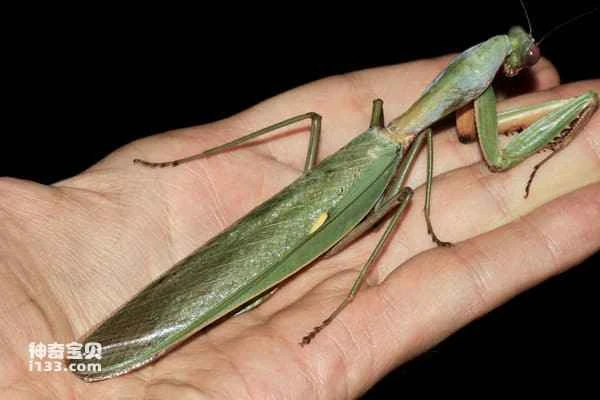
1. The Mantis with the Rhombus Back (ranked first in physical attributes)
The Rhombodera fratricida, also known as the Phimbodera or the Rf mantis, is a species of praying mantis found primarily in high-altitude regions of Southeast Asia. It is widely considered the world's largest mantis species. The Rhombodera fratricida possesses an absolute size advantage and ideal proportions, truly deserving the title of "King of Mantises." Adult females can reach over 12 cm in length, with a head width exceeding 1.4 cm and forearm length exceeding 3.5 cm. This species also has enormous wingspans; wild-caught individuals have already exceeded 12.5 cm in wing length, and the largest individuals are estimated to have a side length of up to 13 cm. For large mantis enthusiasts, the Rhombodera fratricida is like a legendary creature, a dream for all those seeking large specimens, and also one of the most ferocious mantises.
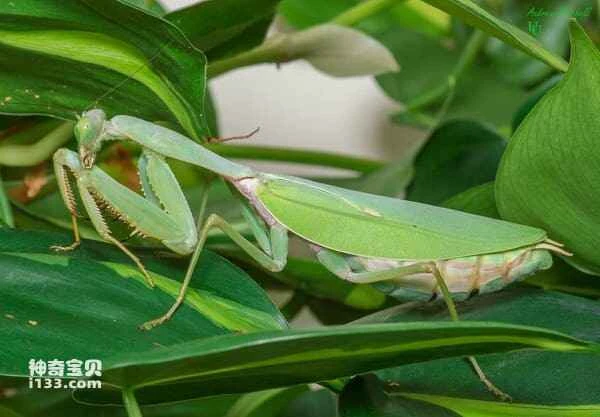
2. Megara Diamondback Mantis (fierce temperament, excellent hunting ability)
The Megaera mantis (scientific name: *Rhombodera megaera *) is one of the most powerful mantises, belonging to the large rhombodera mantis family, mainly distributed in the rainforests of Thailand and Malaysia. It is commonly known as the Rm shield mantis and commercially as the "broad-backed axe mantis." Its maximum size can reach 13 cm, with an average of about 10-11 cm, a size that solidifies its dominant position among large mantises. The Megaera mantis possesses a massive head and powerful arms, enabling it to kill and devour its prey in a short time. Due to its extremely fast feeding speed, many prey are often half-eaten before being killed. Its broad back resembles the shield of an ancient Roman gladiator, giving it a majestic appearance. Because of its large size and aggressive nature, the Megaera mantis even preys on birds and small mammals.
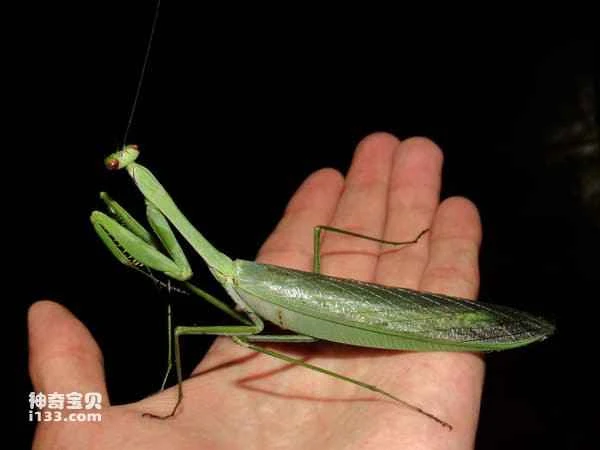
3. Large-headed mantis with transparent wings (large size and powerful predation ability)
The Great Clearwing Mantis (scientific name: *Macromantis hyalina*) is a mantis native to the fertile tropical rainforests of South America. It is also known as the Amazonian Giant Mantis, the Great Clearwing Mantis, or simply the Great Clearwing Mantis. Only the word "giant" best describes its first impression. This mantis originates from the Amazon River basin in South America. The Great Clearwing Mantis is characterized by its enormous raptorial legs and extremely long dorsal plates. Although its head width is not small compared to other mantises of its size, its mouthparts are relatively small. Females can have a head and back length exceeding 4.5 cm, a head width of approximately 1.3 cm, an arm length exceeding 3.5 cm, and a body length exceeding 12 cm when laid flat. Its incredibly long, spiny raptorial legs possess exceptional control. Combined with its enormous size, the Great Clearwing Mantis is a powerful predator, capable of even preying on some native tree frogs and small lizards.
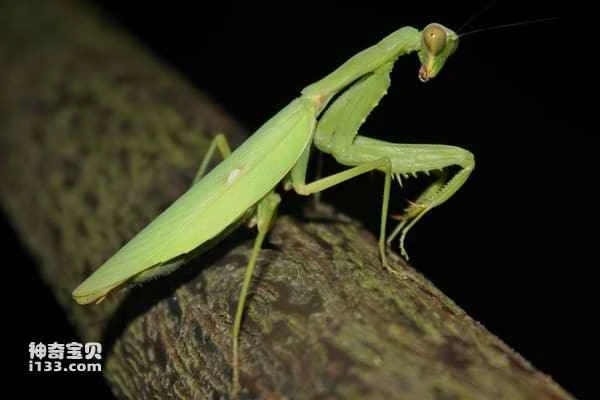
4. Papuan Axe Mantis (robust proportions, strong overall combat ability)
The Papuan Axe Mantis (scientific name: *Hierodula papua*) is a prized species listed among the strongest mantis species. It is distributed in southern Papua New Guinea and the northern Queensland rainforest, and belongs to the large axe mantis family. Its appearance is very similar to the Australian axe mantis (*Hierodula majuscula*), hence the nickname "false Australian axe mantis." The Papuan axe mantis has a very large body, with individuals exceeding 9 cm in length being quite common, and a robust body proportion. It possesses strong overall fighting ability; compared to species like the Taiwan axe mantis and the Indian axe mantis, the Papuan axe mantis is more dominant in terms of body length and weight. It can compete with species such as the Indian giant water bug, the giant ground beetle, the yellow fat-tailed scorpion, and female tarantulas in external combat.
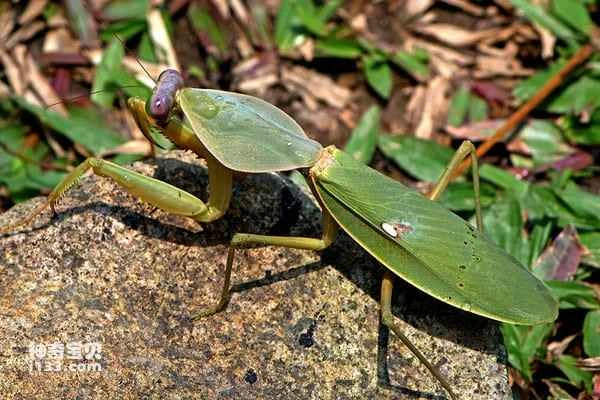
5. Chiang Mai Axe Mantis (Large Size)
The Chiang Mai Axe Mantis (scientific name: *Hierodula sp. Thailand*) is also one of the strongest mantis species. This mantis has long wings and a reinforced club-shaped thorax, but its catching legs are relatively short, making it less suitable for dealing with flying insects like the Queen Bee. In external combat, it can rival the Indian giant water bug, the giant ground beetle, the yellow fat-tailed scorpion, and female tarantulas. Both males and females in the wild have an average total length of about 11 cm. Most individuals become adults at the 10th instar, but a significant proportion do not mature until the 11th instar. Unlike the "Thai shield mantis," the vast majority of known Chiang Mai Axe Mantis individuals retain a darker brown posterior end of the pronotum from the 3rd instar onwards.
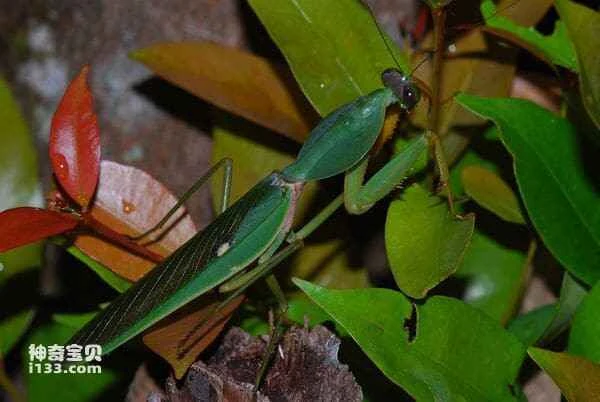
6. Thai Shield Mantis (large size, strong combat power)
Previously mistaken for the Murghettia mantis, the Thai shield mantis (scientific name: *Rhombodera* sp.) has been reclassified. It is characterized by its large and well-proportioned body. Although its arms are relatively short, its enormous size compensates for this. Females can reach 4.2 cm in head-dorsal length, over 1.3 cm in head width, over 3.2 cm in arm length, and over 10 cm in body length. Their wings are also very long, exceeding 11 cm in total length including the wingspan. Like other species with long-backed shields, male Thai shield mantises are also robust, with an overall size and temperament comparable to the Murghettia mantis. It was once considered one of the strongest mantises among mantis enthusiasts and was almost universally known within the mantis community.
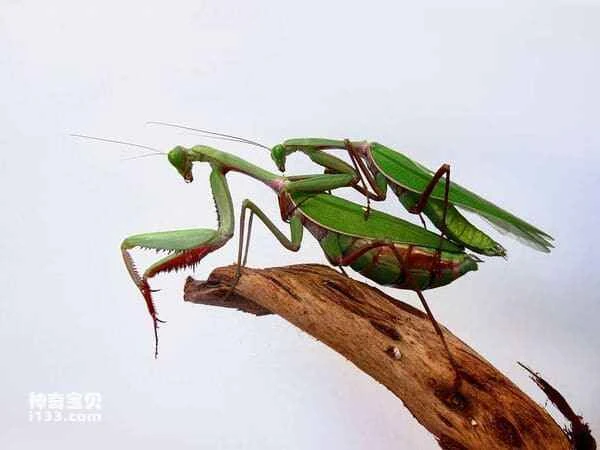
7. Australian Mantis (fierce temperament, strong overall ability)
The Australian broad-bellied mantis (scientific name: *Hierodula majuscula*), also known as the Australian broad-bellied mantis, is one of the world's most famous mantis species. It is one of the largest mantises in Australia. Current records indicate a body length of approximately 10.3 cm, with a fleshy body slightly less than 10 cm and a head-dorsal length of about 3.8 cm. Its body is robust and well-proportioned, with distinctive "blood-red ridges" on the inner sides of its arms, making it very attractive. It is also known for its aggressive temperament. A highly capable mantis, it adapts well to various environments, has a wide predatory range, and a considerable appetite. Besides insects, it also preys on small animals of suitable size, such as tree frogs and lizards. It typically inhabits Australian rainforests and can live up to a year.
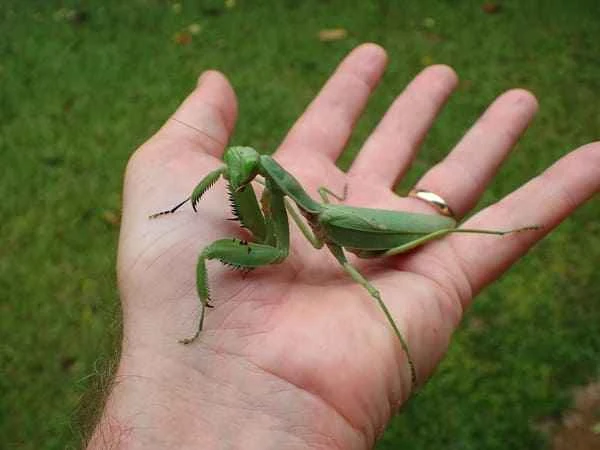
8. African Giant Mantis (fierce and powerful)
The African giant mantis (scientific name: *Hierodula gigantea*) is also a well-known species ranking among the top ten most powerful mantises. As the largest known species in the *Hierodula* genus, it is mainly distributed in North Africa, West Asia, and the Mediterranean coast of Southern Europe. Renowned for its imposing proportions, it is considered the king of large mantises, reaching up to 9.5 centimeters in length. Its signature long legs allow it to attack from a superior position, resembling a mantis warrior. The African giant mantis is one of the few species adapted to semi-desert environments and capable of surviving in hot, dry conditions. It preys on various insects, spiders, centipedes, frogs, small lizards, small mice, small birds, and small snakes. In addition, it also preys on scorpions, centipedes, spiders, mice, and even hummingbirds. The African giant mantis exhibits a wide and diverse dietary adaptability.
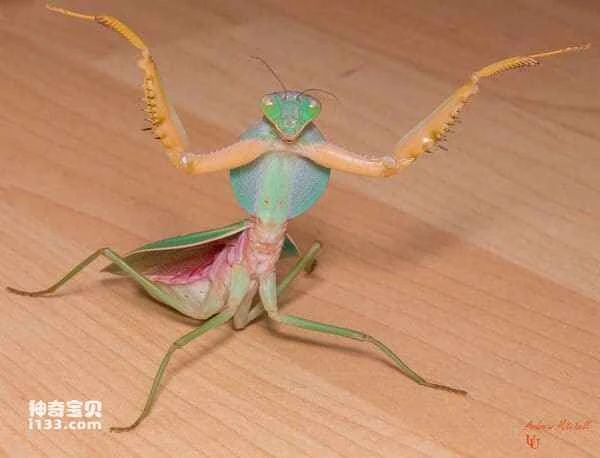
9. Base Diamondback Mantis (High attack power)
The Malaysian Giant Praying Mantis (scientific name: *Rhombodera basalis*), also known as the Malaysian Giant Praying Mantis, is one of my personal favorite praying mantises. This species ranges in length from 7 to 10 centimeters, averaging about 8.3 to 8.5 centimeters. It possesses enormous claws and a head, resembling a bulldog. When threatened, the Malaysian Giant Praying Mantis transforms into a dancer in a breathtaking display. It spreads or raises its wings and extends its catching legs, displaying vibrant, bright colors, like a rainbow of flames. This posture is similar to the famous prayer pose, but the mantis is not paying homage to a higher authority; rather, it is preparing to attack its prey.
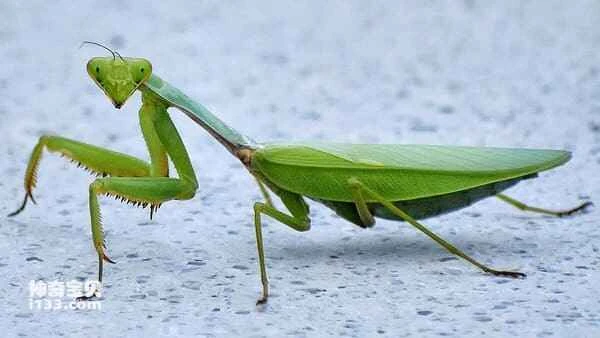
10. Formosan Giant Mantis (fierce temperament)
The Taiwan Giant Axe Mantis (scientific name: *Hierodula formosana*), also known as the Taiwan Axe Mantis, is one of the ten strongest mantises. It is a large, slender, yet powerful mantis. The earliest records consider it endemic to Taiwan, similar to and overlapping with the Chinese Axe Mantis. The average body length of this species is about 9.7 cm, with a maximum length reaching 10.7 cm. Its forelegs have 6-10 small spines on the coxae, black spots on the ends of the coxae and trochanters, but no black spots on the claw grooves on the inner side of the forefemur. The male's forewings are completely transparent in the medial region, while the female's forewings extend beyond the abdomen. The Taiwan Giant Axe Mantis is generally aggressive.
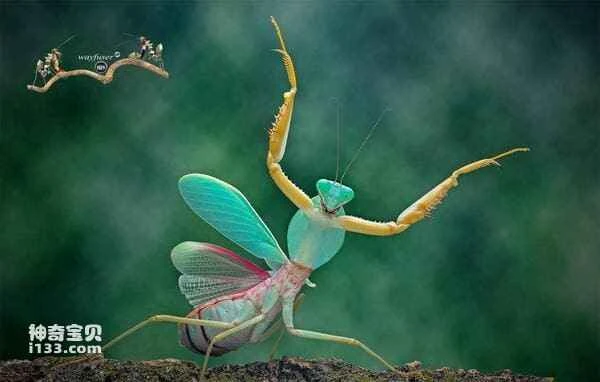
The list of the 10 most ferocious praying mantises in the world is compiled based on factors such as physical characteristics, temperament, and popularity, as well as by referencing relevant online rankings and lists. The following list is current as of February 2, 2024. It should be noted that this list is for entertainment purposes only. These mantis species possess unique characteristics in their physical characteristics, temperament, and popularity, thus qualifying them as among the most ferocious. However, mantis science is constantly evolving, and any inaccuracies or new findings are welcome to be pointed out and supplemented.