Red ants are a type of social insect, also known as fire ants, mainly distributed in tropical and subtropical regions. The following is a detailed introduction to red ants and their living habits:
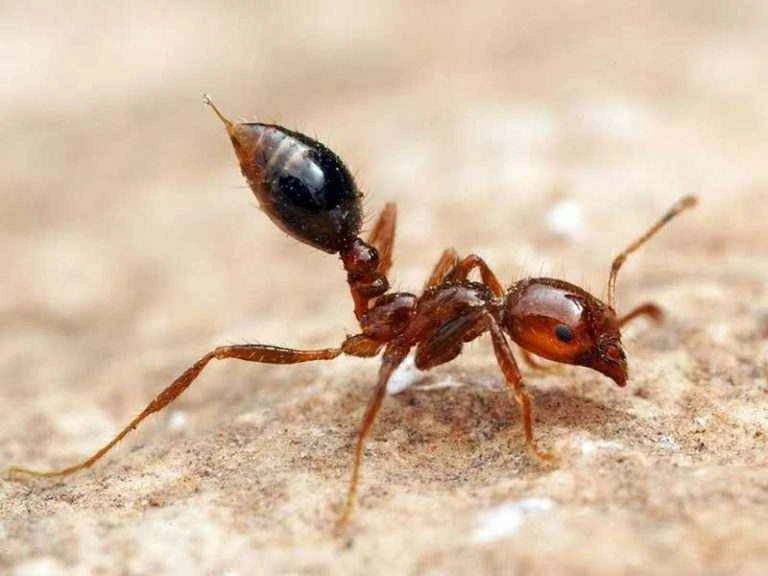
1. Physical characteristics:
Appearance : Red ants have red or reddish-brown bodies, are of moderate size, and usually have a distinct waist contraction. Their heads are relatively large, with two compound eyes and a pair of long antennae.
Body structure : An ant's body is divided into a head, thorax and abdomen. The abdomen connects to the waist segment, which divides the trunk into the thorax and abdomen.
2. Living habits:
Sociality : Red ants are typical social insects, living in large ant colonies. An ant colony typically includes different species of ants such as the queen, worker ants, and soldiers, each with their own responsibilities and working together.
Nest building : Red ants build complex nest systems underground or on the ground, which include different areas such as areas for raising larvae, areas for storing food, and areas for the queen to care for.
Foraging behavior : Red ants are omnivorous insects that feed on various plant debris, insect carcasses, and other small organisms. They spontaneously forage collectively and bring the food back to the anthill to share.
Defensive capabilities : Red ants are highly defensive towards their nests and colonies, and will collectively attack when they sense a threat. They can release irritating formic acid and defend their territory through bites and stings.
Reproductive behavior : The queen ant is responsible for laying eggs and reproduction, while worker ants and soldiers are mainly responsible for caring for larvae, maintaining the nest, and hunting. The queen ant lays eggs regularly and plays a crucial role in the ecological balance of the nest.
Life cycle and evolution : The life cycle of red ants includes the stages of egg, larva, pupa, and adult. Red ants possess a complex and efficient social structure, and this social lifestyle has become key to their successful reproduction and survival.
Red ants are fascinating and highly organized insects; their social nature and collective action make them an important part of the ecosystem. Studying and understanding the habits of red ants allows us to delve into the evolutionary patterns of social insects and how they cope with different environmental challenges.