The fairy bee is one of the smallest animals in the world, measuring only 0.2 millimeters in length. It is also the smallest insect on Earth, and as the world's smallest flying insect, the fairy bee primarily feeds on the eggs of other insects. This tiny flying insect has a lifespan of approximately 21 days.
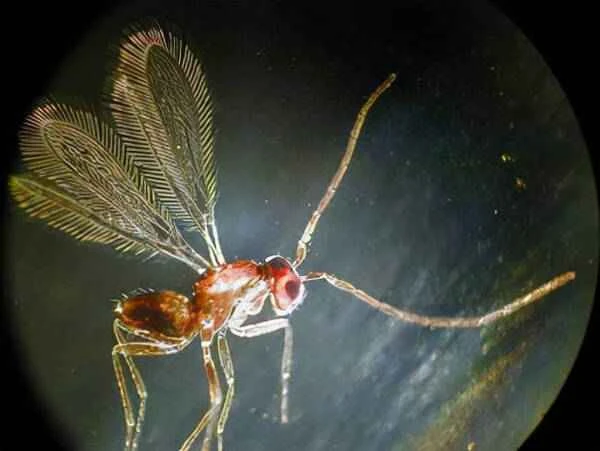
Fairy wasps primarily parasitize thrips, feeding on their nutrients and laying their eggs inside them to reproduce. Many thrips are agricultural pests, so releasing fairy wasps is often used as an effective method for biological control of thrips pests.
Researchers compared adult fairy bees with pupal fairy bees and found that 95% of the neurons in adult fairy bees had lost their nuclei. This indicates that although fairy bees need all their neurons during growth and development, they require far fewer neurons as adults.
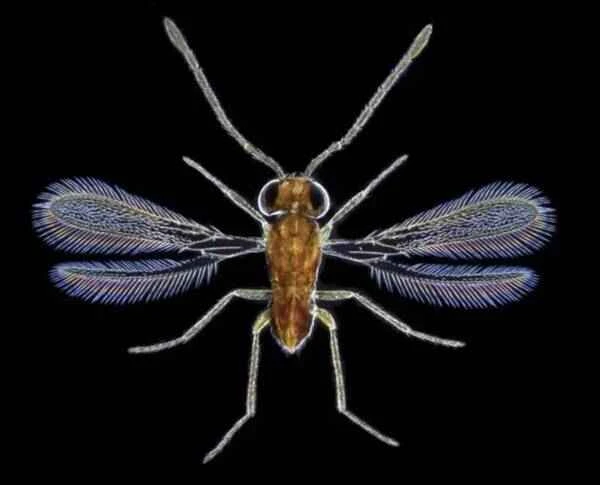
Like other insects, fairy wasps have approximately 7,400 neurons during their pupal stage, each with a nucleus. However, in the final stage of pupal development, most of the neuronal cell bodies decompose, leaving only 339–372 neurons with nuclei in adult fairy wasps, while the remaining approximately 7,000 neurons are nucleiless.