Cicadas are the loudest insects in the family Cicadidae of the order Hemiptera on Earth, making them some of the most annoying insects. They have many aliases, including cicada, zhiliao, zhimuya, bichan, haiyi, zhiliao, jieliao, duliaoguier, daduliao (adult), zhiliaogui, zhiliaohou, jieliaogui, pacha, shaoqian, luanluo, luanluogui (larva), etc. Cicadas live in temperate to tropical regions of the world (approximately 2,000 species of cicadas have been recorded). This includes cicadas such as Cryptotympana atrata, Platypleura kaempferi, Oncotumpana maculicollis, Centrotoscelus yunanensis, grass cicadas, spotted cicadas, thin-winged cicadas, Takasago bear cicadas, Taiwan cicadas, black-winged cicadas, red-eyed cicadas, Taiwan black cicadas, Shanxi cicadas, tortoise-shell cicadas, and autumn cicadas.
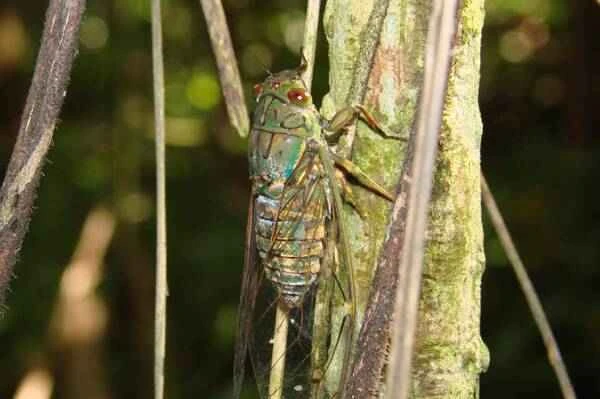
Cicada larvae live in the soil and have a pair of strong digging forelegs. They use their piercing-sucking mouthparts to suck sap from plant roots, weakening trees, causing branches to wither and affecting tree growth. They usually stay in the soil for several years, even more than a decade, before emerging at dusk or night to molt and grow into adulthood. The molting process begins when a black crack appears on the back of the pupa. The head emerges first, followed by the green body and wrinkled wings. After a short pause to harden and darken the wings, they begin to take flight. The entire process takes about an hour. In late June, the larvae begin to emerge as adults. Newly emerged cicadas are green and have a lifespan of about 60-70 days. Female adults begin laying eggs in late July, with the peak egg-laying period in early to mid-August. Eggs are mostly laid on branches 4-5 millimeters in diameter. In summer, they make loud noises in the trees and use their needle-like mouthparts to suck sap from the trees. The larvae live in the soil and suck sap from the tree roots, which is harmful to the trees.
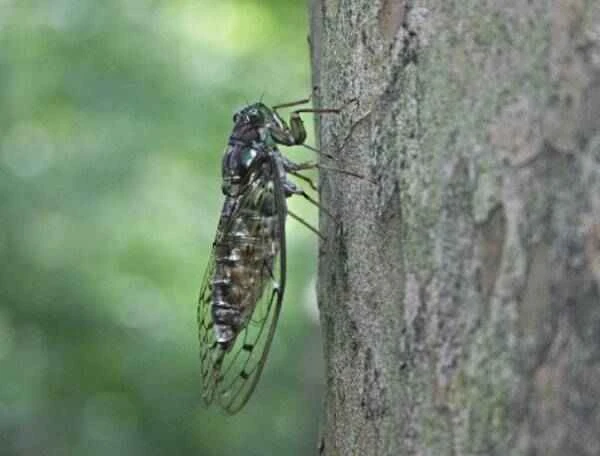
If a cicada is disturbed while it is unfolding its wings, it will be crippled for life, perhaps unable to fly or make a sound.
Male cicadas sing; their sound-producing organ is located in their abdominal muscles, resembling a large drum covered by a tympanic membrane. The membrane vibrates to produce sound. Because the sound-producing muscles can contract and expand approximately 10,000 times per second, and the space between the cover plate and the tympanic membrane allows for resonance, their calls are exceptionally loud. They can also take turns using various different tones to sing passionately. Male cicadas sing incessantly throughout the day to attract females for mating; they cannot hear their own "songs." Each species of male cicada produces three distinct calls: a gathering call, regulated by daily weather changes and the calls of other male cicadas; a courtship call before mating; and a harsh call when caught or startled and flying away. Female cicadas have an incomplete instrument and cannot produce sound, hence they are "mute cicadas." Some species are relatively easy to distinguish based on their calls, behavior, and morphology.
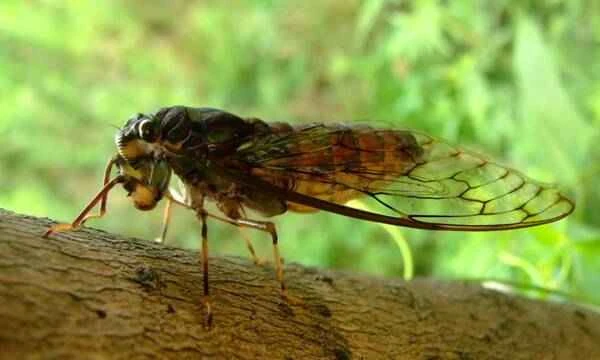
Cicadas are distributed in temperate and tropical regions, inhabiting deserts, grasslands, and forests. Besides the *Cicada* genus and other species that appear in midsummer, there are also periodic cicadas. The most famous periodic cicadas are the 17-year and 13-year cicadas, also known as prime-number cicadas. Because their lifespan is a prime number, they do not encounter the predators of the previous generation. Periodic cicadas occur in large numbers in specific areas at regular intervals, when dozens to hundreds of dark brown cicada larvae emerge from the soil to mature, creating a spectacular sight. Some species are relatively easy to identify by their calls, behavior, and morphology.
Cicada molts are rich in chitin, protein, amino acids, and organic acids, and are often used to treat symptoms such as colds with fever, cough with hoarseness, sore throat, itchy rashes, red and swollen eyes, tetanus, infantile convulsions, and incessant crying at night. Ancient texts like the *Book of Rites* record the consumption of cicadas; at that time, cicadas were not only a common food but also a delicacy at banquets for royalty and nobility, and the custom of eating cicadas remains in many places. Cicadas can be prepared in various ways, including stewing, roasting, frying, and grilling. Like earthworms, grasshoppers, ants, bean worms, silkworm pupae, scorpions, and bee pupae, they are high in protein. Nutritionists have determined that cicadas contain up to 72% protein, making them a natural source of nutrition.