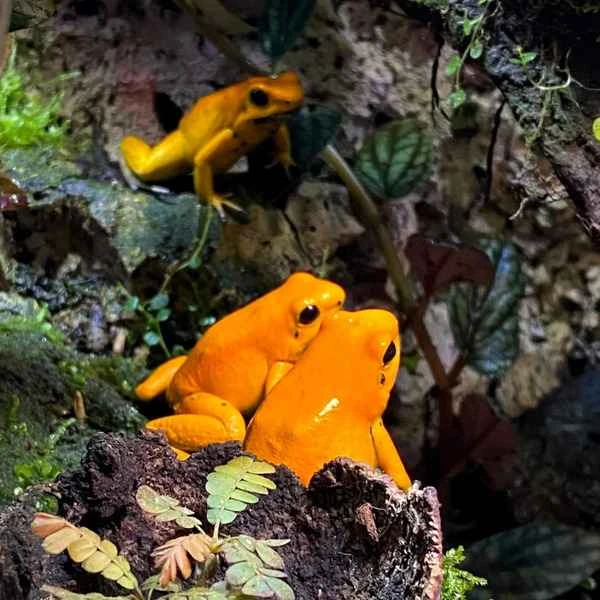
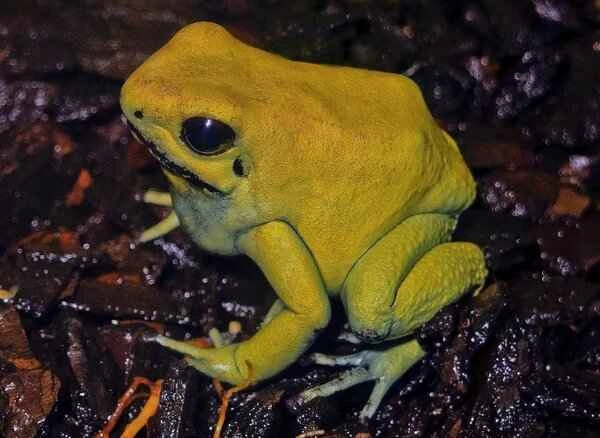
Phyllobates terribilis 'Orange', also known as the orange terror poison dart frog or the golden poison dart frog, is one of the world's most iconic and fascinating amphibians. Although it is considered one of the most venomous vertebrates in the wild, this frog is completely harmless in captivity and is beloved by frog enthusiasts. This article will provide a detailed overview of this amazing creature, from its appearance and toxicity to its care in captivity.
Main features
Suitable for beginners: Despite its dangerous reputation in the wild, *Phyllobates terribilis 'Orange'* is very hardy and easy to care for in captivity, making it an ideal choice for novice keepers.
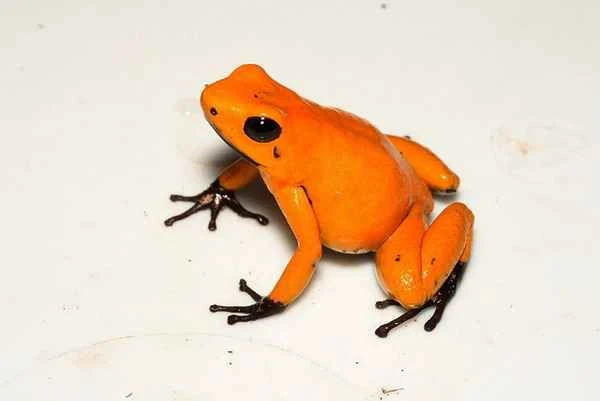
Vibrant orange appearance: This frog's bright orange color makes it stand out from other poison dart frogs, making it a visually appealing pet choice.
Suitable for group keeping: This frog can be kept in groups as long as there is enough space.
Bold behavior: Unlike some other poison dart frogs, Phyllobotes terribilis is bold and usually active outdoors rather than hiding all day.
Loud call: Male frogs produce a loud, trilling call, especially when they reach sexual maturity at 8-10 months.
Larger size: These frogs can grow up to about 2 inches long, making them one of the larger species of poison dart frogs.
Why is it called a poison dart frog?
Phyllobates terribilis gets its name from the fact that indigenous tribes in Colombia used its toxins to coat blowguns for hunting. The alkaloid toxins secreted by this frog's skin, especially bat dart toxin, are extremely potent. In fact, just 1 milligram of bat dart toxin is enough to kill 10 to 15 adults, and even two African elephants. This astonishing toxicity has earned it the terrifying title of "terrifying poison dart frog."
However, these frogs only produce this deadly toxin when feeding on specific prey in the wild, such as certain ants, beetles, and other invertebrates. In captivity, because their diet is completely different—eating non-toxic fruit flies, for example—they do not produce the toxin and are therefore completely harmless, even safe to handle.
Natural distribution and habitat
In the wild, *Phyllobates terribilis* 'Orange' is distributed along the Pacific coast of Colombia, primarily inhabiting humid, rainforest-rich tropical rainforests. However, due to environmental pressures such as habitat loss, their natural populations have declined significantly, making conservation efforts crucial. Notably, the number of captive *Phyllobates terribilis* individuals is now believed to far exceed the wild population.

The habitat of the orange terror poison dart frog
Providing these frogs with a suitable environment is key to ensuring their health and longevity. The following are the necessary conditions for keeping them:
Tank size: A single Phyllobeta terribilis 'Orange' can live comfortably in a 10-gallon tank, but if keeping 2-3 in a group, a tank of at least 29 gallons, or a 24x18x18 inch glass enclosure, is recommended.
Temperature: They prefer temperatures between 65°F and 80°F, with an ideal temperature of low to medium 70°F. Temperatures above 80°F are very dangerous for poison dart frogs.
Humidity: High humidity is crucial. Ideally, humidity should be maintained between 70% and 100%, but frogs can tolerate humidity as low as 50% for short periods, provided there is a water source. Low humidity environments without a water source will quickly become fatal.
Substrate and Plants: To simulate their natural environment, use a moisture-retaining substrate such as coconut fiber, moss, and fallen leaves. Adding some live plants, such as pineapples and ferns, can help maintain humidity and provide hiding places for the frogs.
Social behavior
Phyllobates terribilis 'Orange' can be kept in groups if given enough space. However, their social dynamics may change as they mature. When they reach sexual maturity at 18-24 months, females may begin to compete with each other, even eating each other's eggs. Therefore, many breeders recommend keeping adult frogs in pairs to ensure successful breeding.
diet
In the wild, *Phyllobates terribilis* obtains toxins from consuming poisonous insects such as ants, beetles, and mites. However, in captivity, their diet is entirely different, relying on a stable supply of non-toxic live insects. The following are common captive foods:
Fruit flies: Drosophila melanogaster and Drosophila hydei are common food for poison dart frogs. Young frogs prefer the smaller melanogaster, while adult frogs are more likely to accept the larger hydei.
Crickets: Adult frogs can also be fed small crickets, which can be up to 1/2 inch in size.
Nutritional supplements: All feed insects should be sprinkled with vitamin and mineral supplements, especially calcium, to prevent frogs from developing metabolic bone disease.
In addition, Phyllobotes terribilis will also enjoy regular feeding of springtails and woodlice, which not only help decompose waste in the tank but also provide the frog with extra nutrition.
Reproduction
Phyllobates terribilis 'Orange' is relatively easy to breed in captivity, but the breeding process usually begins when the frogs are 2-3 years old. Breeding typically begins with the female laying eggs on a smooth surface, such as a petri dish under a broad leaf or coconut shell.
The eggs hatch into tadpoles after 10-14 days, and then it takes 60-80 days to complete metamorphosis, transforming them into miniature versions of adult frogs. Many breeders transfer the eggs to separate containers to raise the tadpoles and improve their survival rate.
Sex identification
Distinguishing between male and female Phyllobates terribilis 'Orange' is not easy. Males are usually identified by their loud, trilling calls, which typically begin around 8-10 months of age. Additionally, males may develop black, spreading stripes on their throats due to frequent calling. Females are generally larger and more robust, but body size alone is insufficient for accurate sex determination. In many cases, the exact sex can only be determined when the frogs begin laying eggs.
Colors and patterns
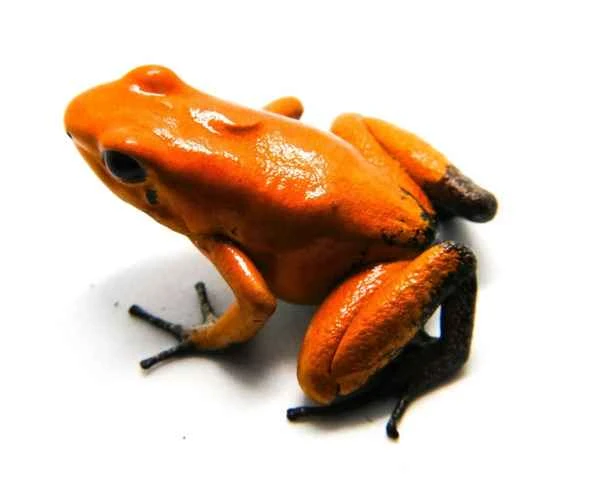
As juveniles, *Phyllobates terribilis* 'Orange' is primarily black with a distinctive yellow or orange U-shaped pattern on its back. As they mature, this coloration gradually expands, eventually covering most of the body, leaving only small areas of black around the nose, mouth, and toes. Unlike some other poison dart frogs, there is very little variation in color and pattern between individuals of *Phyllobates terribilis* 'Orange'.
life
Under good care, Phyllobedes terribilis 'Orange' can live for over 20 years in captivity, although its typical lifespan is around 10 years. Its longevity, striking appearance, and simple care requirements make it a long-term commitment for frog enthusiasts, but also bring substantial rewards.
The history of the pet market
The presence of Phyllobates terribilis in the US pet market is largely due to its introduction from Germany in the late 1990s. With the current ban on exporting wild poison dart frogs from Colombia, captive-bred populations have flourished and are now widely available for purchase.
Phyllobates terribilis 'Orange' is an awe-inspiring poison dart frog, renowned in the wild for its deadly venom, but in captivity known for its stunning appearance and non-toxicity. While wild individuals are highly poisonous, captive frogs are completely harmless, making them a favorite among poison dart frog enthusiasts. Whether you desire a bold and beautiful pet or are interested in breeding, this frog offers a captivating and enriching experience for its owner. With proper care, these frogs can live healthy lives for many years, providing a deeper understanding of the tropical amphibian world.