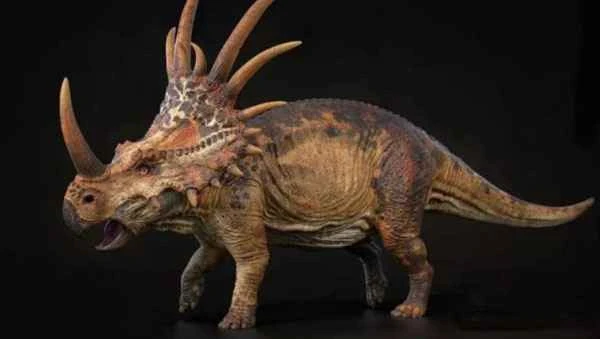
The Triceratops was a herbivorous dinosaur that lived in North America during the Late Cretaceous period, approximately 70 million years ago. It was about 8 meters long. It had a huge head with a brightly colored, enormous shield at the back, two large, pointed horns above its eyes, and a small horn next to its nose. It was a quadrupedal herbivorous dinosaur.
I. Basic Information about Brachiosaurus
Dinosaur length: 8 meters
Dinosaur weight: 8 tons
Dinosaur food: Plants
Era: 70 million years ago, Late Cretaceous period
Survival location: North America
Key identification points: Dinosaur species with heads accounting for half of their total length: Ornithischians, Ceratopsians, Schizoceratops
Origin: The Latin word for horned dragon is "giant reptile". A 2.67-meter-long skull of a horned dragon has been discovered.
II. Introduction to the Horned Dragon
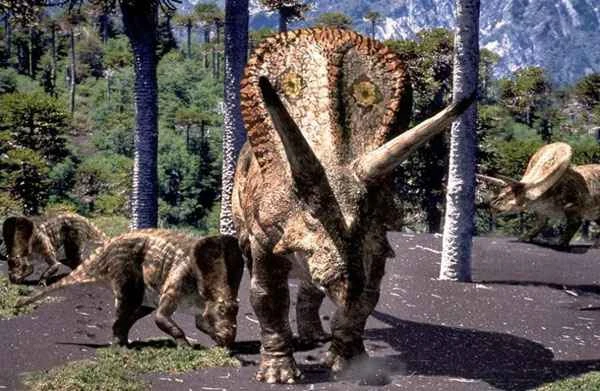
Torosaurus was a herbivorous dinosaur from the Late Cretaceous period that lived on coastal plains and likely used its powerful beak to devour tough plants. It is generally believed that Torosaurus also possessed a brightly colored crest, used for courtship and social hierarchy. Torosaurus was 8 meters long and weighed 8 tons; its skull is the largest ever found on land.
When the Triceratops lowered its massive head, its magnificent head shield rose, making the creature appear even larger. At this point, it could be seen from afar. This behemoth was as long as an elephant and weighed more than five rhinoceroses. It walked on four legs and fed on low-lying plants. Although the Triceratops' skull was 13 times the size of a human's, its brain was relatively small. However, its imposing head shield, two large, sharp horns above its eyes, and a small horn at the tip of its head—these features combined made the Triceratops a formidable opponent, even when facing the largest carnivorous dinosaurs. When confronted head-on and neither willing to yield, the Triceratops would first sway its massive head from side to side to intimidate its opponent, then spread its forelegs to stand firmly. Finally, the two dinosaurs would butt their horns together and begin a contest of strength.
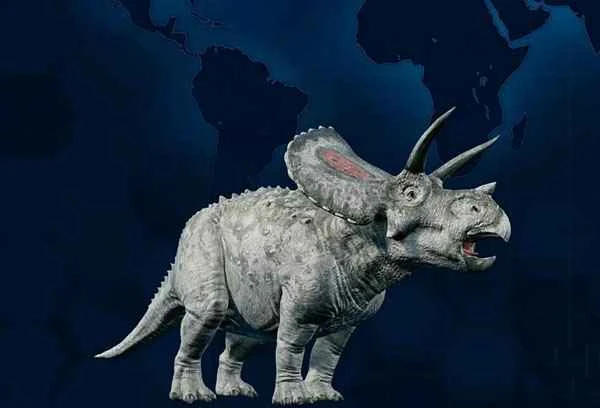
III. Physical Characteristics of the Horned Dragon
The Carnotaurus was a massive creature with thick limbs, and its most distinctive feature was its enormous head shield. It was as large and bulky as a modern elephant; an adult Carnotaurus weighed the equivalent of five adult rhinoceroses. Furthermore, it possessed three sharp horns on its head.
The bullhorned dinosaur had a long head shield with large holes in the skull supporting it. This reduced the weight of the shield and lessened the burden on the neck, thus improving the mobility of its head.
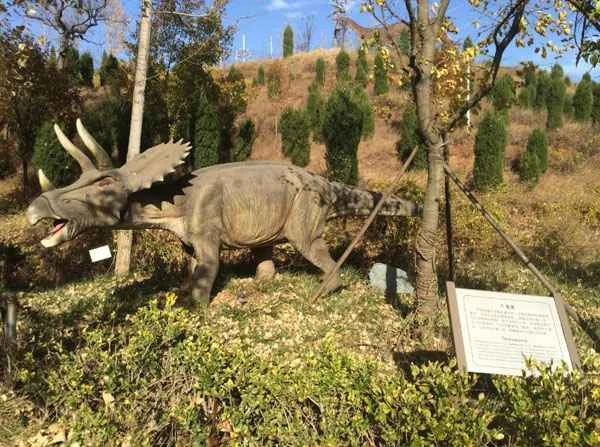
IV. Dietary Characteristics of the Horned Dragon
Hornedosaurs fed on ferns, cycads, and conifers, using their sharp beaks to bite off and swallow tough leaves or needles whole. Hornedosaurs needed to consume large quantities of food to meet the energy requirements of their massive bodies, but their chewing ability was not strong, so they had to swallow their food quickly and rely on their powerful digestive system to digest it.