The forests and wetlands are not silent at night. Besides the cooing of owls, many lesser-known birds play their own nocturnes under the moonlight. From nightingales and mockingbirds to American nightjars and black-crowned night herons, their songs, whether ethereal or mournful, add mystery and poetry to the night.
These nocturnal birds are often elusive, but their songs are melodious and moving. Understanding their calls not only helps in bird identification but also raises our awareness of protecting bird habitats.
1. Northern Mockingbird
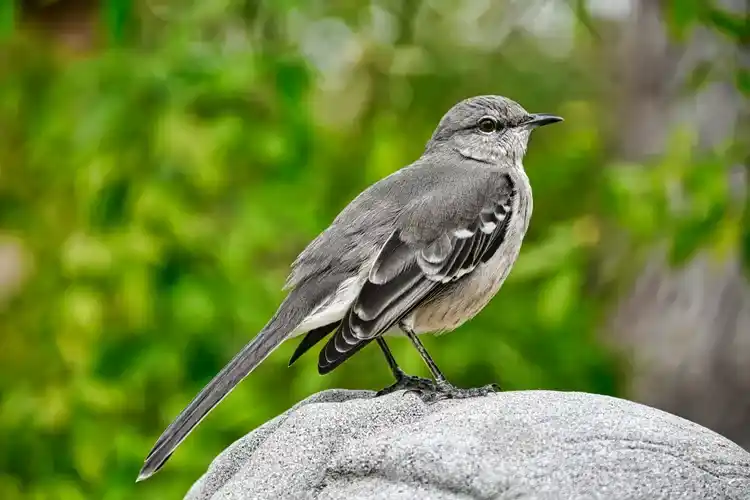
The North American mockingbird (scientific name: *Mimus polyglottos *) is a master mimic. It can not only imitate the calls of other birds, such as jays, orioles, and hawks, but also the croaking of frogs, the creaking of doors, and car alarms. It can learn over 200 different "tracks" in its lifetime.
Although they are not strictly nocturnal, during the spring and summer breeding season, especially on full moon nights, unpaired males may sing incessantly day and night to attract mates. They often sing in conspicuous places, and their long tails and white wing patches make them easily identifiable.
2. Common Nightingale
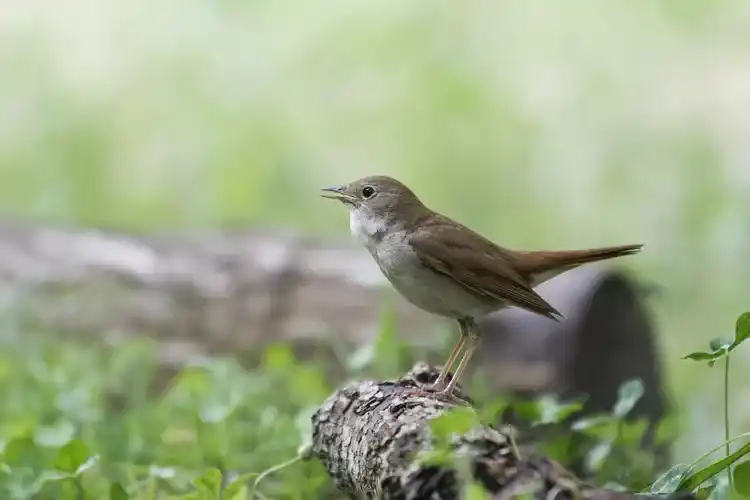
The nightingale ( Luscinia megarhynchos ) has a song as elegant as a flute, with varied and layered melodies. This species is widely distributed in North Africa, Europe, the Middle East, and Central Asia. It breeds from April to July and then migrates to tropical Africa to spend the winter.
Nightingales are shy birds, and the males hide in bushes to sing over 200 different songs in order to attract females. Although Britain was once an important habitat for them, their numbers declined by 53% between 1995 and 2008, mainly due to habitat loss.
3. Eastern Whip-Poor-Will
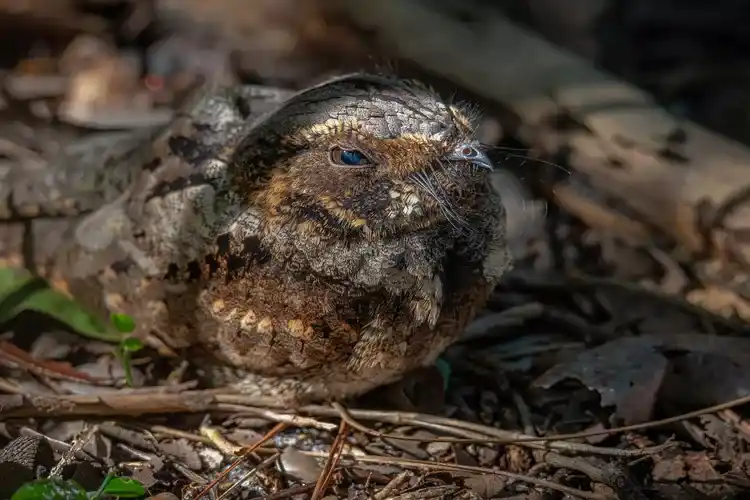
The call of the American Nightjar ( Antrostomus vociferus ), as its name suggests, "whip-poor-will," often echoes through forests on spring and summer nights. They breed in deciduous forests in the eastern United States and southern Canada, hiding among fallen leaves during the day and emerging at night to hunt insects.
One study recorded that a male bird made 1,088 consecutive "whip-poor-will" calls during the breeding season without interruption, making it the "king of the nighttime loop".
4. Great Potoo
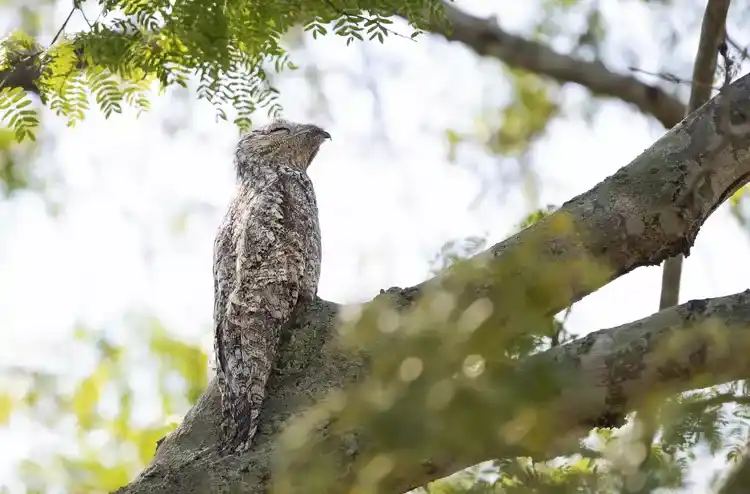
The Great Nightjar ( Nyctibius grandis ), which lives in the tropical forests of Mexico to Bolivia, often emits a low, hoarse cry at night, similar to that of an angry cat. During the day, they camouflage themselves as dead branches, making them almost indistinguishable.
This bird is most active on bright moonlit nights. Its call is not exactly a "song," but it embodies the mysterious nature of night birds and is one of the most eerie sounds in tropical nights.
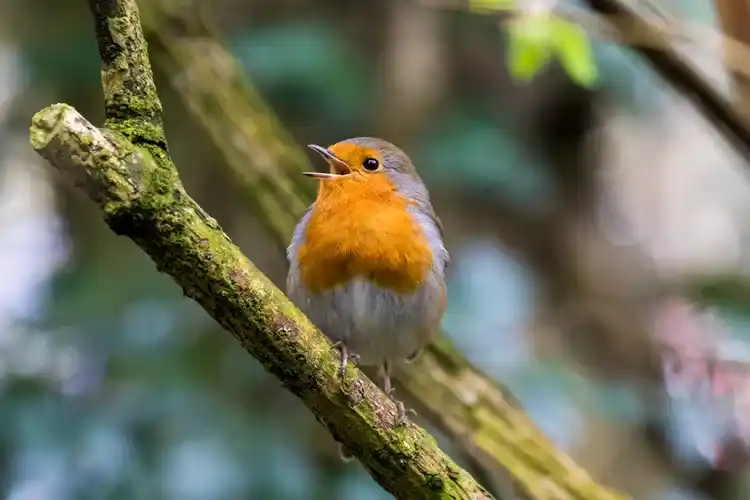
5. European Robin
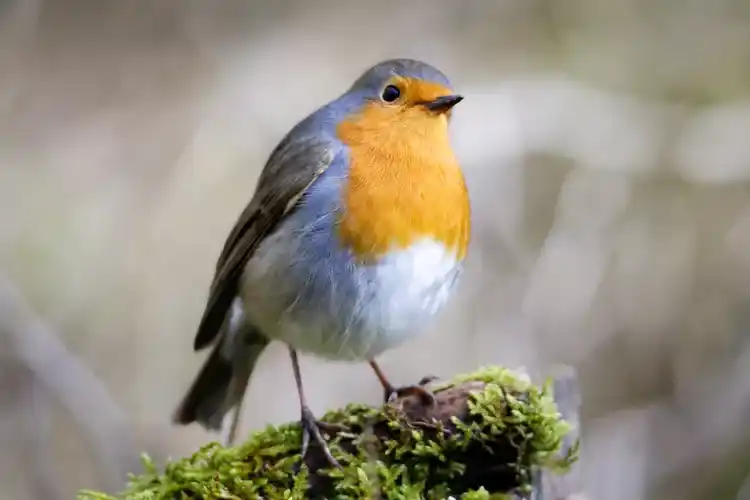
The European robin ( Erithacus rubecula ) is not nocturnal, but it is most active at dawn and dusk, becoming one of the earliest singing and last birds to fall silent. The Royal Society for the Protection of Birds in the UK points out that robins are the most common nocturnal singers in cities and gardens, and are often mistaken for nightingales.
Because they are extremely sensitive to light, artificial lighting disrupts their routines, leading to frequent nighttime chirping. Studies have shown that daytime urban noise is also one of the reasons they "sing overtime" at night.
6. Great Reed Warbler
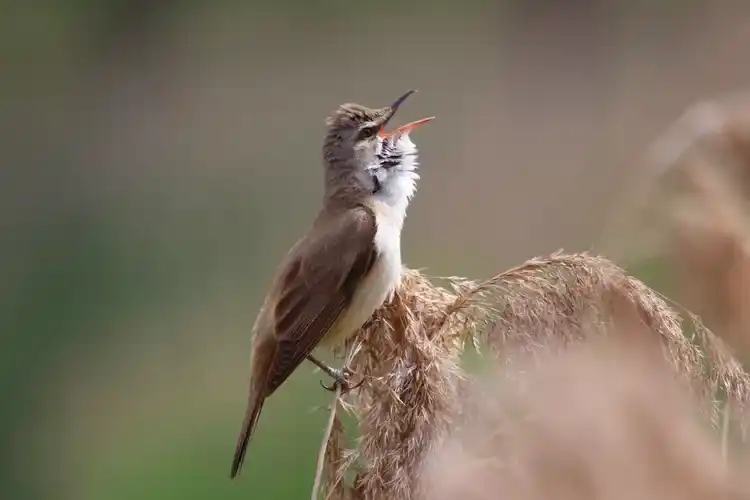
Reed warblers (genus *Acrocephalus *) often sing at night during the breeding season. The Great Reed Warbler ( *Acrocephalus arundinaceus* ) is widely distributed in wetlands across Eurasia and winters in Africa. To attract females, males will sing for 20 seconds to 20 minutes, and their songs can be heard up to 450 meters away.
Although this small insectivorous bird has an unremarkable appearance, it is one of the loudest singers in the wetlands at night.
7. Black-Crowned Night Heron
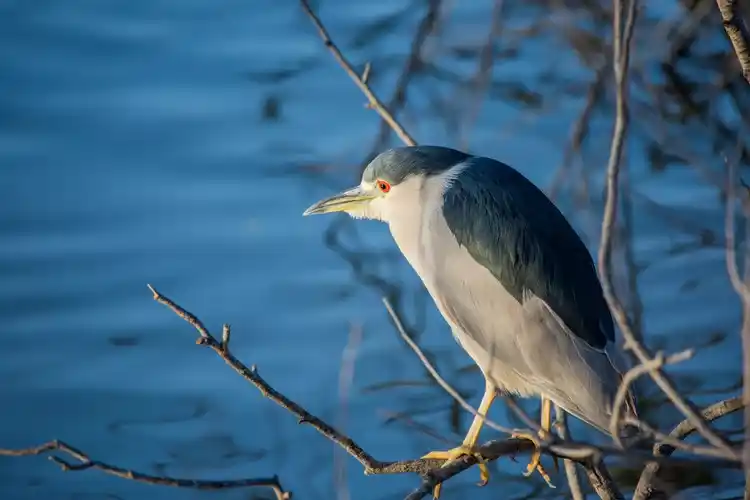
Black-crowned night herons are nocturnal herons, with the Black-crowned Night Heron ( Nycticorax nycticorax ) being a prime example. They are found in most wetlands worldwide, from the Americas to Africa and Eurasia.
Black-crowned night herons build nests in groups during the day and forage alone at night. Although their calls sound more like "cooing" or "waa waa" than traditional bird songs, they still form the "sound background" of the wetlands at night.
8. Eurasian Nightjar
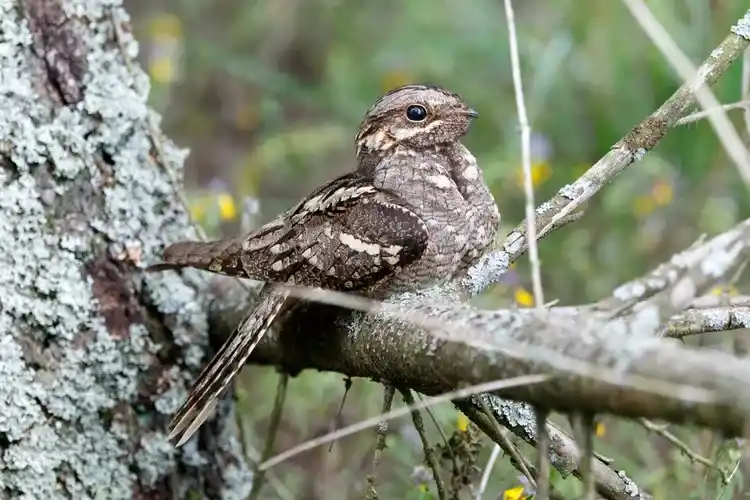
The Eurasian Nightjar ( Caprimulgus europaeus ) is one of the most iconic singers of the summer night, with a range spanning Europe, North Africa, and Asia. The male emits a continuous, loud, and piercing "churring" call from dusk to dawn, capable of producing up to 1,900 notes per minute.
They belong to the order Caprimulgiformes, a name derived from the ancient Roman misconception of "sucking goat's milk"—people once thought these birds would suckle livestock's milk at night.
9. Black Rail
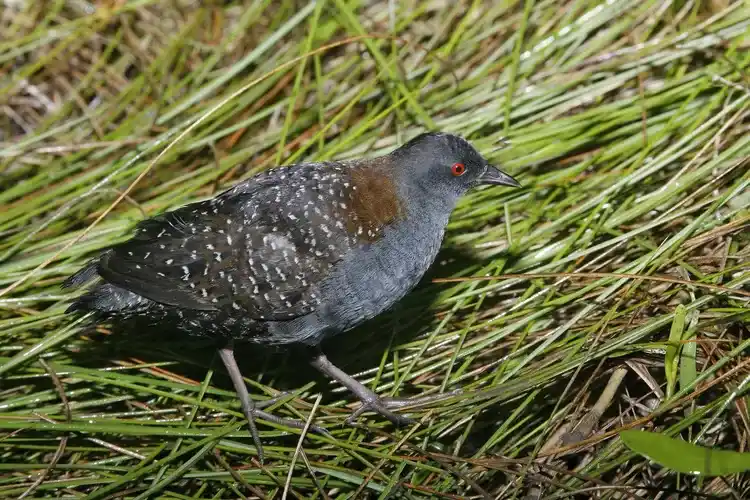
The Black-beaked Rail ( Laterallus jamaicensis ) is mouse-sized and extremely elusive, primarily inhabiting coastal swamps of the Americas, such as California, the Gulf Coast, the Caribbean, and parts of Chile. They are usually difficult to spot, but their melodious "ki-ki-doo" call can often be heard at night.
Rallidae birds are widely distributed around the world, with many species preferring dense wetland environments. Many of them have unique nocturnal calls, making them low-key singers in the night.
Why do birds sing at night?

While birdsong evokes a sense of poetic living, it also serves practical functions: courtship, warning, or territorial assertion. Nocturnal birds are naturally active at night, but diurnal birds have also been increasingly singing at night in recent years, a phenomenon closely related to human activity.
First, light pollution disrupts birds' circadian rhythms, causing them to mistake it for dawn or dusk.
Secondly, noise pollution prevents birds from clearly transmitting information during the day, forcing them to "work the night shift."
Third, the calls of night birds may trigger a stress response in diurnal birds, causing them to join the "night chorus."
Want to learn more about the habits and ecological impact of nocturnal birds? Stay tuned for more fascinating natural science content and conservation advice.