When playing in the water at the beach, one of the creatures we fear most is probably jellyfish. Their tentacles carry stinging cells that can cause anything from a sting to a life-threatening one. But did you know that not all jellyfish cause serious stings? In fact, some jellyfish have extremely low venom and pose almost no harm to humans. Today, let's learn about six types of jellyfish that are "virtually harmless" to humans—safe and beautiful!
Do jellyfish sting?
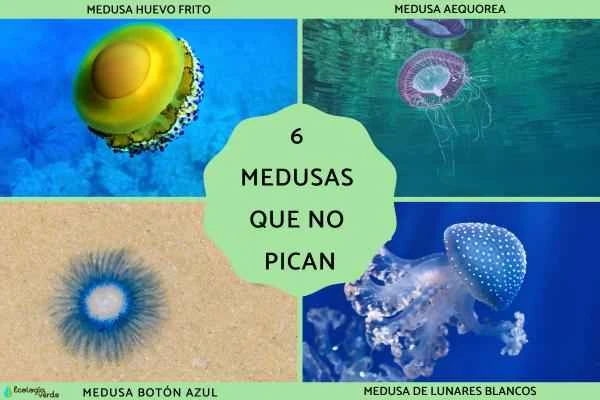
From a strictly biological perspective, all jellyfish possess nematocysts (cnidocitos) for predation and defense. However, the toxicity of different jellyfish species varies greatly. Some venoms, like those of box jellyfish, are highly concentrated, while others have almost no effect on humans. Even with jellyfish of very low toxicity, direct contact is not recommended to prevent skin irritation or allergic reactions.
1. Egg Yolk Jellyfish (Cotylorhiza tuberculata)
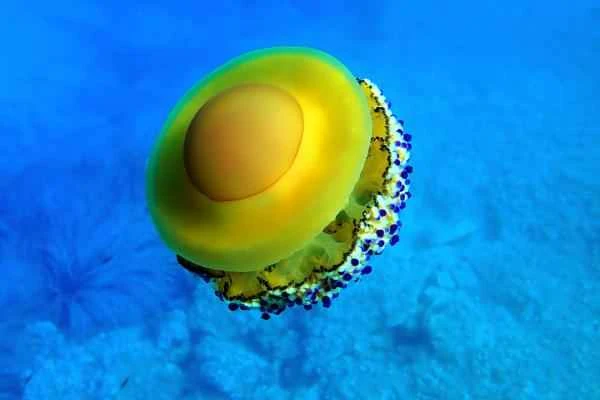
One of the most typical examples of "non-stinging jellyfish," it has extremely low venom and is mostly found in the Mediterranean Sea. Its shape resembles an "omelet," with an orange-yellow yolk-like protrusion in the center. It lacks edge tentacles, instead possessing eight oral arms with button-like appendages at the ends. It is often used as shelter by small fish and crabs.
2. Moon jellyfish (Aurelia aurita)
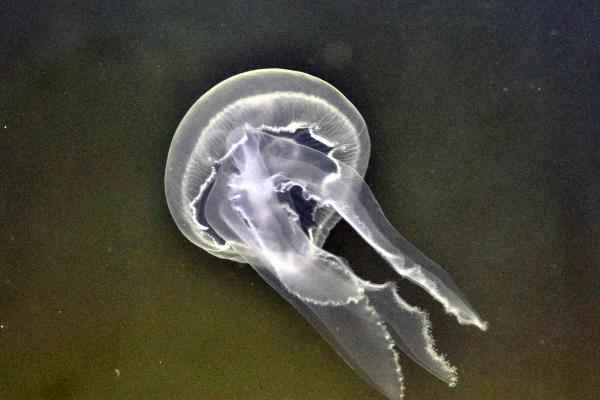
Also known as the "moon jellyfish" or "disc jellyfish," it has an extremely wide distribution, found in almost all temperate seas worldwide. Its bell is transparent, with four horseshoe-shaped gonads in the center. Stings are mild, causing only localized itching or slight erythema. It is a common, gentle jellyfish found in aquariums and natural marine environments.
3. Aequorea forskalea
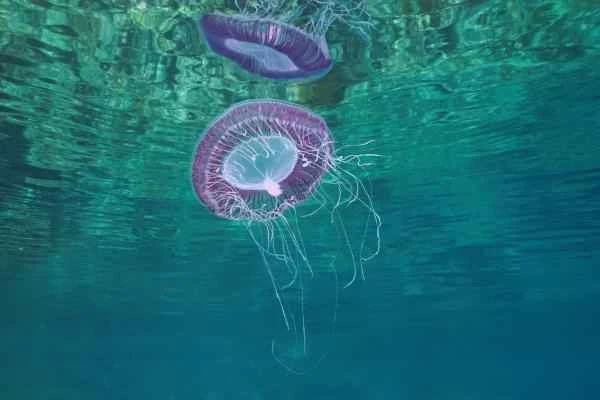
It has a translucent appearance and numerous blue radiating lines, reaching up to 40 centimeters in width. Its population possesses bioluminescent properties , meaning its aequorin emits a green glow. It is mostly found in the western Mediterranean during spring, is gentle in nature, and will not sting humans.
4. Blue-buttoned jellyfish (Porpita porpita)
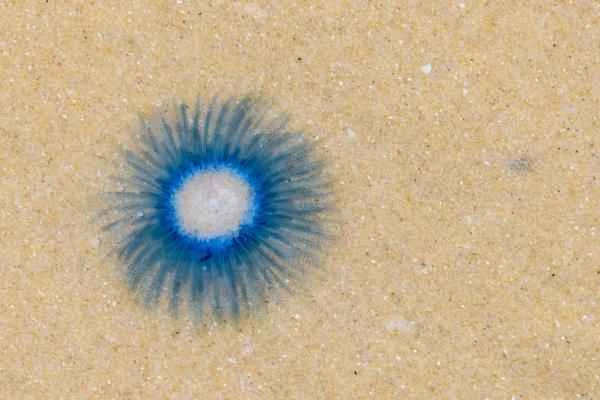
Resembling jellyfish, they are actually a planktonic colony composed of multiple individuals. The bell-shaped cap is about 5 centimeters in diameter, bluish-purple or golden-yellow, with an inflatable sac in the center and tentacle-like structures at the edges. The stings are extremely mild, with only a few people experiencing slight itching. They are commonly found in tropical waters such as the Pacific and Indian Oceans.
5. White-spotted jellyfish (Phyllorhiza punctata)
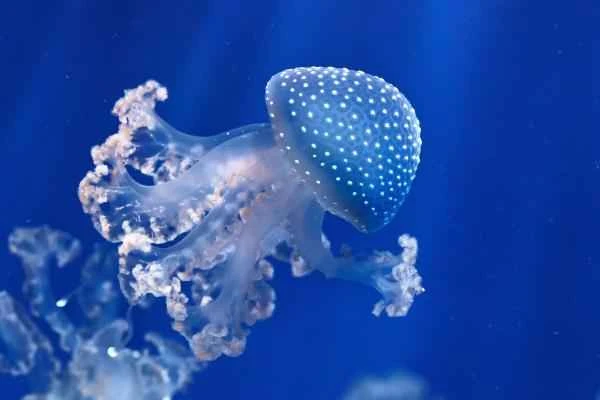
Native to the Pacific Ocean off the coast of Australia and Japan, it has since been introduced to several countries. It is large, transparent, and covered with numerous evenly distributed white spots. Its stings are mild and do not cause serious skin reactions, making it a representative of "high-value, low-risk" jellyfish.
6. Lobata jellyfish (Discomedusa lobata)
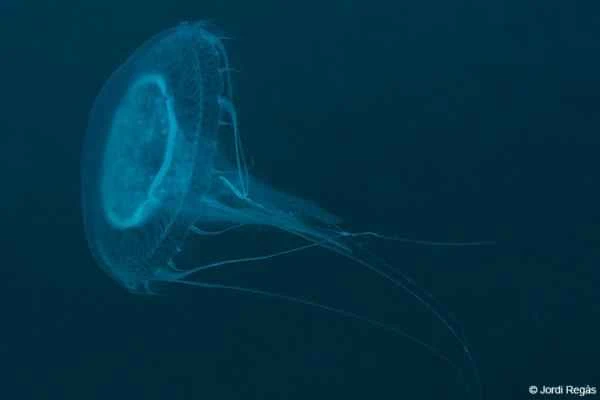
Distributed in the coastal waters of the Atlantic Ocean, its bell is light brown to white with wavy edges. It can reach a maximum length of 15 cm. Although it possesses stinging cells, its venom is weak and will not cause discomfort to humans. Its gonads differ in distribution from those of the moon jellyfish, which can be used to distinguish it.
Friendly reminder : Even with "non-toxic jellyfish," you should still be cautious when swimming at the beach and avoid direct contact with any jellyfish-like creatures to avoid potential skin irritation risks.