In short , Belize remains a world-class diving and snorkeling destination, with shark bites being extremely rare . However, the risks are amplified by speargun fishing, baiting, and overcrowding at popular dive sites . Avoiding baiting, speargun fishing, diving in groups, and adhering to local regulations can significantly reduce these risks.
Quick Highlights (For Urgent Reading)
High-risk scenarios : speargun fishing (smell of blood/struggle signal), feeding or baiting dives, carrying prey, night diving or poor visibility.
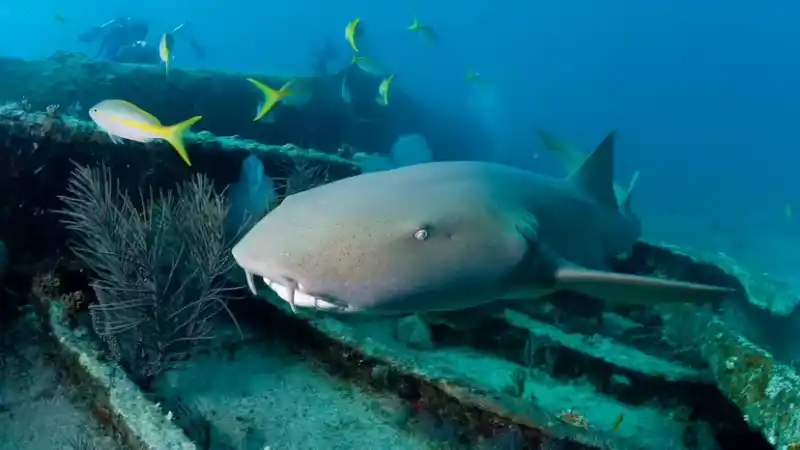
Relatively high frequency species : nurse sharks (mostly docile), reef sharks (grey reef/blacktip reef/Caribbean reef sharks), and a small number of bull sharks (more aggressive).
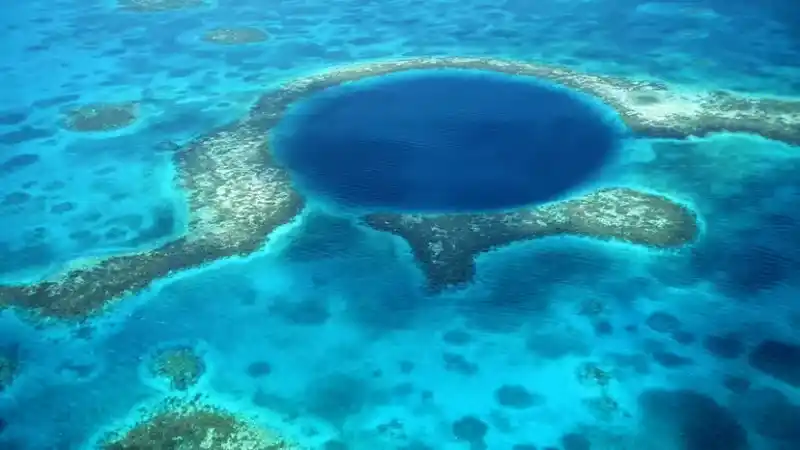
Typical dive sites : Blue Hole, the area around Half Moon Caye, and the edges of outer reefs and trenches such as Ambergris Caye.
Risk management : Choose boat operators that strictly prohibit feeding/fish guns → Avoid shark feeding groups → Dive/snorkel in groups → Remain calm and minimize splashing when entering and leaving the water.
Case Review (Insights, Not Intimidation)
Media reports indicate that an American teenage girl was surrounded and injured by two sharks during a recreational trip near Half Moon Island, ultimately undergoing multiple surgeries and amputation in her recovery. Such cases of severe injury are extremely rare , but they serve as a reminder that:
Behavioral triggers (the smell of blood in the water/fish carcasses/feeding) can alter a shark's original avoidance/indifference behavior;
High-temperature sea areas require stricter tour guide regulations and tourist self-discipline;
Rapid transport, hemostasis, and infection control after an incident are crucial (see the first aid checklist at the end of the article).
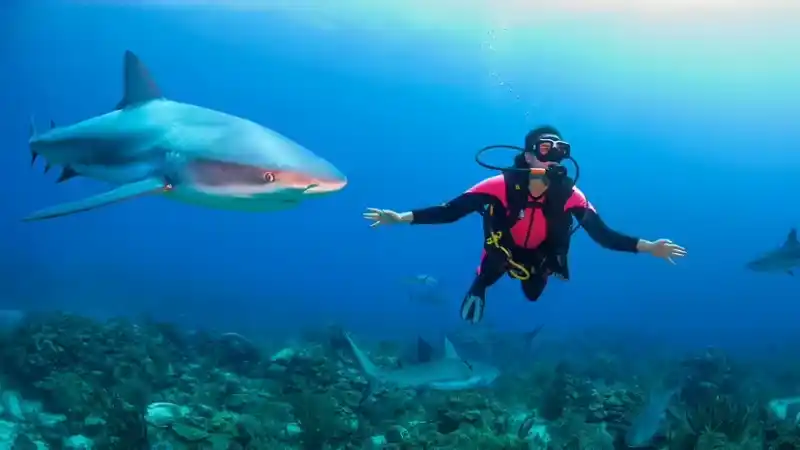
Common Sharks in Belize and Risk Profiles
| Species | Typical temperament | Frequency during tours | Risk to people | Triggering factors |
|---|---|---|---|---|
| Nurse Shark | Generally docile, benthic | Very common (also seen at snorkeling spots). | Low | Accidental contact/close-range feeding competition |
| Caribbean reef shark/grey reef shark | vigilance, territoriality | Outer reefs and drop-off points are common | Low to Medium | Harpoon hunting, the smell of blood, chasing schools of fish |
| Bull Shark | More aggressive, adaptable to muddy waters | Rare | Middle to High | Blood smell/murky water/nearshore bait accumulation |
Note: Individual and situational differences are significant. The vast majority of learning to dive coexist peacefully with sharks; risks are mostly related to human-induced triggers.
Risk classification of dive sites and activity scenarios (practical application)
Low risk : Regular daytime boat dives/snorkeling without feeding; good visibility; no game carried.
Medium risk : Dusk/night diving; poor visibility/strong currents; large fish feeding season; photographers following the fish while it is hunting.
High risk : speargun hunting and towing prey back to the boat; baiting/feeding diving/"shark feeding experience"; dense crowds and violent splashing at the surface.
Is Belize still a good place for diving?
It's definitely suitable . Hundreds of thousands of tourists dive/snorkel in Belize every year, and the probability of being bitten is extremely low . However, it should be treated as a natural risk similar to "swimming in a bay with jellyfish" or "hiking in the mountains with bears": respecting the rules, choosing compliant operators, and exercising self-discipline will minimize the risk.
Things to know before you go: Compliance and store selection checklist
Refuse to feed/bait diving : Choose boat operators who have written prohibitions against feeding sharks or throwing fish entrails/fish baskets.
Fish gun ban : If you insist on using a fish gun, it must be done only in legal areas and independently . The catch must be immediately put on the boat and isolated . Never mix with recreational groups in the waters .
Ask about safety procedures : Does the onboard briefing cover shark encounter handling, separation, and bleeding control ? Are hemostatic bandages, emergency oxygen, and communication equipment provided?
Dive guide ratio : **≤6:1** for open waters; **≤4–5:1** for deep dives/strong currents on outer reefs.
Boatman reputation : Check if there are "shark feeding check-in" marketing activities; prioritize operators with scientific research cooperation/conservation organization partners .
Swimming with Sharks: 10 Rules of Conduct (Do/Don't)
Do
Travel in groups and stay close to the guide ; avoid going alone or straying from the group.
Move smoothly, minimizing splashing and slapping ; remain upright or horizontal and observe calmly.
Slimming down the lines : Camera arms/accessories do not extend outwards, and hands and feet are kept close together to reduce the "prey silhouette".
If you see a school of fish suddenly scatter or hear rapid "clicking" sounds as they feed, reduce water disturbance, move closer to the reef , and if necessary, evacuate from the water/board a boat .
Night dive/murky water: Point your flashlight downwards to avoid shining it directly into the shark's mouth and eyes.
Don't
Do not feed the sharks, do not throw away fish scraps , and do not participate in the "shark feeding experience".
Swim back to the boat without carrying or hanging bloody prey nearby.
Do not chase, block, or touch; do not ride nurse sharks (it is illegal and dangerous).
Avoid splashing or kicking on the water for extended periods to prevent creating the signal of an "injured prey".
Do not blindly cross into deep waters or trenches when visibility is poor or currents are strong.
Emergency treatment and personal first aid (suitable for divers and snorkelers)
In water:
Maintain visual contact and communication with your companions , and slowly evacuate to the side of the ship or the leeward side of the reef;
If bleeding occurs, elevate the limb and apply pressure to the wound to temporarily stop the bleeding;
The crew deployed ladders/ropes to prioritize the evacuation of the injured.
On the ship:
Direct pressure to stop bleeding (thick dressing + bandage); tourniquet if necessary (record the time).
Rinse and clean the wound (with plenty of clean water/sterile saline), then cover with a sterile dressing;
Fluid resuscitation/warming/oxygen administration (if equipment permits);
Get to a hospital as soon as possible : Contact the nearest medical facility and monitor for allergies/shock during transport.
Recommended items to bring (by the tour leader/ship crew) : hemostatic dressings and elastic bandages, tourniquets, sterile saline/water, adhesive bandages/gauze, antibacterial ointment, disposable gloves, thermal blankets, walkie-talkies/satellite communication devices, and emergency oxygen.
Planning your Belize sea voyage: A practical guide
Best seasons : Dry season (roughly November–May) with more stable visibility; Rainy season with localized reduced visibility but fewer people.
Visibility and tides : The outer reef and blue hole are significantly affected by tides and wind direction . Avoid windows with strong winds/high waves .
Insurance : Diving-specific insurance (including medical and evacuation coverage); keep the operator's invoice and itinerary for claims purposes.
Environmentally conscious habits : Choose reef-safe sunscreens; avoid touching corals and large marine life; eat snacks back on the ship.
FAQ
Q: Is diving in the Blue Hole more dangerous?
A: The Blue Hole is mostly a deep-diving/drop environment , and the main challenges come from depth, nitrogen load, light, and navigation; shark encounters are not common. Just follow your diving qualifications, the guide route, and ascent control .
Q: Aren't nurse sharks supposed to be very docile? Why would they bite?
A: During feeding/competition for food , the animal may accidentally bite due to food competition; or it may bite in self-defense when touched or pressured by humans. Not feeding or touching the animal almost eliminates these risks.
Q: Will carrying an action camera attract sharks?
A: The camera itself isn't the problem; the issue lies in the flash and the fish splashing and chasing each other. Maintain a stable shooting distance, but don't get too close .
Conclusion
The seas of Belize are worth visiting countless times. Remember: do not create a bloody smell, do not feed the animals, and do not be reckless . By clearly defining the boundaries between humans and marine life , you can keep "rare events" in the news and "stunning underwater scenery" in your memories.