Introduction : Blue butterflies, with their metallic blue sheen and highly reflective powder, are the most eye-catching figures on grasslands, forest edges, and coastlines. This article selects nine representative "blue butterflies," covering the Americas, Europe, and Asia, providing information on appearance identification, distribution and habitat, host plants, viewing seasons, and conservation points for each species, as well as photography and butterfly-watching tips.
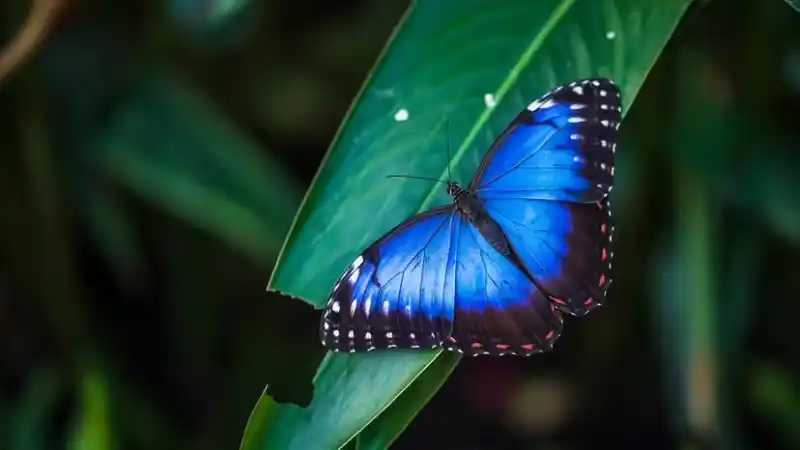
1) Blue Morpho (genus name Morpho )
Key features : Electric blue upper wing surface with black trim; wingspan approximately 13–18 cm. Females are darker in color.
Distribution and habitat : Understory and forest edges of tropical rainforests in Central and South America; flies during the day, its blue light "flickers" during flight.
Diet/Host : Adults prefer decaying fruit and sap; larvae mainly feed on legumes, etc.
Best viewing season : Year-round (tropical), most active after rain and on sunny days.
Observation tips : When perching, it often camouflages itself on the tree trunk with the back of its wings covered by brown eyespots . It is necessary to observe the "blue flash" at the moment of its take-off and landing.
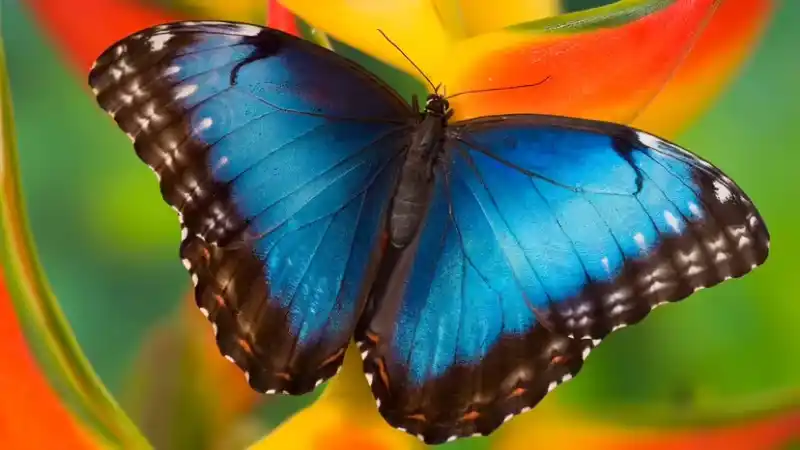
2) Fender's Blue ( Icaricia icarioides fenderi )
Key features: Appearance : Male butterfly is sky blue , female butterfly is brownish with white spots; wingspan is about 2.5 cm.
Distribution and habitat : Willamette Valley, Oregon, USA ; dependent on lupine grasslands.
Host : Lupins are the sole food source for egg laying and larvae .
Conservation priorities : Extremely dependent on specific habitats ; conservation efforts should focus on grassland management, invasive plant control, and lupin restoration.
Observation tips : Find well-sunlit areas of lupin communities; if there is no flowering period, pay attention to the plant strips left from the previous year.
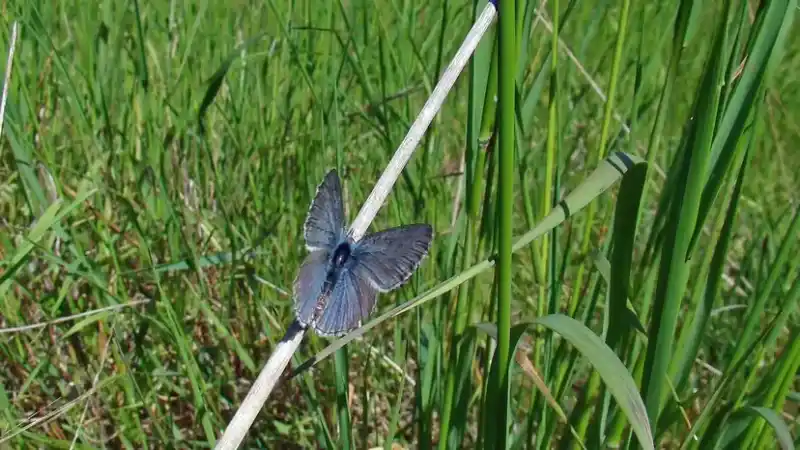
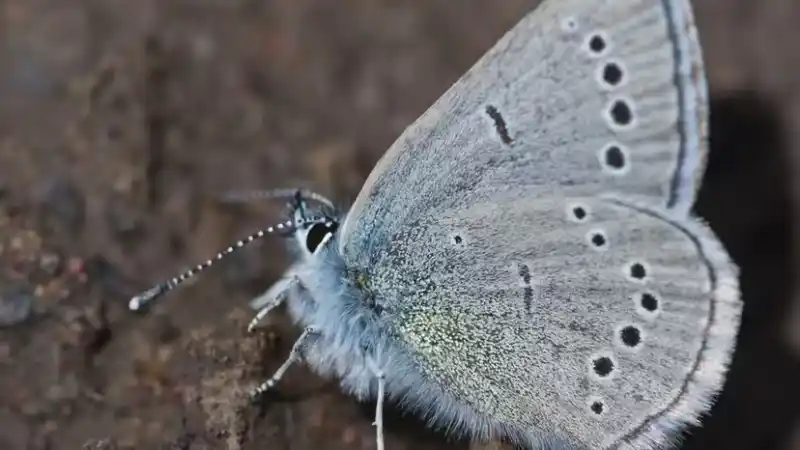
3) Silvery Blue ( Glaucopsyche lygdamus )
Key features: appearance : silvery-blue sheen on top, neat black spots on the back of the wings; small size.
Distribution and habitat : Open grasslands/sandy areas in North America.
Host plants : mostly legumes/Polygonaceae , with significant regional differences.
Viewing season : One generation per year, mostly flying together in late spring to early summer .
Observation tips : When the wind is light and there are plenty of flowers, it is easier for them to stop and collect nectar around noon .
4) Common Blue ( Polyommatus icarus )
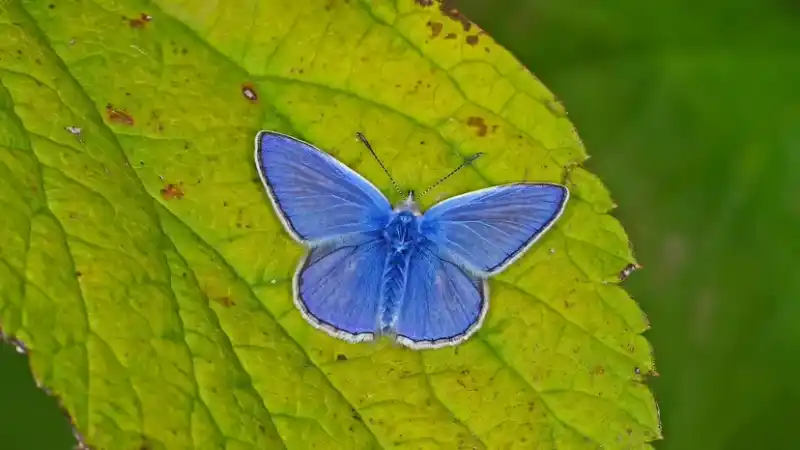
Key features : Male butterflies are bright sky blue with fine black edges; female butterflies are mostly brown with orange moon spots ; common but not "ordinary".
Distribution and habitat : Widely distributed from Europe to West Asia; found in meadows, roadsides, and abandoned land .
Host : Leguminosae (such as clover, trefoil, etc.).
Viewing season : Multiple generations overlap, appearing continuously from late spring to autumn .
Observation tip : Couch together in the grass before dusk to facilitate close-up photography.
5) Eastern Tailed-Blue ( Cupido comyntas )
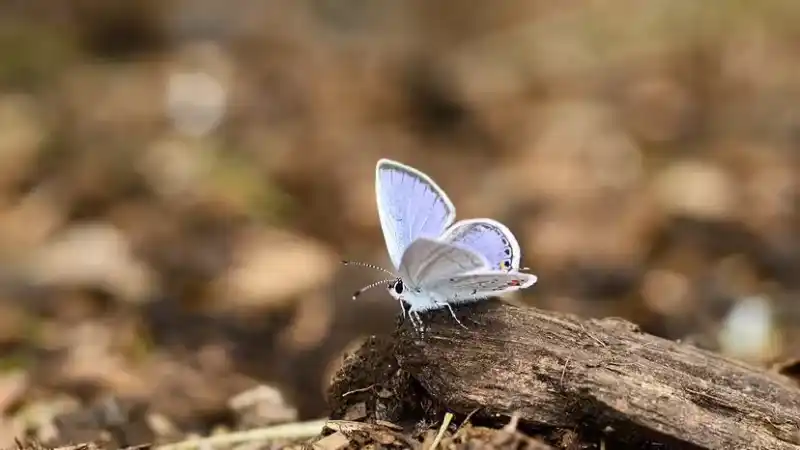
Key features: Appearance : Hindwings have small " tail-like projections "; male butterflies are blue on top, while female butterflies are grayish-blue; black spots are clearly arranged on the back of the wings.
Distribution and habitat : Widely distributed in North America; can be found in lawns, roadsides, and urban green spaces .
Hosts : Various legumes .
Best time to visit : Spring to summer when most peaks are visible.
Observation tips : They often perch near low-growing flowering plants, so it's best to approach them without worrying about footsteps .
6) Karner Blue ( Plebejus samuelis )
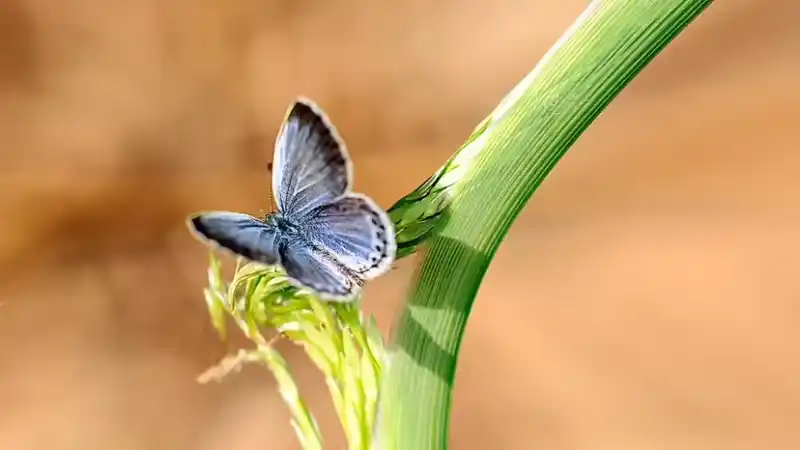
Key features : Male butterfly is bright blue, female butterfly is brownish-blue; wingspan is about 2.5 cm.
Distribution and habitat : Northeastern/northern United States , edge of sandy pine forests and sandy grasslands .
Host : Wild lupins are the only food source; bimodal generation (spring and summer).
Key conservation points : Typical habitat specificity ; restoration through controlling shrubland formation and maintaining open sandy areas and lupin communities.
Observation tips : Check local monitoring/open days for protected areas , and follow the trails to reduce trampling.
7) Adonis Blue ( Lysandra bellargus )
Key features : Male butterfly is pure sky blue with fine white edges; female butterfly is brown.
Distribution and habitat : Southern European limestone/chalkstone grasslands .
Host plants : mostly legumes such as alfalfa .
Viewing season : regional and multi-generational; grazing intensity/mowing intensity directly affects the number.
Observation tip : Searching for "blue dots" on low, barren slopes with concentrated flower blooms is most effective.
8) Boisduval's Blue (related groups such as Icaricia icarioides )
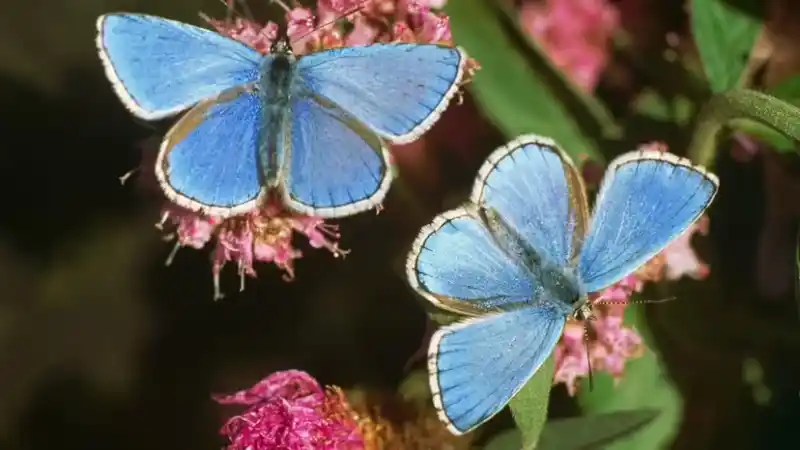
Key features : Male butterfly is pale blue with white tassels ; female butterfly is brown.
Distribution and habitat : Coastal and mountainous areas of the western United States ; active in open areas near host plants.
Host plants : mainly legumes/lupins .
Best time to visit : Spring and Summer.
Observation tips : Prioritize searching for flowers on sunny slopes and along road edges.
9) Green-underside Blue ( Glaucopsyche alexis )
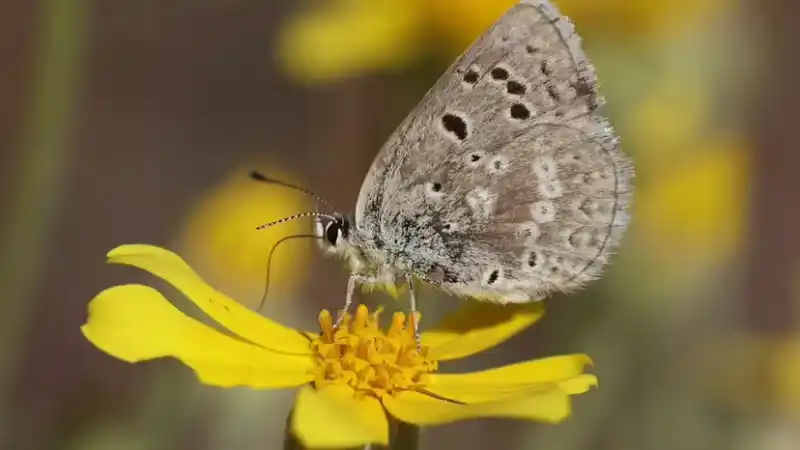
Key features: Appearance : The back of the wings has a light green/greenish-blue base color, with the male butterfly having a blue base and the female butterfly having a brownish base; from a distance, the "blue-green contrast" is striking.
Distribution and habitat : Europe to West Asia; sunny meadows .
Host : Prefers legumes.
Best time to visit : Springtime is the peak season.
Observation tips : Shoot blue backgrounds with front lighting and green backgrounds with side or backlighting for a more three-dimensional effect.
Tips for butterfly watching and photography
Lighting : Side lighting in the early morning/afternoon can highlight metallic blue , while strong midday light can easily cause overexposure.
Approach : Slowly approach the butterfly from behind and above ; wait for the opportune moment when it is collecting nectar or sunbathing .
Do not disturb : Avoid trampling on host plants (especially lupins, etc.), do not catch or net them for "group photos".
Record : Capturing the patterns on the back of the wings, the host plant, and the general appearance of the environment helps in species identification and data uploading.
Why is blue so intensely blue? (Science Extension)
Blue butterflies rely more on structural color than pigment. The micro-nano structure of their wing scales selectively interferes with and scatters blue light, thus creating a color-changing/flickering effect at different angles (especially in Morpho butterflies).
Protection and Participation
Vegetation management : Maintain open grasslands and low-intensity grazing/mowing , and preserve host plant belts.
Intrusion control : Remove invasive weeds and shrubs that provide strong shade, allowing lupins and other plants to receive sunlight .
Citizen Science : Upload observations to a local platform (time, location, host, photo), supporting the monitoring database.
Quick Lookup Table (Simplified Version)
| Species | Typical blue | Key features | Host/Key Points | Viewing window |
|---|---|---|---|---|
| Blue Morpho butterfly | Electric Blue Blockbuster | Large wingspan, a "blue flash" in the forest. | Adult scavengers | Tropical year-round |
| Fender Blue Grey Butterfly | Sky blue | Dependent on lupins | Single host, habitat exclusive | Spring and Summer |
| Silver Blue Butterfly | Silver-blue cool light | Neat black spots on the back of the wings | Leguminosae/Polygonaceae | Late spring and early summer |
| Common Blue-gray Butterfly | Bright sky blue | Male blue, female brown-orange spotted | Leguminosae broad spectrum | Late spring to autumn |
| Eastern Grey Butterfly | Blue to grayish blue | The tail protrusion is obvious | Leguminosae | Spring and summer peaks |
| Cana Blue Grey Butterfly | Bright Blue | Twin Peaks Generation | wild lupine only | spring+summer |
| Adonis Blue | Pure sky blue | chalky grassland experts | Leguminosae (saddle alfalfa) | Multiple generations, viewing pastoral pressure |
| Boisduva Blue | light blue and white tassels | West Coast/Mountains | Leguminosae/Lupinus | Spring and Summer |
| Green-based blue-gray butterfly | Blue back green | Blue and green contrast from a distance | Leguminosae | spring |