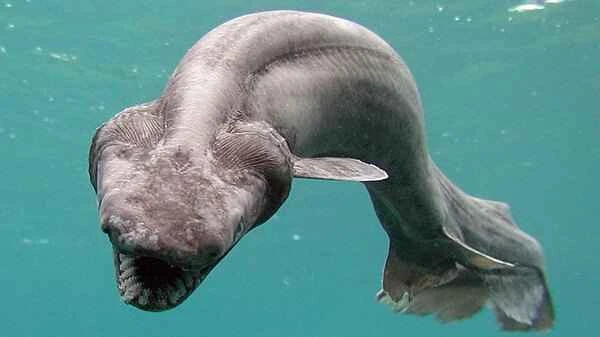
In the animal kingdom, the nose is not merely an organ for smell and respiration; it is also a crucial tool for many animals to adapt to their environment, hunt, mate, and even survive. Different ecological environments have spurred the evolution of diverse noses, allowing animals to gain an advantage in the complex natural world. From the long, slender snout of the crocodile to the hypersensitive whiskers of the star-nosed mole, and the "tusks" of the narwhal, the unique structure of each nose reflects the wisdom of evolution. Today, we will delve into the fascinating noses of these animals , analyzing their nasal structures and functions to explore the amazing evolutionary mysteries of nature.
1. Gavialis gangeticus: A long-nosed underwater hunter.
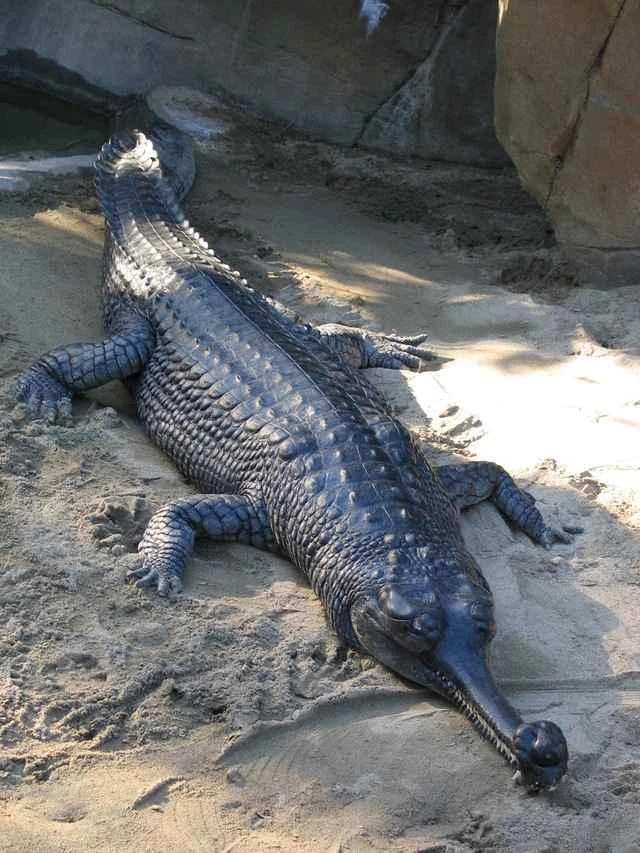
Proboscis crocodiles belong to the crocodile family. Their snouts are extremely long and slender, a shape adapted for high-speed underwater swimming and perfectly suited for catching fish. Their narrow snouts not only reduce water resistance but also enhance the precision of their bite, making them excellent underwater hunters.
Characteristics and functions of the nose :
The long and narrow structure reduces water resistance, increases swimming speed, and is adapted for underwater predation.
Highly sensitive nostrils : help them detect prey underwater.
Unique nostril placement : The nostrils are located above the snout, allowing it to breathe at the surface of the water with only its nostrils exposed, while its body remains hidden underwater, which is advantageous for ambushing and hunting.
Ecological role :
The proboscis crocodile is mainly distributed in the Ganges River basin of South Asia. Due to habitat destruction and human interference, it has become an endangered species. Its unique nose is an important evolutionary feature that allows it to adapt to underwater life.
2. Narwhal (Monodon monoceros): Its tusks are used for sensing its environment and courtship.
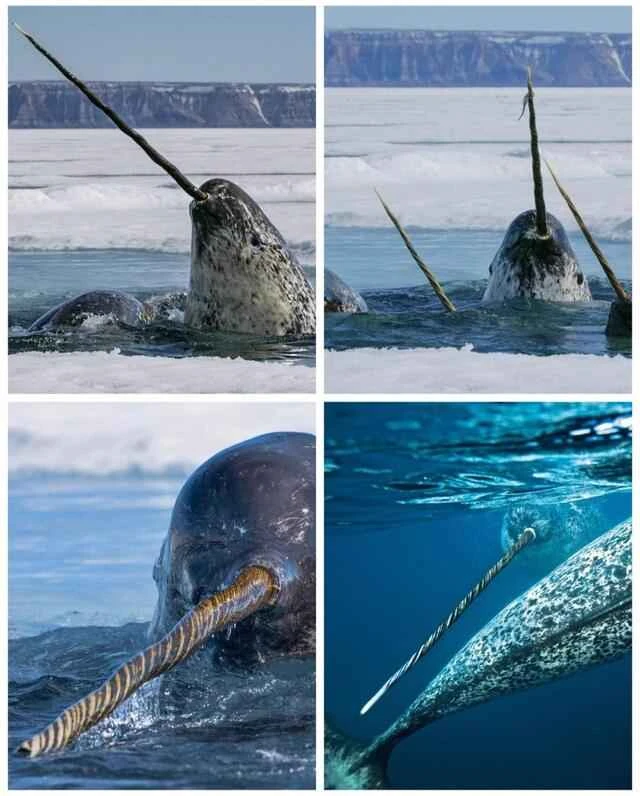
Narwhals are marine mammals native to the Arctic region. Their "horn" is actually a spiral-growing tusk extending from their left upper canine tooth. This unique nasal structure gives them distinctive ecological adaptations to extreme environments.
Characteristics and functions of the nose (for teeth) :
Sensing the environment : The tusks contain millions of nerve endings that can sense changes in the environment such as water temperature, pressure, and salinity, helping them navigate in the icy waters of the Arctic.
Courtship competition : Male narwhals typically possess longer tusks, which may be an important criterion for females when choosing a mate. During mating season, male narwhals may compete for females by clashing their tusks together.
Hunting aid : Although narwhals primarily rely on echolocation to find prey, their tusks can also be used to intimidate or disturb prey.
Ecological role :
Narwhals primarily prey on squid, fish, and crustaceans, and the evolution of their tusks remains a hot topic of scientific research.
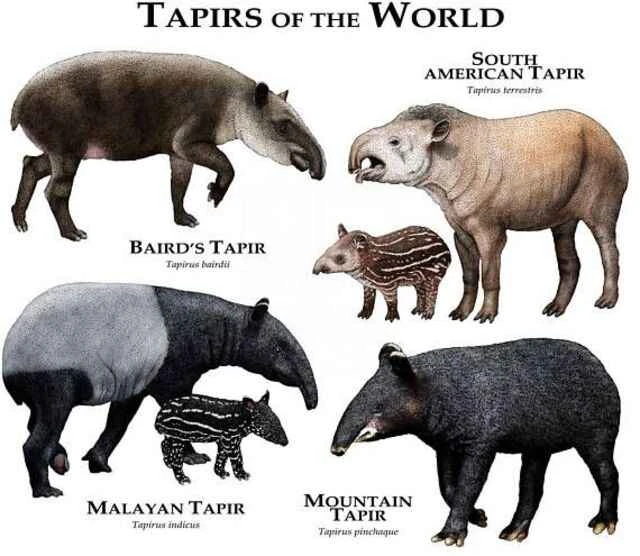
3. Tapir: Short, flexible nose, adapted for foraging.
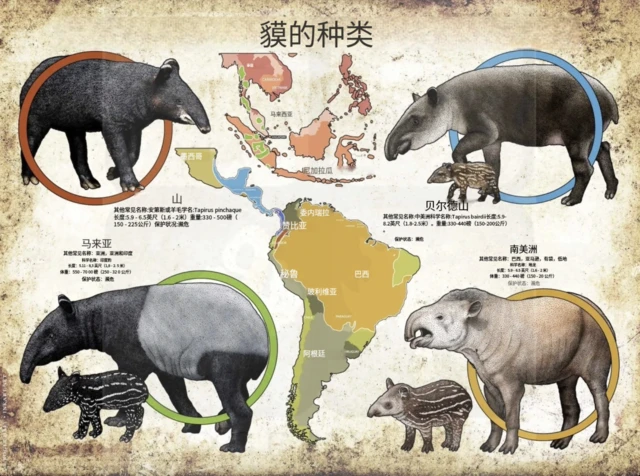
Tapirs are large mammals that live in tropical rainforests and swamps. They have short but exceptionally flexible noses, which resemble miniature elephant trunks.
Characteristics and functions of the nose :
Highly flexible : The tapir's nose can curl like a finger, helping it to grasp food such as leaves and fruits.
Enhanced sense of smell : Living in densely forested areas, tapirs have a well-developed sense of smell, which allows them to find food and even detect the presence of predators.
Foraging in water : Tapirs can breathe underwater using their noses while searching for aquatic plants.
Ecological role :
As an important herbivore in the rainforest, the tapir plays a crucial role in seed dispersal and ecosystem maintenance.
4. Star-nosed mole (Condylura cristata): A subterranean hunter with extremely sensitive nasal whiskers.
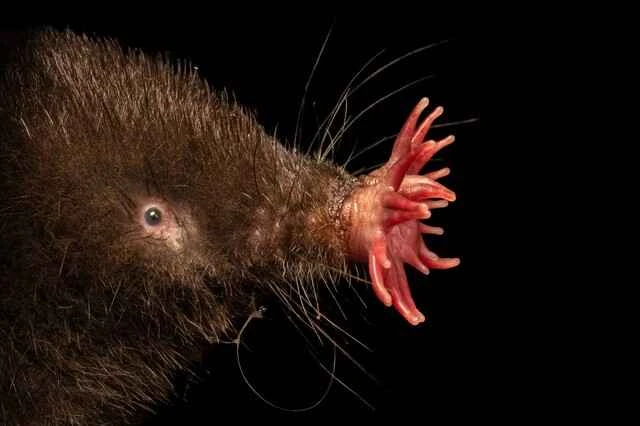
The star-nosed mole is a small mammal that lives in North American wetlands. Its nose is one of the most sensitive sensory organs in the world, with 22 fleshy whiskers covering the tip of its nose, forming a unique "star" shape.
Characteristics and functions of the nose :
Superior sensory abilities : The star-nosed mole's nasal whiskers contain more than 100,000 sensory nerves, far more than the tactile nerves on a human finger, enabling it to detect and identify prey in 0.02 seconds.
Efficient foraging : They feed on earthworms, insects, and crustaceans, using their tentacles to quickly scan the ground to determine whether their prey is edible.
Dark environment adaptation : Because star-nosed moles live in dark underground environments, they rely almost entirely on their nose whiskers to navigate and find food.
Ecological role :
Star-nosed moles play an important role in the ecosystem by digging into the ground to improve soil aeration and control insect populations.
5. Proboscis monkey (Nasalis larvatus): The male's large nose may be related to attracting mates.
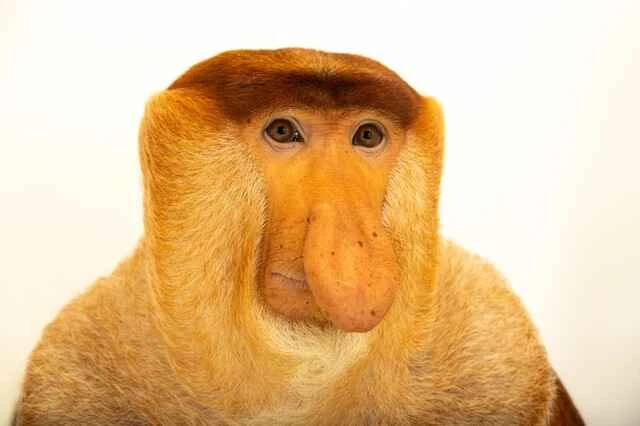
Proboscis monkeys are known for their distinctive large noses, especially the males, which droop downwards and can reach up to 7 centimeters in length. This exaggerated nose is extremely rare among primates, and scientists believe its function is closely related to sexual selection.
Characteristics and functions of the nose :
Attracting females : Studies have shown that female proboscis monkeys are more likely to choose males with larger noses as mates, which may be related to the males' health and genetic advantages.
Vocal resonance : A large nose may enhance the resonance of the voice, making the male's calls more penetrating in the group, which helps to assert territory and attract females.
Ecological role :
Proboscis monkeys mainly inhabit mangrove wetlands in Southeast Asia. Their noses not only affect their social behavior but may also play a key role in vocal communication.
6. Sawshark (Pristiophoridae): A hunting prodigy with a saw-shaped snout.
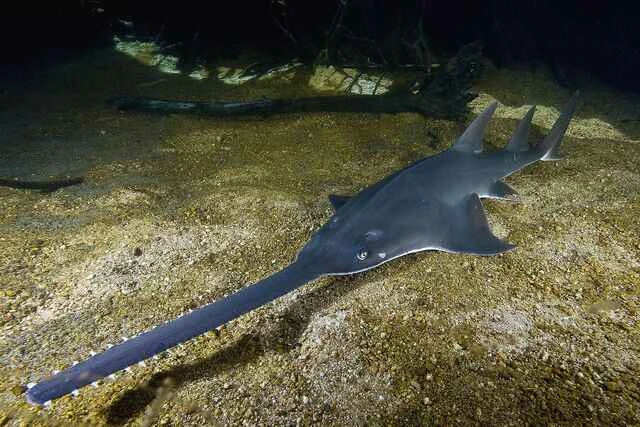
The snout of the sawshark extends into a "saw" with sharp, tooth-like projections, a unique nasal structure that makes them extremely aggressive hunters.
Characteristics and functions of the nose :
Detecting prey : Sawsharks are equipped with electroreceptors in their noses, which can detect weak electrical signals emitted by prey, allowing them to accurately lock onto targets even in murky waters.
Weapon of attack : When prey gets close, the sawshark will swing its "saw" rapidly to stab or kill the prey.
Ecological role :
Sawsharks are important predators in marine ecosystems, maintaining ecological balance by controlling fish and invertebrate populations.
7. Anteater (Myrmecophaga tridactyla): An insect predator with an extra-long snout.
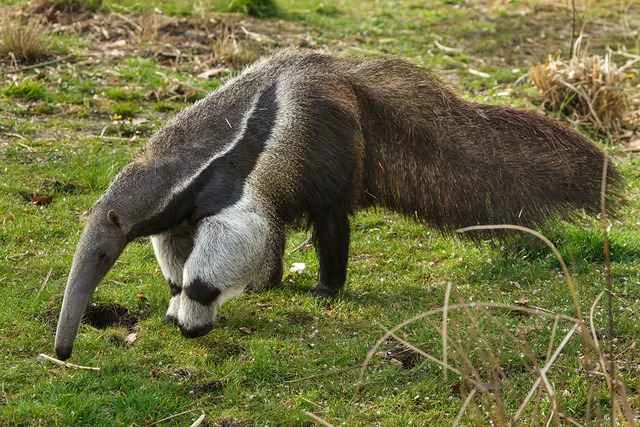
Anteaters are known for their long, thin noses and tubular mouths. They primarily feed on ants and termites, and their noses play a crucial role in this process.
Characteristics and functions of the nose :
Slender structure : Anteaters have long, slender noses without teeth, allowing them to easily reach deep into ant nests and termite mounds to obtain food.
Highly sensitive sense of smell : Despite poor eyesight, its sense of smell is extremely sensitive, enabling it to detect the scent of ants from a distance, helping it find food sources.
Feeding adaptation : Anteaters have tongues that can reach up to 60 centimeters in length and are covered in mucus, allowing them to quickly lick up large numbers of ants, swallowing more than 150 insects per minute.
Ecological role :
Anteaters play a vital role in controlling ant and termite populations, helping to maintain ecological balance.
8. Platypus (Ornithorhynchus anatinus): A strange creature that uses electro-optical sensing to find food.
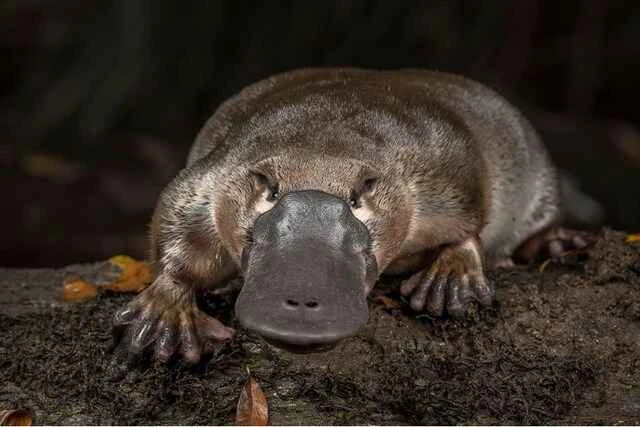
The platypus is a monotremate mammal unique to Australia, known for its flat, beak-like nose, a feature that gives it a unique advantage when foraging underwater.
Characteristics and functions of the nose :
Flat, beak-like nose : like a duck's beak, suitable for digging in the mud and sand in the water to find food.
Electrosensory ability : The platypus's nose is covered with electrosensors, which can detect the weak electrical signals of prey in the water, allowing it to accurately capture prey even in dark or murky waters.
Underwater feeding strategy : Platypuses close their eyes and ears underwater and rely entirely on the electrosensory function of their noses to forage for food. They mainly prey on small invertebrates, such as worms, insect larvae, and crustaceans.
Ecological role :
Platypuses are important members of river ecosystems, and their foraging behavior helps maintain the balance of aquatic life.
9. Tube-nosed Fruit Bat (Nyctimene spp.): A flyer with enhanced sense of smell due to its tubular nostrils.
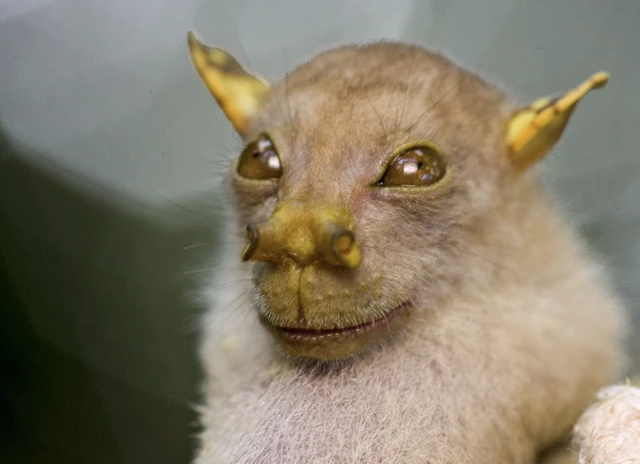
The tube-nosed fruit bat is a fruit-eating bat with distinctive tubular nostrils. This adaptive evolution enhances its sense of smell, giving it an advantage when foraging at night.
Characteristics and functions of the nose :
Tubular nostrils : may help to enhance the concentration of scents, allowing fruit bats to sniff out ripe fruit more effectively.
Powerful sense of smell : Compared to other bats, the tube-nosed fruit bat has a more acute sense of smell, enabling it to search for fruit over long distances at night.
Foraging strategy : They use their sense of smell to locate target fruits, then fly to the fruit tree and use their sharp teeth to bite through the peel and eat.
Ecological role :
Tube-nosed fruit bats play an important role in tropical rainforest ecosystems, helping plants disperse seeds and promoting natural forest regeneration.
10. Saiga tatarica: Its large nose helps it adapt to extreme environments.
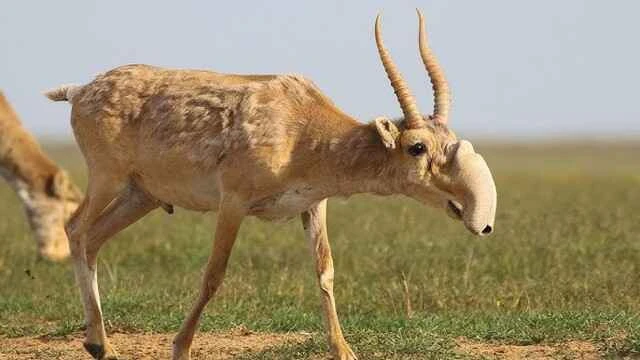
The saiga antelope is an antelope that lives in the steppes and semi-desert regions of Central Asia. Its nose is uniquely curved downwards and is relatively large, an evolutionary feature that helps it adapt to extreme climates.
Characteristics and functions of the nose :
Air filter : The saiga antelope has a complex structure inside its nasal cavity that can filter dust and sand particles from the air, adapting it to dry, windy environments.
Temperature regulation : In summer, the nose helps cool the air we inhale, while in cold winter, it warms the air entering the lungs and reduces heat loss.
Adaptation to harsh environments : This nasal structure enables them to survive in extreme climatic conditions, especially in the arid steppes and deserts of Central Asia.
Ecological role :
Saiga antelopes are an important member of grassland ecosystems, but their numbers are declining due to poaching and habitat loss, and they are now listed as an endangered species.
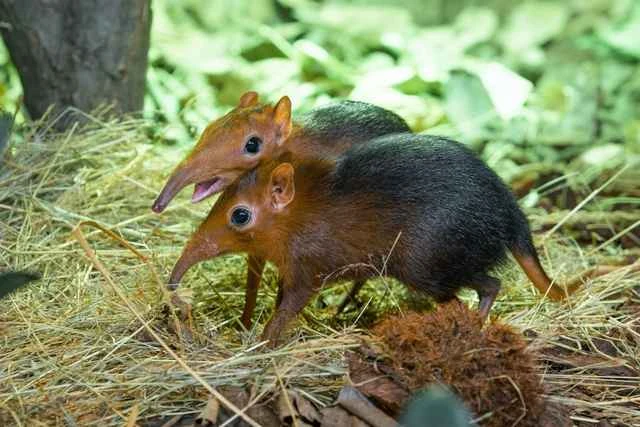
11. Elephant shrew (Macroscelidea): Its long, flexible nose is adapted for high-speed foraging.
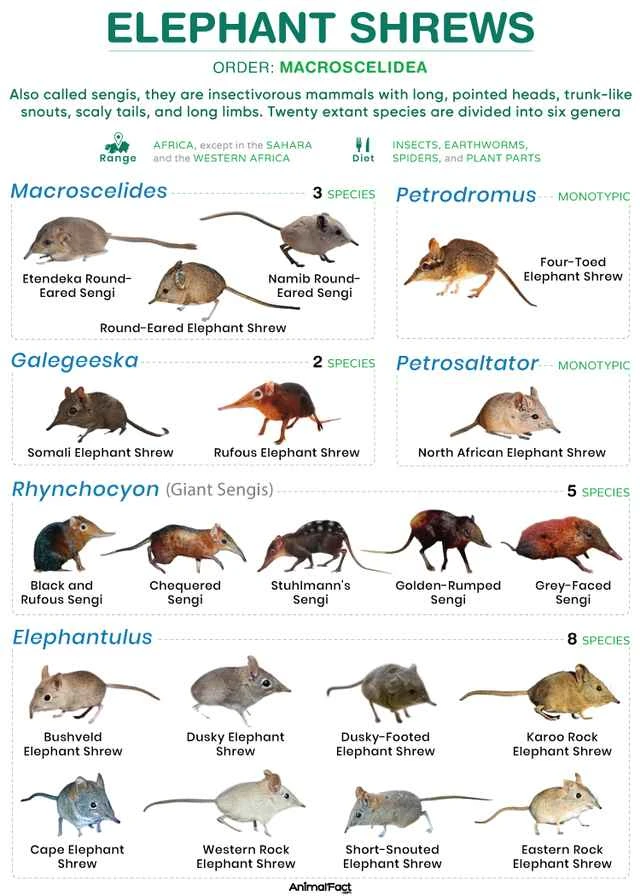
Elephant shrews are a group of small mammals, but despite having "shrew" in their name, they are not related to true moles. Their long, flexible noses give them efficient foraging abilities.
Characteristics and functions of the nose :
High flexibility : The elephant shrew's trunk can move as flexibly as an elephant's trunk, helping it to quickly find insects and other small invertebrates on the ground.
Superior sense of smell : The nose can detect faint odor signals, giving it an advantage in foraging.
High-speed running adaptation : Elephant shrews can run extremely fast and move quickly in jungle or grassland environments, while using their trunks to scan the ground to find food.
Ecological role :
Elephant shrews play a crucial role in maintaining the balance of insect populations, and they are also an important food source for many predators.
12. Elephantnose Fish: Uses its unique "elephant trunk" to explore its environment.
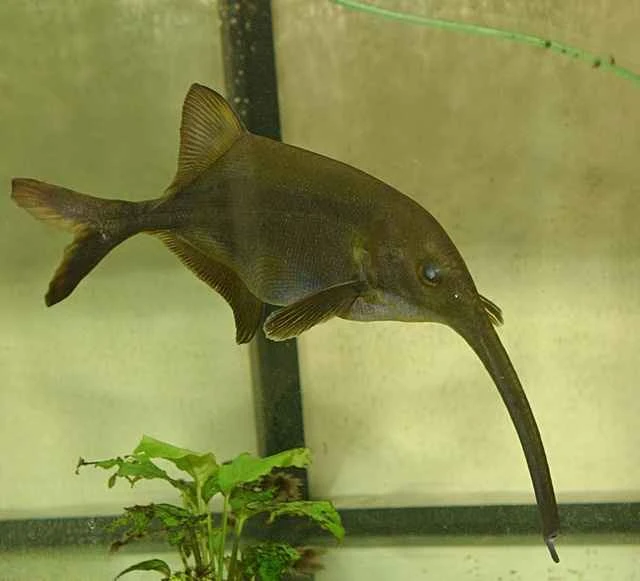
The elephantnose fish ( Gnathonemus petersii ) is a freshwater fish that lives in African rivers and is named for its distinctive long, trunk-like protrusion. This "elephant trunk" not only has a unique appearance but also plays a crucial role in environmental adaptation and foraging.
Characteristics and functions of the nose :
Long and flexible protrusions : The elephantnose fish's nose is shaped like an elephant's trunk and is covered with sensitive electroreceptors that can sense electric fields in the water.
Electro-induction ability : Elephantfish are experts in "electric detection," using their electro-induction abilities to detect their surroundings, find food, and avoid obstacles. Like electric eels or electric fish, they can obtain information about their environment by emitting weak electrical signals.
Foraging and Communication : This special nose not only helps elephantfish sense food in the water, but also helps them locate prey, especially other small invertebrates, in murky water. Their noses constantly wave as they forage, scanning the water with the precision of tentacles.
Ecological role :
Elephantfish play a predator role in the ecosystem, controlling the population of small aquatic invertebrates and maintaining the balance of the aquatic food chain. They also provide researchers with opportunities to study the behavior of electrosensitive organisms.
13. Hammerhead Shark: The secret weapon of its hammer-shaped head
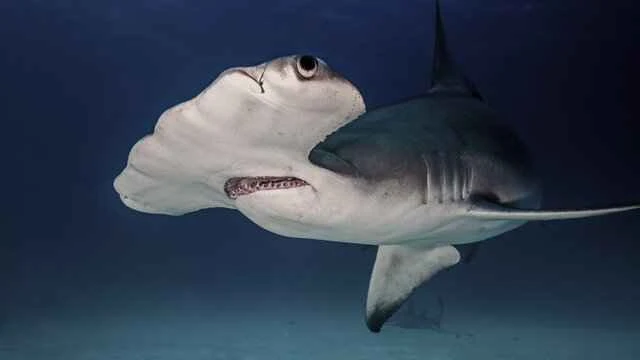
Hammerhead sharks ( Sphyrnidae ) are renowned for their unique head shape. Unlike other sharks, their heads are T-shaped or hammer-shaped, a structure known as the "cephalofoil." This distinctive head is not only impressive but also plays a vital physiological role in the hammerhead shark's survival and hunting.
Characteristics and functions of the nose :
Unique head structure : The hammerhead shark's head is broad and flat, forming a hammer shape. This structure not only enhances its sense of smell but also provides excellent electro-sensing capabilities.
Smell and sensory abilities : Hammerhead sharks have two nostrils located at opposite ends of their heads. Their noses are more sensitive than those of other sharks, enabling them to detect faint chemical signals in the water, which is crucial for them to locate prey when hunting.
Electrosensory organs : The sides of the hammerhead shark's head are also covered with electrosensory organs (called "cranial electrosensors"), which can detect weak electric fields inside prey, especially in creatures rich in electrical signals such as fish and other aquatic animals.
Enhanced field of vision : The hammerhead head structure also gives the hammerhead shark a wider field of vision, allowing it to observe a larger area at the same time, especially when hunting, it can better identify its surroundings and prey.
Ecological role :
Hammerhead sharks are among the top predators in the ocean, primarily feeding on fish, squid, and crustaceans. Their specialized heads help them hunt more efficiently in the deep sea and play an indispensable role in tracking prey.
In conclusion, the remarkable evolution of the nose has determined the survival strategies of living organisms.
From the anteater 's extra-long nose to the platypus 's electro-optical foraging method, and the saiga antelope 's air filter adapted to arid environments, each unique nose is a masterpiece of animal evolution. In nature, noses are not only used for smelling and breathing, but also for foraging, sensing the environment, regulating temperature, and even playing a crucial role in courtship and hunting.
These animals with their unique noses perfectly demonstrate life's extraordinary adaptability to its environment. Whether underwater, on land, or in the air, animals have evolved distinctive nasal structures to find their own way to survive in complex ecosystems. These amazing creatures make us even more amazed by the boundless wisdom of nature.
If you're interested in unusual animal noses , feel free to leave a comment and discuss! What other animals do you know that have special noses?