Throughout Earth's long history, many enormous and astonishing prehistoric megafauna once lived. These behemoths dominated their respective ecosystems, from elephant-sized sloths on land to prehistoric megalodon sharks in the ocean; their existence was truly remarkable. However, with climate change and human expansion, these prehistoric giants eventually went extinct.
This article will introduce 10 amazing prehistoric megafauna, revealing their size, ecological habits, and reasons for extinction.
1. Megalodon (Otodus megalodon) – the largest marine predator in history.
Period of existence: Miocene to Pliocene (approximately 23 million to 3.6 million years ago)
Size: It can reach a maximum length of 18 meters (60 feet), which is three times the size of a living great white shark.
Key features: Extremely strong bite force, specifically designed to prey on whales.
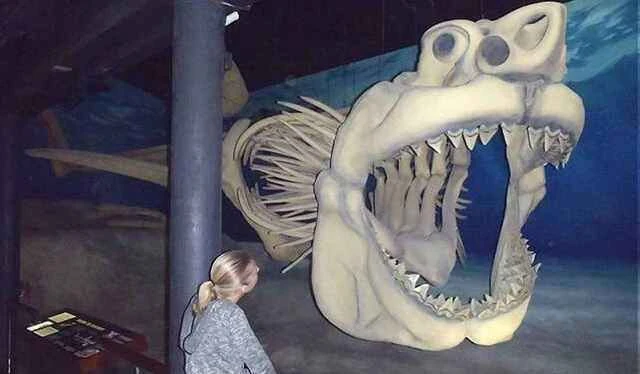
The megalodon was one of the most powerful predators in marine history, possessing serrated teeth over 7 inches (18 cm) long. Studies suggest its bite force even surpassed that of any living animal (Wroe et al., 2008). However, global cooling and declining prey resources may have contributed to its extinction (Pimiento & Clements, 2014).
2. Paraceratherium – the largest terrestrial mammal in history.
Period of existence: Oligocene epoch (approximately 34 million to 23 million years ago)
Size: Shoulder height 5-6 meters, weight up to 20 tons
Key features: Hornless rhinoceros with a long neck, suitable for feeding on leaves at high altitudes.
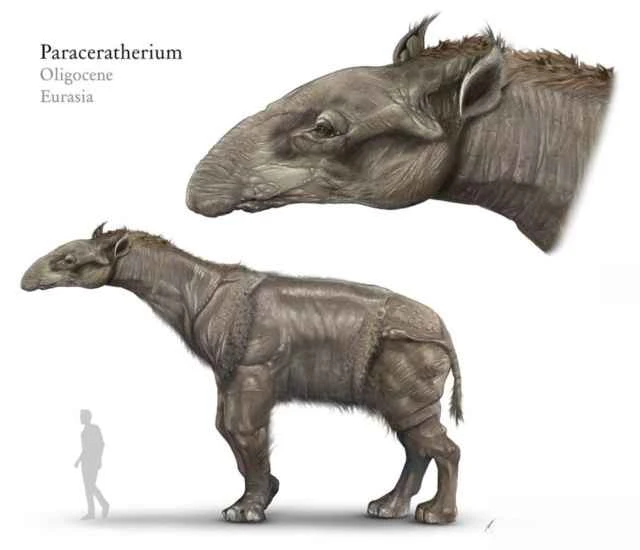
Giant rhinoceroses were the largest land mammals in Earth's history, even larger than modern elephants. They lacked rhinoceros horns but possessed a long neck and flexible lips similar to those of a giraffe, and fed on leaves (Prothero, 2013). Despite their enormous size, they eventually went extinct due to climate change and habitat loss.
3. Argentavis magnificens – the largest flying bird in history.
Period of existence: Pliocene epoch (approximately 6 million years ago)
Size: Wingspan up to 7 meters, weight approximately 70 kilograms
Key characteristics: Flies by gliding, and may feed on carrion.
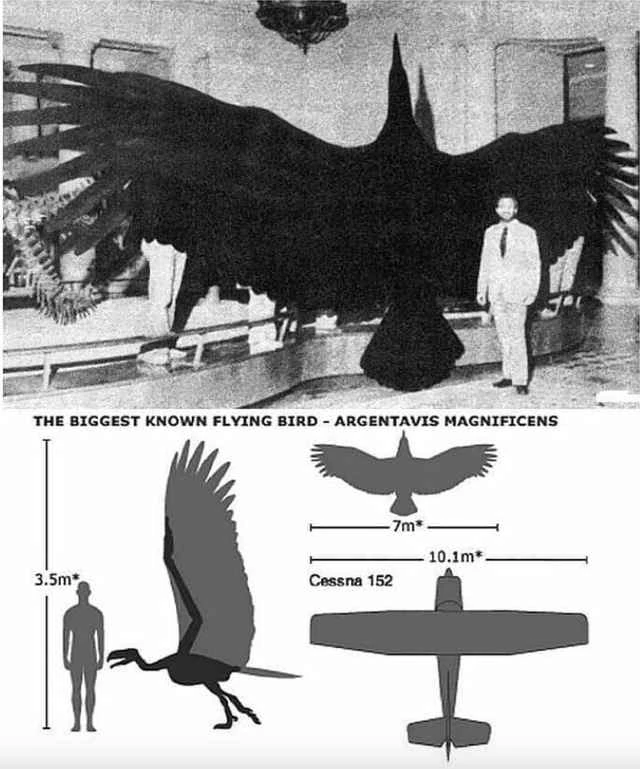
The Argentavis magnificens was the largest bird to ever fly on Earth, with a wingspan exceeding that of any modern bird, comparable to a small glider. Research suggests it primarily relied on thermals for gliding and may have fed on scavenging like a vulture (Palmqvist & Vizcaíno, 2003).
4. Megatherium – a sloth larger than an elephant.
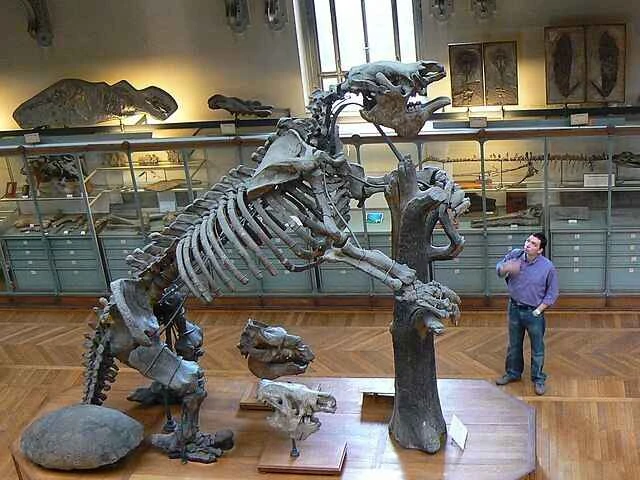
Period of existence: Pleistocene epoch (approximately 2.6 million to 10,000 years ago)
Size: Up to 6 meters long and weighs 4 tons
Key characteristics: Slow-moving, powerful forelimbs and long claws
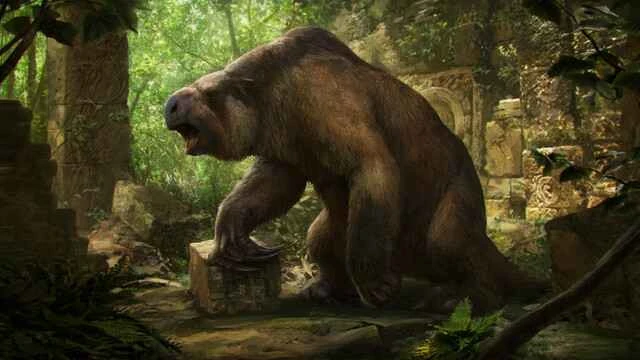
The giant ground sloth was the largest sloth on Earth, roughly the size of an elephant. Despite its slow movement, it possessed exceptionally strong forelimbs, which it used for protection with its massive, curved claws. Research suggests that human hunting may have been the primary cause of its extinction (Fariña et al., 2013).
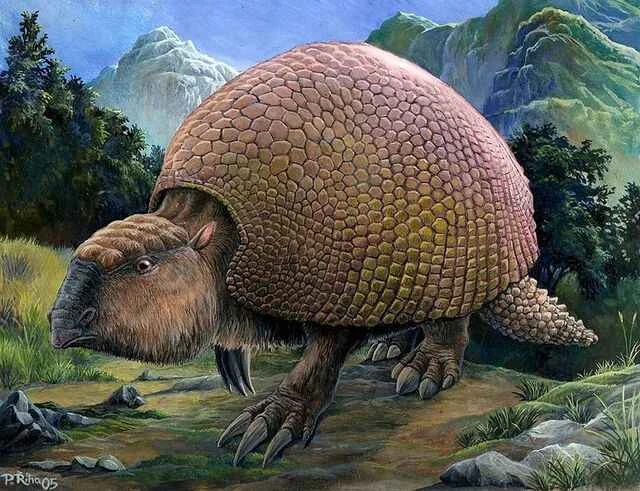
5. Glyptodon – A moving, living armored vehicle.
Period of existence: Pleistocene epoch (approximately 2.5 million to 10,000 years ago)
Size: 3.3 meters long, weighing up to 900 kilograms
Key characteristics: Possesses a hard carapace; tail may have spikes.
Armored giants were ancient relatives of modern armadillos, with shells similar to turtles but more like armored vehicles. Their extinction may have been linked to human hunting and habitat change (Politis et al., 2016).
6. Andrewsarchus – The Mysterious “Giant Wolf”
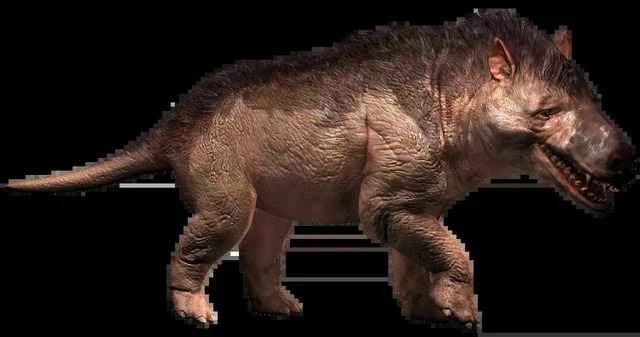
Period of existence: Eocene epoch (approximately 45 million years ago)
Size: The skull is up to 1 meter long, and the shoulder height is about 1.8 meters.
Key characteristics: Possibly omnivorous, with teeth adapted for chewing bones.
Andrius is one of the largest known terrestrial carnivorous mammals. Its enormous skull suggests that it may have been a scavenger or omnivore with a powerful bite (Osborn, 1924).
7. Daeodon – The most terrifying prehistoric wild boar
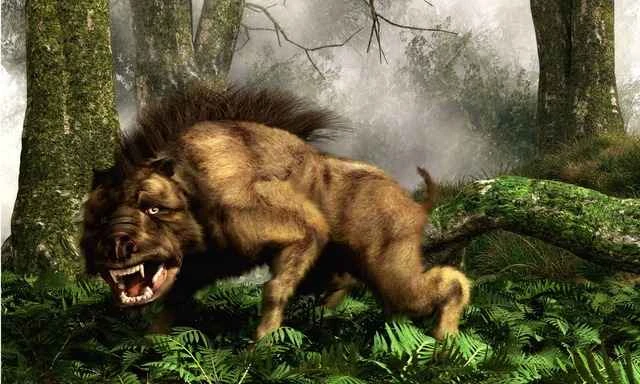
Period of existence: Oligocene to Miocene (approximately 29 million to 19 million years ago)
Size: 1.8 meters tall at the shoulder, weighing several hundred kilograms.
Key features: Huge head, sharp teeth
The hog is a large omnivorous animal that, due to its massive skull, may have been both a predator and a scavenger (Lucas et al., 2004).
8. Quetzalcoatlus – A pterosaur the size of an airplane.
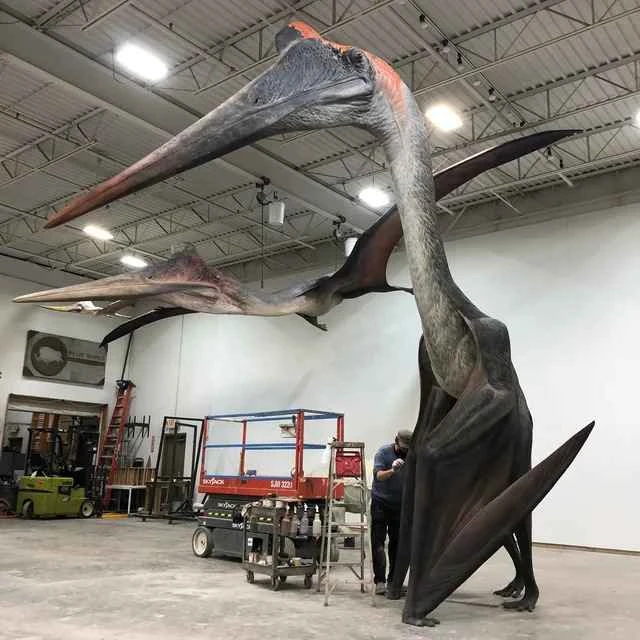
Period of existence: Late Cretaceous (approximately 70 million years ago)
Size: Wingspan 10-12 meters
Key characteristics: The largest flying reptile, likely preying on land.
Quetzalcoatlus is the largest known pterosaur. Although they were able to fly, research suggests they may have hunted more on land, similar to modern storks (Witton & Naish, 2008).
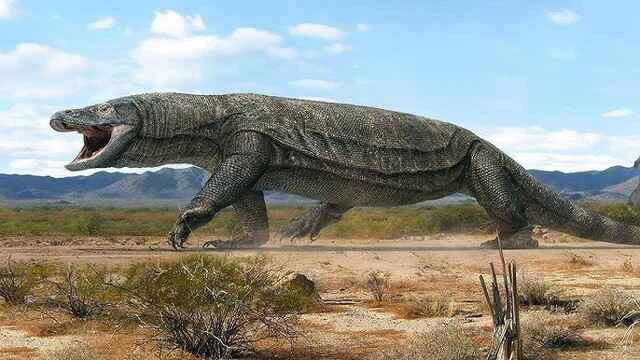
9. Monitor Lizard (Megalania, Varanus priscus) – A prehistoric monitor lizard with deadly venom.
Period of existence: Pleistocene epoch (approximately 2.5 million to 40,000 years ago)
Size: Up to 7 meters long and weighing 1.8 tons.
Key characteristics: May possess venom; preys on large mammals.
Monitor lizards are Australia’s most fearsome prehistoric predators, whose venom can cause prey to bleed and go into shock (Fry et al., 2009).
10. Giant beavers (Castoroides) – bear-sized rodents
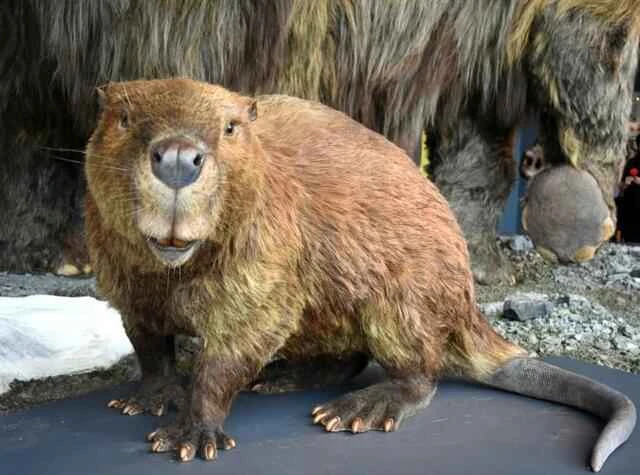
Period of existence: Pleistocene epoch (approximately 2.5 million to 10,000 years ago)
Size: 2.4 meters long, weighing up to 90 kilograms
Key characteristics: Not good at building dams; primarily feeds on aquatic plants.
Although giant beavers resemble modern beavers in appearance, research shows that their teeth are not suited for gnawing on trees, but rather for chewing aquatic plants (Harington, 1990).
Conclusion
These prehistoric behemoths once dominated the Earth, but due to climate change, human activity, and ecosystem shifts, they eventually disappeared. These extinction stories remind us of the crucial importance of protecting the rare animals that still exist today.
Which prehistoric behemoth is your favorite? Feel free to discuss in the comments!