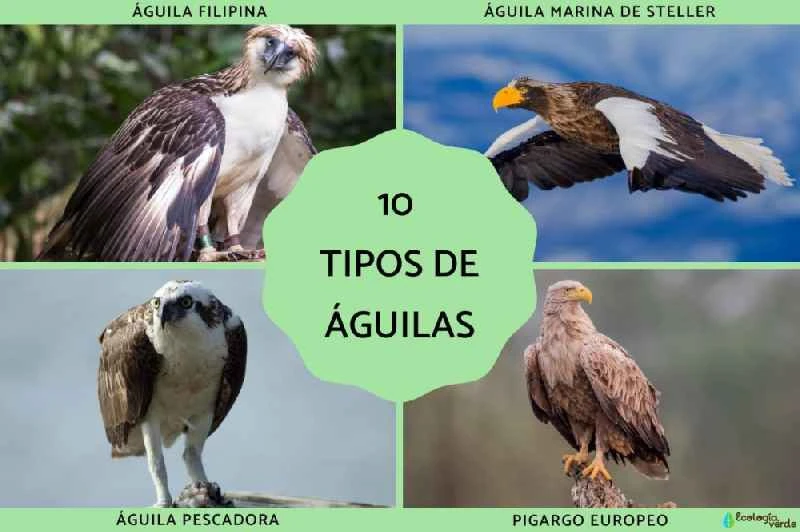
Among the different types of eagles, we found the harpy eagle (Harpia harpyja), the golden eagle (Aquila chrysaetos), the Philippine eagle (Pithecophaga jefferyi), the bald eagle or American eagle (Haliaeetus leucocephalus), and many other species. If you would like to learn more about the different types of eagles still in existence, please continue reading this interesting article in Green Ecology.
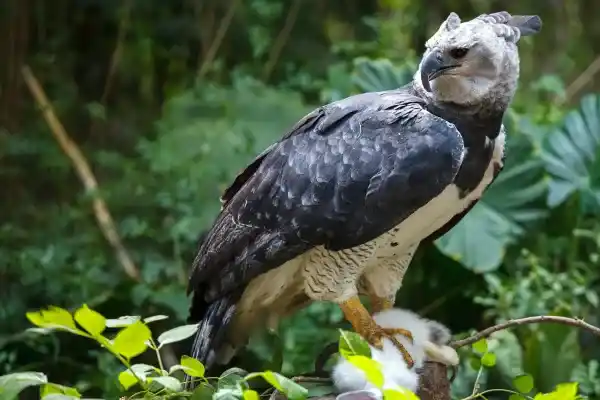
Horned Eagle
The harpyja (Harpia harpyja) is one of the world's most impressive birds, with a wingspan of up to 2 meters and a weight of up to 7 kilograms. It inhabits tropical and subtropical forests from southeastern Mexico to northeastern Argentina (excluding Chile). It primarily feeds on arboreal mammals such as monkeys, sloths, and raccoons, but also preys on terrestrial species such as armadillos and weasels. Due to its low reproductive rate, wide range, and habitat loss caused by human activity, it is a rare species with sporadic records.
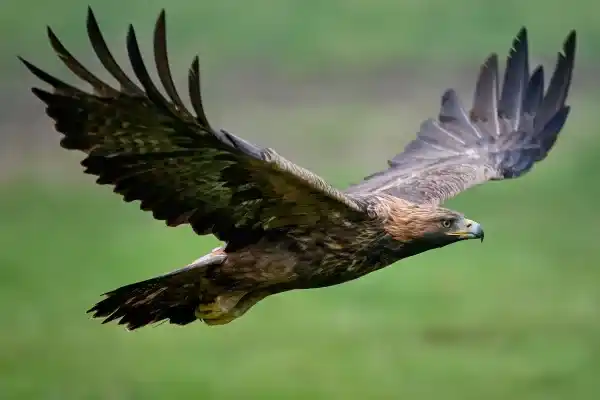
Golden Eagle
The golden eagle (Aquila chrysaetos) is a large, rock-dwelling raptor (with a wingspan of up to 2.3 meters) and the largest raptor on the Iberian Peninsula. It is distributed across Eurasia and the Northern Hemisphere of North America, with some populations also found in North Africa and southern Ethiopia. It builds its nests on rocks and in trees. Its diet is diverse, including mammals, birds, reptiles, and even carrion. Adults are dark brown with golden hues on the forewings, nape, and neck.
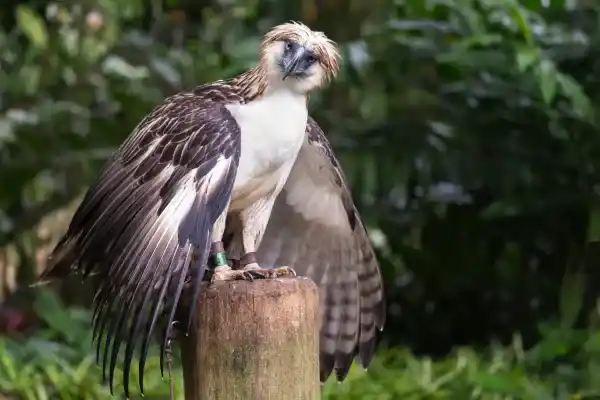
Philippine Eagle
The national bird of the Philippines, the Philippine eagle (Pithecophaga jefferyi), is endemic to the country and is the largest bird of prey in the Philippine jungles, as well as one of the largest tropical eagle species. Its distinctive crest makes it easily recognizable when roosting. Its primary prey is the Philippine flying lemur (Cynocephalus volans), but it may also feed on other mammals, birds, and reptiles. Unfortunately, according to the International Union for Conservation of Nature (IUCN), the species is critically endangered due to deforestation.
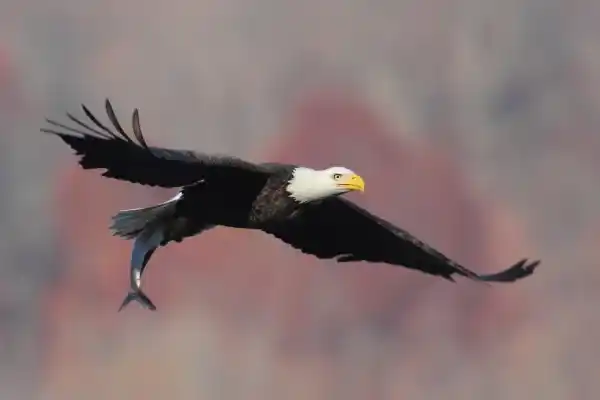
Bald eagle
The bald eagle (scientific name: *Haliaeetus leucocephalus*) is the symbolic bird of the United States. It inhabits a variety of environments across North America, from southern Canada to Baja California Sur and Sonora in Mexico. Adult bald eagles are easily recognizable by their dark brown bodies and white heads and tails. They primarily feed on carrion and fish, hunting near bodies of water. Their nests are among the largest of all bird nests, reaching depths of up to 4 meters and widths of up to 2.5 meters. Generally, they are solitary birds, roosting for long periods without moving.
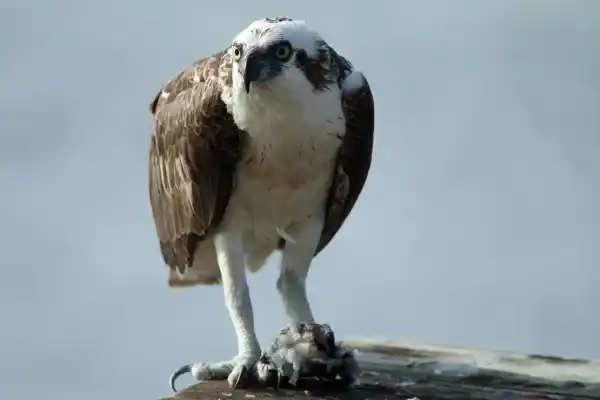
osprey
The osprey (Pandion haliaetus) has a wide distribution, found on every continent except Antarctica. As its name suggests, its diet consists mainly of fish. We often see it swooping down from high places, its legs outstretched, using its sharp talons to catch its prey. In flight, it is easily identifiable by its long, narrow tail and angular wings. Did you know that in South America, it migrates but does not nest?
Common Eagle
The common eagle (Morphnus guianensis) is a unique large eagle species in its genus, inhabiting the humid rainforests and lowland corridor forests of Central and South America. Smaller than the harpy eagle, it, like the harpy eagle, preys on mammals, birds, and some reptiles, and nests in trees. According to the International Union for Conservation of Nature (IUCN), it is listed as "Near Threatened" because its numbers are declining at a moderate rate due to habitat loss caused by deforestation and land-use change.

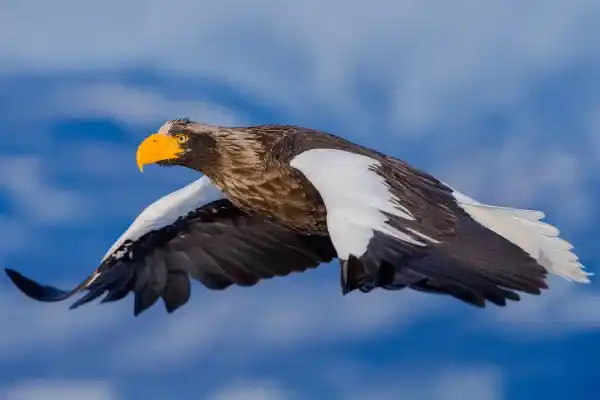
Steller's Sea Eagle
The sea eagle (Haliaeetus pelagicus), commonly known as the tiger eagle, is distributed along the western coast of the Bering Sea, extending south to the Gulf of Paul and the coastal areas surrounding the Sea of Okhotsk. In winter, it can reach as far south as Ussuriland, Korea, and Japan. It is one of the heaviest eagles, averaging 7.2 kg, and also one of the largest, with an average wingspan of 2.2 meters.
In Russia, hydropower projects, large-scale coastal and marine projects in the petrochemical industry, and logging activities are causing habitat alteration, threatening their survival. Industrial pollution of rivers, along with high concentrations of toxic compounds and heavy metals, are other threats.
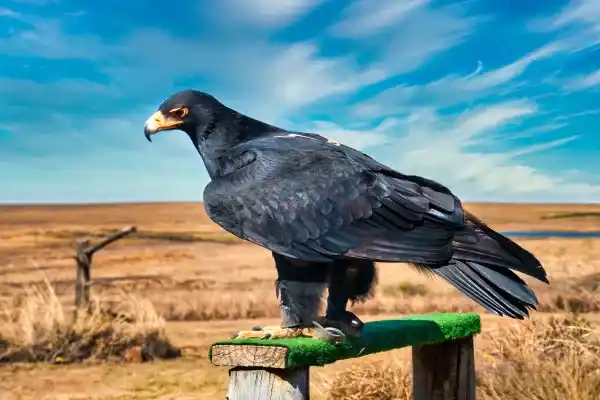
African Black Hawk
The African Black Eagle, Cape Eagle, or Verro Eagle (named after the French naturalist Édouard Verro) (Aquila verreauxii) is a bird of prey found in sub-Saharan Africa and the southern Arabian Peninsula. It typically nests in mountainous areas and primarily feeds on hyraxes (Procaviidae). Adults have dark plumage and a distinctive white "V" shape on their backs. They measure 75 to 96 centimeters in length and weigh 3 to 6.2 kilograms. Their wingspan can reach 2.5 meters.
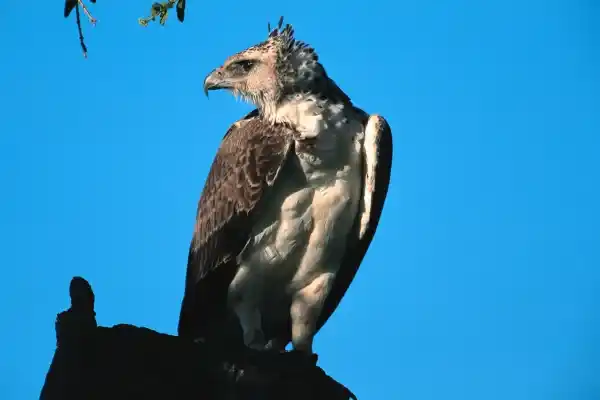
Wu Ying
The Great Eagle (Polemaetus bellicosus) is one of the largest eagle species in Africa and the sole representative of its genus. It is found in savannas, open woodlands, grasslands, and bramble thickets in central and southeastern Africa, with a wingspan between 188 and 227 centimeters. It is capable of catching prey the size of jackals or small antelopes. Unfortunately, it faces the danger of extinction due to direct persecution by farmers and other indirect threats such as electrocution and drowning in reservoirs.
White-tailed eagle
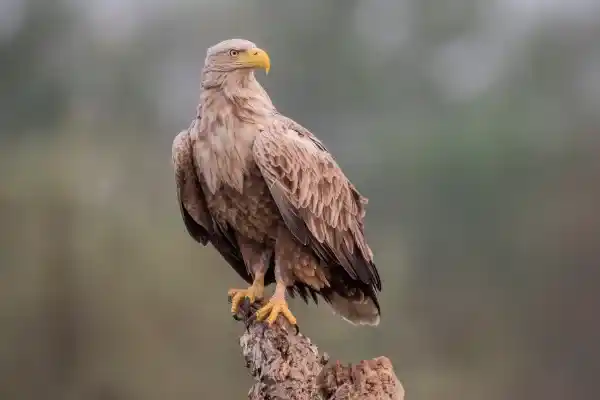
The white-tailed eagle, commonly known as the white-tailed sea eagle, is the largest bird in Europe. Adults have brown bodies, while their heads and necks are lighter in color. Their tails are white, and their beaks and legs are yellow. White-tailed eagles nest near large open lakes, coastlines or valleys, cliffs, or large forests in northern, temperate, and tundra regions. They feed on vertebrates such as fish, mammals, and especially birds. They migrate primarily north and east of their breeding range, winter in continental Europe and southern Asia, but settle in other parts of the world.