When it comes to speed, the ocean is home to some of the fastest animals on Earth. From streamlined predators to agile swimming masters, these marine creatures have evolved extraordinary abilities to propel themselves at incredible speeds through the water. This article will take you through the fastest animals in the ocean , compare the speeds of various creatures, and reveal the science behind their astonishing speeds.
Who is the fastest animal in the ocean?
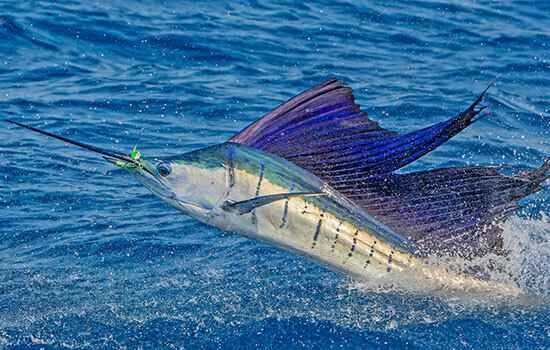
With speeds reaching up to **68 miles per hour (110 kilometers per hour)**, the sailfish is the fastest animal in the ocean. Known as the "cheetah of the sea," its speed is unmatched among marine creatures.
Main characteristics of sailfish
**Streamlined body:** Reduces water resistance.
**Fins:** The long, retractable dorsal fin (“flag”) enhances agility.
**Muscle strength:** Specialized muscle fibers can rapidly release energy.
The black marlin is also a strong contender for the title of king of speed, swimming at speeds of up to 50 miles per hour (80 kilometers per hour) , making it another speed champion in the ocean.
The fastest animals in the ocean
Here are some of the fastest creatures in the ocean and their top speeds:
| animal | Top speed | Features |
|---|---|---|
| swordfish | 68 mph (110 km/h) | Streamlined design, explosive swimming ability |
| Black marlin | 50 mph (80 km/h) | Known for his long-distance, fast swimming |
| swordfish | 48 mph (77 km/h) | A slender body helps with fast swimming |
| Mako Shark | 45 mph (72 km/h) | Top predator, agile and swift |
| Bluefin tuna | 43 mph (69 km/h) | Skilled at long-duration, high-speed swimming |
| Orcas (killer whales) | 34 mph (56 km/h) | Powerful tail thrust for efficient hunting |
| Dolphin (common dolphin) | 37 mph (60 km/h) | Intelligent and skilled at swimming |
| Wahu (Oahu) | 47 mph (75 km/h) | Known for its rapid bursts of speed |
| Yellowfin tuna | 40 mph (64 km/h) | Close relatives of the bluefin tuna |
| Skipjack tuna | 40 mph (64 km/h) | Agile predators in the flow zone |
Why are sailfish and other marine animals so fast?
Marine life possesses astonishing speeds thanks to its unique evolutionary adaptations:
**Streamlined Body:** Most fast swimmers have a hydrodynamic shape that reduces drag.
**Powerful muscles:** Fast-moving fish like sailfish and black marlin possess special muscle fibers that enable them to generate explosive power.
**Fin and tail design:** A crescent-shaped tail (like that of a tuna) provides efficient propulsion.
**Behavioral strategy:** Fast swimming is crucial for escaping predators or catching prey and is an important survival trait.
Speed comparison of marine animals
**Sailfish vs. Black Marlin:** Although the sailfish is the fastest, the black marlin has an advantage in long-distance swimming.
**Shark vs. Tuna:** Mako sharks' agility and speed allow them to easily catch their prey, while tuna are better at long-distance, high-speed navigation.
**Mammals:** Although orcas and dolphins are not as fast as fish, they make up for their lack of speed by using intelligence and teamwork.
The Science Behind Ocean Speed
Marine life is able to achieve such high speeds thanks to the combined effects of physics and biology:
**Buoyancy and Density:** The density of water requires animals to minimize drag, which explains the evolution of streamlined bodies.
**Fin Mechanics:** The pectoral fins act as stabilizers, while the caudal fin generates thrust.
**Muscle Composition:** Fast swimmers have a high proportion of red and white muscle fibers, which balances endurance and explosive power.
Educational significance and rapid evolution
**Evolutionary adaptation:** Over millions of years, fast-moving marine organisms have evolved survival features such as sharp fins and slender bodies.
**Speed and Hunting:** Speed is crucial for predators like the mako shark, helping them catch agile prey.
**Human Inspiration:** Studying ocean speeds has provided inspiration for designing hydrodynamic vessels and other technologies.
Speed comparison on land, sea, and air
How does the speed of a sailfish compare to the speed champions on land and in the air?
Cheetah (land): up to 75 mph (120 km/h) , slightly faster than the sailfish.
Peregrine Falcon (in the air): Its dive speed can reach 240 mph (386 km/h) , making it the king of speed in all environments.
Frequently Asked Questions about Ocean Speed
Q: Why is the sailfish the fastest?
A: The sailfish's streamlined body, powerful muscles, and retractable fins give it unparalleled speed.Q: Can dolphins swim faster than sailfish?
A: Dolphins are fast, but they lack the explosive speed of sailfish or marlin.Q: How fast can a tuna swim?
A: Bluefin tuna can reach speeds of up to 43 mph (69 km/h), making them one of the fastest fish.
A tribute to the King of Ocean Speed
The fastest animals in the ocean showcase nature's wisdom and adaptability. From the lightning-fast sailfish to the exceptionally endurance of the bluefin tuna, these marine creatures have made their underwater world their own.
Understanding their speed is not only amazing, but it also inspires advancements in technology and science. So, the next time you gaze at the ocean, remember these speed champions hidden beneath the waves!