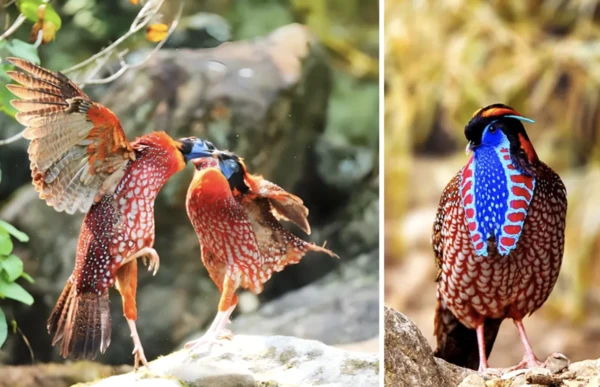
The Temminck's Tragopan, scientifically known as *Tragopan satyra* , is one of the most dazzling members of the pheasant family. Renowned for its vibrant plumage, unique behavior, and high-altitude habitat, this bird is considered a jewel of the Himalayas. This article will comprehensively explore the Temminck's physical characteristics, habitat, diet, behavior, conservation status, and cultural significance.
Red-bellied Tragopan Overview
Scientific name : Tragopan satyra
Common names : Red-bellied Tragopan, Red-eared Tragopan
Family : Phasianidae
Order : Galliformes
Conservation Status : Near Threatened (IUCN Red List)
The red-bellied tragopan is renowned for its striking colors and unique courtship rituals. Its English name, "Satyr," originates from Greek mythology and refers to a mythical creature of the forest, highlighting its forest-dwelling nature.
External features
Male red-bellied tragopan
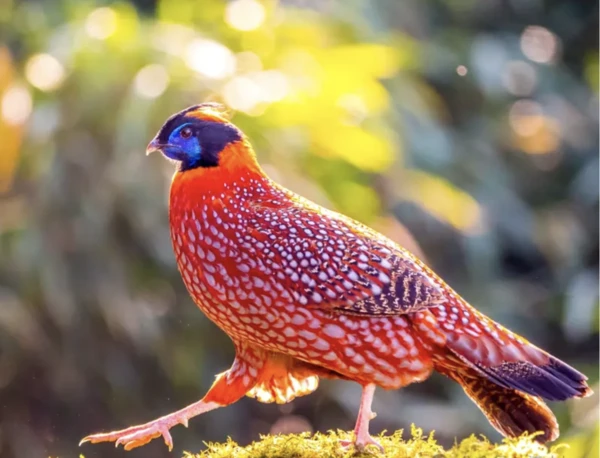
Feathers : The male bird has fiery red and orange feathers, adorned with white spots edged in black.
Facial features : Bright blue facial skin and fleshy, horn-like protrusions above the eyes, which are particularly noticeable during courtship.
Size : Approximately 68 cm (27 inches) in length; males are larger than females.
Female red-bellied tragopan
Appearance : The female's plumage is mainly brown and greyish-brown, providing excellent camouflage.
Sexual differences : Females are smaller and lack the bright colors and ornamentation of males.
Distribution and Habitat
Geographical distribution
The red-bellied tragopan is mainly distributed in the Himalayan region, including Bhutan, Nepal, northern India, Tibet , and parts of Myanmar.
Habitat
Altitude : Primarily inhabits high-altitude mountainous regions between 2,400 and 4,200 meters (7,900 to 13,800 feet).
Ecological environment : Prefers temperate forests, especially areas with dense shrubs and rhododendron bushes.
The red-bellied tragopan relies on undisturbed forest ecosystems and is one of the important species for measuring the ecological health of the Himalayas.
Diet and foraging habits
Omnivorous diet
The diet of the red-bellied tragopan is diverse, including:
Plants : leaves, flowers, seeds, and berries.
Insects : Small invertebrates such as ants and beetles.
Foraging behavior
They mainly forage on the ground, searching for food on the forest floor, and sometimes also eat plants from shrubs and low trees.
Behavior and Reproduction
Courtship Ceremony
The red-bellied tragopan is known for its elaborate courtship display.
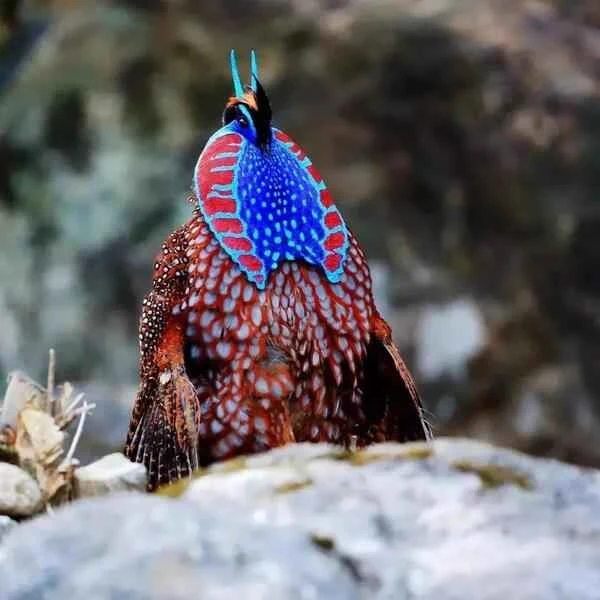
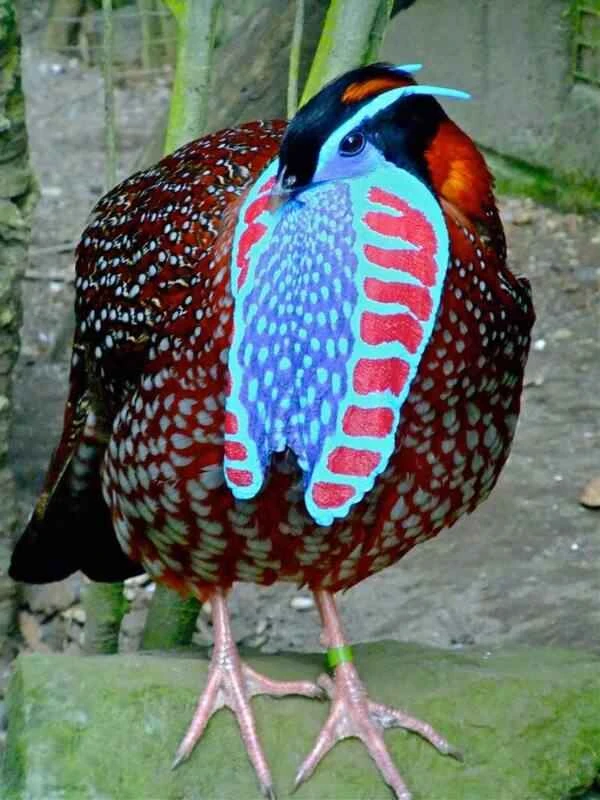
Horn-like projections and throat display : During the breeding season, the male inflates to display its blue fleshy horns and colorful patches on its throat, which are usually covered with intricate patterns.
Dance : The male bird performs a unique and rhythmic dance to attract the female.
Reproductive habits
Breeding season : The breeding season is from April to June each year.
Nest : The female bird builds her nest on the ground or in low trees using twigs, leaves and moss.
Number of eggs : Generally, 2 to 4 eggs are laid each time, and the incubation period is about 28 days.
social structure
Male birds are mostly solitary outside of the breeding season, while female birds may form small groups with their young.
Preserve the status quo
The red-bellied tragopan is listed as a near-threatened species , mainly facing habitat loss and hunting threats.
Threat factors
Deforestation : Logging and agricultural expansion have led to the reduction of its habitat.
Hunting : The red-bellied tragopan is a target for hunters because of its bright plumage.
Protective measures
Reserves : The red-bellied tragopan inhabits several Himalayan national parks and wildlife reserves.
Community awareness : Local projects are dedicated to educating the community about the importance of sustainable development.

Cultural and ecological significance
Symbol of biodiversity : As a flagship species in the Himalayas, its presence indicates the health of the forest ecosystem.
Cultural value : In some Himalayan communities, the red-bellied tragopan is revered for its beauty and symbolic significance.
Interesting facts about the red-bellied tragopan
Master of disguise : The female bird's mottled feathers blend perfectly into the forest floor, thus avoiding predators.
Mythological name : Its English name "Satyr" is related to a mysterious forest creature in Greek mythology, highlighting its captivating qualities.
Cold adaptation : It can survive in cold, high-altitude climates, demonstrating amazing adaptability.
The best place to observe the red-bellied tragopan
Recommended location :
Jigme Dorje National Park, Bhutan
Lantang National Park in Nepal
Kedarnath Wildlife Sanctuary, India
Best time to observe : Spring and early summer are the best times to observe the courtship displays of the red-bellied tragopan.
How to protect the red-bellied tragopan
Support conservation organizations : Donate to or participate in the activities of conservation organizations such as WWF and BirdLife International.
Promote ecotourism : Choose responsible tourism that respects wildlife habitats.
Spread awareness : Educate others about the importance of protecting the Himalayan ecosystem.
Why is it called the Red-bellied Tragopan?
The name itself is quite unique. "Satyr" comes from the forest spirit in Greek mythology, symbolizing a lively and mysterious nature, which perfectly matches the forest life of the red-bellied tragopan. "Tragopan" is the name of the pheasant family to which it belongs, referring to this type of brightly colored pheasant.
Its unique features
Stunning appearance
Vibrant colors : The male bird's feathers are predominantly bright red, dotted with white spots, and edged with black, resembling a work of art. Its blue facial skin further enhances its striking appearance.
The magical "horn" : When the male bird is courting, it will swell up a blue "horn" above its eyes. Although it is not an actual horn, it looks particularly strange and interesting.
A colorful "scarf" : During courtship, the male bird spreads out the bright, colorful wattle below its throat, like a shiny tie in the bird world.
The hidden female bird
Compared to the male, the female is much more subdued in color, with mainly brown and gray feathers, which helps them camouflage themselves on the forest floor and thus avoid attacks from predators.
Habitat of the Red-bellied Tragopan
Geographical distribution
The red-bellied tragopan mainly inhabits the Himalayan region, including:
Bhutan
Nepal
Northern India
Tibet
Environmental preferences
Altitude : They typically inhabit areas at altitudes of 2,400 to 4,200 meters (7,900 to 13,800 feet).
Habitat : Prefers dense forest environments, especially places with rhododendrons and oak bushes.
These birds are highly dependent on the primary forests, so their presence is an important indicator of the health of the Himalayan forests.
What do they eat?
The red-bellied tragopan is an omnivorous bird with a diverse diet, including:
Plants : leaves, flowers, and berries on shrubs.
Insects : Small invertebrates such as ants and beetles.
Seeds : their "nut snacks".
They mainly forage on the forest floor, and sometimes also feed on plants on low-lying trees.
The love life of the red-bellied tragopan
The breeding season is the peak time for Temminck's Tragopan to display its charm, especially the males. Let's imagine their "courtship show":
Display of horns and scarves : When courting, the male bird will swell up blue horns and colorful wattles below its throat, which are brightly colored and eye-catching.
Courtship dance : The male bird will also perform a series of rhythmic dances, shaking its head and spreading its feathers to attract the female bird's attention.
If the female is moved, they will stay and breed. The female is responsible for building the nest, usually using twigs, leaves, and moss, and incubates 2 to 4 eggs. After the chicks hatch, the female is solely responsible for raising them.
Why are they threatened?
Unfortunately, the Temminck's Tragopan is facing a survival crisis and has been listed as a near-threatened species . Major threats include:
Habitat loss : Deforestation and agricultural expansion have severely shrunk their habitats.
Hunting : They are often hunted because of their brightly colored feathers.
How can we protect them?
Methods for protecting the red-bellied tragopan include:
Support conservation projects : Donate money or volunteer to join organizations that protect Himalayan wildlife.
Choose eco-friendly travel : If you are traveling to the Himalayas, choose eco-tourism projects that respect nature.
Spreading knowledge : Introducing more people to the importance and conservation significance of the red-bellied tragopan.
Interesting facts about the red-bellied tragopan
Masters of disguise : The female bird's mottled feathers allow it to blend perfectly into the forest floor, avoiding the sight of predators.
Mythological connotations : Its name evokes ancient myths, and its appearance does indeed resemble a bird from a fairy tale.
Adaptation to cold : They can adapt to the cold, high-altitude environment, demonstrating an amazing ability to survive.
Why is the red-bellied tragopan important?
The Temminck's Tragopan is more than just a beautiful bird; it plays a vital role in the ecosystem. Protecting this bird is not only about saving a single species, but also about preserving the biodiversity of the entire Himalayan forest. By understanding and appreciating their uniqueness, we can contribute to their future.
The Temminck's Tragopan is a true marvel of the bird world, possessing vibrant colors, captivating behavior, and playing a vital role in the ecosystem. Protecting this species is not just about saving a bird, but about preserving the rich biodiversity of the Himalayan forests. By understanding and appreciating its importance, we take a significant step towards protecting its future.
The Red-bellied Tragopan ( Tragopan satyra ) is a truly unique bird. Often called the "peacock of the mountains," it boasts vibrant red plumage, blue facial skin, and distinctive "horns" displayed during courtship. This bird is not only stunning in appearance but also lives in the magnificent Himalayan forests, adding to its mystique and allure.
The next time you think of the Himalayas, imagine this magical red-bellied tragopan—a stunningly beautiful bird that's like a mountain spirit.