While analyzing Late Ordovician paleosols from Pennsylvania, American paleobotanist Jean Letariak discovered fossilized footprints of annelids or arthropods that had migrated from the surface into deeper soil. Based on these fossils, he inferred that terrestrial plants, which nourished these animals, had already appeared in the Ordovician period. Since no large or microfossils of plants were found in these paleosols, only recrystallized calcareous tubular particles, Letariak concluded that these particles were some kind of algae. This suggests that although higher plants did not yet exist on land during the Ordovician, terrestrial algae already existed; moreover, higher terrestrial plants likely originated from certain groups of these terrestrial algae, rather than from aquatic higher plants that gradually migrated to land.
In fact, ancient soils already existed in the Precambrian period, and traces of organic matter have been found in them.
Throughout Earth's history, sea levels have risen and fallen countless times due to changes in factors such as paleoclimate. For land, when sea levels rise, some low-lying areas are submerged, causing the coastline to advance deeper into the land—a process known as transgression. When sea levels fall, these low-lying areas are exposed again, causing the coastline to retreat into the ocean—a process known as regression.
In the Precambrian transgression-regression transition zone, scientists discovered ancient microorganisms whose morphology closely resembles modern terrestrial algae. Scientists speculate that these earliest algae to take to land likely originated in the late Archean or early Proterozoic. Their descendants, lichens, likely appeared as early as the Early Paleozoic; traces of them have been found along the coastal edges of the Silurian period.
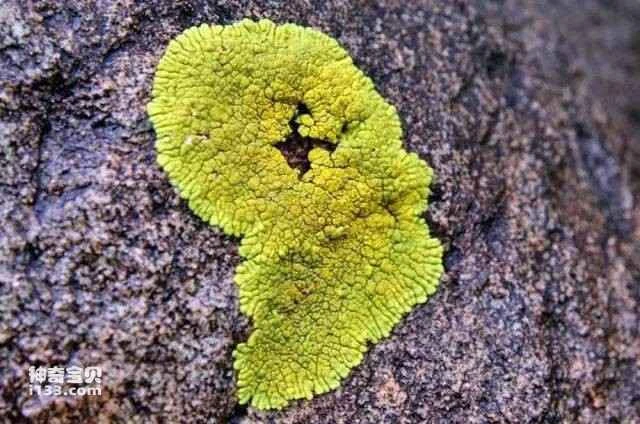
Lichens are actually symbiotic complexes of algae and fungi. Algae are encased within mycelia, producing organic matter through photosynthesis for the fungi to consume; in turn, the fungi absorb water and minerals to provide for the algae. Lichens, growing by attaching to rocks, produce litmus acid, which gradually decomposes the rock surface into soil, creating conditions for the growth of other terrestrial plants. Therefore, lichens may have played a pioneering role in paving the way for other terrestrial plants to transition from water to land.
Fungi are generally classified as a separate kingdom because they lack photosynthetic function and live saprophytic or parasitic lives. However, many scientists believe that they are a large group that evolved from some primitive algae after losing their photosynthetic function. Therefore, they are also included in the category of lower plants along with algae and lichens.
The earliest higher plants—ferns—began to appear on land in the late Silurian period.