Hemichordates, also known as cryptochordates, all live in the ocean. Their most distinctive features are a dorsal nerve cord and a short, blind tube called the "oral cord" extending forward from the back of the mouth. Some scientists believe that this dorsal nerve cord is the prototype of the dorsal nerve tube of later chordates, while the oral cord is the prototype of the notochord or anterior pituitary gland of chordates. Clearly, hemichordates are a transitional type between non-chordates and chordates.
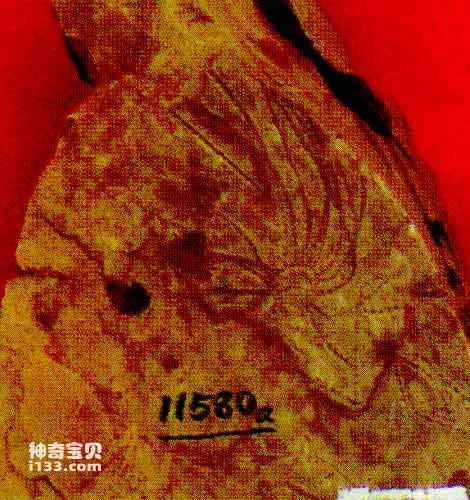
Penstone
Hemichordates comprise four classes: Enterobranchia, Pterygobranchia, Coccidioides, and Graptolophus. Enterobranchia consists entirely of modern animals with no fossil record; Pterygobranchia appeared in the Ordovician period and have continued to the present day; Coccidioides is a very small group of modern animals. These three classes combined contain only about 50 species. Graptolophus is the most diverse and abundant group within the hemichordate phylum; however, they are all ancient organisms, first appearing in the Middle Cambrian and becoming extinct by the Early Carboniferous period, over 300 million years ago.
Graptolite fossils are typically preserved as flattened carbonaceous films, resembling pencil marks on rock layers, hence the name "graptolites" among scientists. They are generally classified into six orders: Dendrograptolites, Tubulargraptolites, Coelophysila, Stemgraptolites, Scalegraptolites, and Orthograptolites.
Based on the state of fossil preservation, the types of symbiotic animals, and the skeletal structure of the graptolites themselves, scientists speculate that some graptolites lived a benthic, sessile life on the seabed, such as most tree graptolites, which had fixed stems and roots; while other graptolites lived a floating life, such as orthograptolites, which had filamentous structures called "cannulas" to attach to floating objects.
Graptolites can coexist with fossils of animals such as brachiopods and trilobites. However, in some specific environments, only floating graptolites exist without other organisms or with only a few planktonic organisms.
Graptolites are usually preserved in black shale. One possible reason is that the seawater was relatively calm during the deposition, with strong seabed reducing activity, insufficient oxygen, and a high content of hydrogen sulfide, making it unsuitable for benthic organisms. However, graptolites that floated in such an environment could live in the surface water, and after death, their bodies sank to the bottom and became fossils. Another possible reason is that when graptolites floated from normal water bodies to these unsuitable water bodies, they died in large numbers and sank to the seabed. Since there were few benthic animals on the seabed, these graptolite bodies were not "destroyed," and they were preserved in large numbers and became fossils.
Besides shale, graptolite fossils can also be found in fine sandstone, siltstone, or limestone.