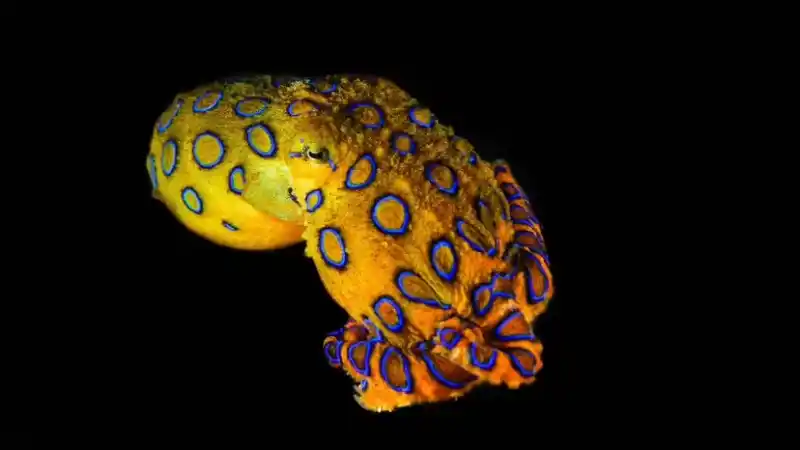
Octopus, also known as eight-armed octopus, is a type of mollusc widely distributed in tropical and temperate seas, with numerous species. Some octopuses are brightly colored, while others are highly poisonous. So, which octopuses are edible? Common edible octopuses include the common octopus, long octopus, short octopus, egg octopus, two-spotted octopus, spindle octopus, striped octopus, water octopus, small-hole octopus, and eastern octopus . Below, we've compiled a list of ten well-known octopus species; let's learn about octopus classification and related information together!
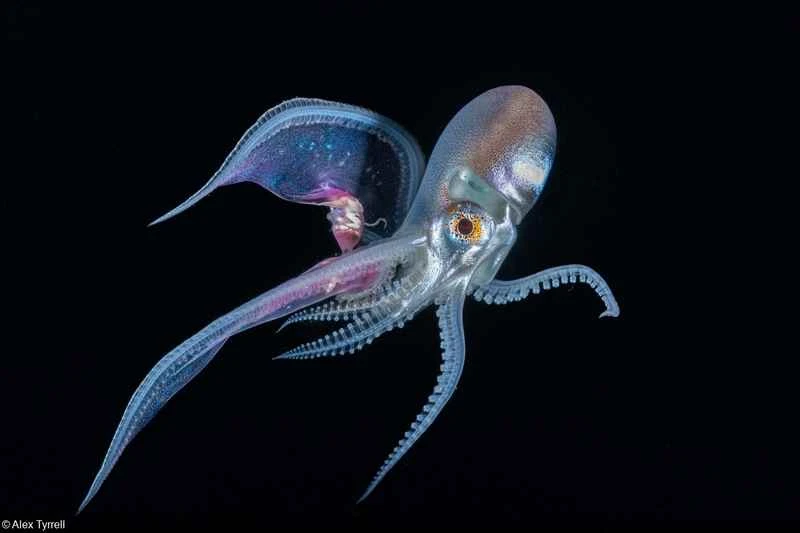
Octopus is a general term for all animals in the superorder Octopoda of the class Cephalopoda, while squid and cuttlefish are animals in the superorder Decapopoda. They are also the easiest to distinguish; just count their tentacles. Octopus has 8 tentacles, while cuttlefish or squid has 10 tentacles .
1. Common octopus (body length about 50cm, distributed in seas except for the North and South Poles)
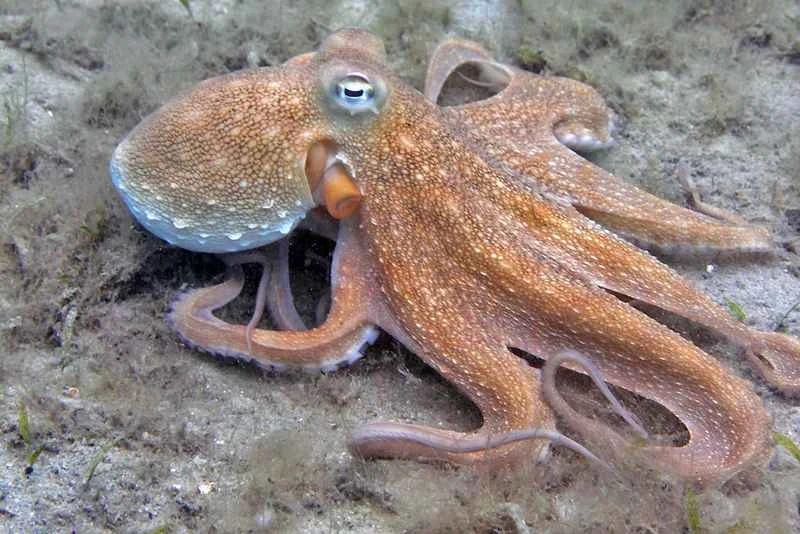
The common octopus, also known as the real octopus or common octopus, is one of the most common edible octopuses. This octopus is widely distributed, and has been caught in almost all major oceans except for the Arctic and Antarctic. They typically hide in sandy or muddy bottoms or rocky crevices during the day and actively hunt at night. Common octopuses grow rapidly, increasing in weight up to a hundredfold within six months of hatching.
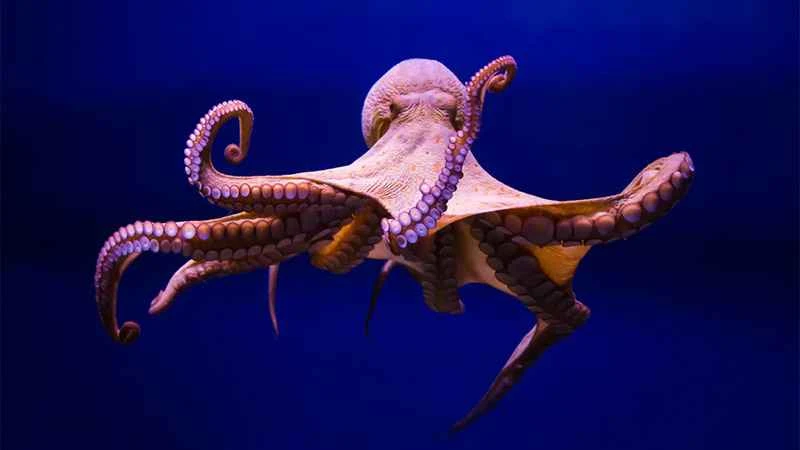
The common octopus is medium-sized with a relatively short, sub-rounded or oval body, and its four arms are of similar length. Generally, the common octopus can reach a total length of 50 cm. Its body color is brown with distinct grayish-white spots on its back. In the market, common octopus is usually sold in three forms: fresh, cooked, and dried. Fresh octopus has an excellent taste, cooked octopus has an appealing color and is easy to preserve, while dried octopus is a concentrated delicacy.
2. Long octopus (body length 50-70cm, distributed along the Northwest Pacific coast)
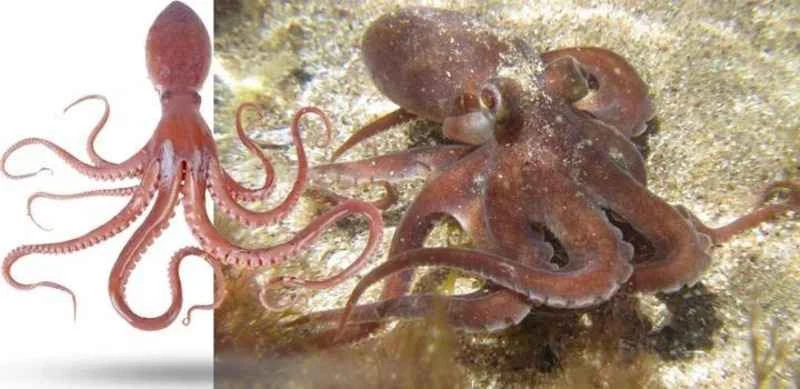
The long-legged octopus, also known as the long-legged octopus or the slender-legged octopus, has tentacles that can be more than five times the length of its body. Its overall length ranges from 50 to 70 centimeters. The body is elongated oval in shape with a smooth surface. The lengths of its tentacles vary, and the body is generally pink. Long-legged octopuses are typically distributed along the Northwest Pacific coast, with major habitats including the Korean Peninsula and the Yellow Sea and Bohai Sea coasts of China, particularly in Shandong and Liaoning provinces.
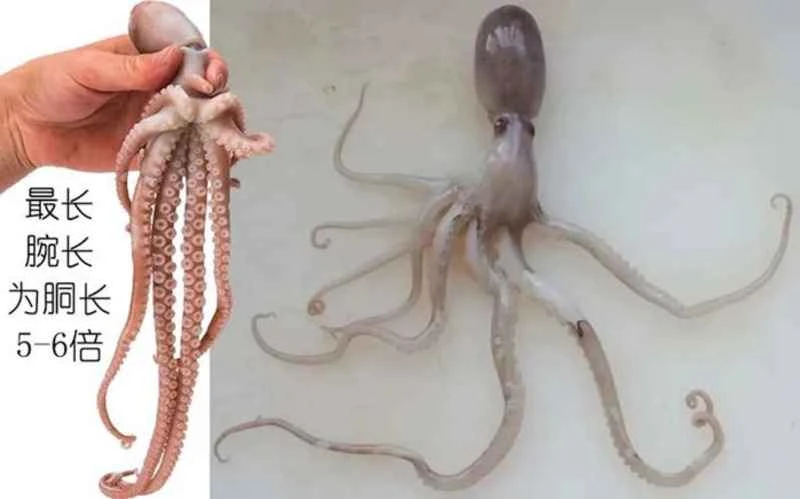
Low tide is the perfect time to catch octopuses. The essence of the octopus lies in its slender tentacles, which are delicious and chewy. Besides common cooking methods, it is also perfect for eating raw or in hot pot.
3. Short-necked octopus (body length not exceeding 20cm, distributed in China/Japan)
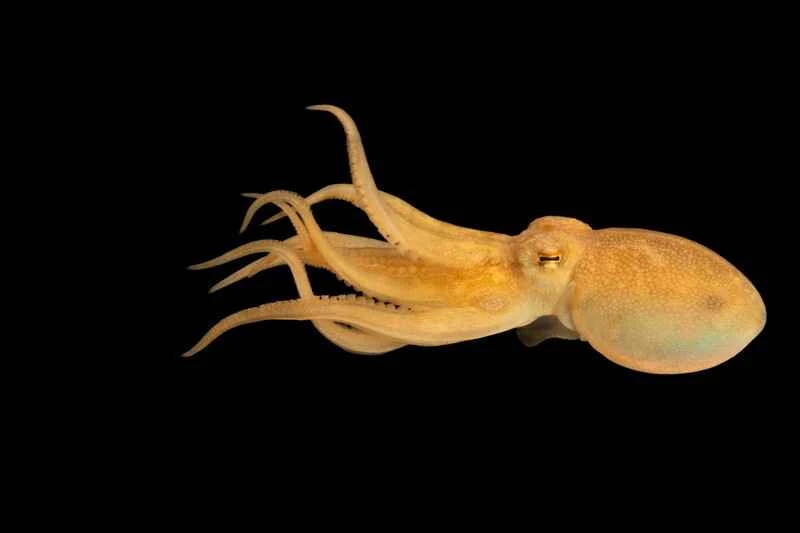
The short-clawed octopus, also known as the rice octopus or short-clawed octopus, is a small octopus with relatively short arms that are almost as long as its body, typically not exceeding 20 centimeters in length. It is distinguished by a pair of golden rings, and is generally yellowish-brown, with a darker back and a lighter belly.
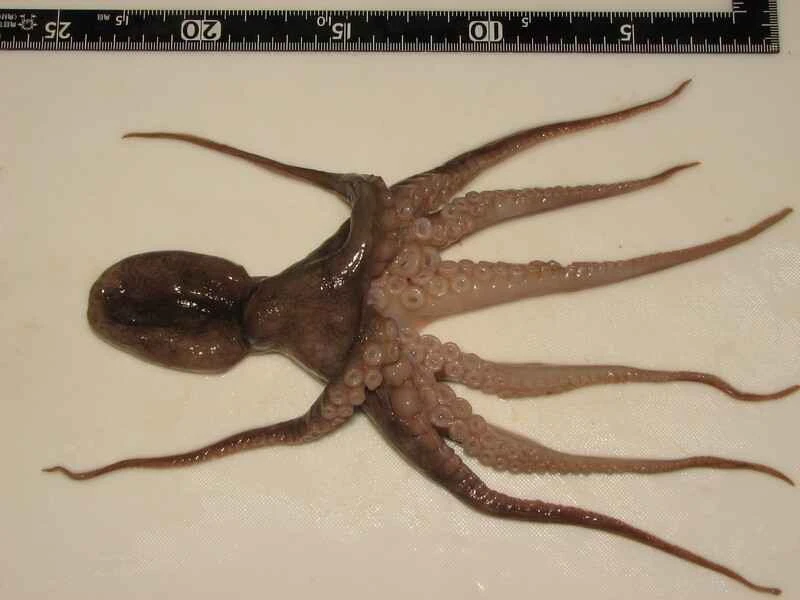
The short-necked octopus is mainly distributed in the Bohai Sea, Yellow Sea, East China Sea, South China Sea, and the waters around the Japanese archipelago. Its fishing season is primarily concentrated in spring and autumn: March to May and September to November. The short-necked octopus has tender flesh and is popular whether eaten fresh or dried. During the breeding season, the octopus's abdomen is full of roe, which, when cooked, resembles translucent, sticky rice and is extremely delicious.
4. Octopus (carcass length about 4cm, distributed in the East China Sea/South China Sea/Japanese Islands)
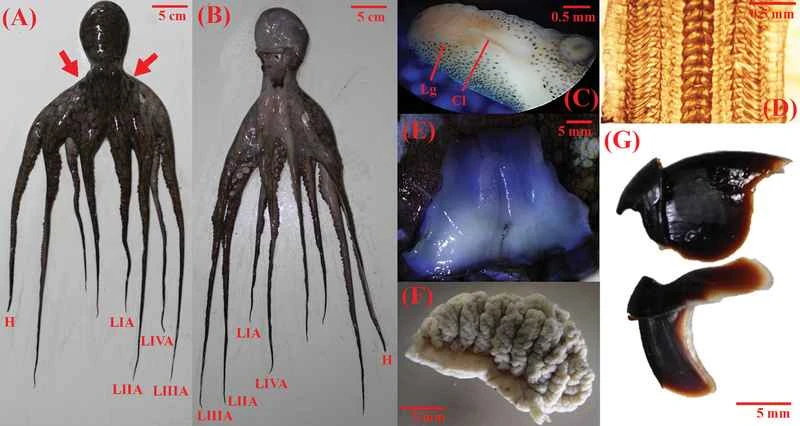
The ocelot is a relatively common type of octopus, belonging to the small to medium-sized group, with a body length generally around 4 centimeters. It is mainly distributed in the East China Sea and South China Sea, as well as the waters south of the Japanese archipelago, typically inhabiting muddy or soft muddy bottom environments at depths of 20 to 180 meters. The ocelot's lifespan is about one year, after which it dies. Its eggs are rice-grain shaped, about 3 millimeters long and 1.5 millimeters short, usually anchored on fine seaweed, with each cluster producing forty to fifty eggs.
The body surface of the octopus is covered with many nearly round small granules, and below each eye is a nearly oval brownish-black patch with a purple circle inside. Its arms are relatively short, with each arm being roughly the same length, the longest reaching 3 to 4 times the length of its body, and each arm has two rows of suckers.
5. Two-spotted octopus (carcass length up to 12cm, distributed in South Asia/Central America)

The two-spotted octopus, named for the large, black, round spot between its second and third pairs of tentacles, is a common species of octopus. It is mainly distributed in South Asia and Central America, and is also commonly found in the East my country Sea, South China Sea, the Malay Archipelago, the Hawaiian Islands, California, San Salvador, Panama, Sri Lanka, and India. They typically inhabit caves, under rocks, and in crevices of reefs.
The body of the two-spotted octopus is oval-shaped with a smooth surface, covered with irregular tubercles and reticulate stripes. Between the second and third pairs of tentacles in front of each eye, black circular spots can be seen, with irregular black patterns on the outer side. Their tentacles are approximately four to five times the length of their body; the largest known adult body length can reach 120 mm.
6. Octopus spindleii (carcass length up to 5cm, distributed in the Malay Archipelago/India)
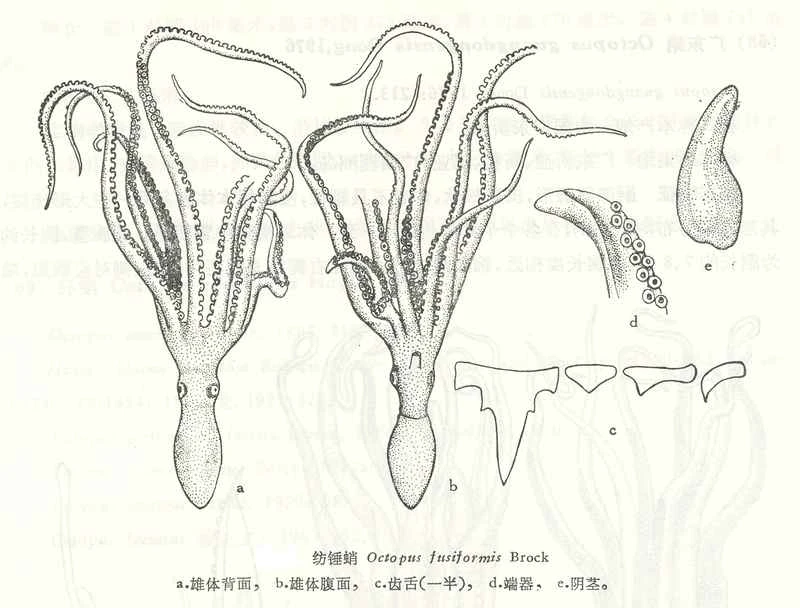
The spindle-shaped octopus is an edible octopus with tender flesh, a plump body, and thick, fleshy tentacles, offering a chewy yet firm texture. Its carcass length is approximately three times its width, with the largest known adult reaching 50 mm in length. Its body surface is smooth without any markings, and its pigment granules are extremely fine. Its tentacles are six to seven times the length of its carcass, with suckers arranged in two rows. The spindle-shaped octopus adapts to relatively warm waters and is mainly distributed in the waters of the Malay Archipelago and southern India. In China, it is primarily found in the waters south of Fujian province, typically inhabiting muddy or sandy bottoms at depths of tens of meters.
7. Striped Octopus (carcass length up to 10cm, distributed in China/Japan/Australia)
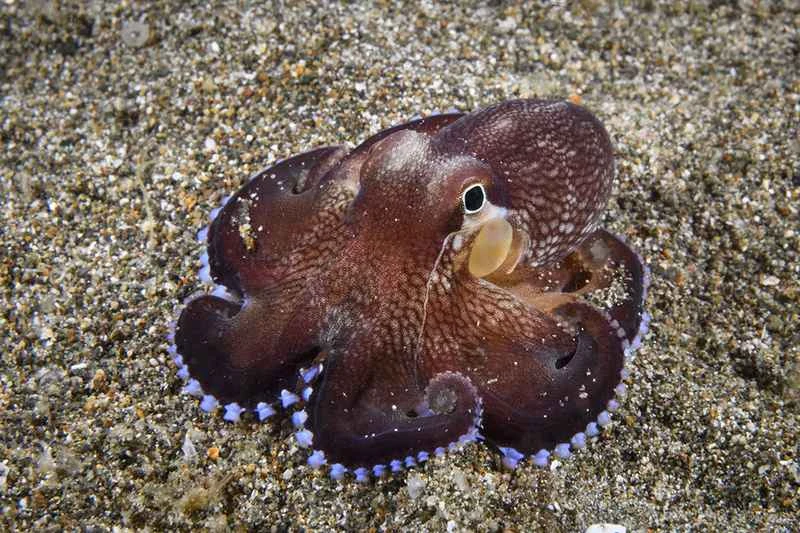
The striped octopus (also known as the octopus scutellarioides or striped octopus) is a small, edible octopus. Its body is oval-shaped, with a rough surface covered in small granules, and is dark brown in color, darker on the back and white on the abdomen and tentacles. The striped octopus's ventral carcass is about 76 mm long and weighs up to 300 grams; the largest carcasses can reach 100 mm in length and weigh up to 600 grams, and have distinct longitudinal stripes on their sides.
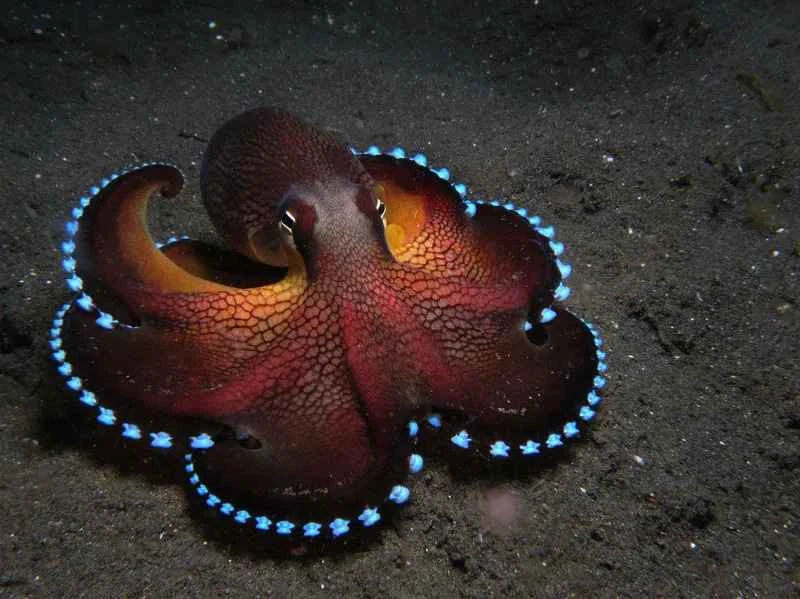
This type of octopus is widely distributed in the East China Sea, South China Sea, southern Japan, Southeast Asia, Australia, the Red Sea, and East Africa, and is a common octopus species in the market. Similar to other octopuses, the striped octopus has a very chewy and bouncy texture, making it quite appealing.
8. Water octopus (body length exceeds 3m, distributed in the Pacific Ocean)
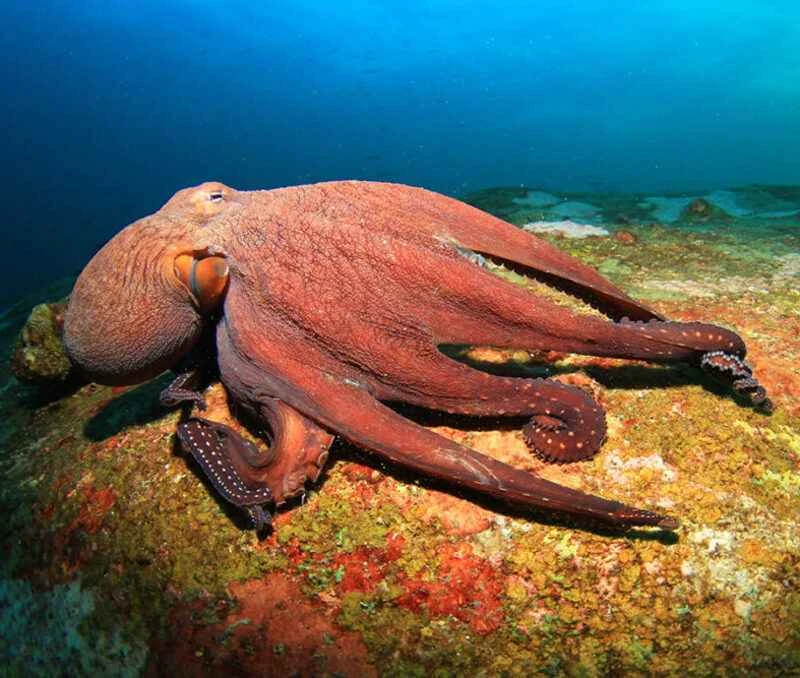
The octopus, also known as the giant octopus of the North Pacific, is a massive octopus. Its tentacles can extend to over three meters, and it can weigh tens of kilograms. Its head is large and round, usually reddish-brown, and possesses unique pigment cells that allow it to change color. Octopuses are widely distributed in various parts of the Pacific Ocean, from Southern California to Alaska, and from the western Aleutian Islands to Japan.
Its high water content gives it the name "octopus." Its flesh is tender, and due to its relatively large size, it is usually cut and sold in markets. Octopus has abundant meat, making it a very cost-effective and popular type of octopus in the market.
9. Small-mouthed octopus (carcass length up to 18cm, distributed in Southeast Asia)
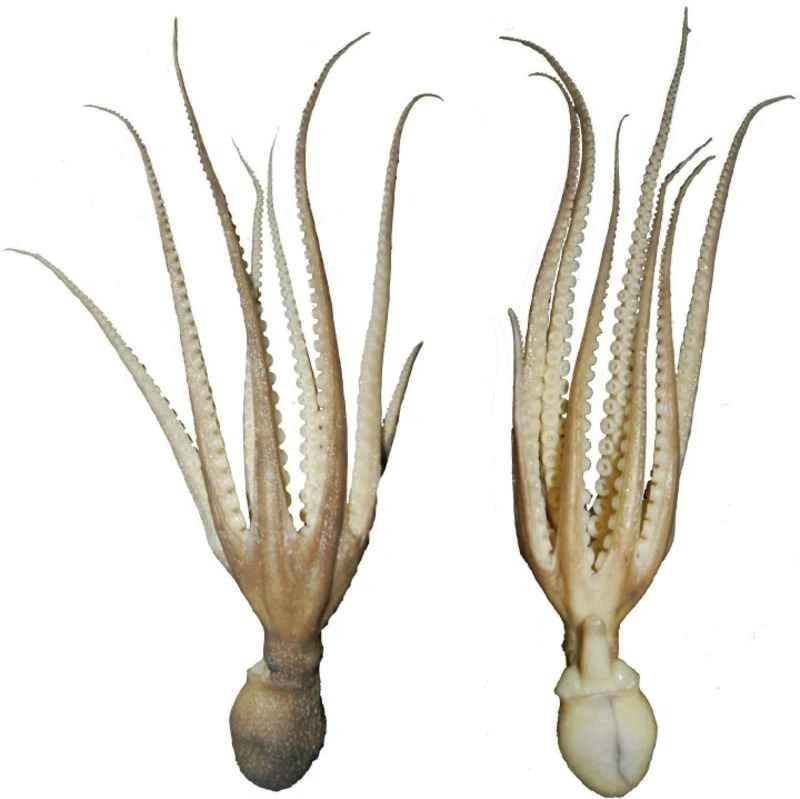
The small octopus is one of the smallest octopuses. It is mainly distributed in the waters of the Philippine archipelago, Sulawesi, Malaysia, India, and Pakistan. It prefers warm waters and has a limited tolerance for temperature variations, typically inhabiting warm, saline waters at depths of up to 50 meters in muddy seabeds. The largest known carcass of the small octopus can reach 18 cm in length. Its body is oval-shaped, smooth, and has soft flesh. It possesses long arms, approximately 6 to 7 times the length of its carcass. Each arm has a small sac at its base that connects to the outside.
Due to their small size, they are usually cooked whole, with common ways of eating them including blanched baby octopus and grilled baby octopus with sauce.
10. Eastern Octopus (carcass length up to 16cm, distributed in the Japanese archipelago/Malaysian archipelago)
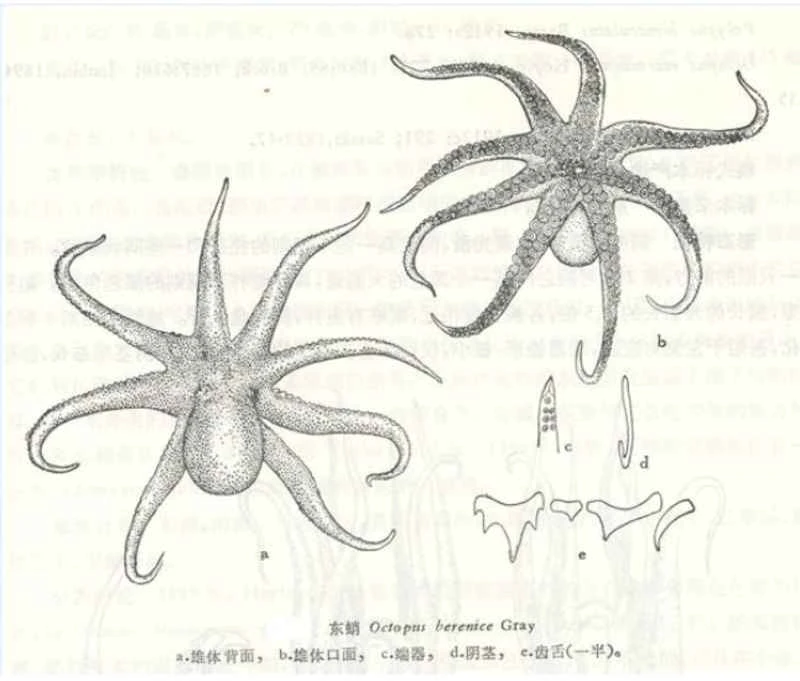
The Japanese octopus is delicious and also has some ornamental value. Its body is oval-shaped with a rough surface covered with numerous round granules of varying sizes, arranged in raised patterns. The arms of the Japanese octopus are relatively long, approximately 3 to 4 times the length of the carcass, with each arm being of similar length; the largest carcass can reach 160 mm in length. It is mainly distributed in the waters south of the Japanese archipelago and the Malay Archipelago, and can also be found in the East China Sea and South China Sea of my country.
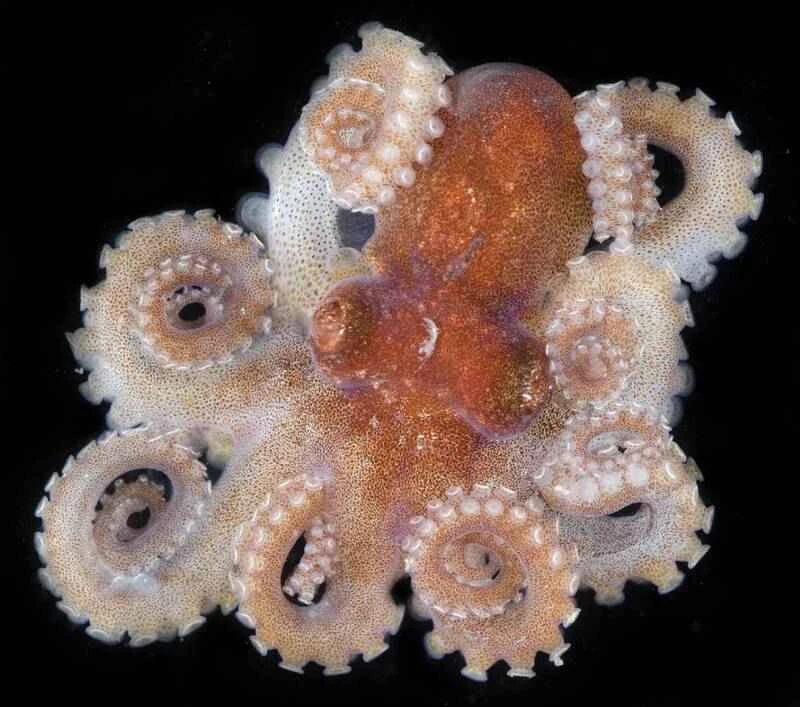
Octopus octopus is available almost year-round in seafood markets, with smaller individuals appearing in the spring, and sometimes even sold as ornamental fish. As a relatively small octopus, octopus is very easy to prepare; it's delicious whether steamed, blanched, or stir-fried.