Modern ferns have leaves that resemble sheep's teeth, so the earliest scientists to study them aptly named them "ferns." In the course of Earth's natural history, these "ferns" were actually among the earliest higher plants, appearing on land as early as the Late Silurian period.
These earliest terrestrial ferns were called *Atopys* or *Atopys*. Subsequently, ferns diverged into two branches. One branch, through the transition from the Silurian to the Devonian, evolved from *Atopys* to later lycophytes; the other branch, through the early Devonian *Gymnophytes*, evolved into later *Equisetum* (also called horsetail or wedge-leaf) and true ferns. Furthermore, a group of plants called *Rheiniformes* was discovered in the Devonian. These plants possessed vascular bundles like higher plants, but lacked stomata like lower plants, making it difficult to determine their true systematic classification.
By the Late Devonian, the once-thriving psilophytes of the Early and Middle Devonian gradually became extinct, while lycophytes, dwarf ferns, and true ferns began to flourish. These evolved ferns had developed differentiated roots, stems, and leaves: roots stabilized the plant and penetrated deeper into the soil to absorb more water and minerals; stems enabled the plant to stand upright, and more importantly, the formation of their internal vascular bundles created a more sophisticated transport system to facilitate nutrient delivery; leaves became specialized organs for photosynthesis, and their significantly increased surface area allowed the plant to absorb more energy from sunlight. For these reasons, ferns adorned the "gardens" of the Earth with exceptional beauty during the Late Paleozoic.
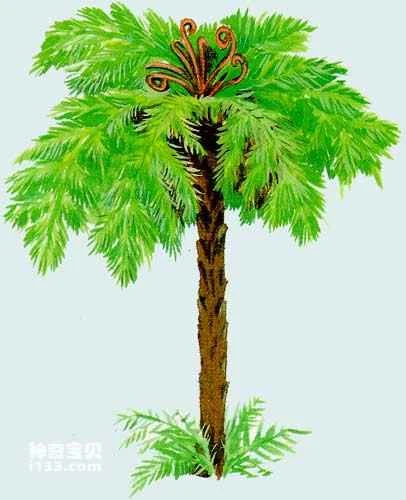
scale wood
There are still over 10,000 species of ferns living on Earth today, the vast majority of which are herbaceous plants. However, during the Carboniferous and Permian periods of the Paleozoic Era, Lepidoptera, belonging to the Lycophyta group, and Pyrrosia, belonging to the Pyrrosia group, were both tall, tree-like woody plants.
Lepidoptera can grow to 30 to 40 meters tall, with a trunk diameter of up to 2 meters. Their trunks, like those of naked ferns, branch out in two directions. Their narrow leaves can be up to 1 meter long, with a distinct midrib. The leaves are arranged in a spiral on the trunk, growing from the leaf base at its base. The leaf base protrudes from the surface of the trunk and is generally rhomboid. Because they are arranged in a spiral, when the leaves fall off, they look like scale-like imprints, hence the name lepidoptera.
The reed tree grows in swamps, reaching heights of thirty to forty meters, with a trunk diameter of up to one meter. Its leaves are whorled at the nodes of its branches. The leaves of the reed tree and the scaly tree have different origins; the reed tree's leaves evolved from twigs.
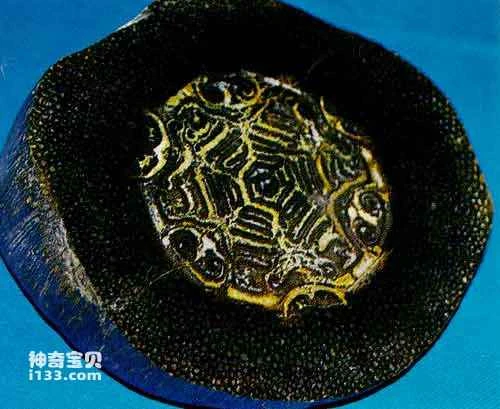
Cross section of the trunk of a hexagonal Ficus pumila
True ferns are better adapted to terrestrial life than lycophytes and cladocerans. Their leaves are large, flat, and divided into upper and lower surfaces with numerous branching veins, thus increasing the area and efficiency of photosynthesis. True ferns generally live on land, with a few living in swamps, and some epiphytic on the branches of other plants. Among true ferns, tree ferns that lived from the late Carboniferous to the early Permian had large canopies and formed dense forests. More than 200 million years ago, during the late Early Permian to early Late Permian, a tree fern called *Gymnocladus hexagonus* was distributed in Yunnan and several other provinces in southern and southwestern my country. It reached heights of over ten meters, with trunk diameters exceeding 20 centimeters, and large pinnate compound leaves, two to three meters long. The stem of *Gymnocladus hexagonus* had highly developed vascular and mechanical tissues; its trunk cross-section revealed the outer cortex and extremely complex vascular bundles that formed the stele (the central axis of the roots and stem). The vascular bundles are about 10 centimeters in diameter and consist of seven concentric rings, the innermost of which is circular, while the rest are strip-shaped. Therefore, the cross-section of such a tree trunk appears to form a colorful hexagon, which is the origin of the name "Hexagonal Glowwood".
The great development of ferns led to the emergence of the first primeval forests in Earth's history, which brought about tremendous changes in the overall appearance of Earth's ecosystem and laid the material foundation for vertebrates to move from water to land.