When Paleozoic ferns formed the first primeval forests on Earth, gymnosperms, more advanced than ferns, had already quietly appeared in the Late Devonian period. However, at that time, the Earth's climate was warm and humid, allowing ferns to thrive more easily, and gymnosperms could not yet gain dominance. By the Late Permian, the climate had cooled and become drier, and ferns could not adapt well to this new environment, gradually withdrawing from the center stage of the plant kingdom. Gymnosperms began to demonstrate their latent advantages and flourished, maintaining their prosperity until the Late Cretaceous. It can be said that the vegetation of the reptile kingdom was characterized by gymnosperms.
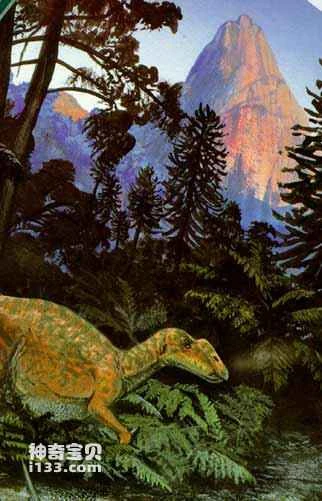
Reptile Kingdom Vegetation Landscape
Gymnosperms were the first organisms on Earth to reproduce sexually using seeds, while algae and ferns, which appeared before them, reproduced sexually using spores. The superiority of gymnosperms lies primarily in their ability to reproduce by seeds.
Before the Late Permian period, ferns were able to reproduce extensively primarily because their sporophytes produced a large number of spores, which were dispersed to various locations. Under warm and humid conditions, these spores easily germinated into gametophytes. The gametophytes lived independently and, with the help of water, were fertilized to form a zygote. The zygote then germinated to form a new generation of sporophytes. However, under dry conditions, spores rarely germinated into gametophytes, and the germinated gametophytes were also unlikely to survive. In particular, fertilization was impossible without water, which prevented fern reproduction from proceeding normally.
In gymnosperms, the gametophyte does not develop independently from the sporophyte but is protected by the parent plant; fertilization does not require water as a medium, but rather occurs through dry fertilization. The fertilized egg develops into an embryo within the parent plant, forming a seed, which then detaches from the parent plant. If unfavorable conditions arise, the seed may not germinate immediately but retains its vitality, germinating into a new plant when conditions become suitable. Therefore, gymnosperms possess a significantly enhanced ability to preserve and perpetuate their species.
Gymnosperms originated from plants exhibiting characteristics of both true ferns and gymnosperms, namely progymnosperms, including Paleoferns and cladocerans. Paleoferns lived more than 400 million years ago in the Late Devonian period, with a main stem 1.6 meters thick and 35 meters tall. Cadadocerans lived from the Middle to Late Devonian periods, had a main stem and branches, and could reach heights of more than 10 meters.
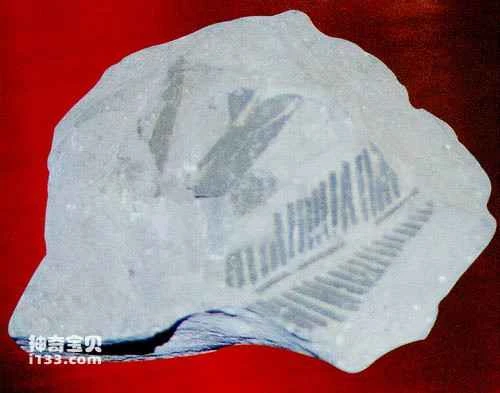
Cycad leaf fossils
In the Late Devonian period, a tree-like plant evolved from progymnosperms. Its leaves were mostly pinnate compound leaves typical of fern leaves, but it contained seeds, hence the name "seed fern." Although the seed fern had seeds, it lacked an embryo; although it had pollen grains, it lacked pollen tubes, and therefore no flowers. This demonstrates that the seed fern was a precursor to seed plants in a primitive state, and also proves that in plant phylogeny, the appearance of seeds preceded flowers and fruits.
Based on this, gymnosperms differentiated into two major groups: cycads and conifers, and flourished during the Mesozoic Era, becoming the dominant members of the vegetation in the reptile kingdom.