Introduction: Why the Bison is So Important
When users search for "state animal bison," they want to know more than just basic information about the animal. They are more interested in: Why was the bison chosen as the state animal? What does it symbolize? What is its place in history and culture? This in-depth article will explore the bison comprehensively from its biological characteristics, state symbolism, conservation efforts, to its enduring influence in the American narrative.
Bison Overview
Species Introduction
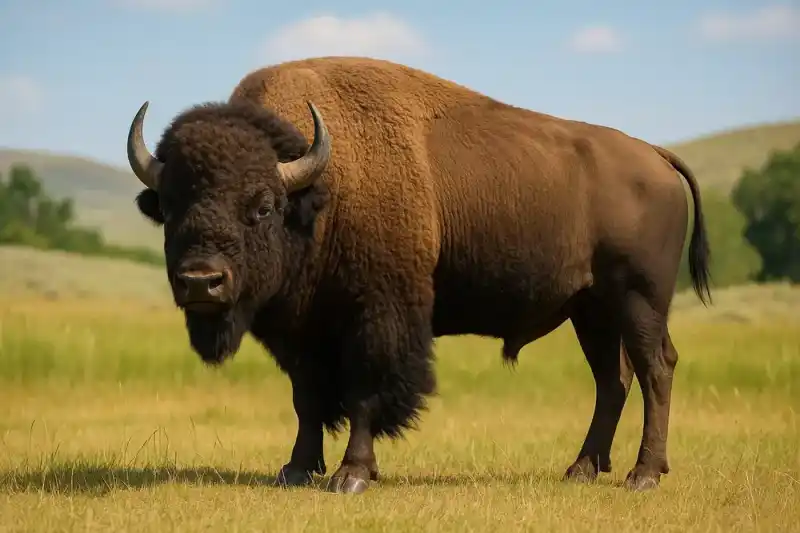
The bison , often mistakenly called a water buffalo, is the largest land mammal in North America. It belongs to the Bovidae family and is native to the grasslands, forests, and plains of North America.
Main physical characteristics
Weight: Males can reach 2000 pounds (approximately 900 kilograms).
Height: Approximately 1.8 meters (6 feet) at the shoulder.
Lifespan: Can survive 15 to 20 years in the wild
Speed: Running speed can reach 56 km/h (35 mph)
Coat: Particularly dense and long hair on the head and shoulders
State animal status: The symbolic meaning of the bison
National Mammal of the United States
In 2016, the U.S. Congress passed the National Bison Heritage Act, officially designating the American bison as the national mammal of the United States, establishing its status as a symbol of pioneering spirit and resilience in the Americas.
State-level symbol
The bison is recognized as the official animal or state animal by several states, including:
Kansas : Became the state animal in 1955.
Wyoming : State Mammals
Oklahoma : Its official animal, which also appears on the state flag.
North Dakota : Official State Mammal
The cultural significance of bison
Contact with Native Americans
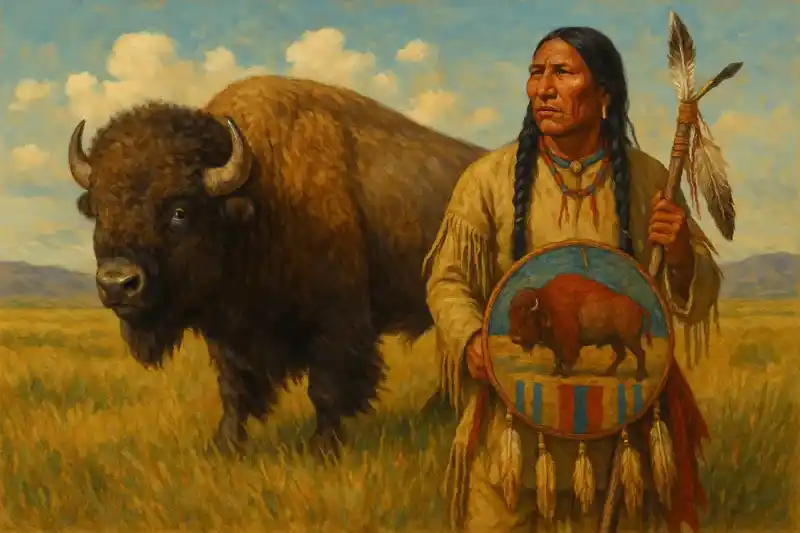
Bison has always been central to the culture, spiritual beliefs, and economic life of many Native American tribes, especially plains tribes such as the Lakota, Cheyenne, and Blackfoot.
Uses of bison include:
Food sources (meat and offal)
Clothing (leather)
The dwelling (the tent was made of cowhide).
Tools (made of bones and horns)
Ritual and spiritual symbolism
American national symbol
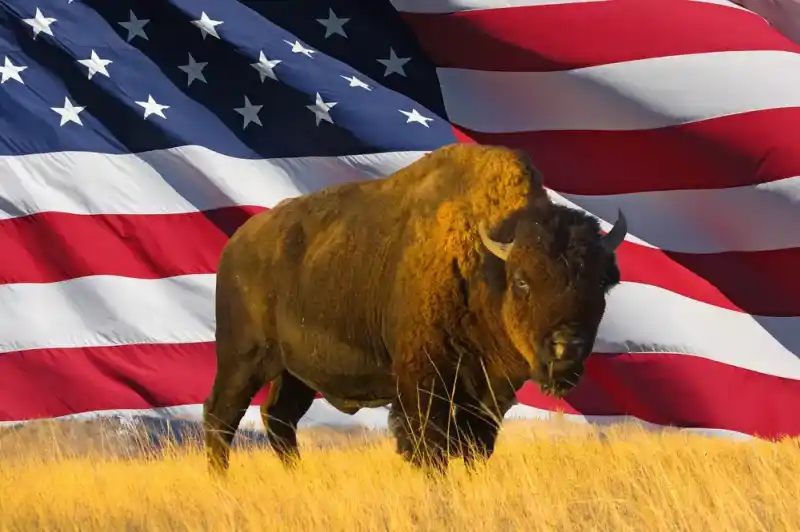
Bison are commonly found in American art, currency, and brand logos.
Cent coins (Buffalo Nickels issued from 1913 to 1938)
Logos of agencies such as the Ministry of the Interior and the National Park Service
State emblem, state flag, and sports mascot
Biological and ecological roles
Habitat and Distribution
Historically, tens of millions of bison roamed the prairies stretching from Mexico to Canada. Today, bison primarily live freely in the following protected areas and national parks:
Yellowstone National Park (where bison have lived since prehistoric times).
Wind Cave National Park
Tall Grassland Nature Reserve
Key Species Role
Bison play a key role in maintaining the grassland ecosystem:
Eating affects the composition of plant communities
Help spread seeds
Creating "mud pits" to store water and benefit other species
The Endangered and Recovered History of the Bison
19th-century massacres
Between 1800 and 1880, the bison population plummeted from 30 million to 60 million to less than 1,000, primarily due to the following reasons:
The large-scale hunting of the Western Trailblazers
Railway expansion leads to habitat loss
Government policies that deliberately weaken the livelihoods of indigenous people
Milestones in the conservation efforts
Thanks to the efforts of President Roosevelt and early conservation pioneers such as the American Bison Society, some bison populations were preserved and successfully bred and spread within protected areas.
Current quantity
Currently, the North American bison population is estimated at 500,000, but only 30,000 of them are free-range wild individuals. The majority of bison live on private ranches and are used for meat production.
The difference between bison and water buffalo
It's not a real "water buffalo".
Despite being commonly known as "water buffalo," the American bison is not the same species as the African or Asian buffalo.
Back hump : Bison have a distinct shoulder hump, while true buffalo do not.
Horn shape : Bison horns are short and curved, while buffalo horns are long and crescent-shaped.
Geographical distribution : Bison originated in North America, while buffalo are mainly found in Africa and Asia.
The status of bison in modern conservation and ecotourism
Return to the Wilderness
Several projects in the United States and Canada are reintroducing bison into tribal territories and nature reserves, for example:
The reintroduction project promoted by the Intertribal Bison Committee
Montana's "Great Plains Preserve" Plan
Ecotourism and Scenic Value
Bison are a highlight of ecotourism, especially in Yellowstone National Park, attracting tourists while also boosting the local economy and public awareness of native species.
The role of bison in education and state culture
Bison in educational courses
Many states incorporate bison into their elementary and secondary school curricula, elaborating on their role in pioneering history, ecosystems, and Indigenous cultures.
School mascots and state-level image
Many schools and universities use bison as mascots, for example:
University of Colorado Boulder (Mascot: Ralph Buffalo)
North Dakota State University (Bison)
Fun facts about bison
Interesting features
The puppies were called "red dogs" at birth because of their orange-red fur.
Despite their large size, bison are excellent swimmers.
During the breeding season, males attract females with growls and hissing sounds.
Bison in popular culture
Featured in the movie "Dances with Wolves" and several nature documentaries
Widely distributed in national zoos and wildlife parks
How to support bison conservation
Donations or volunteer participation
Supported organizations include:
National Bison Association
Wildlife Conservation Society
World Wildlife Fund (WWF)
Choose friendly bison products
Purchase sustainably raised bison meat to support Indigenous-led bison initiatives.
Education and Advocacy
To raise public awareness about the cultural significance of bison and the challenges of conservation.
Conclusion: The Contemporary Value of the Bison
The American bison is not only a totem, but also a living symbol of resilience, embodying cultural identity, ecological balance, and historical redemption. As a national and state protected animal, the bison reminds us of past losses and our responsibility to protect the life that shaped this continent for the future.