Crab spiders are fascinating arachnids, renowned for their unique hunting methods and striking appearance. Among the many species of crab spiders, the pink crab spider is particularly eye-catching due to its vibrant colors and intriguing behavior. This article will provide a detailed introduction to pink crab spiders, including their habitats, behaviors, and why they are so popular among enthusiasts and researchers.
What is a pink crab spider?
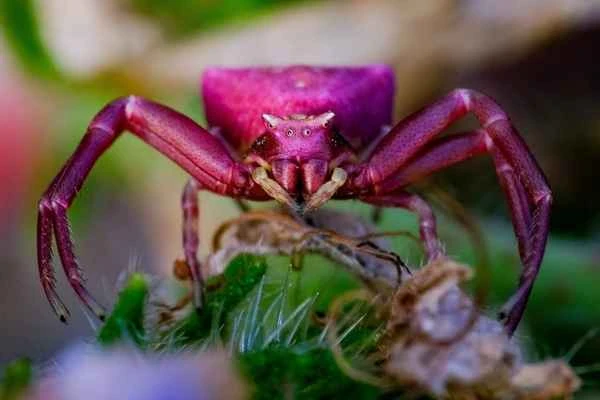
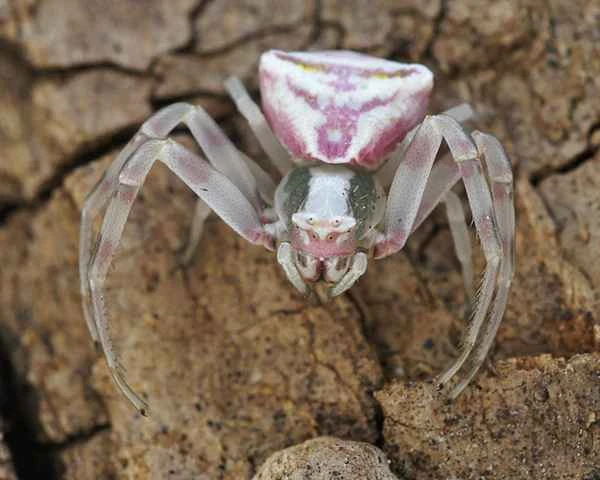
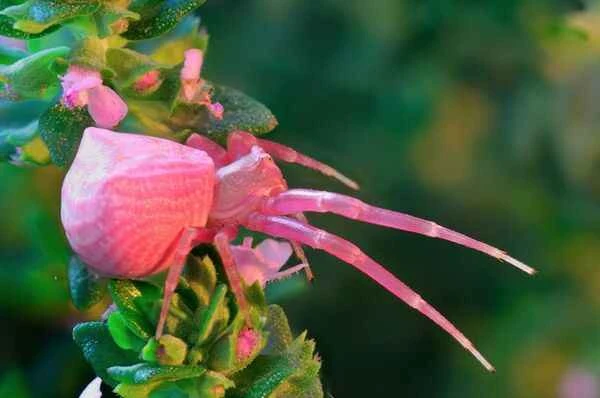
The pink crab spider, belonging to the family Thomisidae , is known for its ability to change color. Its name, "crab spider," comes from its unique walking style, which resembles the lateral movement of crabs. Unlike many spiders that capture prey by weaving webs, crab spiders are active predators, typically catching their prey by ambush. The pink crab spider is particularly striking for its pink body, a color that helps it blend into flowers, where it often perches, catching pollinating insects like bees and butterflies.
scientific name :
Pink crab spiders are usually identified as Misumena vatia , although not all crab spider species are pink; other colors such as white or yellow are also common, depending on the environment.
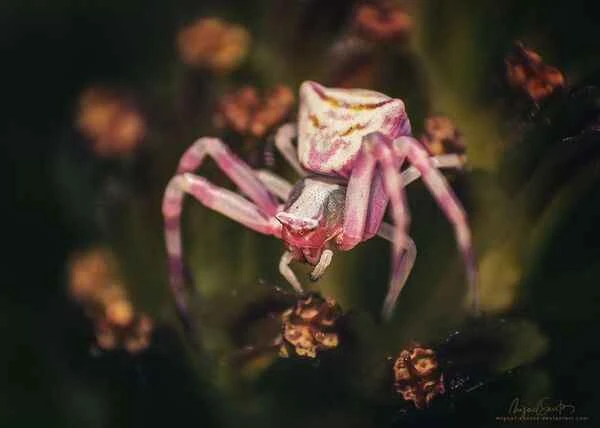
Physical characteristics of pink crab spiders
Color : The most distinctive feature of the pink crab spider is its pink or reddish-pink body, a color that blends well with certain flowers, especially pink or white ones. Interestingly, these spiders can also change color to adapt to their environment, shifting from pink to white or yellow depending on the color of the flowers they inhabit.
Size : Pink crab spiders are relatively small, with females typically measuring about 9-10 mm (0.35-0.39 inches) and males smaller, measuring about 5-7 mm (0.20-0.28 inches).
Legs : Like other crab spiders, the pink crab spider has long, wide legs, which help it walk sideways like a crab. These legs have sharp claws that help it grip firmly onto flowers and other surfaces.
Eyes : They have eight eyes, arranged in two rows, which provide excellent vision and help them hunt and navigate.
Habitat of the pink crab spider
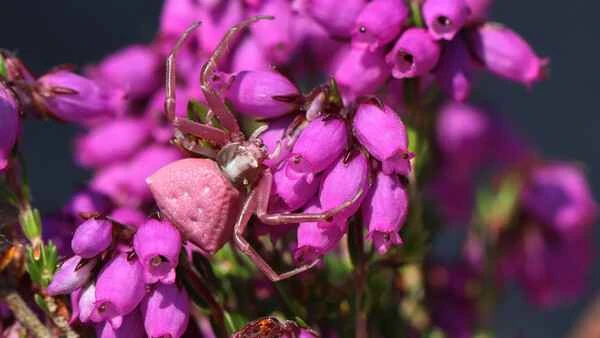
Pink crab spiders primarily inhabit gardens , lawns , and areas with abundant flowers . They often remain quietly atop flowers, waiting to catch insects. Their colors allow them to blend seamlessly into their environment.
Unlike many other spiders that weave webs to hunt, they employ a strategy of waiting patiently , ambushing their prey by hiding among petals or leaves. Some species can even change color to match the flowers they inhabit, increasing their chances of a successful hunt.
Commonly found on flowers : Pink crab spiders are often found on flowers such as asters , daisies , chrysanthemums , and camellias .
Preferred climate : They thrive in temperate climates, where flowers bloom continuously during the warmer months, providing them with ample food and habitat.
Diet and hunting habits of pink crab spiders
The pink crab spider is an ambush predator . Unlike spiders that catch prey through webs, the crab spider relies on stealth and speed . Its hunting process is as follows:
Luring prey : Spiders lie still on flowers, using their camouflage to attract insects such as bees , flies , or butterflies .
Ambush attack : Once the prey gets close, the pink crab spider strikes swiftly, grabbing the insect with its powerful forelegs and injecting venom to paralyze or kill it.
Feeding : After subduing its prey, the spider liquefies the insect's internal tissues by injecting digestive enzymes into the insect, and then sucks up the liquid.
The pink crab spider's diet consists mainly of small insects and pollinators , making them a beneficial natural pest controller in gardens and fields.
Behavior and adaptation of pink crab spiders
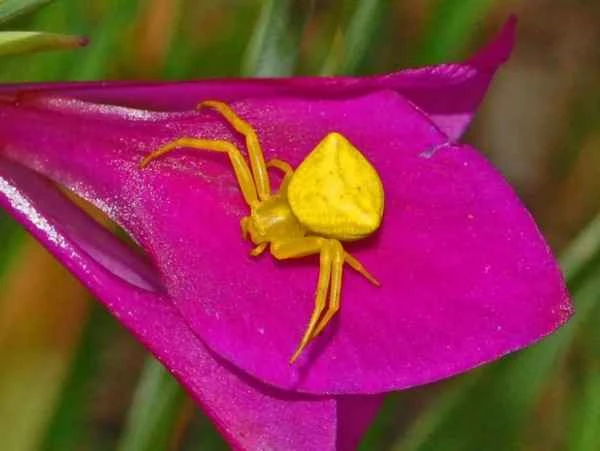
One of the most interesting features of the pink crab spider is its ability to change color . While their primary color is pink, they can also change to white or yellow depending on their surroundings, helping them blend in with different types of flowers. This color change is determined by environmental factors, such as the color of the flowers.
Color-changing mechanism : Pink crab spiders change their color through pigment cells in their skin. This process can take several days, helping them remain camouflaged and increasing their chances of ambushing prey.
Aggression : Pink crab spiders are generally not aggressive towards humans. They are shy creatures that prefer to hide in flowers and will only bite when threatened. Even if bitten, their venom is not dangerous to humans and is more often used to subdue small insects.
Life cycle and reproduction of pink crab spiders
The breeding cycle of pink crab spiders is quite interesting. Here is an overview:
Mating : Female crab spiders are larger than males. During the mating season, males approach females cautiously, as they may be eaten. After mating, the female lays an egg sac and guards it until the spider larvae hatch.
Spider larvae : After hatching, spider larvae are independent and begin hunting on their own. Several months later, they mature and begin a new life cycle.
Are pink crab spiders harmful to humans?
Although pink crab spiders may appear fierce and are skilled predators, they are generally not dangerous to humans. Their venom is used to subdue small prey, and while they may bite in self-defense, their bites are harmless to humans. Some people may experience mild irritation or redness, but this is rare.
How to attract or repel pink crab spiders
Attract them : If you want to attract pink crab spiders to your garden (because they are effective pest control plants), plant flowers such as asters , daisies , and chrysanthemums . Providing a variety of flowering plants will help attract pollinators, which in turn attract crab spiders.
Drive them away : If you don't like them, avoid using pesticides, as these can harm spiders. Additionally, removing flowers they often inhabit can also prevent them from settling in your garden.
Interesting facts about pink crab spiders
Camouflage expert : The pink crab spider is a master of disguise. By adjusting its color to match its surroundings, it can make itself virtually invisible to predators and prey.
Pest controllers : These spiders play a vital role in controlling insect populations, especially in environments filled with flowers.
Extreme patience : These spiders can remain still for long periods of time, patiently waiting for the right opportunity to attack.
The pink crab spider is a beautiful and captivating creature with many amazing abilities. From its vibrant camouflage colors to its unique hunting techniques, this spider holds a place in the natural ecosystem and has won the favor of spider enthusiasts. While harmless to humans, they are highly effective predators in gardens and flower beds, helping to control insect populations.
Whether you're a gardening enthusiast interested in natural pest control or a researcher interested in spider behavior, the pink crab spider is a fascinating creature worth observing and learning from.
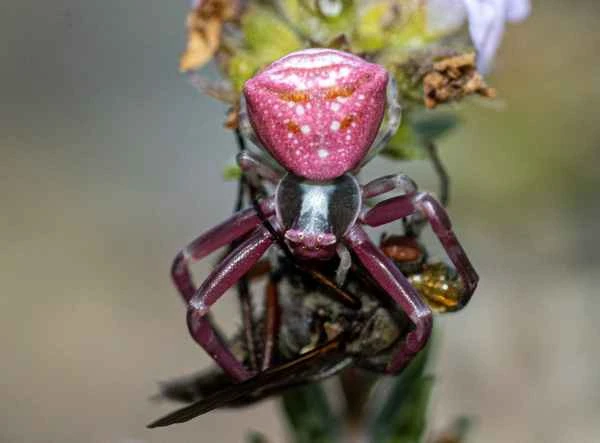
Pink crab spider species: venom and suitability as pets
The venom of the pink crab spider
While pink crab spiders are excellent predators, their venom is not dangerous to humans. These spiders primarily use venom to paralyze small prey, such as bees and flies. However, their venom is mild , and even a bite usually only causes mild local irritation or swelling, posing no fatal threat to humans or pets.
Key points regarding toxicity :
Venom type : Neurotoxic , can incapacitate small prey.
Effects on humans : Usually only causes mild redness, swelling or local pain, and serious reactions are rare after a bite.
Effects on pets : Pink crab spider bites generally do not cause serious harm to pets such as cats and dogs, but if bitten, local irritation may occur.
Treatment : After being bitten, wash the wound with soap and water, apply a cold compress to reduce swelling, and take antihistamines or painkillers if necessary. If symptoms worsen, consult a doctor.
In general, while the venom of the pink crab spider is effective against its prey, it poses minimal threat to humans and pets.
Are pink crab spiders suitable as pets?
Crab spiders, including pink crab spiders, are not as widely kept as pets as other pet spiders such as tarantulas or jumping spiders. Although they have unique behaviors and appearances, they are not usually a pet choice for most people due to their specific needs and low level of interactivity.
Feeding requirements :
Feeding : Pink crab spiders are ambush predators , meaning they require live prey such as flies, bees, or other small insects. Regular feeding is more complex than for other spiders that can accept pre-killed food.
Habitat : They require specific environments, such as flowers or plants, to mimic natural habitats. Providing such environments in artificial settings can be challenging because they also require stable temperature and humidity.
character :
Shy and secretive : Crab spiders are typically shy and secretive . They spend most of their time remaining still and blending into their surroundings. This makes them less interactive than other pet spiders.
Defensive : While not aggressive towards humans, pink crab spiders may bite if provoked. Their venom poses no threat to humans but can cause mild, localized reactions.
Body size and lifespan :
Size : Crab spiders are generally small in size. Although some species, such as Misumena vatia, can reach 1 inch (about 2.5 cm) in length, they are still smaller than other pet spiders.
Lifespan : Pink crab spiders typically live for 1 to 2 years . This shorter lifespan makes them less suitable as long-term pets than other spiders that can live for several years or even longer.
deal with :
Crab spiders are not suitable for handling because they are small and delicate. Excessive interaction can stress the spiders, and they may bite when they feel threatened, although this is relatively rare.
Which crab spiders are better suited as pets?
While pink crab spiders are not typically the most common pets, some other crab spider species and smaller spiders are better suited for beginners or hobbyists:
Tarantulas (such as Mexican red-knee tarantula and Chilean rose tarantula) : These spiders are larger, easier to handle, and more interactive, making them more suitable as pets than crab spiders.
Jumping spiders (e.g., Phidippus audax) : Smaller than tarantulas, but very curious and easy to keep. Jumping spiders are also more suitable as pets than crab spiders.
Flower crab spiders (such as Misumena vatia) : Although not commonly kept as pets, some people do keep Misumena vatia as pets. This species is relatively easier to keep in controlled environments, such as small containers and plants.
If you decide to keep crab spiders as pets, how should you take care of them?
If you decide to keep a pink crab spider, here are some basic care guidelines:
Feeding box :
Use a small glass enclosure (about 10 to 20 gallons). Ensure there are enough plants or flowers in the environment for the spider to hide in.
Maintain a suitable temperature (approximately 21–27°C) and humidity (approximately 60–70%) .
Feeding :
Give the spider live prey , such as small flies, bees (if safe and ethical), or crickets. Do not overfeed, as they are ambush predators and only need to be fed occasionally.
Make sure the food is the right size for the spider, as prey that is too large may make the spider uncomfortable.
Water source :
Provide a small water dish and make sure the spider can drink fresh water at any time.
deal with :
Avoid handling the spider frequently to prevent stress. Place it in a quiet, comfortable location so it can hunt peacefully.
Health check :
Observe the spider's health condition . If it becomes lethargic or stops eating, you may need to adjust its environment or diet.
clean :
Clean the enclosure regularly, but avoid disturbing the spiders during the cleaning process.
Overall, while pink crab spiders are captivating for their unique appearance and hunting skills, they are not suitable as pets due to their specific care requirements and low interactivity. Their venom poses no threat to humans or pets, but they are better suited for observation in the wild or in specialized viewing environments. For those wishing to keep spiders as pets, tarantulas , jumping spiders , or other more interactive species are generally better choices.