Sharks have always fascinated people worldwide, not only because of their ferocity but also because of their enormous size and prehistoric history. Among the shark species we know today, the question often arises: " What was the largest shark ever? " This article will explore in detail the largest sharks ever recorded, including both extant species and extinct ancient sharks that once roamed the oceans.
The largest living shark: whale shark
Of all the sharks still in existence, the whale shark ( Rhincodon typus ) is undoubtedly the largest. This gentle giant is the largest fish in the ocean and has long held the record for the world's largest shark. Let's learn about the whale shark and some other sharks that have challenged the title of the largest shark.

Whale Shark: A Gentle Giant
Scientific name : Rhincodon typus
Body length : Whale sharks can grow to over 40 feet (12 meters). The largest whale shark ever recorded was 61.7 feet (18.8 meters) long, although most whale sharks are typically between 30 and 40 feet in length.
Weight : Whale sharks can weigh up to 20.6 metric tons (45,000 pounds).
Habitat : Whale sharks are found in tropical and warm oceans around the world, especially in coastal areas.
Diet : Unlike many other sharks, whale sharks are filter feeders. They feed on plankton, shrimp, and small fish, filtering food from the water by opening their large mouths.
Conservation status : Whale sharks are listed as an endangered species, facing threats such as fishing, ship collisions and habitat destruction.
Whale sharks are filter feeders , meaning they obtain food by swimming with their mouths open and filtering out plankton and small organisms from the water. Despite their enormous size, they pose little threat to humans and are generally considered one of the most docile creatures in the ocean.
Why are whale sharks so huge?
Whale sharks grow to such enormous sizes primarily due to their feeding habits. As filter feeders , they typically live in nutrient-rich shallow waters, constantly filtering plankton and small fish. This abundant food source allows whale sharks to grow to their enormous size with relatively little energy expenditure, unlike predatory sharks that rely on hunting live prey.
Megalodon: The largest shark in history
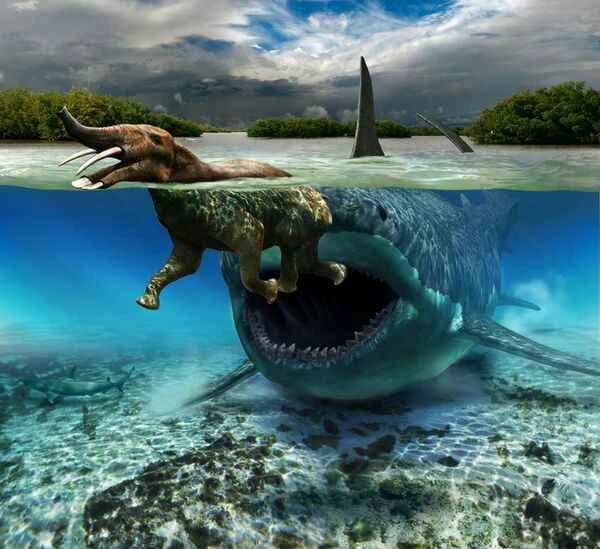
While whale sharks are the largest living sharks, the megalodon ( Carcharocles megalodon ) was truly the largest shark ever. This prehistoric behemoth roamed the oceans millions of years ago, its sheer size being unbelievable.
Megalodon: A Prehistoric Giant
Scientific name : Carcharocles megalodon
Body length : It is estimated that the maximum length of the Megalodon could reach 60-70 feet (18-21 meters), and some theories even suggest that they could reach 82 feet (25 meters) in length.
Weight : Adult megalodons weigh approximately 50-70 metric tons (110,000-150,000 pounds).
Habitat : Megalodon lived in warm, shallow oceans around the world during the Cenozoic era (approximately 16 to 2.6 million years ago).
Food : As one of the largest predators in history, the Megalodon fed on large marine mammals, including whales, seals, and large fish.
Why were Megalodons so huge?
The megalodon's enormous size was closely related to the abundance of large prey in the ocean, including whales, dolphins, and large fish. They possessed an extremely powerful bite force, capable of exerting pressure up to 18 tons . Although the megalodon went extinct approximately 2.6 million years ago, its size and power still leave a deep impression on many people.
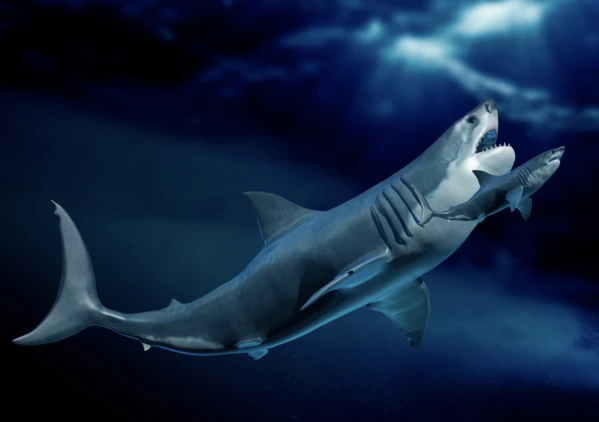
How do we know the size of the Megalodon?
Because megalodon went extinct millions of years ago, scientists can only estimate their size using fossil evidence. The most important clues come from megalodon teeth , which could grow up to 7 inches (18 centimeters) long. By studying the size of these teeth and comparing them with those of modern sharks, scientists have been able to estimate the size and weight of megalodon.
Other large sharks
While whale sharks and megalodons are the most famous giant sharks, there are other shark species that can also reach astonishing sizes. Let's take a look at these other behemoths:
1. Filter-feeding shark (Siamese shark)
Scientific name : Cetorhinus maximus
Body length : can grow up to 40 feet (12 meters).
Diet : Similar to whale sharks, filter-feeding sharks are also filter feeders, mainly feeding on plankton.
Conservation status : Filter-feeding sharks are listed as vulnerable species due to their slow reproduction rate and pressure from fishing.
2. Great White Shark
Scientific name : Carcharodon carcharias
Body length : The largest recorded great white shark was 20 feet (6 meters) long, but they typically grow to 15-16 feet (4.5-5 meters).
Weight : Great white sharks can weigh up to 2.5 metric tons (5,000 pounds).
Diet : Great white sharks are apex predators, primarily hunting seals, dolphins, and large fish.
Conservation status : The great white shark is listed as vulnerable by the International Union for Conservation of Nature (IUCN).
3. Tiger shark
Scientific name : Galeocerdo cuvier
Body length : Tiger sharks can grow up to 16 feet (5 meters) long.
Food : Tiger sharks are known for their diverse diet, eating almost anything from fish to birds, turtles, and even garbage.
Conservation status : Tiger sharks are listed as near endangered due to overfishing leading to a decline in their numbers.
Why are sharks so huge?
A shark's size is influenced by a variety of factors, including food availability, environmental conditions, and evolutionary advantages. For whale sharks, their large size helps them efficiently filter large amounts of water and obtain sufficient food. For large predatory sharks like the megalodon, the reason for growing to such a massive size is to be able to hunt large prey and subdue them with their immense strength.
Currently, the whale shark is the largest living shark, reaching lengths of over 60 feet, a gentle giant of the ocean. The megalodon, on the other hand, was the largest shark in history, estimated to have reached 82 feet in length. Although these behemoths are long extinct, many shark species still rule the oceans today with their massive size and power.
Understanding the history and biology of these giant sharks can help us better appreciate their vital role in marine ecosystems and recognize the importance of protecting these amazing creatures.