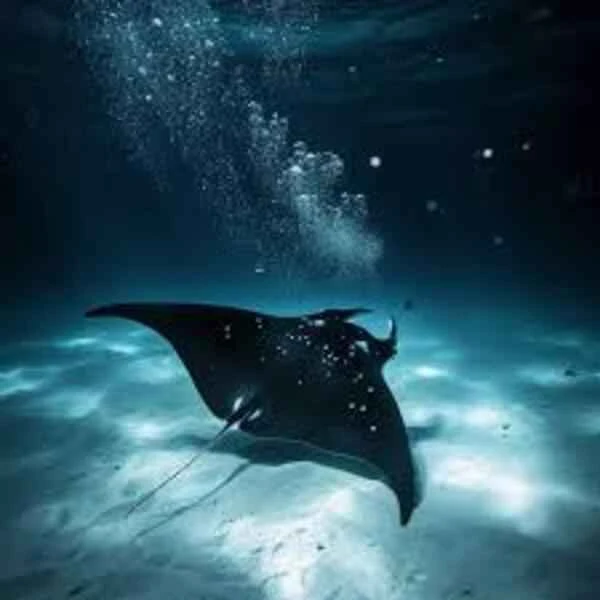
The ocean is home to many fascinating creatures, but few have captivated ocean lovers worldwide like the manta ray, with its massive size and graceful movements. This article delves into the world of the largest manta ray, exploring its size, behavior, habitat, conservation efforts, and the interactions between humans and these gentle giants.
What is the largest manta ray?
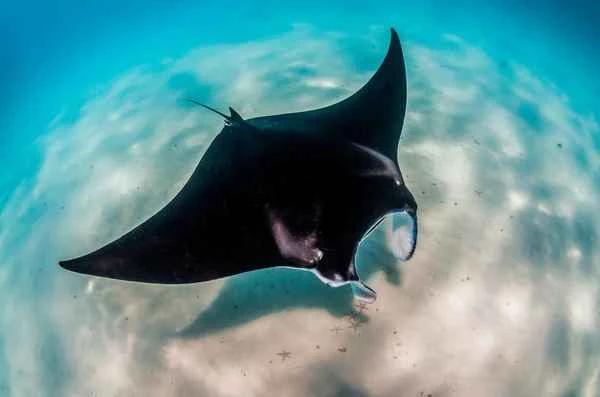
The giant manta ray (Manta birostris) is the largest species of manta ray. They are widely distributed in oceans around the world, attracting the attention of divers and researchers with their enormous size and graceful movement.
How big can they grow?
Wingspan: The wingspan of the giant manta ray can reach an astonishing 29 feet (about 8.8 meters).
Weight: They weigh approximately 2,200 to 3,000 pounds (1,000 to 1,350 kilograms).
In comparison: their size is often compared to a small airplane, making them giant fish in the ocean.
Record-breaking manta rays
The largest manta ray on record had a wingspan of over 30 feet, making it a true ocean giant.
manta ray species
Manta rays are divided into two main species:
Giant manta ray (Manta birostris): The largest species, usually inhabiting open ocean.
Coral reef manta ray (Mobula alfredi): Slightly smaller, prefers to inhabit shallow waters near coral reefs.
While both are impressive, the giant manta ray stands out due to its size and global distribution.
Habitat and Distribution
Manta rays inhabit warm tropical and subtropical waters worldwide. They are found in a variety of marine environments, including:
Open Ocean: Giant manta rays typically roam the vast waters of the Pacific, Atlantic, and Indian Oceans.
Coral reefs: Coral reef manta rays prefer to inhabit nearshore waters where there are abundant food sources.
Hotspots: Some of the best manta ray watching locations include the Maldives, Hawaii, the Great Barrier Reef, and Indonesia.
Manta rays are known for their migratory behavior, crossing oceans in search of waters rich in plankton.
Behavior and Diet
Manta rays are filter feeders, feeding on large amounts of plankton. Their feeding method is called countercurrent feeding, which involves swimming with their mouths wide open to filter plankton.
Main behaviors
Gentle Giant: Despite their enormous size, manta rays are harmless to humans.
Social: Manta rays often congregate, especially when feeding or cleaning.
Aerial performances: They are known for their breathtaking leaps out of the water and spin in the air.
Threats to manta rays
Unfortunately, manta rays face threats to their survival from human activities.
Overfishing: Manta rays are often caught because of their gill plates, which are commonly used in traditional medicine.
Accidental catching: Many manta rays are accidentally caught in fishing nets.
Habitat loss: Coral reef degradation and marine pollution endanger their habitats.
protection efforts
Manta rays are listed as vulnerable on the International Union for Conservation of Nature (IUCN) Red List. Conservation organizations protect manta rays through the following measures:
Marine Protected Areas (MPAs): These areas restrict harmful activities such as fishing.
Trade regulation: International agreements such as the Convention on International Trade in Endangered Species of Wild Fauna and Flora (CITES) monitor and restrict the trade in manta ray products.
Education and Tourism: Raising public awareness and helping to fund conservation efforts through sustainable diving and snorkeling tourism activities.
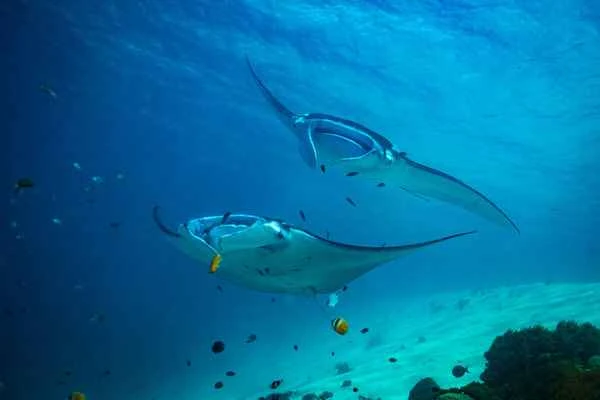
Interaction with manta rays
Swimming with manta rays is a dream experience for many ocean enthusiasts. These interactions are safe and memorable, as long as we follow responsible guidelines.
Suggestions for manta ray tourism
Keep your distance: Avoid touching or chasing manta rays to ensure their comfort and safety.
Choose ethical operators: Support tourism companies that adhere to strict guidelines for manta ray interactions.
Best viewing locations: Famous manta ray diving spots include Kona in Hawaii, Hanifaru Bay in the Maldives, and Raja Ampat in Indonesia.
Interesting facts about manta rays
Fish with the largest brain capacity: Manta rays have the largest brain-to-body ratio of all fish.
Intelligent creatures: Research suggests that manta rays may be able to recognize their own reflection in a mirror, a manifestation of advanced intelligence.
Unique markings: Each manta ray has a unique spotted pattern on its belly, which researchers use to identify them.
Misunderstood relative: Unlike stingrays, manta rays do not have tail spines and are completely harmless.
The Importance of Manta Rays
Manta rays play a vital role in maintaining the health of marine ecosystems. As filter feeders, they help regulate plankton populations, which impacts the food chain. Furthermore, they contribute to ecotourism, generate income for local communities, and fund conservation projects.
The largest manta rays, with their breathtaking size, graceful movement, and high intelligence, are considered gentle giants of the ocean. However, they face numerous threats that jeopardize their survival. By learning more about these amazing creatures and supporting conservation efforts, we can ensure their continued existence in the oceans. Whether you are an ocean enthusiast, a diver, or simply someone curious, manta rays are a testament to the beauty and complexity of marine life.