Musk oxen, also known as musk oxen, do indeed have a musky scent, especially during their mating season, but not everyone likes that smell.
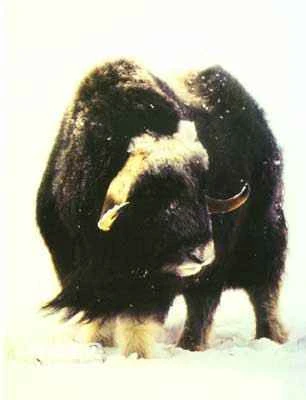
Musk oxen are classified as animals between cattle and sheep, perhaps more appropriately belonging to the families Capricornidae or Antelopeidae. In appearance, they resemble yaks from Tibet, my country, and indeed possess a somewhat stubborn temperament. Musk oxen stand about 1.5 meters tall, are about 2 to 2.5 meters long, and can weigh over 400 kilograms. Females are slightly lighter, about three-quarters the weight of males. Their weight is concentrated in the forequarters with humps, making them exceptionally agile and powerful. They are the largest herbivores in the Arctic, distributed across the ice fields of Canada, Greenland, and northern Alaska. They feed on moss, lichen, and the roots, stems, and bark of plants. Slow-moving yet incredibly energetic, they are the undisputed rulers of the tundra.
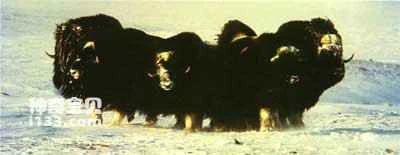
Musk oxen form a circular formation when danger approaches.
Musk oxen possess a pair of incredibly strong horns, powerful weapons for defense and combat; their bodies are covered in long, trailing hair that reaches the ground, beneath which grows a thick layer of high-quality down, which the Inuit call "quivet"; their ears are small and covered in dense hair; their nose is the only exposed part of their body. The musk ox's body structure effectively reduces heat loss, allowing it to withstand wind speeds of up to 96 kilometers per hour and temperatures as low as -40°C. They thrive in such harsh environments. In the depths of winter, warm air currents sometimes visit the Arctic, bringing heavy rain. The poor musk oxen are often soaked to the bone, and when the cold wind blows, the rainwater freezes into a thick layer of ice, turning them into giant ice rudders, unable to move. Disaster ensues, and some musk oxen freeze to death as a result.
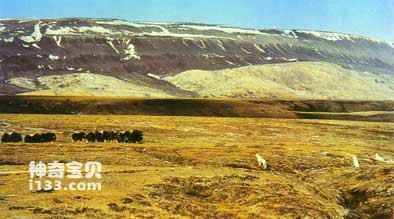
As the two armies faced off, a pack of wolves approached the musk ox.
Under normal circumstances, musk oxen appear exceptionally docile, walking slowly and deliberately, as if contemplating important matters. They stop to eat a little food, then lie down and chew slowly before dozing off. Once slightly awake, they continue walking a short distance. This behavior reduces energy expenditure and food requirements, achieving two goals at once. Reports indicate that because musk oxen conserve energy so efficiently, they require only one-sixth the amount of food of a cow of the same size.
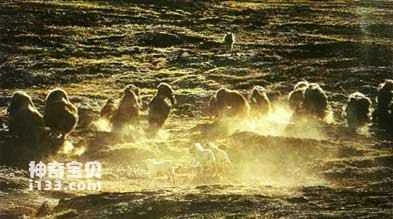
The musk oxen could not withstand the attack and were routed.
Musk oxen are gentle in nature and never cause trouble. Even when faced with a powerful enemy (mainly Arctic wolves), they adhere to the principle of "I will not attack unless attacked," always remaining vigilant and never initiating an attack. At such times, they adopt a collective defensive strategy, automatically forming a circle with the weaker animals in the center. Using their massive bodies, they create an effective protective "wall," glaring angrily at any intruder, raising their hard, forked horns as if to intimidate them. If an enemy attacks, they will fight to the death, never retreating.