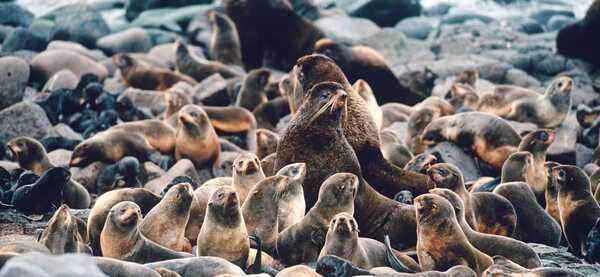
The northern hairy seal (Callorhinus ursinus) is an impressive marine mammal, renowned for its dense fur and captivating behavior. While perhaps not as well-known as whales or dolphins, the northern hairy seal plays a vital role in the North Pacific ecosystem. This article delves into the biology, habitat, and conservation efforts of this unique species to help you gain a comprehensive understanding of the northern hairy seal.
What is a northern hairy seal?
The northern hairy seal is a species of hairy seal that inhabits the North Pacific Ocean. Unlike true seals, hairy seals have thick, dense fur and are generally more agile on land than other seals. They are known for their large size, excellent swimming ability, and unique social behavior.
External features
Size: Adult males can reach 8 feet (about 2.4 meters) in length and weigh about 600 pounds (about 272 kilograms), while females are smaller, usually about 4.5 feet (about 1.37 meters) in length and weighing 100-150 pounds (about 45-68 kilograms).
Unique fur: Their thick fur is an important feature that distinguishes them from other seal species, enabling them to survive in cold waters.
Flippers: Hairy seals have long forepipexes that enable them to propel themselves efficiently in water. They are very agile in both land and water, but prefer to rest on land.
Habitat and distribution of the northern hairy seal
Northern hairy seals are mainly distributed in the North Pacific Ocean, with their primary breeding populations located in the Pribilov Islands and Aleutian Islands. They are also found throughout the Bering Sea and occasionally off the coasts of Japan and Russia.
Important habitats
Pribilov Islands: This is the largest breeding ground for northern fur seals, and these islands are an important part of their habitat.
Aleutian Islands: Another key breeding ground, known for its cold waters, which are ideal for the survival of hairy seals.
North Pacific: During the non-breeding season, northern fur seals migrate across the North Pacific in search of food and for other activities.
Reproductive Behavior of Northern Hairy Seals
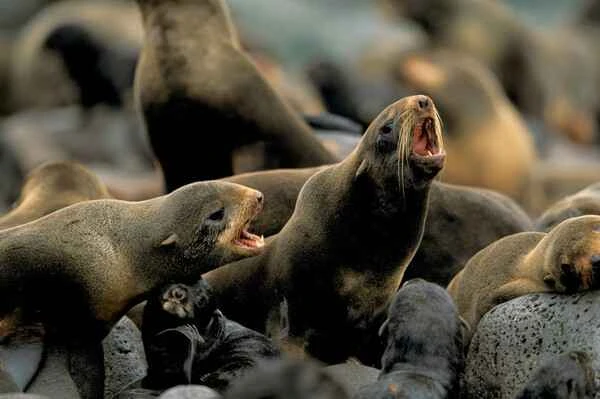
The breeding season for northern hairy seals typically begins in June and lasts until August. During this period, male seals (also known as "male seals") compete for territory and mates, exhibiting strong and aggressive behavior.
Reproductive behavior
Mating: During the breeding season, male seals establish territories and actively defend these areas, refusing entry to other males. Female seals mate with males within these territories, and each female typically gives birth to only one pup.
Birth of the pups: Northern woolly seal pups are typically born on land and rely on their mothers for nursing. The pups are nursed for several months until they begin to learn to swim and forage independently.
Diet and foraging behavior
Northern hairy seals are carnivorous, and their diet mainly consists of fish, squid, and other marine life. They are capable of deep-sea diving to hunt food sources that are inaccessible to other marine mammals.
Foraging habits
Diving: Hairy seals can dive to depths of 600 feet (about 183 meters) in search of food, and a single dive can usually last for several minutes.
Diet: Their main food sources include Pacific herring, cod, squid, and small fish. They are highly efficient hunters, using their sharp teeth to quickly capture prey.
Migration patterns
Although northern fur seals do not undertake long-distance migrations like some other species, they still migrate seasonally based on their needs for foraging and reproduction. Outside of the breeding season, they cross the vast North Pacific Ocean in search of suitable foraging areas.
Migration routes
Summer foraging: After the breeding season, northern fur seals migrate to cold waters where food is plentiful.
Winter migration: During winter, they usually migrate south or to deeper waters to avoid the harsh environment near the breeding island.
Predators and Threats of the Northern Hairy Seal
Despite having few natural predators, adult northern fur seals still face a variety of threats from the ocean.
predators
Killer whales: Killer whales prey on young hairy seals, although adult hairy seals are usually not easy targets for them.
Sharks: Some species of sharks, such as the great white shark, also attack hairy seals.
Human impact
Overfishing: Commercial fishing leads to the depletion of fish resources, which directly affects the food supply for hairy seals.
Pollution: Marine pollution such as oil spills and plastic waste threatens the habitat and health of seals.
Climate change: Rising ocean temperatures could disrupt the food sources and migration patterns of fur seals.
Protection status and efforts
The conservation status of the northern fur seal is a major concern due to numerous threats. Although their numbers have recovered from past declines, they remain vulnerable.
Protective measures
Marine protected areas: Marine protected areas like the Pribilov Islands provide safe breeding grounds for hairy seals.
Regulations: International agreements, including marine mammal protection laws, help limit hunting and reduce human interference with marine mammals.
Scientific research: Ongoing scientific research is crucial for monitoring the health status of hairy seals and understanding their migration patterns.
The role of the northern hairy seal in the ecosystem
Northern hairy seals play a vital role in the marine food chain. As predators of fish and squid, they help regulate the populations of these species, thus maintaining the balance of the ecosystem. Furthermore, they also serve as prey for larger predators, fostering an ecological balance between predators and prey.
Interesting facts about the northern fur seal
Social animals: Northern fur seals are highly social animals and often gather in large groups during the breeding season.
Deep-diving ability: They can dive to depths of over 600 feet, deeper than many other marine mammals.
They are fast swimmers: their long flippers make them excellent swimmers, with a top speed of up to 25 miles per hour (about 40 kilometers per hour).
The northern hairy seal is a fascinating marine mammal that plays a vital role in the North Pacific ecosystem. Despite current conservation challenges, these unique animals have the potential to continue thriving in their natural habitats through ongoing conservation efforts and scientific research. Whether you're a marine enthusiast or a conservation advocate, the northern hairy seal is a species worthy of attention.