When it comes to the most venomous animals in the world, the box jellyfish undoubtedly tops the list. This marine creature is renowned for its almost transparent appearance and highly venomous tentacles, and has evolved into one of the most efficient predators in the ocean. Let's delve into what makes the box jellyfish one of the most dangerous and venomous animals on Earth.
What are box jellyfish?
Box jellyfish: one of nature's deadliest creatures
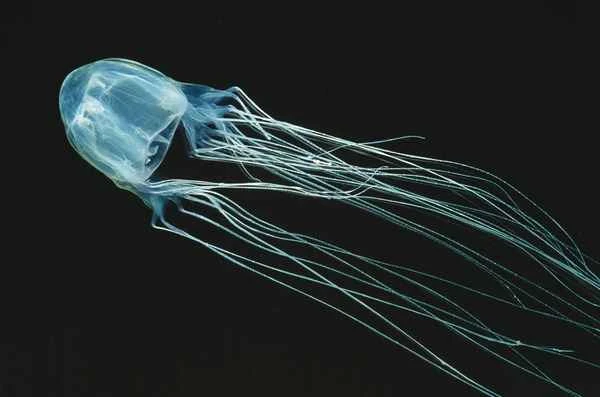
The box jellyfish, scientifically known as *Chironex fleckeri* , is considered one of the deadliest animals on Earth. Its venom is potent enough to kill a person within minutes. This nearly transparent, ghostly creature primarily inhabits the warm coastal waters of the Indo-Pacific region and has evolved into a highly efficient hunter, possessing one of the fastest-acting venoms known in science. Below is a detailed introduction to the box jellyfish's characteristics, its deadly venom, its distribution areas, and how to avoid its harm.
Characteristics of box jellyfish
Box jellyfish are distinctly different from other jellyfish:
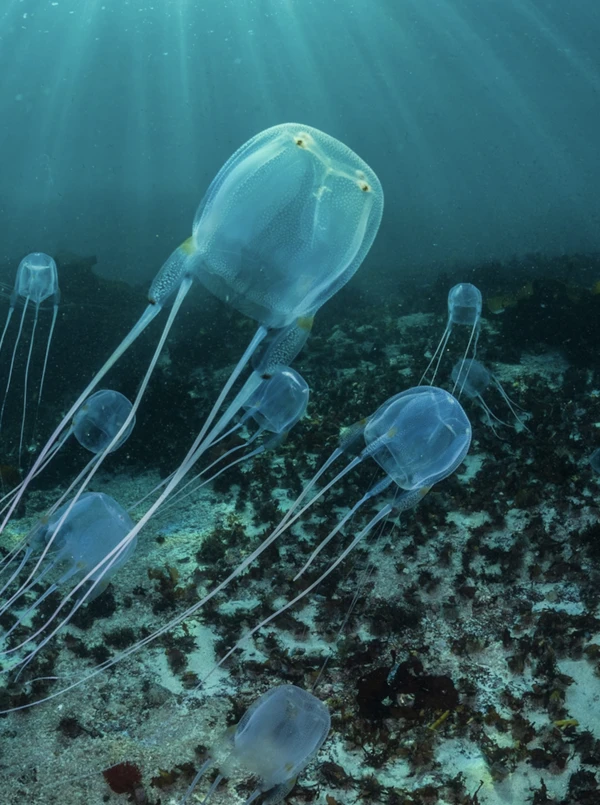
Unique shape : Unlike jellyfish that are usually round or bell-shaped, the box jellyfish has a cube-shaped body, which gives it its "box" name.
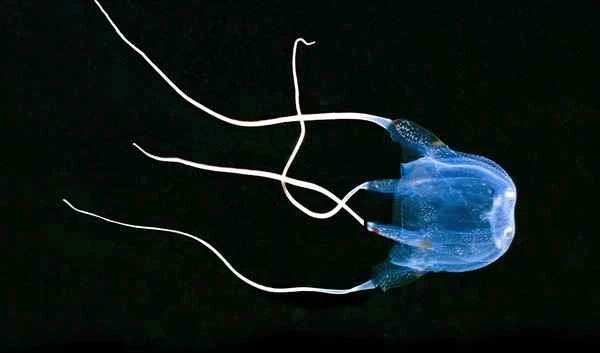
Tentacles : Each corner of the box jellyfish extends multiple long tentacles, which can reach up to 3 meters in length. These tentacles are covered with special stinging cells ( nematocysts ), which contain venom sacs.
Fast Swimming : Unlike many jellyfish that rely on currents to float, the box jellyfish is an unexpectedly agile swimmer. It can move quickly to hunt or avoid threats in the water. This active swimming ability helps it cover a wider area and avoid being washed ashore or trapped on rocky areas.
Vision and Senses : The box jellyfish has a rather complex visual system, possessing 24 eyes distributed around its body. Some of these eyes can recognize colors and form images, helping it to see and actively hunt. This visual ability makes it more of a predator than a creature that simply floats on water currents, compared to other jellyfish.
The deadly venom of the box jellyfish
Box jellyfish venom is considered one of the most potent and fastest-acting toxins in nature, with extremely serious effects on the human body.
Neurotoxins and cardiovascular effects : The venom contains neurotoxins, blood toxins, and cardiotoxins that can rapidly attack the heart, nervous system, and skin cells, causing severe pain and even cardiac arrest.
Immediate symptoms : Being stung by a box jellyfish may cause Irukangi syndrome, including severe pain, muscle spasms, rapid heartbeat, and sweating. In severe cases, death can occur within minutes if not treated promptly.
Skin damage : When the tentacles come into contact with the skin, they leave deep red marks and cause burn-like damage. The scars may last for weeks or even permanently, and in some cases, the wound may become necrotic, meaning the tissue dies.
The role of venom : Venom helps box jellyfish catch small fish and crustaceans, which are their main food source. The venom instantly paralyzes its prey, providing a highly efficient hunting method that allows it to capture its prey within seconds.
Habitat: Distribution area of box jellyfish
Box jellyfish are mainly distributed in the Indo-Pacific region, including coastal areas of northern Australia, Thailand, Malaysia, and the Philippines. Their peak activity season is from October to May, when they are most active and pose a greater threat to tourists. During this period, jellyfish warnings are often posted on local beaches to remind people to be cautious.
How to avoid box jellyfish stings and first aid measures
Understanding the threat posed by box jellyfish and taking appropriate precautions is crucial. Here are some safety tips:
Pay attention to warning signs : Beaches where box jellyfish are found usually have warning signs, especially in high-risk areas. Please be sure to follow these signs and do not swim in prohibited areas.
Wear protective clothing : When swimming in waters where box jellyfish live, wear protective clothing to cover your skin and provide some protection.
Avoid touching jellyfish : Even dead jellyfish can retain toxicity on their tentacles. Avoid direct contact and do not assume that a "dead" jellyfish is safe.
First aid : If stung by a box jellyfish, prompt first aid can save your life. You can rinse the wound with vinegar to neutralize the nematocysts and prevent further venom release. Avoid rubbing the wound and seek medical attention as soon as possible.
Cardiopulmonary resuscitation (CPR): In severe cases, box jellyfish venom can cause cardiac arrest. If you have CPR knowledge, you can perform this while waiting for rescue, potentially saving the victim's life.
Mysterious Box Jellyfish
Box jellyfish are evolutionary marvels and among the most threatening marine creatures. Possessing a complex sensory system, incredible swimming speed, and potent venom, they are true marine predators. Despite their small size and near-transparent appearance, box jellyfish pose a significant threat and should not be underestimated. Maintaining a safe distance from box jellyfish and respecting their habitat will ensure your own safety.
Box jellyfish showcase the beauty of the ocean while also reminding us of the potential dangers in nature. Even the smallest creatures can possess unimaginable power.
How dangerous are box jellyfish?
Box jellyfish venom contains components that attack the heart, nervous system, and skin cells. After being stung, the following symptoms may occur:
Intense pain : Box jellyfish stings are known for their extreme pain, which can cause victims to go into shock or even lose control of their limbs.
Heart failure : Toxins can cause arrhythmia, which can lead to cardiac arrest within minutes if not treated promptly.
Skin damage : A sting will leave a dark red mark on the skin, which may result in a permanent scar. In severe cases, necrosis (i.e., tissue death) may occur at the sting site.
These symptoms are known as "Irukanji syndrome," named after the Irukanji jellyfish, a smaller but equally dangerous species of jellyfish. Many victims of box jellyfish stings describe the pain as "unbearable," even likening it to burning or electric shock.
Why are box jellyfish so venomous?
The box jellyfish's potent venom is an evolutionary adaptation that allows it to quickly paralyze and kill its prey. This jellyfish feeds on small fish and shrimp, which will quickly escape if not immediately paralyzed. The venom's rapid action renders the prey helpless, allowing the jellyfish to feed easily.
Where can I find box jellyfish?
Box jellyfish are mainly distributed in the warm coastal waters of the Indo-Pacific region, especially in the waters of northern Australia, Thailand, Malaysia, and the Philippines. The peak season for box jellyfish in these areas is from October to May each year, during which time they are more active and pose a greater threat to tourists.
How to prevent being stung by a box jellyfish?
Knowing when and where box jellyfish are found is key to avoiding their stings. Here are some basic safety precautions:
Pay attention to warning signs : Warning signs are present on many beaches in areas where box jellyfish are prevalent. Be especially mindful of these signs when swimming, particularly in Australia and Southeast Asia.
Wear protective clothing : When entering waters where box jellyfish are found, you can wear protective clothing. This type of clothing can cover the skin and provide some protection.
Do not touch : If you see jellyfish, do not touch them. Even dead jellyfish can cause stings.
Learn first aid : If stung, vinegar can neutralize some of the toxins. Rinse the wound with vinegar before medical personnel arrive, and do not rub the wound to avoid worsening the injury.
Other venomous animals: How do they compare to box jellyfish?
While box jellyfish are considered the most venomous animals in the world, several other creatures are also highly venomous and worth mentioning:
Poison dart frogs : These brightly colored small frogs contain a toxin called curare, which can paralyze or even kill predators.
Inland taipan : Known as the most venomous snake, the venom of the inland taipan is enough to kill multiple adults in a single bite.
Stonefish : This fish is adept at camouflage and possesses highly venomous spines, making it one of the most dangerous fish in the world.
Box jellyfish – one of the deadliest creatures in the ocean.
With its deadly venom and elusive, transparent body, the box jellyfish is undoubtedly one of the most venomous animals in the world. While other creatures also possess potent toxins, the box jellyfish's venom is not only extremely potent but also takes effect within minutes, making it both mysterious and terrifying. If you have ever swum in the waters where box jellyfish inhabit, please remain vigilant, take necessary precautions, and respect this amazing yet deadly marine creature.
These beautiful yet dangerous creatures remind us that there are still many mysteries and potential dangers in the ocean—respecting these creatures is key to our safety.
The intelligence (IQ) of box jellyfish
Strictly speaking, box jellyfish do not possess "intelligence" or "IQ" in the traditional sense. IQ is typically used to measure the cognitive and problem-solving abilities of animals with complex nervous systems (especially humans). However, box jellyfish have relatively simple nervous systems and do not possess a traditional "brain," therefore their intelligence cannot be assessed in the same way as that of mammals or other animals with advanced cognitive functions.
However, despite this, box jellyfish exhibit surprising "intelligent" characteristics in certain behaviors and responses, particularly in the design of their body structure and survival mechanisms. Here are some key elements regarding the "intelligence" of box jellyfish:
1. A complex sensory system
Box jellyfish possess a very unique sensory system, especially their "eyes." Their sensory organs are called "staphylococci," and each staphylococci contain six eyes. Each box jellyfish has a total of 24 eyes, distributed across four staphylococci.
High-resolution eyes : Some of these eyes (known as "lens eyes") are capable of forming sharp images, similar to how human eyes work. This means that box jellyfish can identify and avoid obstacles, which is extremely rare among other jellyfish.
Visual processing ability : Despite lacking a brain, box jellyfish have a visual processing system that can recognize light and shape, aiding them in navigation to some extent. They can track and approach prey and avoid obstacles, demonstrating a certain level of perception.
2. Precise control of motion
Unlike other jellyfish, box jellyfish possess a strong swimming ability. Their bodies are square-shaped, with four sets of tentacles arranged in a box-like pattern along the edge of their bell-shaped cap. This shape allows for more precise swimming direction, and they can autonomously adjust their swimming speed and direction to approach prey or avoid threats.
Autonomous movement : Unlike other passively floating jellyfish, box jellyfish can autonomously control their movement and even actively track prey. Although these behaviors do not involve "intelligent" decision-making, they achieve efficient movement control through muscle contractions.
Rapid reaction : Box jellyfish can react quickly, rapidly changing direction to ensure they don't collide with obstacles or dangerous areas. This behavioral pattern demonstrates the sophisticated control an organism possesses within a simple nervous system.
3. Unique neural network
Box jellyfish do not have a brain, but only a simple nervous system, which is biologically known as a "reticular nervous system." This system allows them to coordinate complex behaviors without a central processing unit such as a brain.
Brainless control system : Its nervous system is located within a neural ring surrounding the canopy, connecting various tentacles and sensory organs to support its movement and responses. Their behavior is automatically coordinated through this network of nerves, rather than relying on higher-level neural processing.
Instantaneous response : Through this neural network, box jellyfish can respond quickly to external stimuli. This system is similar to the "reflex arc" of some lower animals, whose behavior is based on instantaneous responses to sensory input, rather than through complex thinking.
4. Hunting strategies and venom
Box jellyfish possess highly developed venom, sufficient to quickly paralyze or even kill their prey. This makes their hunting behavior highly efficient, and this "predatory intelligence" is achieved through evolutionary design.
Precise venom delivery : Box jellyfish can sense the presence of prey, and the nematocysts (venom-releasing cells) on their tentacles can quickly respond to external stimuli and release venom. This evolutionary mechanism demonstrates their high degree of adaptability to the environment.
Hunting Efficiency : Despite lacking intelligence in the traditional sense, box jellyfish exhibit high efficiency in hunting. They choose the optimal moment and use venom to quickly subdue their prey, demonstrating a highly effective survival strategy.
5. Basic learning ability (limited adaptability)
Although box jellyfish do not have brains, some studies suggest that they may possess some degree of learning ability, particularly the ability to adapt to their environment and change their behavior.
Conditioned reflexes : Studies have shown that box jellyfish can form conditioned reflexes to some extent through repeated experiences, such as avoiding contact with specific areas of an obstacle. However, this learning ability is extremely limited and does not involve complex memory or decision-making abilities.
Environmental adaptation : Box jellyfish can adjust some of their behaviors according to environmental changes, such as changing their swimming patterns to avoid areas with strong light or high temperatures. This ability to adapt to the environment does not fall under the category of "intelligence" but is the result of natural selection.
Box jellyfish do not possess intelligence or "IQ" in the traditional sense because they lack a complex brain structure. However, their sensory systems, motor control, hunting mechanisms, and limited adaptability allow them to exhibit a degree of "intelligent behavior" despite their lack of a brain. These abilities are actually the result of highly adaptive evolution; through millions of years of evolution, they have developed unique mechanisms to meet their survival needs. Therefore, although box jellyfish cannot think or learn like higher animals, their survival strategies and sensory abilities make them extremely efficient marine predators.
Box jellyfish sting: Can a human survive?
The answer is yes, it is possible for humans to survive a box jellyfish sting, but this often depends on the severity of the sting, the speed of first aid, and the individual's physical condition. Box jellyfish venom is one of the most potent venoms in the world. Without prompt treatment, a sting can cause excruciating pain, cardiac arrest, respiratory failure, and even death within minutes. However, with rapid first aid and timely medical attention, many stung individuals can recover. Here are the key factors for survival and the necessary responses:
Factors affecting survival
Severity of stings : Box jellyfish tentacles contain venom, and the severity of a sting depends on the number of tentacles that come into contact with the skin. The more contact, the greater the venom exposure, and the higher the risk to life.
Size and age : Children and smaller individuals tend to face a higher risk of severe reactions because their bodies absorb toxins more quickly and their systems are more prone to overload.
Health condition : Patients with heart or breathing problems are more likely to face complications, so rapid medical intervention is especially important.
Location of the puncture : Stabbings near the torso (such as the chest or back) are generally more dangerous than those on the limbs. When venom is near the heart or lungs, it can cause a fatal reaction more quickly.
Symptoms and Risks
Box jellyfish venom can cause intense, sudden pain , paralysis, shock, and difficulty breathing. The venom attacks the heart, nervous system, and skin cells, leading to the following symptoms:
The burning pain at the puncture site
Blisters or severe scarring may occur at the point of contact with the tentacles.
Muscle spasms and convulsions
Dizziness, nausea or vomiting
Difficulty breathing or chest pain can lead to respiratory failure.
Cardiac arrest in severe cases
These symptoms often worsen rapidly, so prompt action is crucial.
First aid and emergency response
After being stung by a box jellyfish, prompt first aid is crucial to improving the chances of survival. Here are the appropriate measures:
Remove the victim from the water : If the victim is unable to swim due to pain or paralysis, pull them ashore to prevent drowning.
Rinse the wound with vinegar : Rinsing the wound with vinegar can neutralize the venom cells (nematocysts) and prevent further venom release. Do not use fresh water , as this may trigger the release of more venom.
Remove tentacles : Carefully remove any remaining tentacles from the skin using tweezers or the edge of a card, avoiding direct contact to prevent further stings.
Perform CPR if necessary : If the victim stops breathing or has no pulse, perform CPR while waiting for medical help. Rapid intervention during cardiac arrest can save lives.
Seek immediate medical attention : Even after first aid, seek professional medical help as soon as possible. Hospitals in high-risk areas typically have antitoxins and supportive care available.
Medical treatment
In a hospital, treatment for box jellyfish stings may include:
Antitoxin : In some cases, medical personnel will inject box jellyfish antitoxin to counteract the effects of the venom. This antitoxin is specifically designed to counteract the toxins of the box jellyfish.
Pain relief and supportive care : Strong analgesics such as morphine will be used to relieve pain, and intravenous fluids will be administered to maintain hydration and support cardiovascular function.
Respiratory and cardiac support : If a patient experiences respiratory failure or cardiac arrest, a ventilator or cardiac medications may be needed to stabilize breathing and cardiac function.
Survival and recovery
With timely first aid and hospital care, many people stung by box jellyfish survive, but full recovery can take time. Pain can last from days to weeks, and some victims may be left with skin lesions or scars. Severe cases can lead to long-term complications such as nerve damage or heart problems.
Prevention and awareness
In areas where box jellyfish are common, taking preventative measures is crucial:
Protective clothing : Wearing protective clothing while swimming can greatly reduce the risk of being punctured.
Pay attention to warning signs : Jellyfish warning signs are usually posted on beaches in high-risk areas, especially during peak season.
Avoid swimming at night : Box jellyfish are more active in low light.
While box jellyfish stings can be fatal, survival is possible with timely first aid and medical treatment. Understanding these methods and being more vigilant can help swimmers in tropical waters improve their safety and increase their chances of survival and recovery if stung.
The box jellyfish's deadly record: human deaths
Box jellyfish are notorious for their potent venom, causing numerous human deaths each year, particularly in tropical coastal regions. While the exact death toll is difficult to determine due to numerous unreported incidents or the inability to identify specific jellyfish species, researchers estimate that at least 20 to 40 people worldwide die annually from box jellyfish stings . This figure includes both confirmed cases and deaths strongly suspected to be caused by box jellyfish.
Recorded death cases
Australia : Since the 1880s, box jellyfish have caused more than 70 documented deaths in Australia. Queensland and the Northern Territory are the most affected areas, with most deaths occurring in these warm northern regions. Australia maintains a strict record of such incidents and has medical facilities equipped with measures to treat jellyfish stings.
Philippines : The Philippines reports more than 100 deaths annually from box jellyfish stings, making it one of the regions with the highest number of such deaths globally. Box jellyfish are abundant in the tropical waters surrounding the Philippines, and the victims are mostly fishermen and children swimming in coastal areas.
Thailand, Malaysia, and Vietnam : Residents of coastal areas in these countries also face the threat of box jellyfish, although fewer deaths have been recorded compared to Australia and the Philippines. Unreported deaths may exist in some areas due to limited medical resources or remote locations.
In other regions , such as Hawaii and other parts of the Indo-Pacific, box jellyfish stings still pose a threat, but deaths are rare due to safety measures and access to medical facilities.
Reasons for high mortality rate
The lethality of box jellyfish stings lies primarily in the rapid action of the venom on the human body. The venom attacks the heart, nervous system, and skin cells, leading to cardiac arrest, respiratory failure, and excruciating pain . Victims may go into shock within minutes, and therefore often die quickly without immediate medical attention.
Safety measures and emergency response
In areas where box jellyfish are frequently sighted, several safety measures are typically implemented, including:
Warning signs : Warning signs should be posted in coastal areas during the jellyfish season (October to May of the following year).
Protective clothing : It is recommended that people swimming in these areas wear protective clothing to reduce skin exposure.
Vinegar stations : Some beaches have set up vinegar stations as an emergency first aid measure. Vinegar can neutralize stinging cells and prevent further release of venom.
Despite these preventative measures, deaths caused by box jellyfish continue to occur, highlighting the importance of enhanced safety awareness and timely medical responses in affected areas.
Research and medicine on box jellyfish
Box jellyfish have garnered widespread attention due to their deadly venom, making them a crucial subject of research in toxicology (toxin studies) and medicine. Scientists have made significant progress in understanding the effects of box jellyfish venom on humans, while continuously exploring more effective treatments, antitoxins, and potential medicinal value. Below are some key research areas and their significance in medicine:
Understanding Box Jellyfish Venom
Box jellyfish venom is a complex mixture of proteins, peptides, and toxins designed to instantly paralyze its prey. It has a powerful effect on the heart, nervous system, and skin cells, causing intense pain, muscle spasms, and even fatal cardiac arrest and respiratory failure. Researchers have isolated multiple components of the venom to better understand the mechanisms by which it causes rapid and severe damage.
Mechanism of action : Studies have shown that box jellyfish venom affects calcium channels in heart cells, leading to arrhythmias and even cardiac arrest. This explains why some stings can be fatal when the venom rapidly enters the bloodstream.
Pain pathway : Venom also acts on pain receptors, triggering a severe pain response. Understanding how venom interacts with these receptors is key to developing more effective pain relief methods.
Cellular damage : The venom damages skin cells, causing necrosis (tissue death), which often leaves noticeable scars on survivors. Further research into this can help find ways to mitigate long-term damage.
Advances in antitoxins
Antitoxins have long been the primary treatment for box jellyfish stings, especially in Australia where *Chironex fleckeri* (one of the most venomous box jellyfish) is common. The following outlines the mechanism of action of antitoxins and current research progress:
Traditional antitoxins : Traditional antitoxins are produced by injecting a small amount of venom into an animal (usually a horse) to elicit an immune response, and then extracting antibodies. When antitoxins are injected into a puncture wound patient, these antibodies neutralize the venom, preventing further damage.
Effectiveness and limitations : While antitoxins can be life-saving, their effectiveness is limited in severe cases where venom spreads rapidly. Researchers are working to improve the efficacy and stability of antitoxins and to make them more widely available in areas with high rates of puncture wounds.
Synthetic and peptide-based antitoxins : Scientists are developing synthetic antitoxins that may not only be more effective but also more cost-effective. These antitoxins will mimic the action of natural antibodies, neutralizing venom toxins more quickly and comprehensively.
Application technology : Researchers are also developing delivery methods for rapid local injection, such as syringes, to quickly and locally deliver antitoxins to the wound site, which could improve treatment speed in critical moments.
Pain management and treatment
Box jellyfish stings cause intense pain that is difficult to treat, and the venom often causes persistent pain. Researchers are exploring new ways to alleviate the pain and reduce tissue damage:
Vinegar rinsing : Rinsing the injured area with vinegar immediately after being stung has been shown to neutralize venom cells (nematocysts) and prevent the release of more venom. Researchers are evaluating the effects of vinegar on the venom of different box jellyfish to find out if there are more effective rinsing agents.
Painkillers : In hospitals, opioids such as morphine are commonly used to relieve the intense pain from box jellyfish stings, but these drugs can have side effects. Researchers are looking for more targeted pain-relieving compounds that act on specific pain pathways affected by the venom.
Local anesthesia and cooling : Applying cold compresses or local anesthesia can reduce inflammation and numb pain. Research is exploring how to reduce pain without causing further skin damage.
Medicinal potential of box jellyfish venom
Interestingly, some scientists are also researching the potential medicinal value of the venom. Despite its dangers, box jellyfish venom may have therapeutic effects on certain medical conditions. Here are some areas of exploration:
Cardiovascular research : Venom acts on heart cells, providing new insights into the study of heart function and arrhythmias. By understanding how venom interferes with heart rhythm, scientists hope to develop new therapies for heart-related diseases.
Pain management research : The unique interaction between venom and pain receptors may help in the development of new pain medications. Researchers are exploring whether certain proteins in venom can be modified for use in the production of harmless painkillers.
Neurological research : The effects of box jellyfish venom on the nervous system is also a hot research topic. By studying how the venom interferes with nerve function, scientists may discover new ways to treat neurological diseases or protect nerve cells from damage.
Current Challenges and Future Directions
Despite the progress made in research, box jellyfish research still faces many challenges:
Venom Complexity : Box jellyfish venom has a complex composition and varies greatly between species, increasing the difficulty of developing universal treatments or antitoxins. Researchers are studying different species of box jellyfish to better understand the diversity of their venom.
Accessibility to treatment : In areas where box jellyfish are common, access to rapid antivenom and effective treatment is limited. Research is advancing efforts to make life-saving treatments more accessible and affordable, particularly in coastal communities where stings are frequent.
Education and Prevention : In addition to treatment, raising public awareness of how to avoid box jellyfish and how to respond to a sting remains a priority. Strengthening awareness and safety measures in high-risk areas can reduce the need for emergency treatment.
Box jellyfish research is deepening our understanding of this dangerous creature and improving treatments for those stung. Whether it's improving the effectiveness of antitoxins or exploring the medical potential of the venom, scientists are working to reduce the risks posed by box jellyfish and try to find their medicinal value. The ultimate goal of the research is to save lives and potentially develop new, beneficial drug treatments.