In the early 20th century, some Western scholars, based on the evolution of mammals and changes in the natural environment since the Tertiary period, inferred that the vast, arid, and barren plains of Central Asia (including northwestern China and Mongolia) were once a "Garden of Eden" that nurtured humankind in the distant past. Consequently, many countries organized expeditions to Central Asia in an attempt to find clues to human ancestors. For a time, "Central Asia fever" swept the world's paleoanthropological and paleontological communities.
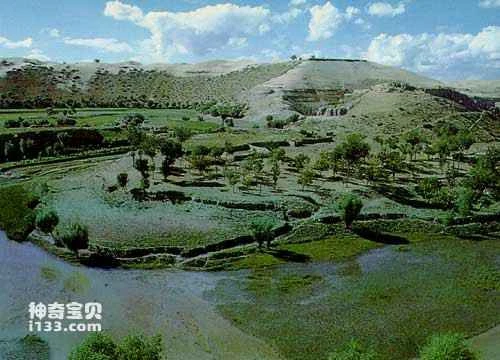
Salausu Ruins

woolly rhinoceros
Beginning in 1914, Father Licent, the renowned French collector and founder of the Tianjin Beijiang Museum (the predecessor of the current Tianjin Natural History Museum), conducted a ten-year expedition in the Yellow River basin. In 1920, he discovered abundant fossils of three-toed horses in the Loess Plateau region of eastern Gansu. Simultaneously, he discovered three stone artifacts—one quartz core and two quartz flakes—made by ancient humans in loess deposits dating from the Late Pleistocene (130,000 to 10,000 years ago) north of Qingyang, Gansu. These were the first Paleolithic artifacts discovered on Chinese soil, a discovery of great significance. This discovery not only corrected the prejudice that "there were no Stone Age humans in China," but also further fueled the anthropological community's dream of finding fossils of ancient human ancestors in China.
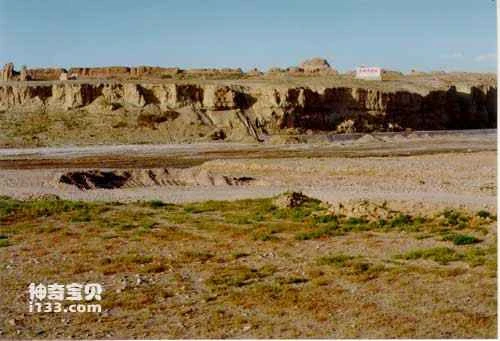
Shuidonggou Site
In 1922, based on a clue provided by a Mongolian villager named Wangchuk, Sang Zhihua discovered the world-renowned Salawusu site (located in present-day Uxin Banner, Ordos League, Inner Mongolia Autonomous Region) in the southeastern corner of the Ordos Plateau. In 1923, Sang Zhihua and Teilhard de Chardin conducted two further investigations and excavations at the site, discovering a rich and well-preserved collection of fossils of 33 mammal species, including woolly rhinoceros, Hetao giant deer, Wangchuk buffalo, wild ass, antelope, and camel, as well as 11 bird species, including ostriches. They also discovered a batch of Paleolithic artifacts and a human upper incisor fossil. The assemblage of animal fossils indicates that the Salawusu site dates to the Late Pleistocene (recently, radiometric dating places its absolute age at approximately 35,000 years ago). Furthermore, Sang Zhihua and Teilhard de Chardin also discovered a very rich Late Paleolithic cultural site at Shuidonggou in Lingwu County, Ningxia Hui Autonomous Region.
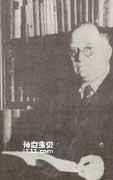
Andersson
Meanwhile, starting in 1921, the American Museum of Natural History's Asian Expedition, organized and led by the renowned naturalist and explorer Andrew, spent a full ten years searching for traces of human ancestors in the Gobi Desert of Mongolia, but with little success. However, they made significant progress in collecting Tertiary mammal fossils, providing strong evidence that the Central Asian Plateau was an important stage for the evolution of mammals in the Old World (referring to Eurasia and Africa).
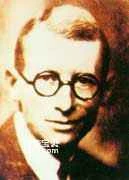
Bu Dasheng
The renowned Swedish geologist Johan Gunnar Andersson also devoted himself to the "Central Asia craze," dedicating himself to the investigation of ancient Chinese cultures from 1919 onwards. In 1921, he excavated the Copper-Stone Age cave site at Shaguotun in Jinxi County, Liaoning Province, and the famous Neolithic site at Yangshao Village in Mianchi County, Henan Province. In 1923 and 1924, he further explored various parts of Gansu Province, discovering numerous Late Neolithic and Copper-Stone Age villages and cemeteries. At that time, the Canadian anatomist Johan Gunnar Andersson was teaching at Peking Union Medical College. He had a good working relationship with Andersson and consistently supported the theory that Central Asia was the cradle of humankind, writing papers such as "The Divergence of Asia and Primates" to argue that Central Asia was the most promising place to find early humans and their ancestors. In 1925, the two scholars began actively preparing for a Central Asian expedition project targeting Xinjiang. Their collaborative project received funding from the Swedish Research Council and the Rockefeller Foundation in 1926. At this very moment, an unexpected discovery turned their attention to Zhoukoudian, a small, inconspicuous suburban town southwest of Beijing at the time.