Many people are familiar with the game of Animal Chess, where the elephant is the most powerful piece, followed by the lion, tiger, leopard, dog, and wolf. But how powerful are these animals in the real wild animal world? Below is a list of the top ten land predators, showcasing their strengths and advantages. Each animal plays an important and unique role in its ecosystem. Discussion is welcome:
1. Saltwater crocodile
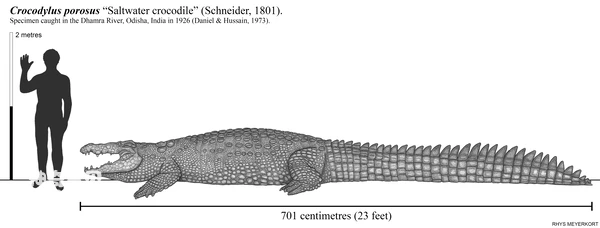
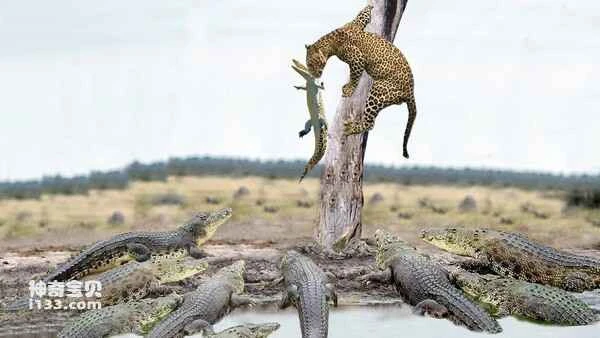
The saltwater crocodile is the largest known reptile. Adult males can exceed 6 meters in length, weigh over 1 ton, and have a bite force of up to 1.9 tons. They are ferocious and have virtually no natural predators, typically preying on large mammals such as buffalo, livestock, and wild boar. In Australia, saltwater crocodiles have attacked humans and even boats, demonstrating their terrifying power. Despite their formidable strength, the outcome is not always certain when facing other top predators like tigers; reports indicate that saltwater crocodiles and Bengal tigers have been evenly matched. However, in a water battle, the saltwater crocodile would undoubtedly have a greater advantage, as its hunting and maneuvering skills in the water far surpass those on land.
2. African elephant
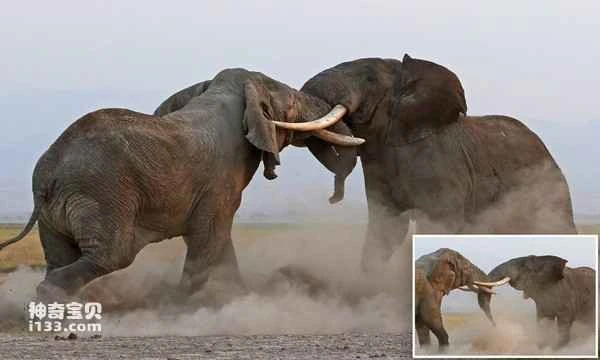
Although lions are renowned as the "kings of the savanna," even a group of lions working together wouldn't dare to easily challenge an African elephant weighing 4 to 5 tons. Adult African elephants can exceed 3.5 meters in height, with some reaching as high as 4.1 meters; their sheer size is enough to subdue most land predators. Compared to Asian elephants, African elephants are more robust and powerful. Due to the unique nature of their environment, they exhibit greater aggression and a fiery temper, displaying a formidable and intimidating ferocity. Fortunately, these massive beasts are herbivores and typically don't display their ferocity; otherwise, they would be an even more terrifying presence.
3. Black rhinoceros
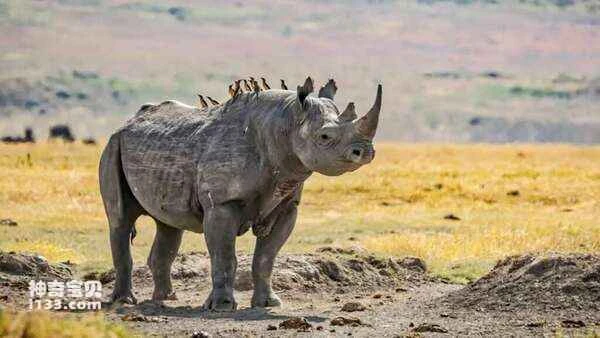
Like African elephants, black rhinoceroses dominate the African continent with their sheer size and weight. Although named black rhinoceroses, their coat color is actually closer to grayish-white. They measure approximately 2.3 to 3.1 meters in length and weigh about 0.8 to 1.4 tons. While slightly smaller than white rhinoceroses, black rhinoceroses are far more ferocious. They are known for their bad temper and sometimes attack vehicles, humans, and burning campfires. Black rhinoceroses can reach speeds of approximately 45 kilometers per hour in short runs, and up to 52 kilometers per hour, charging like an armored tank, capable of easily overturning a car.
4. Hippopotamus
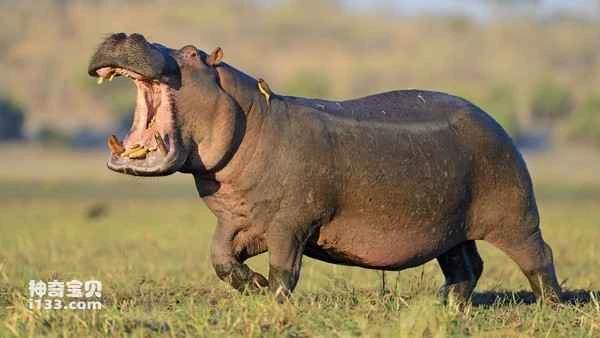
Hippos, the third largest land animal in the world, are only after elephants and rhinoceroses. With their enormous size and aggressive nature, hippos have virtually no natural predators besides humans. An adult male hippo weighs an average of about 1.5 tons. Despite their seemingly clumsy appearance, they can charge at speeds of up to 30 kilometers per hour, a force that few animals in the world can withstand. Although hippos are herbivores, they possess an extremely strong territorial instinct and are highly aggressive, making them one of the omnivores responsible for the most human deaths in Africa each year. Due to habitat proximity, crocodiles are often targeted and killed by hippos. Hippos also frequently attack humans; records show that attacks on humans unintentionally provoked on the shore or from boats are very common. Although they don't attack for prey, hippos will not hesitate to attack if they feel threatened.
5. Polar bear
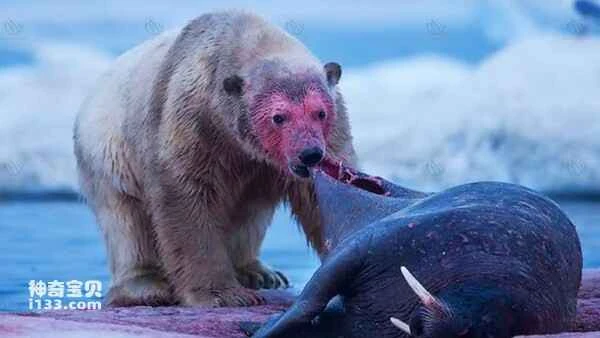
Polar bears are the largest land carnivores on Earth. Although they appear cute and docile, they are actually extremely ferocious. These animals occupy the top of the food chain in their region. When standing upright, an adult polar bear can reach a height of 8.3 feet and weigh up to 1760 pounds, equivalent to the weight of 3 to 4 African lions. Despite their massive size, they are incredibly agile, reaching top speeds of up to 60 kilometers per hour, 1.5 times the speed of the world's fastest 100-meter sprinter. In water, polar bears are even more adept and agile. Furthermore, polar bears are the only bear species that will actively attack humans; it is believed that no one could survive an attack from one.
6. African buffalo

Many people are unaware that African buffalo are actually one of the most dangerous animals in Africa, and one of the most frequent cause of injuries and fatalities. They are particularly aggressive when injured, isolated, or with calves, and can be more dangerous than lions, which are often feared. Because of their volatile temperament and the significant danger they pose to humans, no attempt has ever been made to tame them.
Some zoologists once believed that buffalo were the weaker prey of lions, but this is not the case. Because lions risk their lives every time they hunt, they usually hunt in packs, attacking isolated or weak buffalo. Once the buffalo are grouped together, lions dare not easily provoke them. It is common for lions to fail in their attacks and be forced to climb trees to avoid a counterattack. There are even recorded incidents of lions being accidentally struck and killed by buffalo horns.
7. African lion
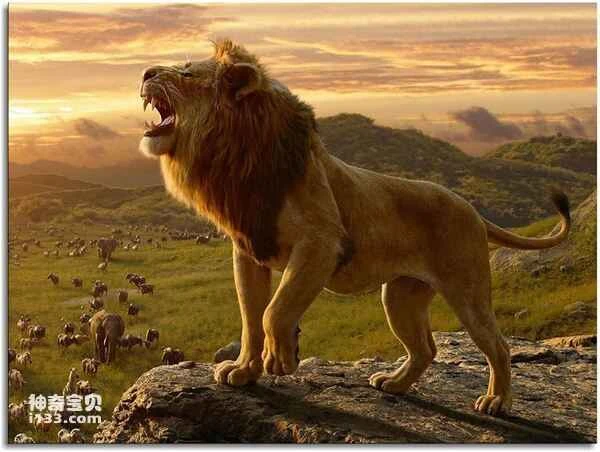
Lions, hailed as the "kings of the savanna," are apex predators on the African savanna. Wild male lions weigh between 138 and 275 kilograms and can reach a length of 3.2 meters, making them among the top predators. Their attack speed can reach 60 to 80 kilometers per hour. Lions typically bite off the heads and necks of small prey, while against larger prey, they tear or suffocate the neck. Unlike tigers, lions hunt in packs. When facing fast-moving prey like oryx, they work together to herd them into an ambush and then launch a surprise attack. Against giant prey like giraffes, they exhaust their opponent until they are brought down. There are even records of multiple lions cooperating to kill isolated elephants.
8. Siberian Tiger

The Siberian tiger, known as the "King of the Jungle," is considered one of the largest tiger subspecies. A wild adult male Siberian tiger typically weighs up to 260 kilograms, is about 3 meters long, and can leap up to 8 meters, easily clearing obstacles 3 meters high. These tigers are fierce, suspicious, and agile, moving stealthily through dense jungles, using surprise attacks as their hunting method. They approach their prey and launch a swift assault, ending its life quickly. When food is scarce, Siberian tigers will even attempt to prey on black bears and brown bears, which actually constitute 5% to 8% of their diet. Although Siberian tigers typically prey on bears, there have been rare instances where brown bears have successfully defeated or even killed Siberian tigers in self-defense or resource competition.
9. Brown Bear

Brown bears are among the largest land carnivorous mammals, exhibiting admirable adaptability and the ability to survive resiliently in a variety of environments. These animals are enormous; adult male brown bears can reach 3 meters in length and weigh up to 680 kilograms, possessing a powerful physique and immense strength. In a single strike, a brown bear can crush a red deer as large as itself and easily shatter the spine of an American bison. Although brown bears do not have retractable claws like lions or tigers, the immense strength within their bodies is their most lethal weapon.
10. Jaguar
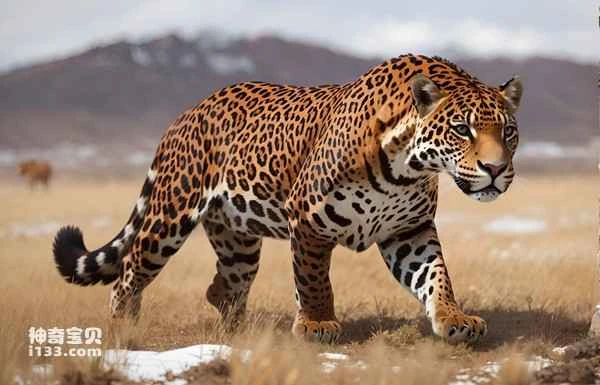
The jaguar is one of the third largest living cat species, measuring approximately 182 to 285 centimeters in length and weighing between 70 and 180 kilograms. While they share similar markings with leopards, their overall size is more tiger-like. As apex predators, jaguars possess exceptionally powerful bites, capable of penetrating the hard shells of reptiles. Like other large cats, they employ a rare hunting method: biting directly through the skull between their prey's ears, delivering a fatal blow. When facing reptiles such as caimans, jaguars swiftly leap onto their prey's back, severing the cervical vertebrae and incapacitating the prey. Even with giant sea turtles like leatherback sea turtles, jaguars can sever their heads.