If you're an equestrian enthusiast or just starting out in the world of equestrian sports, understanding the different types of equestrian competitions and their rules is essential. Whether you're drawn to the elegance of dressage , the thrill of show jumping , or the challenge of long-distance endurance riding, each sport has its unique challenges and rules. This article will provide a detailed analysis of some of the most popular equestrian competition types, their rules, and the unique aspects of each.
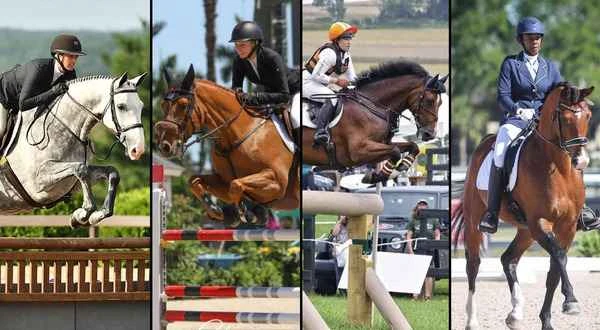
race
What is equestrian competition? Overview
Equestrian competitions encompass a range of riding events where riders and horses showcase their skill, agility, and strength. These competitions can be individual or team events, and the horse's performance, the rider's technique, and the synergy between horse and rider are all judged. Equestrian competitions have a history spanning over a century and continue to attract riders from around the world.
Key elements of equestrian competition
Scoring and Judging <br/>Most equestrian events have a scoring system that evaluates performance based on the horse's performance, the rider's skill, and coordination. Scoring systems may vary depending on the type of competition, but they typically reward precision, agility, and control.
Safety Rules <br />In all equestrian competitions, the safety of riders and horses is always paramount. Riders must wear appropriate safety equipment , including helmets, protective clothing, and riding boots. Furthermore, horses must be adequately prepared and in good health to participate in the competition.
Types of equestrian competitions
If you're new to equestrian sports, it's essential to understand the different types of equestrian competitions and their rules. Whether you prefer elegant dressage , thrilling show jumping , or the extreme endurance required for riding , each sport offers its unique challenges. Below is a comprehensive overview of the most popular equestrian competition types and their rules—take a look!
1. Dressage : The Precise Art
Rules and Scoring
Dressage, often called "equestrian ballet," emphasizes the perfect coordination between rider and horse. Riders perform according to a prescribed sequence of movements, and judges score based on the horse's accuracy, grace, and smoothness. The better the horse responds to subtle commands, the higher the score.
motion precision
Each action must be performed precisely; any minor error (such as improper movement or incorrect sequence of steps) will result in a deduction of points. Common actions include:
Gait : The horse maintains the correct gait.
Turning : The horse must turn in circles on its hind legs, requiring very precise movements.
Rating system
Percentage system : Each action is scored from 0 to 10, and the final score is usually expressed as a percentage.
2. Show Jumping : Speed and agility
Obstacles
In show jumping , riders and horses must navigate around various obstacles, such as walls, fences, and water jumps. The course design is relatively complex, with obstacles varying in height and difficulty.
Time limit
Competitions typically have time limits, and riders must try to complete the race within the allotted time while avoiding fouls (such as hitting obstacles). Exceeding the time limit will result in increased penalties.
Jumping skills
Clear jumps : The key is for the horse to jump over obstacles smoothly without colliding.
Rider control : The rider's ability to control the horse is crucial to helping the horse jump smoothly.
Rating system
Fouls : Points are deducted for each mistake (such as knocking over an obstacle or refusing to jump).
Time penalty points : Riders will be penalized with time penalty points if they exceed the time limit.
3. Eventing : A comprehensive test of both rider and horse.
The three stages of the triathlon
Triathlon is a comprehensive event that combines three different sports:
Dressage (a display of precision and elegance).
Obstacle course (a test of agility and speed).
Cross-country races (a challenge of endurance and physical strength).
Cross-country race
Cross-country racing requires riders and horses to traverse complex natural obstacles, with courses typically ranging from 50 to 100 kilometers in length. This stage tests the horse's endurance and cross-country jumping ability.
Ratings and Overall Match
Total Score : The scores from the three events are combined, and the rider with the lowest final score wins.
Penalty : Each foul in each stage will add points, increasing the total score.
4. Arena Jumping : Indoor jumping
Indoor racetrack design
Show jumping is usually held in enclosed indoor arenas, with intricately designed obstacles that require riders and horses to demonstrate precise control.
Jump order and height
Obstacle height : The height of obstacles generally ranges from 1.2 meters to 1.6 meters, depending on the competition level.
Jump sequence : Riders must complete obstacle jumps in a specific order, which usually includes quick turns or combinations of multiple jumps.
score
Fouls : Just like in obstacle course , hitting an obstacle or exceeding the time limit will result in points.
Time : The time control requirements for the competition are very strict.
5. Polo : A team sport played on horseback.
Competition Rules
In polo , riders from two teams try to score by hitting the ball with polo mallets into the opponent's goal. The game is very fast-paced and usually consists of multiple chukka (rounds).
Stadium and player setup
Polo field size : A standard polo field is 300 meters long and 160 meters wide.
Team members : Each team consists of 4 riders, and each member has a different role (attack, defense, etc.).
Score
Goal : A player scores a goal by hitting the ball into the goal.
Penalty : A foul will result in a penalty or other point deduction.
6. Endurance Riding : A long-duration challenge
Long-distance racetrack
Endurance races test the endurance of both riders and horses. The race distance is generally 50-100 kilometers, and the course has complex terrain. Riders need to maintain the horse's stamina and manage the speed reasonably.
Supply Station
During the race, riders and horses can stop at designated aid stations to rest, replenish fluids, and energy. These stations are also used by veterinarians for health checks.
Cycling strategy
Successful riders know how to control the pace and avoid overexerting the horse's energy.
7. Driving: Horse-drawn carriage races
carriage type
In carriage racing , horses pull various types of carriages in a race. The race can be a single horse pulling a carriage or multiple horses pulling a carriage, and each type has different rules.
Driving skills
The driver must precisely control the horse's movements, usually using reins and words to command the horse.
score
Time penalty points : Points will be added if you fail to pass the track in time or encounter an obstacle.
8. Western Riding : Rodeo
Competition Events
Western riding includes a variety of traditional competitive events, such as steeplechaser , slalom , and cutaway :
Obstacle course : Riders navigate around designated obstacles to achieve the fastest time.
Slalom : Riders require their horses to perform turns, glides, and other maneuvers with high precision.
Cutting Race : Riders must separate a bull from the herd and keep it independent.
score
Speed : Obstacle courses typically require faster times.
Control : In slalom and cut races, the horse's control is crucial.
9. International Equestrian Federation (FEI) : The governing body for equestrian events worldwide.
International events
FEI is the governing body for equestrian events worldwide. Many important international events are organized by FEI, including the Olympic Games and the World Equestrian Games .
Rules and regulations
Global Events : FEI has established standard rules for various events to ensure fair competition in international events.
10. Horse racing : a combination of speed and strategy
Track design
In horse racing, the track can be a flat track or a steeplechase track (such as a steeplechase ). Flat tracks are generally oval-shaped, while steeplechase tracks include jumping obstacles.
Competition Rules
Horse racing is divided into flat racing (without obstacles) and steeple racing (with jumps). The race distance varies depending on the horse's age, ability, and experience.
Time and Records
Time : The match time is very short, usually completed within 1-2 minutes, and the time is recorded very accurately.
Winning : The horse that reaches the finish line first wins.
Summary of major equestrian competition rules
| Competition Types | Main content | Scoring criteria | Time/Distance |
|---|---|---|---|
| Dressage | Precision and elegance | Accuracy of movement, elegance | No time limit |
| Obstacle course | Speed and flexibility | Whether the jump was successful or not, time penalty | Each track lasts 1-2 minutes. |
| Triathlon | Comprehensive abilities (three items) | All scores are combined, and the three performance indicators are considered. | Trail running 50-100 km |
| obstacle courses | Indoor accuracy | Motion control, time control | Time control |
| polo | Teamwork and Speed | Goals scored, penalty points | Each round lasts 7 minutes, and there are usually 4 rounds. |
| Endurance race | Long-distance endurance | Health check, supply station | 50-100 km |
| Carriage racing | carriage control | Time penalty, obstacle collision | Time control |
| Western riding | Rodeo | Time and Control (Obstacle Course, Slalom Course, Cutting Course) | Depending on the project |
| race | Speed and Endurance | Time is of the essence; the fastest to cross the finish line wins. | 1-2 minutes |
This guide introduces you to several major equestrian events, highlighting the rules, techniques, and scoring methods for each. Whether you're watching or participating, understanding these basics will help you better appreciate this sport rich in history and culture!
Common rules of equestrian competitions
Although the rules differ for each equestrian event, there are some universal rules and guidelines that apply to all competitions:
1. Rider's clothing and equipment
Helmet : Riders must wear a suitable helmet in all competitions to ensure safety.
Saddles and reins : The requirements for saddles and reins differ for each competition type. For example, dressage saddles and steeplechaser saddles differ in design and fit.
2. The well-being of horses
Riders must ensure their horses are well cared for and in good health before competing. In endurance races, veterinary checks are conducted during the race to ensure the horses are healthy and fit.
3. Fair competition
In all equestrian competitions, sportsmanship and fair play are of paramount importance. Riders must adhere to ethical guidelines, and any unfair practices such as doping or mistreatment of horses will be severely punished.
Equestrian Competitions and Cultural Significance
Historically, equestrian competitions have held significant cultural value in many countries. From the Royal Horse Racing in England to traditional cowboy racing in America, horses have always played a vital role in daily life and leisure activities. Equestrian competitions symbolize the deep bond between rider and horse, showcasing the art of riding and mutual respect.
World's Top Five Equestrian Tours
Equestrian sport, with its combination of precision and tradition between riders and horses, has long attracted audiences and riders worldwide. Numerous equestrian competitions take place around the world, with some seasons considered among the most prestigious and challenging. These competitions encompass jumping , dressage , eventing , and many other disciplines, showcasing the skills of the world's top riders and the capabilities of their horses. If you are an equestrian enthusiast or wish to learn more about equestrian competitions, here are five of the world's premier equestrian competition circuits , distinguished by their rich history, level of competition, and thrilling atmosphere.
1. FEI World Cup™ (Jumps and Dressage)
Overview:
The FEI World Cup™ is one of the world's most prestigious equestrian competitions, encompassing both jumping and dressage . Organized by the International Equestrian Federation (FEI), the World Cup series takes place in multiple cities worldwide, culminating in a year-end final. This tour attracts the world's top riders and horses, showcasing their exceptional skills in jumping and dressage.
Key features:
Project : Jumping & Dressage
Tour locations : The tournament is held in major cities such as Paris, London, Hong Kong, and Las Vegas.
Competition Format : The World Cup is divided into regional qualifying rounds, with the champion of each event determined through the final.
Reputation : Since the 1980s, the FEI World Cup™ has been a landmark event in the global equestrian world.
Why it is the best:
The FEI World Cup™ represents world-class equestrian competition, with top riders and horses vying for the most prestigious titles. Its numerous global locations and diverse events make this tour incredibly exciting and a must-see for every equestrian enthusiast.
2. Longines Global Champions Tour (LGCT)
Overview:
The Longines Global Championship Tour (LGCT) is one of the world's most prestigious and internationally influential jumping competitions . Renowned for its luxurious venues and generous prize money, the LGCT attracts top jumpers from around the globe, with events held in numerous iconic cities worldwide, from Monaco to Shanghai .
Key features:
Project : Jump
Tour locations : Events will be held in Monaco, London, Paris, Miami, Shanghai, and other cities.
Competition format : The season spans multiple competitions, and riders accumulate points to compete for the Grand Prix and the overall annual championship.
Prize money : LGCT is one of the most lucrative jumping competitions, attracting a large number of top riders.
Why it is the best:
The Longines Global Championship Tour offers a series of lavish equestrian events with unparalleled venues and atmosphere. The competition during the season is exceptionally fierce, with riders and horses of extremely high skill levels, making it a must-see for jumping enthusiasts.
3. Rolex Grand Prix Jumping Grand Prix
Overview:
The Rolex Grand Prix Jumping Series is an elite series comprising four major jumping events: the Dutch Masters , the CHIO Aachen , the Geneva Grand Prix , and the Spruce Meadows Masters . What makes this series unique is that it combines some of the world's most challenging and prestigious jumping events.
Key features:
Project : Jump
Tour locations include renowned cities such as the Netherlands, Aachen (Germany), Geneva (Switzerland), and Spruce Meadows (Canada).
Competition format : Riders must win at least three of the four events to have a chance to win the Rolex Grand Prix Jumping Championship .
Prize money : These events offer very generous prize money and are among the most prestigious events in jumping competitions.
Why it is the best:
The Rolex Grand Prix Jumping Championship is one of the highest honors in the global jumping competition world. Winning this award requires an extremely high level of competition and consistency, and the venue and historical background of the event make it a benchmark for jumping competitions worldwide.
4. Badminton Eventing
Overview:
The Badminton Eventing Championships are among the world’s most prestigious eventing competitions (including dressage, cross-country, and jumping). Held annually at Badminton Estate in England, it is considered one of the “Big Three” eventing competitions in the world, alongside the Burghley and Kentucky Derby .
Key features:
Event : Triathlon (Dressage, Cross Country, Jumping)
Location : Bardemington House, England.
Competition format : Riders will complete three events over three days: dressage, cross-country, and jumps.
Prestige : With a long history, this event is one of the three most prestigious eventing competitions in the equestrian world, attracting top riders and horses from around the globe.
Why it is the best:
Badminton Eventing is renowned for its challenging cross-country courses, a comprehensive test of both horse and rider skill. Winning this event is considered the pinnacle of achievement in eventing, drawing enthusiastic spectators and participants alike.
5. Kentucky Triathlon
Overview:
The Kentucky Eventing Championships , held annually at the Kentucky Equestrian Park in the United States, is another top-tier global eventing competition, attracting the world's best riders and horses. The competition is renowned for its challenging cross-country courses and is part of the FEI Classic Series .
Key features:
Event : Triathlon (Dressage, Cross Country, Jumping)
Location : Kentucky Equestrian Park, USA.
Competition Format : Similar to Budmington, the Kentucky Triathlon lasts for three days and includes dressage, cross-country, and jumping events.
Prestige : The race is part of the FEI Classic Series and attracts top riders and horses from around the world.
Why it is the best:
The Kentucky Triathlon is a major event in the triathlon season, attracting the world's top riders with its challenging cross-country courses and beautiful racecourses. It is a prestigious event in the triathlon world, and participating in it is a dream for any rider.
The excitement of the world's top equestrian events
These five major equestrian events— FEI World Cup™, Longines Global Champions Tour, Rolex Grand Prix Jumping, Badminton Eventing , and Kentucky Eventing —represent the pinnacle of equestrian sport worldwide. Whether watching top riders showcase their exceptional skills in jumping or experiencing the challenge of eventing, each event delivers an unparalleled competitive experience. These events not only demonstrate the riders' skill and the horses' excellence but also embody the culture and tradition of equestrian sports.
For any equestrian enthusiast, these events are undoubtedly the most noteworthy top-level events and a glorious embodiment of the sport.
What is the most popular equestrian sport?
Globally, the most popular equestrian sport is show jumping . This sport is highly regarded for its dynamic nature and the speed, agility, and skill demands placed on both horse and rider. Show jumping involves a rider leading a horse through a series of obstacles, with the goal of successfully navigating all obstacles within a set time without knocking down any poles or objects.
Why is show jumping the most popular equestrian sport?
Exciting and fast-paced : obstacle courses are full of speed and challenge, making them incredibly exciting to watch, whether in competitions like the Longines Global Champions Tour or Olympic events.
Top-tier events : Large show jumping events such as the Rolex Grand Slam and FEI World Cup™ attract world-class riders and horses and offer substantial prize money, greatly enhancing the appeal of these events.
A wider audience : Obstacle course has gradually attracted more viewers through television broadcasts and the popularity of social media, making it a global sport.
Diverse venues : From large indoor arenas to expansive outdoor tracks, obstacle courses can be held on a variety of locations, increasing their popularity.
Equestrian events in the Olympics
Equestrian sport has been a Summer Olympic sport since 1900 , boasting a history of over 100 years. The Olympic equestrian events comprise three main competitions, each highly regarded for their challenge, elegance, and the seamless teamwork between rider and horse. The following are the three main equestrian competitions in the Olympic Games:
1. Dressage
Overview : Dressage, also known as "equestrian ballet," is a competition in which riders and horses perform a set sequence of movements within a designated area, showcasing the horse's precision, fluidity, and coordination with the rider.
Olympic format :
Individual dressage
Group dressage
Scoring : The competition is scored by a group of judges, and the scoring criteria include the accuracy of the movements, the horse's gait, and the rider's performance.
2. Obstacle Course (Show Jumping)
Overview : Show jumping requires riders to lead their horses over a series of obstacles (such as railings, water features, etc.) within a specified time. The goal is to avoid collisions with the obstacles and complete the course as quickly as possible.
Olympic format :
Individual obstacle course
Team obstacle course
Scoring : Riders are scored based on the number of fouls (collisions with obstacles) and time taken. Points are deducted for obstacle collisions and exceeding the time limit. The rider with the fewest mistakes and the fastest time wins.
3. Eventing
Overview : Eventing is considered the ultimate challenge in equestrian sports, combining dressage , cross-country , and show jumping . It comprehensively tests the horse's endurance, agility, speed, and the rider's ability to handle different terrains.
Olympic format :
Individual Triathlon
Team Triathlon
Scoring : The rider's performance in all three stages will be evaluated. The final winner will be determined by the combined score from all three stages, with fewer mistakes and better overall performance.
Popular equestrian sport : Show jumping is the most popular equestrian sport globally, attracting a large audience and media attention due to its speed and excitement.
Olympic equestrian events : The three major equestrian events in the Olympic Games are dressage , show jumping , and eventing . Each event showcases the unique synergy and superb skills between the horse and rider, becoming a highlight of the world's top equestrian competitions.
Summary: The allure of equestrian competitions
Whether you prefer the elegance of dressage , the thrill of show jumping, or the challenge of endurance racing , each equestrian sport has its unique charm. Understanding the rules and requirements of each competition will help you prepare and participate more effectively. By studying the details of these competitions, you will gain a deeper understanding of the technical aspects of equestrianism and the relationship between horse and rider.
For anyone looking to participate in competitive horseback riding , there's always a sport that suits your skills and interests. With proper training and preparation, you can enjoy the endless fun that equestrian competitions offer!