This is a frenzied moment—a swarm of male cactus bees surrounding a female. The suspense: in this love-filled melee, who will be the lucky one to mate with her? This photograph by Karine Aigner won the 2022 Wildlife Photographer of the Year (WPY) competition. In a sense, it's a technically demanding photograph; it requires a macro lens to get close enough to the heart of the subject.
“I had to lie face down in the mud for long periods of time,” Karin said with a laugh.
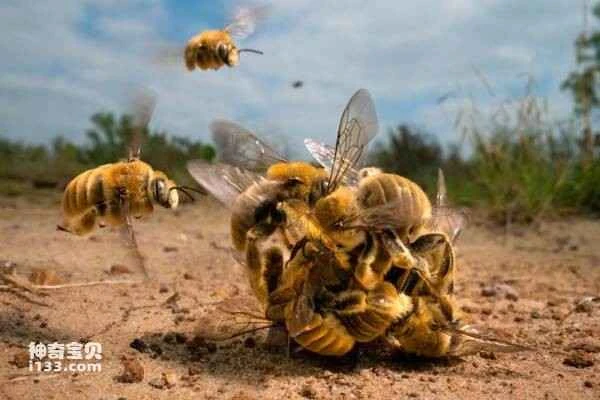
Buzzing: It took weeks for Karin Agner to capture this moment of bees fighting for mating rights, which won her the 2022 Wildlife Photographer of the Year award.
This American photographer is the fifth woman to receive the highest award in the WPY's 58-year history.
She told BBC News: “I didn’t go looking for this scene. I’ve been working on a ranch in South Texas for years and just happened to be in this place. I saw these little ‘volcanoes’ all over the ground—the burrows that the females dug for nesting.”
Cactus bees, as the name suggests, live on and around cactus plants. The females collect pollen, form it into small balls, and store them in cells in the soil. These balls are used to feed the bee larvae until they grow to maturity, become bees, fly out of the hive, and begin their reproductive cycle.
“This picture is fantastic, full of dynamic energy. It’s a perfect shot of ‘behavior.’ That’s what you can get from invertebrates, and that’s why I love them,” said Roz Kidman Cox, chair of the WPY jury.
"And then there's the composition. It's the bee that enters from the side that completes the picture. It provides the 'background music'."
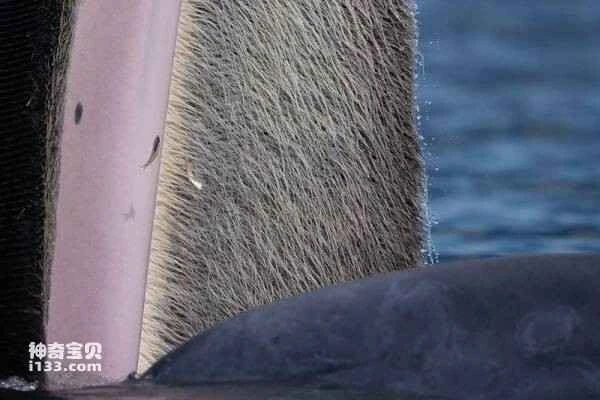
The beauty of whale baleen: Katanyou Wuttichaitanakorn went out to sea 20-30 times for this photo.
The 2022 Young Wildlife Photographer of the Year award went to 16-year-old Katanyou Wuttichaitanakorn from Thailand.
His award-winning work was a close-up of the Brad whale and the baleen plates in its mouth used to filter food.
You can see a sardine flying through the air, trying to escape being swallowed by a whale.
“I don’t know why, but the sardines jumped onto the boat,” Katayoo recalled. “I was lucky. I was on the boat approaching them. The whale stayed on the surface for about a minute.”
The WPY is one of the most prestigious photography competitions of its kind in the world. It was founded in 1964 by the BBC Wildlife Magazine and is now run by the Natural History Museum in London.
This year’s competition attracted 38,575 participants from 93 countries.