Some of India's animals include the Nilgore deer (Boselaphus tragocamelus), the Bengal vulture (Gyps bengalensis), and the Bengal tiger (Panthera tigris tigris). The Republic of India is a vast country in Asia with diverse climates and geography, resulting in a diverse range of animals, from rare to common. Below, we will introduce the characteristics of these Indian animals in detail.

Nilgore deer (Boselaphus tragocamelus)
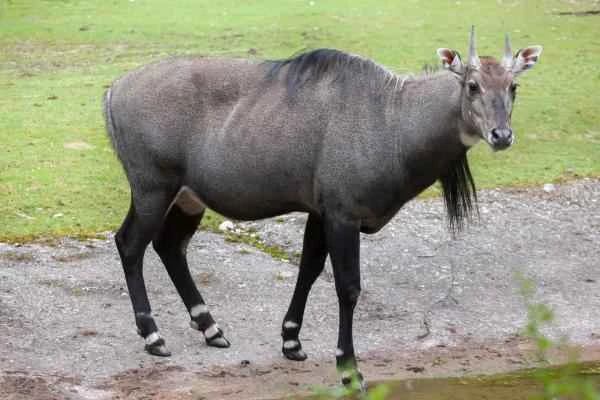
Also known as the blue bull because the males have bluish-gray coats. It is an elegant bison with a slender and powerful physique, somewhat resembling a deer. The nilgarch has short antlers, walks very quietly, and is a herbivore.
Bengal vulture (Gyps bengalensis)
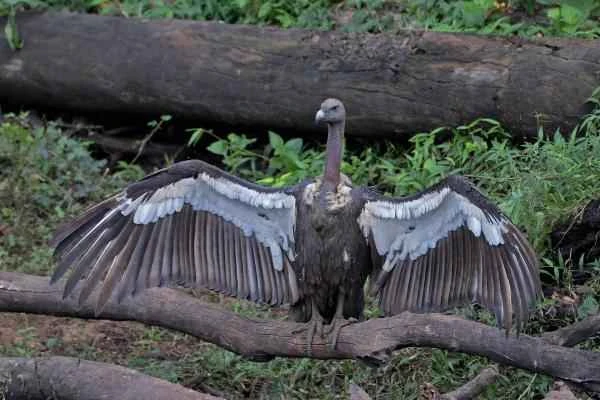
The Bengal vulture is a species of vulture endemic to India, belonging to the family Falconidae. It is endangered due to its consumption of livestock carcasses poisoned by the drug diclofenac, and is one of the most threatened animals in India.
Bengal tiger (Panthera tigris tigris)
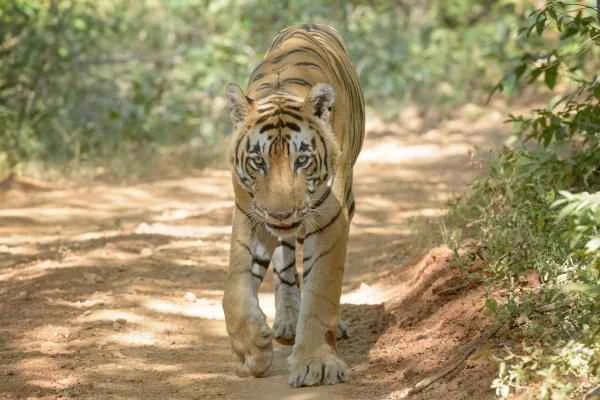
The Bengal tiger is an endangered animal in India, its habitat fragmented by urban expansion and threatened by poaching. It is India's national animal, and this designation was given to it in 1973 to promote conservation awareness.
Asiatic lion (Panthera leo persica)
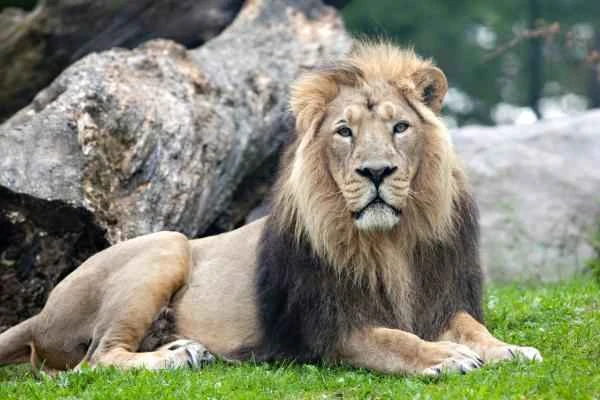
Although not critically endangered, its numbers have declined drastically, mainly due to human hunting. It is the only lion subspecies living outside of Africa, smaller than the African lion, with denser fur and tufts of hair on its elbows.
Indian cassowary (Ardeotis nigriceps)
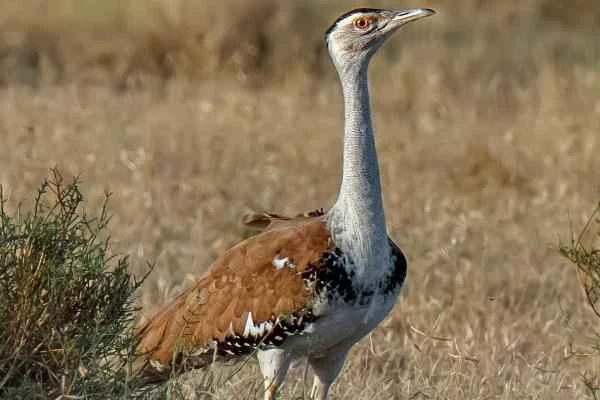
A rare bird species, endangered due to mass deaths caused by power lines in its habitat. With a lifespan of approximately 13 to 15 years, fewer than 300 individuals remain.
King cobra (Ophiophagus hannah)
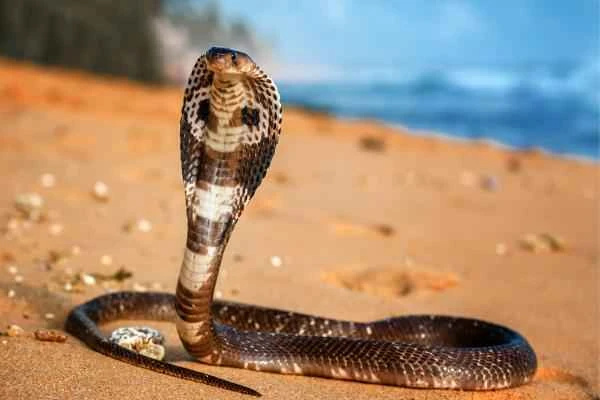
Known as the "Kingsnake" for its elegant appearance, it is one of the most venomous snakes, reaching lengths of 5 to 6.5 meters. It lives near lakes and streams in dense forests, primarily preying on other snakes. Its venom is extremely dangerous to humans, causing severe symptoms such as visual and respiratory failure.
Peacock (Pavo cristatus)
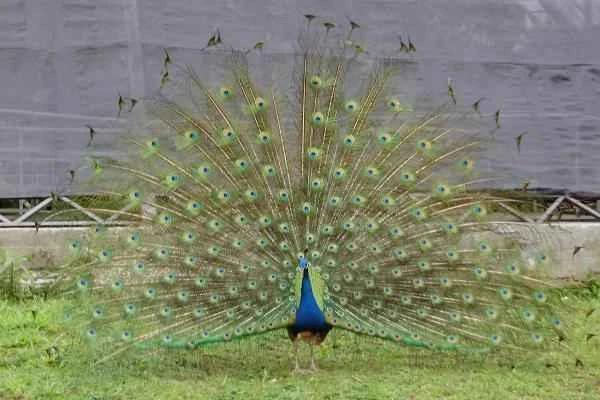
A bird endemic to India, now commonly found in parks and estates. They can live up to 15 years and weigh approximately 6 kilograms. Male peacocks possess brightly colored tail feathers, can fly short distances, and typically forage and nest on the ground, roosting in trees at night. Males are polygamous, having 5 to 6 female partners simultaneously.
Wildcat (Felis silvestris ornata)
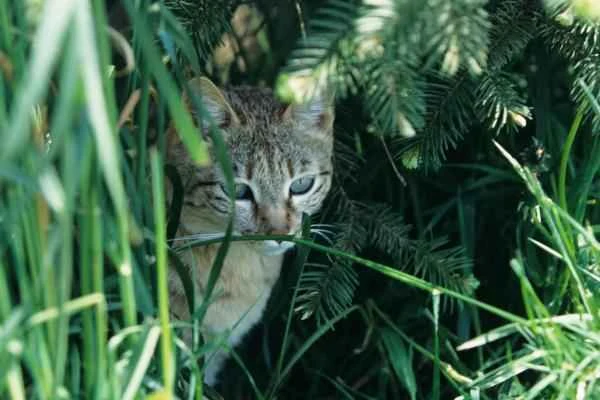
A typical wildcat species in southern India, with yellowish-green fur, a small body, and a weight not exceeding 4 kilograms. Its tail has a ringed pattern and a black tip. Resembling a domestic cat in appearance, it is one of the Eurasian wildcat subspecies and its population is growing rapidly in India.
Indian one-horned rhinoceros (Rhinoceros unicornis)
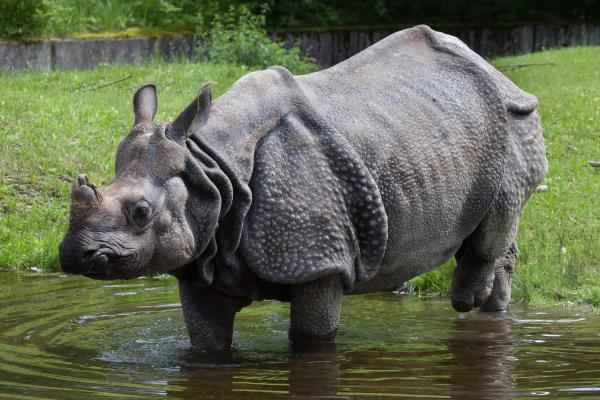
The largest rhinoceros species in northern India, reaching approximately 3.5 meters in length and weighing up to 2200 kilograms. They inhabit grasslands and meadows, feeding on grass. They possess a massive horn about 50 centimeters long on their nose, which has been mistakenly believed to have medicinal value since ancient times, leading to illegal hunting. Their skin is thick, resembling a carapace. Despite their enormous size, they can reach speeds of up to 50 kilometers per hour over short distances. They give birth to only one calf at a time, and the young rhinoceros stays with its mother until she becomes pregnant again (approximately two to three years). The current wild population is estimated at only about 2000 individuals, making them critically threatened.
Indian bear (Melursus ursinus)
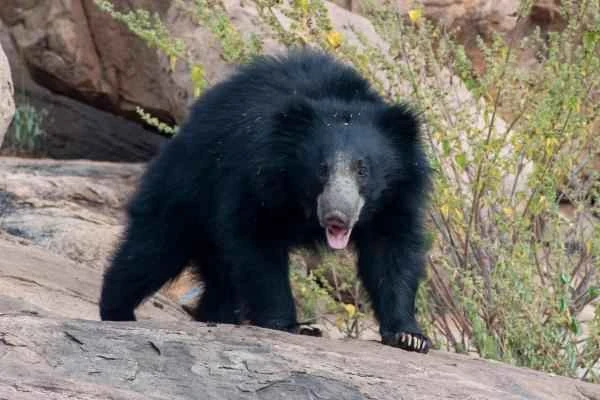
Also known as sloth bears, they have historically suffered severe abuse. They are tied with ropes to control their mouths and noses, and forced to stand and "dance" to music. Although this cruel performance is strongly opposed by animal protection organizations, it still exists in some places.