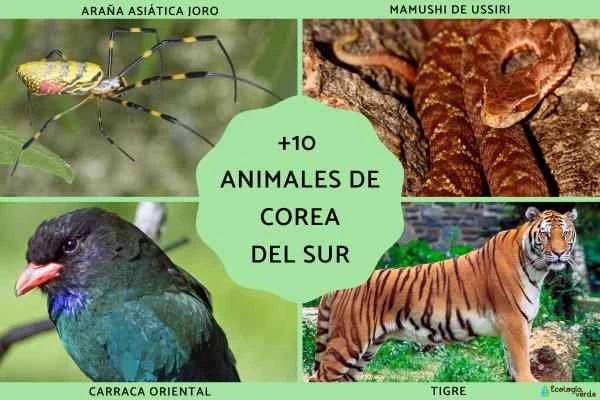
South Korea is home to a diverse array of animals, including the Korean forest frog (Rana coreana), the oriental magpie (Pica serica), the Asian spider (Trichonephila clavata), and the national animal, the tiger (Panthera tigris). South Korea's predominantly mountainous terrain contributes to its rich animal diversity. This article will introduce some of South Korea's unique animals; continue reading to explore more of South Korea's endemic wildlife!
Korean forest frog (Rana coreana)
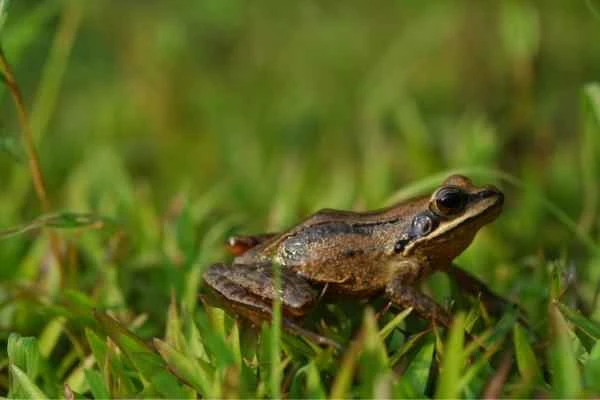
The Korean forest frog is an amphibian endemic to South Korea, inhabiting areas below 700 meters in altitude. Females can reach 44 mm in length, while males can reach 38 mm. They typically live in shallow water environments such as lakes, ponds, and rivers, and hibernate in shallow mud during the winter.
Oriental Magpie (Pica serica)
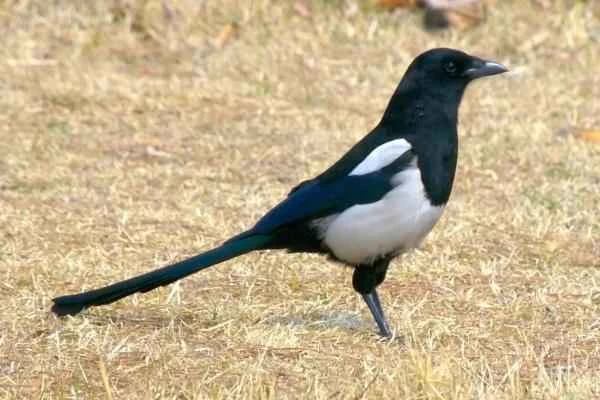
The Oriental Magpie is a common bird in South Korea, especially in Seoul. Compared to the Common Magpie, it has a more robust body, longer wings, and a noticeably shorter tail. Its plumage has iridescent blue-green markings, and it is easily identifiable by its loud call. This magpie inhabits open areas such as cities, parks, and forests, and is endemic to South Korea.
Asian spider spider (Trichonephila clavata)
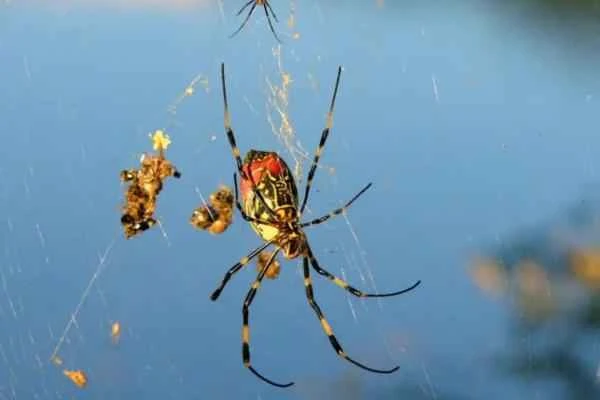
The Asian fly spider, also known as the "flying spider," does not actually fly; instead, it uses wind power for "flying" dispersal. Their webs are strong and powerful, even capable of catching small birds. This spider is venomous, but generally does not actively attack humans, and its venom is not fatal. This species has recently spread to the United States via air travel and other means, and is expected to spread more widely in the future. It measures approximately 1 to 1.5 centimeters in length.
Asian ladybug (Harmonia spp.)
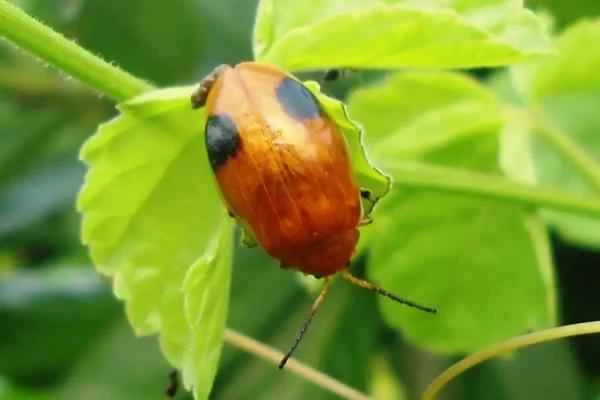
Asian ladybugs are widespread in South Korea, measuring 7 to 8 millimeters in length, and come in a variety of colors, including yellow, red, orange, or combinations of multiple colors. Because they are effective at controlling aphid populations, they have been introduced to the Americas and other regions.
Ussuri viper (Gloydius ussuriensis)
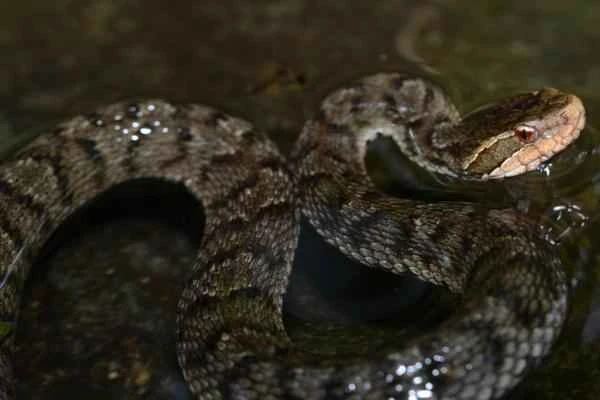
The Ussuri viper is a venomous snake endemic to South Korea. It typically measures 35 to 40 centimeters in length, with gray to black scales, sometimes tinged with brown. Besides South Korea, it has also been found in parts of Russia.
Plautia stali
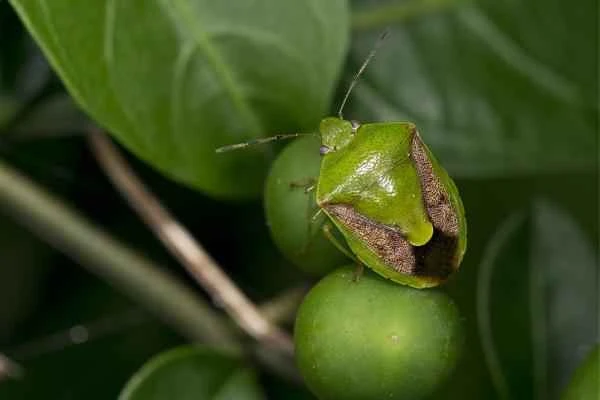
The green stink bug, also known as the green stinking bug, is a green stink bug that uses the release of a persistent, foul odor as a defense mechanism. Although they can damage crops, they are also an important food source for many birds and lizards. They hibernate in groups during the winter, playing a vital role in maintaining ecological balance.
Oriental Three Treasure Bird (Eurystomus orientalis)
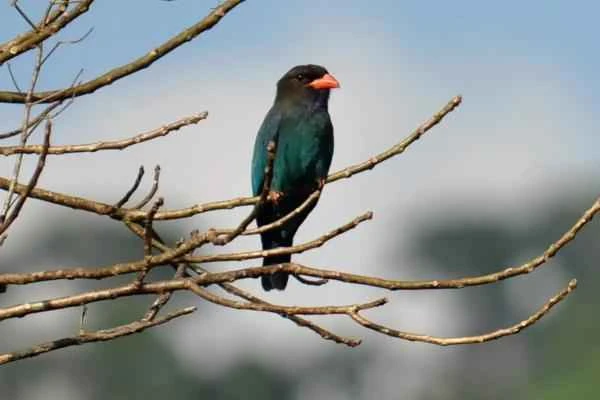
The Oriental Three-Treasured Bird is a brightly colored bird with blue-green plumage, distinctive white or light blue patches under its wings, and orange beak and legs. It can reach a length of 30 centimeters. They feed on insects, with a particular fondness for beetles.
Boxwood moth (Cydalima perspectalis)

The boxwood leafminer is native to Korea and has recently spread to Europe as an invasive species, seriously damaging boxwood shrubs and causing them to lose their leaves.
Mareca falcata (Falcata duck)
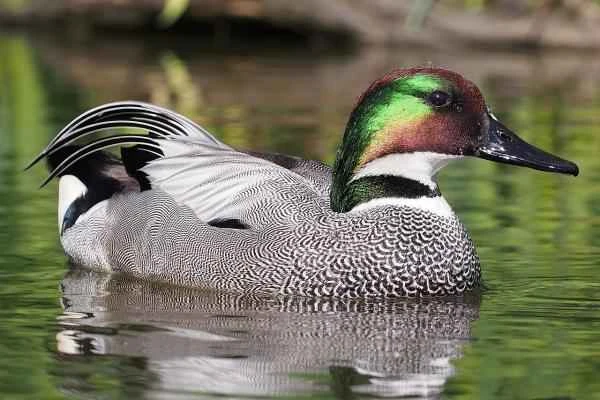
The tufted duck is a magnificent wild duck, renowned for its richly patterned head feathers and iridescent plumage. They primarily inhabit forested areas with freshwater lakes or rivers, migrating to warmer coastal regions, rice paddies, and wetlands during the winter.
Korean Scincella vandenburghi
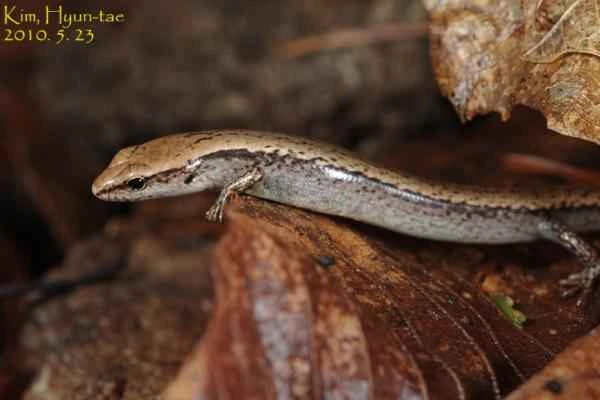
The Korean lizard is a reptile endemic to South Korea. It has a slender body, short limbs, and a snake-like appearance. It is usually brown and inhabits damp areas of the forest floor.
Endangered animals in South Korea
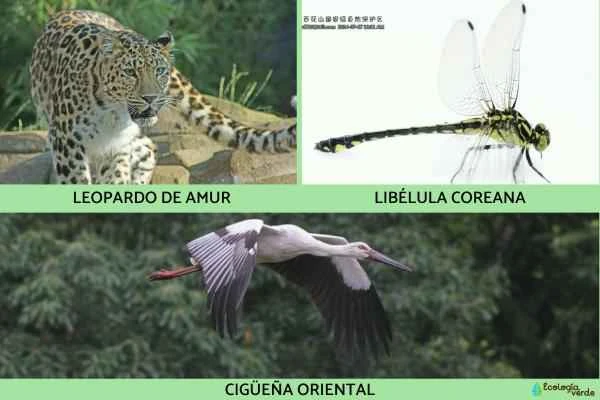
Due to overhunting and urbanization, more than 250 animal species in South Korea are now endangered, such as:
Far Eastern Leopard (Panthera pardus orientalis)
Korean dragonfly (Asiagomphus coreanus)
Oriental White Stork (Ciconia boyciana)
South Korea's national animal
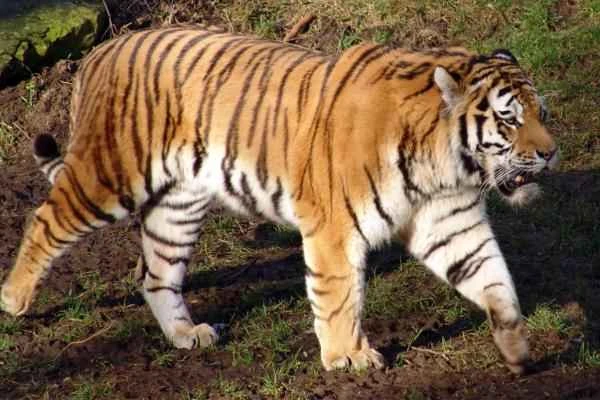
The national animal of South Korea is the tiger (Panthera tigris). In Korean culture, the tiger symbolizes courage, benevolence, and the ability to ward off evil spirits. According to legend, the tiger played an important role in the early days of the nation's founding, thus being revered as a divine beast and serving as the inspiration for the mascots of the South Korean Olympics.