Basic characteristics of the blue dragon
Size : Blue dragons can reach 4 centimeters in length.
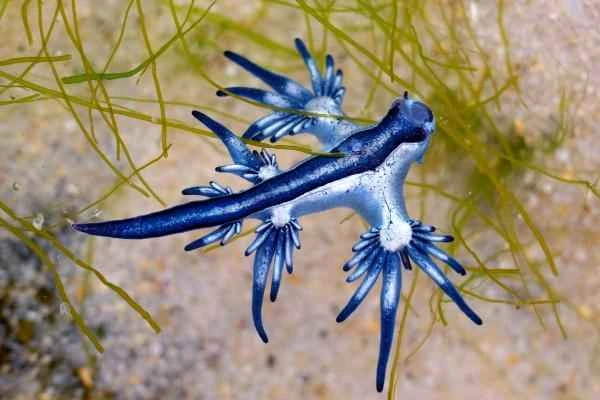
Body color : The back is dark blue, the feet are silver-white, and there are two dark blue stripes on both sides of the body that extend from the head to the tail.
Body structure : The body is slender, and the abdomen is decorated with blue and silver-gray horizontal stripes.
Head : Terminal position, mouth is dark blue, with two distinct oral appendages.
Jaws : Well-developed structure, with serrated teeth forming a tight bite when closed, which helps in hunting.
Tongue : It has a tooth-like structure, which is suitable for scraping the tissues of prey.
Appendages : It has six forked appendages (called "cerata") used to store toxins obtained from predatory jellyfish. The head and back also have two cone-shaped, grayish-silver sensory organs—tentacles (rhinophores).
Blue Dragon's Habitat
Blue dragons are mainly distributed in temperate and tropical seas around the world, maintaining their buoyancy through a bubble in their abdomen. They rely on wind and ocean currents for movement, so they are usually found on the ocean surface and rarely near the shore, unless washed ashore by wind and waves.
Blue dragons have a wide distribution, especially in the Atlantic Ocean, and have been recorded in South Africa, Mozambique, Barbados, and coastal areas of Europe and Australia.
Blue Dragon's Diet
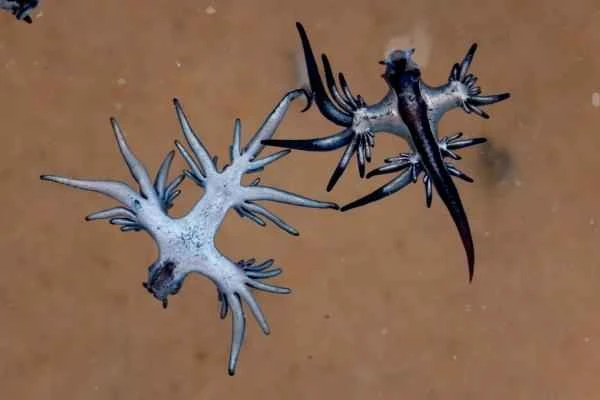
Blue dragons feed on jellyfish and hydroids, with a particular preference for the Portuguese battleship jellyfish (Physalia physalis). When feeding on these venomous jellyfish, blue dragons extract their stinging cells (nematocysts) and store them in their intestinal processes, which not only provide them with nutrition but also give them powerful defenses.
It uses tiny tentacles at its mouth to grasp prey, effectively preying on even dangerous jellyfish, which helps control the population of Portuguese warship jellyfish and plays the role of "ecological regulator" along with sea turtles and ocean sunfish.
Blue Dragon Breeding Method
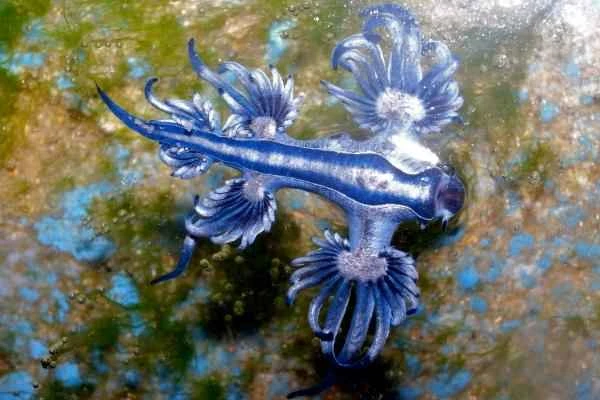
Blue dragons are hermaphroditic creatures. During mating, the two individuals face each other and intertwine their genitals, which can extend up to 60 millimeters, to exchange sperm, a process that lasts about an hour.
The female then lays 10 to 30 eggs, which usually cluster together and float on the surface of the water, hatching after about three days. The newborn larvae are called "veliger larvae" and subsequently develop into mature individuals.
Interestingly, some studies have found that blue dragons sometimes lay their eggs on their prey, creating a "nursery"-like environment that provides shelter and food for the young.
Blue Dragon Behavioral Characteristics
Predatory : It not only hunts venomous prey, but also stores their toxins for secondary use.
Inhalation buoyancy : By swallowing air to maintain buoyancy, it can drift long distances with the help of ocean currents.
Floating on your back : Floating with your back facing down is beneficial for camouflage.
Unique mating method : They mate face-to-face, unlike most mollusks, exhibiting specialized reproductive behavior.
Is the blue dragon poisonous?
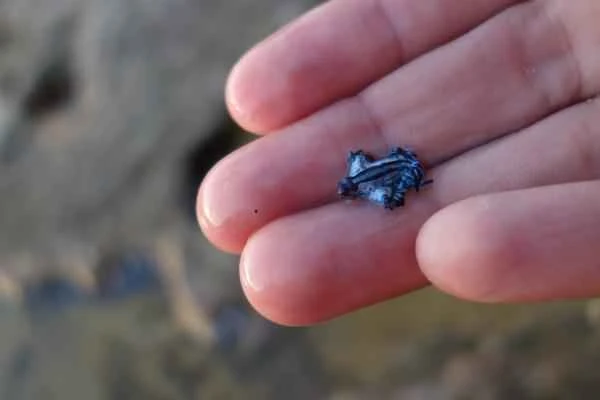
Yes, blue dragons are highly venomous. Although they generally stay away from humans, they can be accidentally touched when washed ashore by waves, especially when they gather in large groups to form a "blue fleet."
Its toxicity comes from the Portuguese jellyfish it consumes, whose stinging cells are stored in cnidosacs at the end of their intestinal processes. The blue dragon can not only store venom but also release it in a concentrated manner, making its sting even more powerful than the jellyfish itself.
The process and symptoms of being stabbed by a blue dragon
Acquire toxins : Absorb stinging cells by biting the jellyfish's tentacles.
Toxin storage : The toxin is stored in the spicules at the ends of its appendages.
Releases toxins : When it comes into contact with the skin of humans or predators, it can release toxins that trigger a pain response.
Symptoms of a puncture wound may include: severe stinging pain, burning sensation, nausea, vomiting, acute contact dermatitis, and in severe cases, anaphylactic shock, fainting, or post-inflammatory hyperpigmentation.