A kangaroo is an animal with a pouch on its chest. Kangaroos originated in Australia, Papua New Guinea, and other regions. As an animal unique to Australia, the kangaroo has long been considered a national symbol, and Australia is often called the "Kangaroo Country" because of its fame. The name "kangaroo" originates from a misunderstanding; in the languages of indigenous peoples, it means "I don't know." When Europeans arrived in Oceania and first saw kangaroos, they asked the locals what kind of animal it was and what its name was. However, the locals, not understanding their language, didn't know what the Europeans were saying, so they replied in their native tongue, "Kang-ga-er" (I don't know). This phrase became the name "kangaroo" verbatim. The Chinese name "袋鼠" (dàishǔ) is a translation based on the kangaroo's pouch feature.
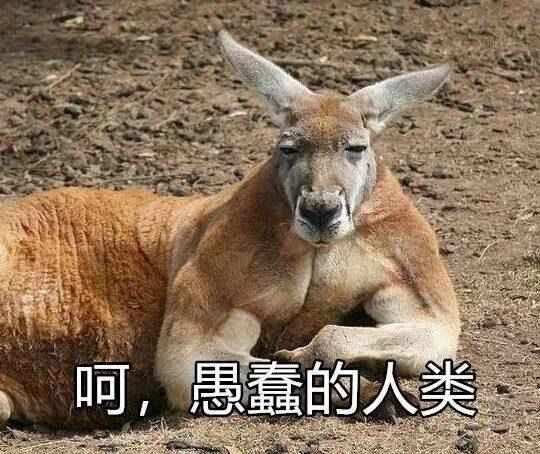
All kangaroos, regardless of size, share one common trait: strong, powerful, long hind legs. A kangaroo's Crural Index (calf length/thigh length × 100, or tibia length/femur length × 100) reaches 172, with red kangaroos reaching an even higher 202, far exceeding other animals, while the human average is only around 80. Kangaroos hop instead of run, leaping up to 4 meters and as far as 13 meters, making them arguably the highest and farthest jumping mammals. Most kangaroos live on the ground, and their powerful hopping hind legs easily distinguish them from other animals. Kangaroos use their tails for balance during hops, and when walking slowly, the tail acts as a fifth leg. The kangaroo's tail is thick, long, and muscular. It supports the kangaroo's body when resting and helps it jump faster and farther.