I. Capybara
Representative country: Brazil
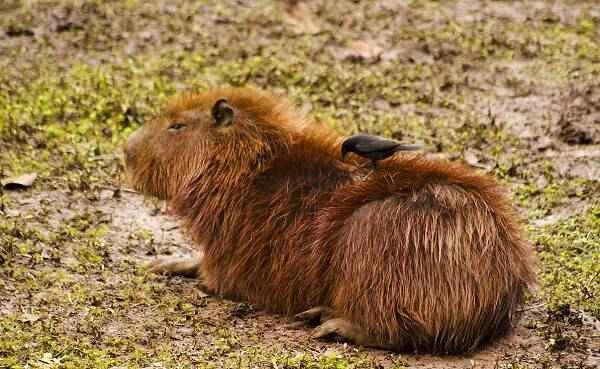
Capybaras are semi-aquatic herbivores and the largest rodents in the world. They are enormous, measuring 1-1.3 meters in length, about 0.5 meters in shoulder height, and weighing 27-50 kilograms. They are stocky, with a large head, short neck, short tail, small, rounded ears, and eyes positioned relatively close to the top of the head. Their snout is abnormally enlarged and blunt at the tip. Adult males have a raised, bare area on their snout containing a large adipose gland. Their upper lip is enlarged and split in two. They have four toes on their forelimbs and three on their hind limbs, arranged radially with semi-webbed toes adapted for swimming. The toes have claws resembling hooves. Females have four pairs of nipples.
II. Camel Genus
Representative countries: Middle Eastern countries, etc.
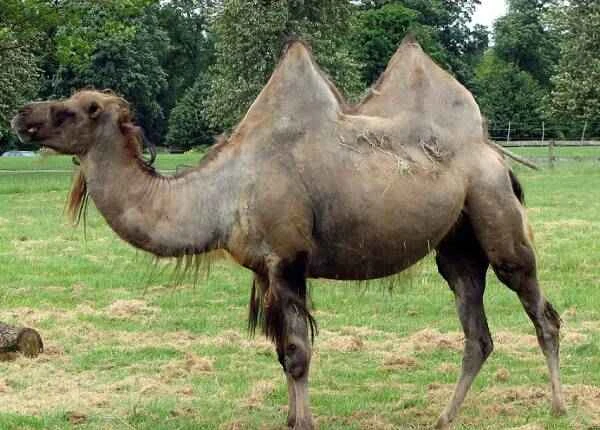
Camels evolved from proto-hoofed ungulates in North America during the Eocene epoch of the Cenozoic era (approximately 55 million years ago). This genus includes two species: the Bactrian camel and the dromedary camel, commonly known as camels or ruminants. The camels living in China are mainly Bactrian camels, which are distributed in the high-altitude, cold desert regions of Asia, with the majority found in China and Mongolia. In China, Bactrian camels are mainly distributed in Inner Mongolia, Xinjiang, Gansu, Qinghai, Ningxia, and northern parts of Shanxi, Shaanxi, and Hebei provinces.
III. Alpaca
Representative country: Peru
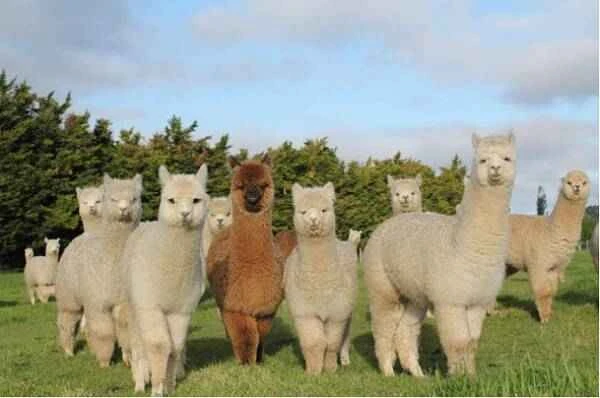
Alpacas are docile, intelligent, and intuitive. Besides wild species, there are also a significant number of domesticated alpacas, widely used by Native Americans for pack animals. Suitable for domestication, they are one of the most important livestock in South America. Alpaca wool is longer than sheep's wool, glossy, and elastic, making it suitable for crafting high-quality textiles. There are approximately 3 million alpacas in the world, with over 90% living in the highlands of Peru and Chile in South America, and the remainder distributed in Victoria and New South Wales, Australia.
IV. Mediterranean Macaque
Representative country: Morocco
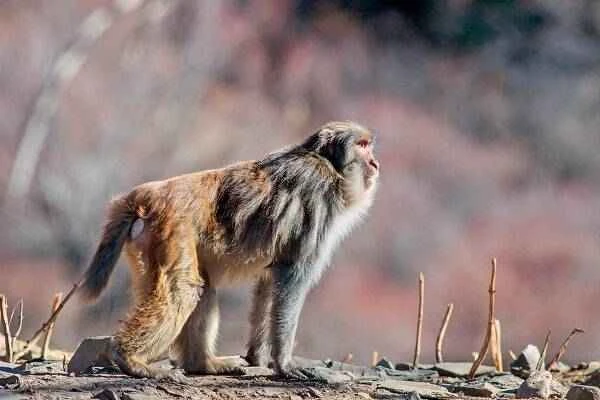
Mediterranean macaque (scientific name: *Macaca sylvanus*): Body length 51-63 cm. It is a rather unique animal in the genus *Macaca*, characterized by its short tail and cheek pouches. It has a robust body; its forelimbs and hind limbs are approximately the same length; its thumb can oppose the other four fingers, allowing for dexterous grasping; it has a low forehead with a prominent ridge. The head is brown, the back is brownish-gray or brownish-yellow, the lower part is orange-yellow or orange-red, and the belly is pale grayish-yellow.
V. Bengal Tiger
Representative country: India
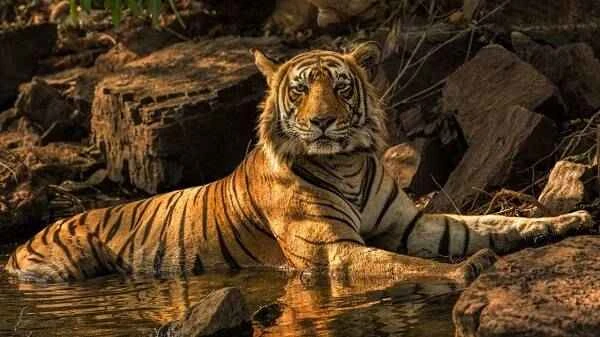
The Bengal tiger (Panthera tigris tigris): is the nominate subspecies of tiger, also known as the Indian tiger. Wild male Bengal tigers weigh 160-270 kg, second in size only to the Siberian tiger. Adult Bengal tigers have brown and white fur with black stripes. A small number of white Bengal tigers with black stripes also exist due to genetic mutation. They are large, well-proportioned, with medium-length limbs and are digitigrade.
VI. Siberian Brown Bear
Representative country: Russia
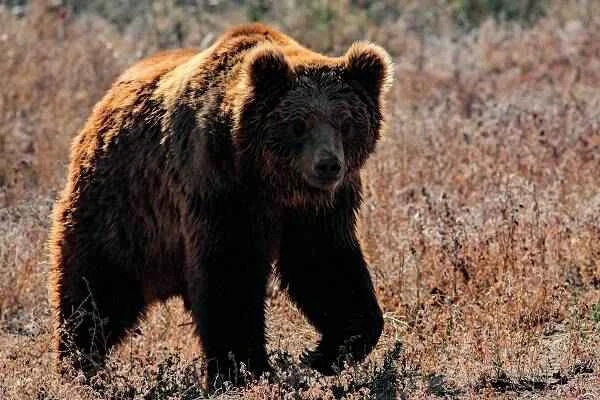
The Siberian brown bear belongs to the phylum Chordata, class Mammalia, order Carnivora, family Ursidae, and genus Ursus. Its size is intermediate between that of the European brown bear and the Kamchatka brown bear. It has thick, long, soft fur, a typically dark brown collar, and noticeably darker legs. In Russia, the Siberian brown bear occupies the largest habitat. It has a robust build with a high, rounded back. The fur on its back is coarse and can reach 10 centimeters in length during winter. While its claws are not retractable and not very flexible, their immense strength is still deadly.
7. Komodo Dragon
Representative country: Indonesia
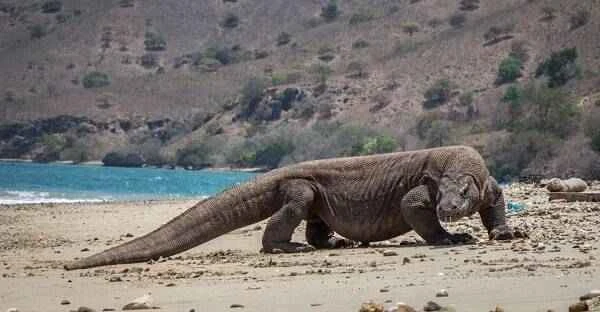
The Komodo dragon, scientifically known as *Varanus komodoensis* (Ouwens, 1912), is a species of lizard belonging to the family Varanidae and the genus *Varanus*. Also known as the Komodo monitor, it is the largest known living lizard species. Komodo dragons are ferocious; adults can prey on their own young and sometimes on other adults. They are capable of rapid movement and occasionally attack humans; however, they primarily feed on carrion, venturing out of their burrows to locations several kilometers away each day in search of food.
8. Wingless Birds
Representative country: New Zealand
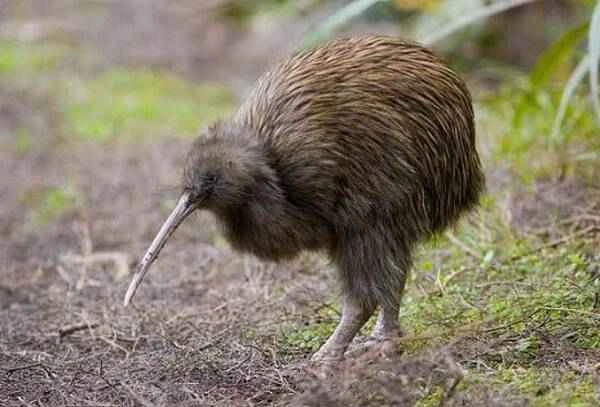
Apterygidae (family Apterygidae): Belonging to the order Apterygidae, this family contains only one genus and five species, commonly known as "kiwis," distributed in New Zealand. The name "kiwi" is translated from their English name. They are chicken-shaped, with females larger than males. They are 48-84 cm in length and weigh 1.25-4.00 kg; their feathers are hair-like; their bills are long and slightly downward-curved, with nostrils located near the tip, giving them a keen sense of smell; their wings are vestigial, preventing them from flying.
9. Kangaroo
Representative country: Australia
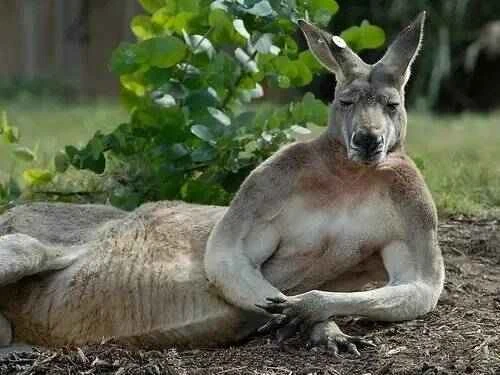
Kangaroos are marsupials belonging to the order Coccinellida, primarily distributed across mainland Australia and parts of Papua New Guinea. Some species are endemic to Australia. Different species of kangaroos inhabit a wide variety of natural environments in Australia, from cool-climate rainforests and desert plains to tropical regions. Kangaroos are the highest and farthest jumping mammals. The term "kangaroo" sometimes refers to all marsupials.

10. Giant Panda
Representative country: China
Giant panda (scientific name: *Ailuropoda melanoleuca*): A mammal belonging to the family Ursidae and the genus *Ailuropoda*. There are only two subspecies. Males are slightly larger than females. They are stout and bear-like in appearance, with a round head and short tail. The head and body length is 1.2-1.8 meters, and the tail length is 10-12 centimeters. They weigh 80-120 kilograms, with the heaviest reaching 180 kilograms. Their coat is black and white, with round cheeks and large "black eye patches."
11. Asian Elephant
Representative country: Thailand
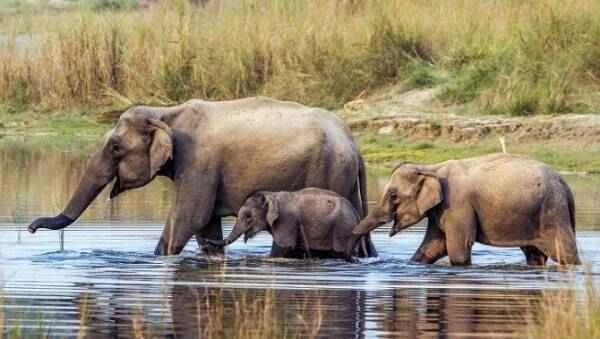
The Asian elephant (scientific name: *Elephas maximus* Linnaeus), also known as the Asian elephant, belongs to the order Proboscidea and the family Elephantidae. It is the largest living land animal in Asia, possessing tusks over 1 meter long. These tusks are the incisors protruding from the upper jaw of male elephants and serve as powerful defensive weapons. Elephants have small eyes and large ears that can cover the sides of their necks when laid back. They have large, strong limbs, with five toes on their forelimbs and four on their hind limbs. Their tails are short and thin, with thick, wrinkled skin.
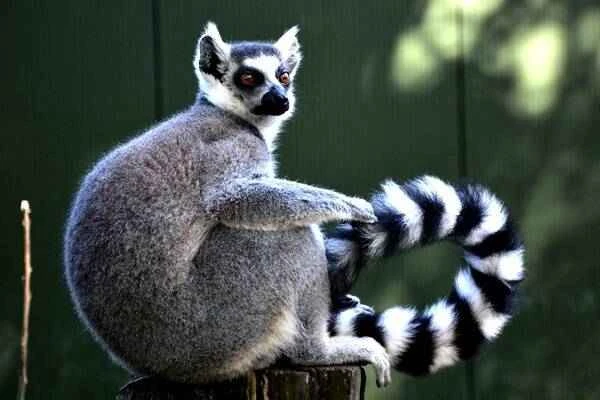
12. Ring-tailed lemur
Representative country: Madagascar
Ring-tailed lemur (scientific name: *Lemur catta*) is an animal belonging to the order Primates, family Lemuridae, and genus *Lemur*. Its head and body length are approximately 30-45 cm, its tail length is 40-50 cm, and it weighs about 2 kg. It has a small head, low forehead, large ears covered in fine hair, and long, bushy hair on the sides of its head. Its long, protruding snout and comb-like lower incisors give it a fox-like appearance. It is named for the ringed markings on its tail.

13. Whooper Swan
Representative country: Denmark
The Whooper Swan (scientific name: *Cygnus cygnus*) is a migratory bird belonging to the family Anatidae and the genus *Cygnus*, with no subspecies differentiation. It is a large bird, measuring 120-160 cm in length, with a wingspan of 218-243 cm, weighing 8-12 kg, and having a lifespan of 20-25 years. It has a black bill with a large yellow patch at the base, extending to a pointed edge on the upper beak. When swimming, its neck is straighter than that of the Mute Swan. Males and females are similar in appearance and color, entirely white, with extremely long necks; their posture is elegant.
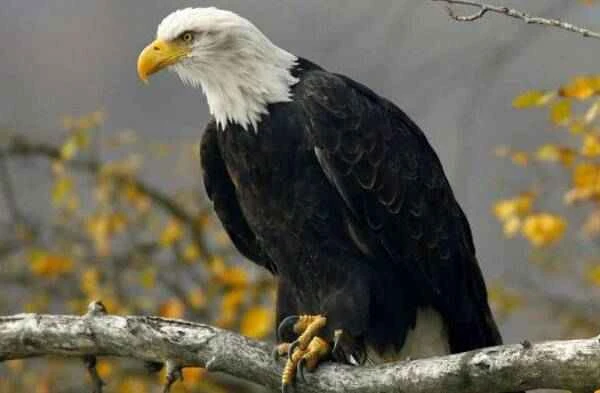
14. Bald Eagle
Representative country: United States
The bald eagle (scientific name: *Haliaeetus leucocephalus*), also known as the American eagle, is a large bird of prey. Adult bald eagles can reach 1 meter in length and have a wingspan of over 2 meters. Their eyes, beak, and feet are pale yellow, while the feathers on their head, neck, and tail are white, and the rest of their body is dark brown, giving them a very majestic appearance.