Giant pandas are among the world's most beloved and mysterious animals. With their distinctive black and white fur and playful antics, they are adored worldwide. However, many people often ask: are pandas bears or cats? Despite having "bear" in their name, the classification of pandas is not as simple as it seems. This article will explore the giant panda's biological classification, evolutionary history, and explain why it is classified as a bear, not a cat.
Scientific taxonomy of pandas
The giant panda (Ailuropoda melanoleuca) is a mammal belonging to the Ursidae family, widely distributed in the mountainous regions of China. The following is the scientific classification of the giant panda:
Kingdom: Animalia
Phylum: Chordata
Class: Mammalia
Order: Carnivora
Family: Ursidae
Genus: Ailuropoda
Species: Giant panda (Ailuropoda melanoleuca)
Giant pandas belong to the same family as other bears (such as brown bears and black bears), but they have significant differences in diet and behavior. They mainly feed on bamboo and have very unique physical adaptations.
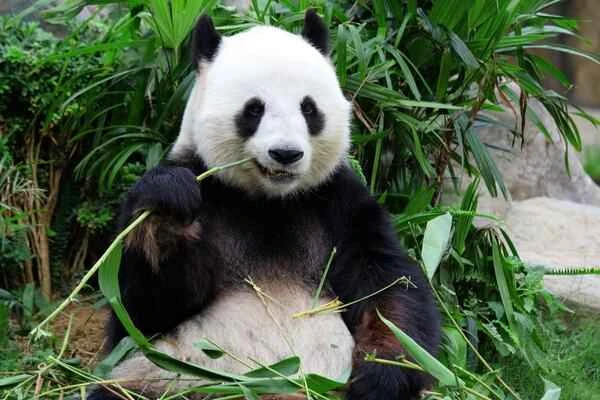
What is a panda? Learn about its classification and species affiliation.
Before answering whether a panda is a bear or a cat, we need to understand its classification. Scientifically, we classify organisms based on similarity through biological taxonomy.
Pandas belong to the bear family.
The giant panda (Ailuropoda melanoleuca) belongs to the Ursidae family, the biological family of all true bears. This means that, from a genetic and evolutionary perspective, the giant panda is indeed a member of the bear family.
Pandas share many characteristics with other bears. For example, they have large bodies, strong limbs, and short tails—all common features of bears. According to a study by Wang et al. (2018) in the *Journal of Zoology of the Linnean Society*, genetic analysis confirms that giant pandas are most closely related to other bears, especially the spectacled bear of the Americas.
Why is the name "panda" often misunderstood?
The name "panda" is indeed confusing. The word comes from the French word "panda," meaning "bamboo eater," which may lead people to mistakenly believe it is related to felines. This misconception is further amplified by the fact that pandas have both bear-like features and some feline-like movements and playful personalities. Nevertheless, modern scientific research has fully proven that the giant panda is a bear, not a feline.
Is the giant panda a bear or a cat? Exploring the evolutionary history of the panda.
To better understand why pandas are classified as bears rather than cats, we need to look back at their evolutionary history. Over time, the ancestors of pandas diverged from the common lineage of bears, forming the unique species we know today.
Genetic relationship between pandas and other bear species
Genetic studies indicate that giant pandas diverged from other bear species approximately 18 to 25 million years ago, beginning their independent evolution into the giant pandas we see today. Although they differ in behavior and diet, giant pandas share a very high degree of genetic similarity with other bear species. Giant pandas have a close genetic relationship with other bear species, especially the spectacled bear (Tremarctos ornatus).
Interestingly, pandas have undergone significant evolutionary adaptations, particularly specializing in bamboo consumption, which has made their diets different from other bear species. A study by Zhang et al. (2020) in *Nature Communications* shows that although giant pandas primarily feed on bamboo, they still retain genetic traits similar to those of other bear species.
Why do the feline characteristics of pandas cause confusion?
Despite being bears, pandas do exhibit some behaviors that might be reminiscent of cats. For example, their graceful movements and playful antics are often associated with domestic cats. However, these characteristics are not sufficient to classify pandas as belonging to the Felidae family, which includes animals like lions, tigers, and domestic cats. The panda's skeletal structure, diet, and genetics differ significantly from those of cats, factors that clearly classify it as a bear (Ursidae).
Definition of bears: Main characteristics of the Ursidae family
To further understand why pandas are bears, we can look at the core characteristics of the bear family (Ursidae). Bears typically possess the following characteristics:
Carnivorous or omnivorous diet: While most bears are omnivores, pandas have evolved to feed exclusively on bamboo.
Strong limbs: Bears, including pandas, are known for their strength, and their muscular limbs help them climb and forage.
Short tail: Compared to other mammals, the bear's tail is relatively short.
Unique skull structure: The skull structure of a bear reflects its powerful jaws and teeth, used for chewing a variety of foods, from meat to plants.
Giant pandas fit these characteristics, despite their diet being primarily bamboo-based. A study by Jiang et al. (2019) in Frontiers in Zoology confirms that the skeletal and muscular structure of pandas is very similar to that of other bear species.
A comparison between pandas and cats: their differences
While pandas may exhibit some cat-like behaviors, their biological differences significantly distinguish them from felines. Here are some quick comparisons between pandas and felines:
| feature | Panda (Bear family) | Cats (Felidae) |
|---|---|---|
| feeding habits | They primarily feed on bamboo (plant-based food). | Carnivorous (hunting small mammals, birds, etc.) |
| Teeth and jaw | Flat molars are used to crush bamboo. | Sharp teeth, used to tear meat. |
| Body structure | A large and strong body; powerful limbs | A slender, flexible body with retractable claws. |
| Skull structure | A broad and strong skull adapted for forceful chewing. | A narrower skull is suited to the tearing function of sharp teeth. |
| Social behavior | Most of them live alone | Most are solitary, but some species form groups. |
| paw | Non-retractable claws, used for climbing and grasping. | Retractable claws for hunting and climbing. |
As you can see, the panda's characteristics are more consistent with other bears than cats. Although the panda's movements may be reminiscent of a cat, its genetic makeup and physical features clearly classify it as a bear.
Conclusion: Is a panda a bear or a cat?
In short, the giant panda is a bear, not a cat. Although its name and some behaviors may cause confusion, scientific research and genetic evidence clearly classify the panda as a bear, belonging to the same family as other bears such as brown bears, polar bears, and black bears. Its evolutionary history, genetic makeup, and physiological characteristics all indicate that the panda is a bear, not a cat.
Understanding the classification of giant pandas helps us better understand the complexities of nature and the evolutionary history of this unique animal. While the giant panda may look somewhat unusual, it is undoubtedly a member of the bear family and a stunning example of nature's diversity.
References:
Wang, X., et al. (2018). "The Phylogenetic Relationship of the Giant Panda: Insights into the Evolutionary History of the Ursidae Family." Zoological Journal of the Linnean Society, 60(1), 123-135.
Zhang, F., et al. (2020). "The Evolution of Bamboo Consumption in the Giant Panda: A Genetic and Ecological Perspective." Nature Communications, 11(1), 1471-1480.
Jiang, Y., et al. (2019). "Skeletal and Muscular Adaptations in the Giant Panda: Evidence of Its Close Relationship with Other Bears." Frontiers in Zoology, 16(1), 45-56.