Have you ever wondered that so many mysterious creatures live in the underground world beneath our feet? These animals are called subterranean animals . They live in environments below the surface for extended periods and only briefly appear on the surface at specific times or under special circumstances.
These animals have developed unique body structures and behaviors to adapt to the dark, damp, and low-oxygen underground environment. The underground ecosystem contains not only microorganisms, fungi, and bacteria, but also a variety of life forms such as insects, reptiles, and mammals. Below, we will introduce you to eight typical underground animals and reveal the secrets of how they survive in this "invisible" world.
1. Camel Spider
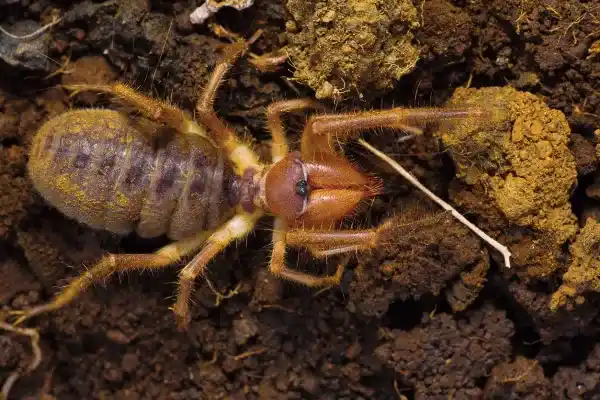
Despite its name, the "camel spider," it is not actually a spider, but rather a type of arthropod belonging to the order Solifugae. They are typically medium-sized, with their bodies divided into a cephalothorax (including the head, chelicerae, sensory organs, and walking legs) at the front and a segmented abdomen at the rear.
Camel spiders live in desert regions and are nocturnal predators . They hide underground or under rocks during the day to avoid light and hunt at night. They have strong chelicerae that can easily tear apart their prey, catching insects, small reptiles, and even other arthropods.
2. Pink Fairy Armadillo
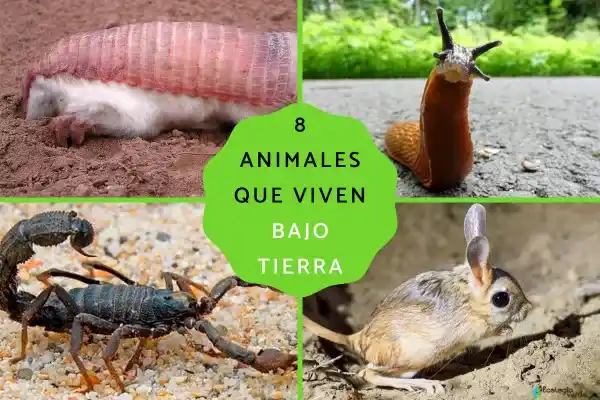
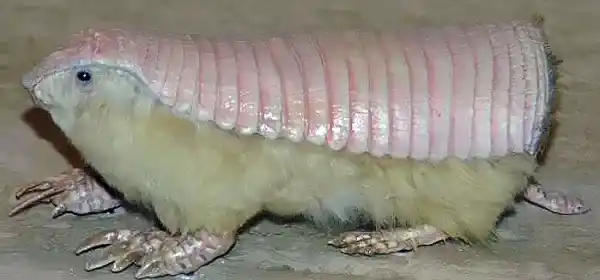
The pink armadillo (scientific name Chlamyphorus truncatus ), also known as the Pampas armadillo , is the smallest of all armadillos, measuring only about 7 to 11 centimeters in length. It has a hard, pinkish carapace covering its light-colored fur, making it quite adorable.
This mammal is primarily nocturnal and adept at digging underground tunnels, especially common near ant nests. When threatened, it quickly burrows into the ground to escape danger. Due to its secretive lifestyle, humans know very little about it.
3. Slug
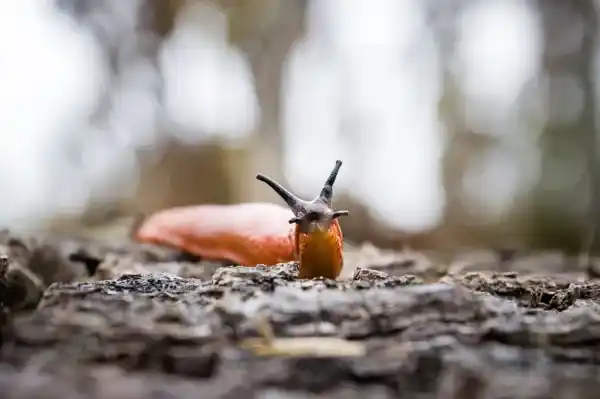
Slugs are a type of mollusc without an outer shell . Their bodies are soft and slender, ranging in length from 1 to 15 centimeters, depending on the species. They are nocturnal creatures highly sensitive to climate . In the cold winter, they burrow into the ground to avoid the cold; in the dry season, they also choose to hide in the soil to maintain the moisture and mucus secretion required by their bodies.
Slugs rely on secreting mucus to move and protect themselves, making moist underground environments their ideal habitat.
4. Scorpion
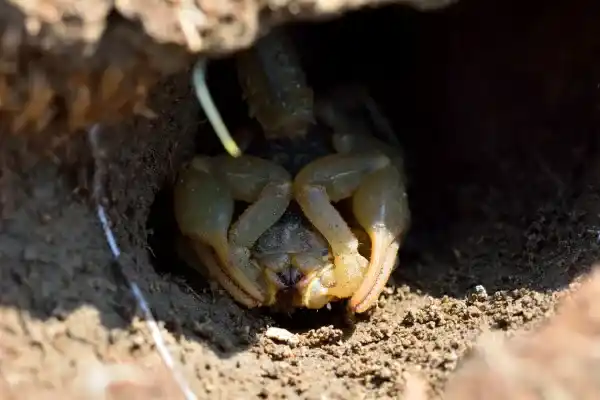
Scorpions are venomous arthropods with a segmented body and a stinger and venom glands at the end of their abdomen (tail). They hide underground, in crevices of rocks, under decaying wood, or in sand, and are most active at night, preying on spiders, small insects, and other invertebrates.
Scorpions are widely distributed in tropical and subtropical arid or semi-arid regions and are important predators in the ecosystem. During the day, they avoid sunlight and hide in underground structures, making them true subterranean creatures.
5. Ants
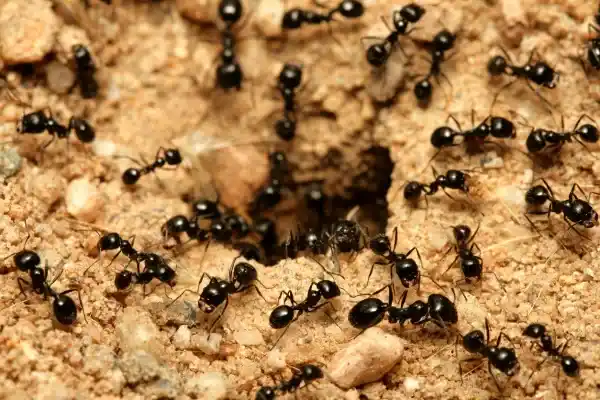
Ants are a highly social group of insects , widely distributed throughout the world, especially common in tropical rainforests. They build complex underground nests—anthills—which include multiple tunnels, rooms, and entrances, forming a highly organized "underground city."
Ant nests are typically used for reproduction, food storage, and defense against predators. Worker ants forage for food on the ground, such as plant debris, insect carcasses, seeds, and even fungi. Ants are important engineers in underground ecosystems , playing a crucial role in improving soil aeration and structure.
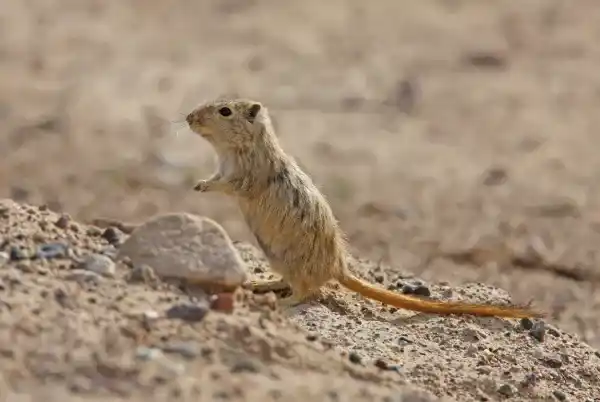
6. Jerboa / Mongolian Gerbil
Jerboas are small mammals that live in the arid desert regions of Mongolia and China. They resemble mice in appearance, with long, flexible tails. They hide in self-dug underground burrows during the day to avoid the heat and predators, and come out at night to forage for food, mainly seeds and plants.
Jerboas have burrow systems that provide insulation, light protection, and protection from predation, enabling them to survive in harsh environments. They are typical desert subterranean creatures.
7. Earthworm
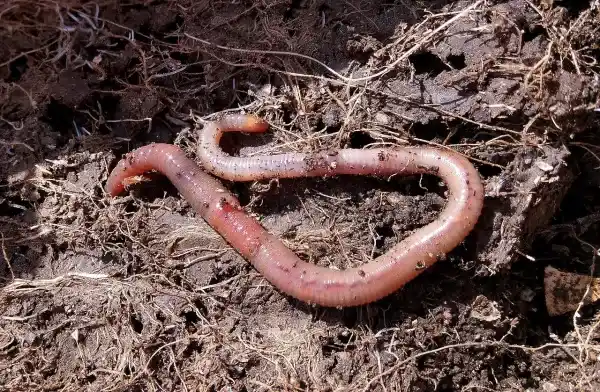
Earthworms are among the most typical underground animals. They have soft, slender bodies composed of multiple segments, typically ranging from 10 to 30 centimeters in length. They live in the soil and are key species in the soil ecosystem .
Earthworms dig tunnels deep underground during the day and sometimes emerge to feed at night. They feed on organic matter, such as decaying plants, leaves, and humus. Earthworms' digging behavior helps loosen the soil, promotes water penetration and aeration, making them "natural cultivators of the land."
8. Mole
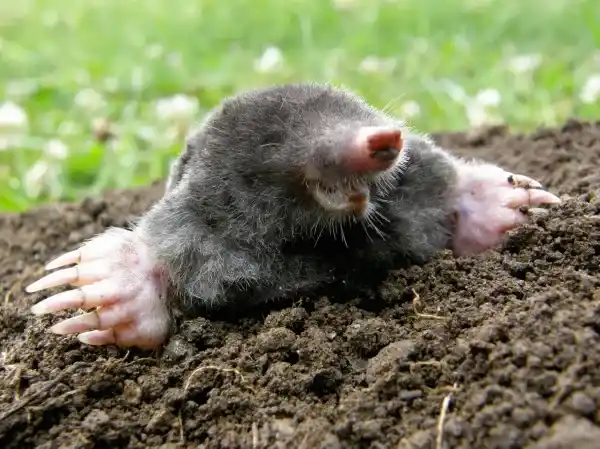
Moles are small mammals covered in thick, velvety fur. Their eyes are very small or even degenerate, making them blind or barely perceptible. Their forelimbs are particularly strong and powerful, specifically designed for digging. Moles construct intricate networks of tunnels , including multiple rooms and passages, collectively known as the "mole burrow system."
They primarily feed on earthworms, but sometimes also eat insects, small reptiles, tubers, and fruits. Moles often create "mouse mounds" by piling soil on the surface when they dig, a common sign of their presence.
In conclusion: Why are subterranean animals worthy of attention?
These subterranean animals play a vital role in maintaining soil health, regulating ecosystems, decomposing organic matter, and controlling pests and diseases. They may go unnoticed by humans, but they are essential to the natural world's cyclical systems.