Despite being the world's smallest and least populated continent, Oceania boasts two "super biodiversity nations": Australia and Papua New Guinea, both ranking among the world's approximately 20 most biodiverse countries. This rich diversity makes Oceania a haven for biologists and researchers who continuously report to the media and the public on the conservation status of species in the region, particularly those facing survival crises.
However, with increasing human activity, climate change, the spread of invasive species, and the prevalence of certain diseases, the populations of many Oceania-endemic and native animals have plummeted, some even facing extinction. Animals like the moa, Hearst eagle, MacLeod, and Tasmanian tiger have disappeared in the past few decades. If you are interested in this topic, please continue reading this article to learn about the animal species in Oceania facing extinction threats.
Table of contents
Tasmanian Demon
Kakapo Parrot
Bourbey fruit bat
Hector's Dolphin
Abbott boobies
Kiritimati Reed Warbler
Lord Howe Island Stick Insects
Southern Corobori Frog
Western Swamp Turtle
Other endangered animals (50 species in total)
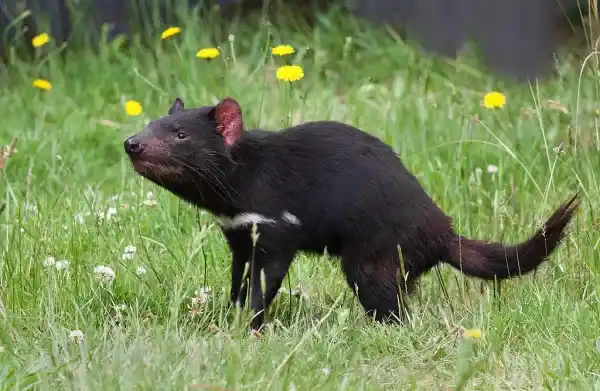
Tasmanian Demon (Sarcophilus harrisii)
The world's largest carnivorous marsupial, now found only on the island of Tasmania, Australia. It feeds on carrion, small to medium-sized animals such as possums, kangaroos, and sheep. Due to overhunting in the first half of the 20th century, frequent road accidents, and a highly contagious facial tumor cancer (DFTD), the species is listed as endangered.
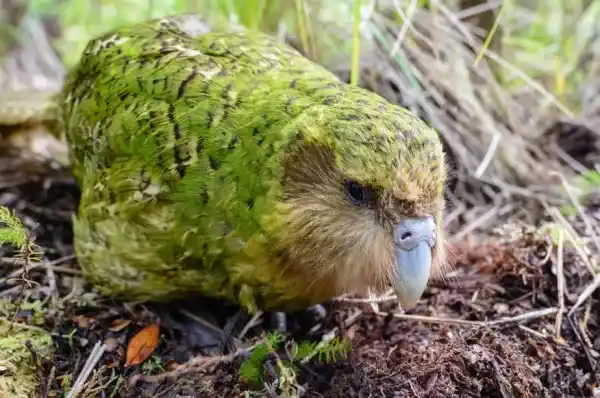
Kakapo parrot (Strigops habroptilus)
The Kakapo is a nocturnal, flightless parrot endemic to New Zealand and also the heaviest parrot in the world. They feed entirely on plants, flowers, and fruits, and are characterized by their green feathers and cat-like whiskers. Fewer than 210 individuals remain worldwide. They are primarily threatened by habitat destruction and predation by invasive species (cats, rats, and weasels).
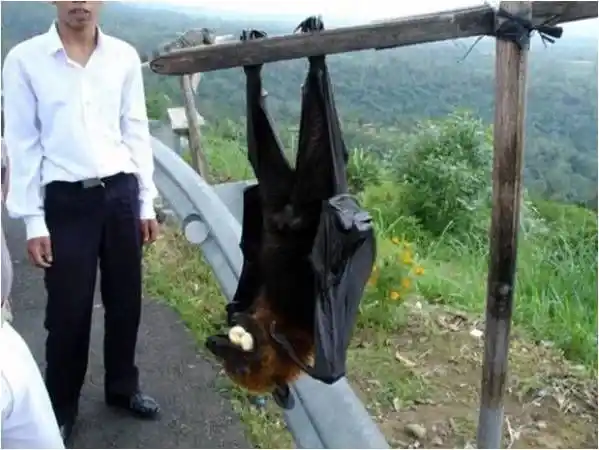
Boomer fruit bat (Aproteles bulmerae)
This is a species of bat found only in the mountain caves of New Guinea, at altitudes above 1800 meters. It faces extinction due to habitat loss and human hunting. IUCN data from 2016 indicates a total population of fewer than 160 individuals.
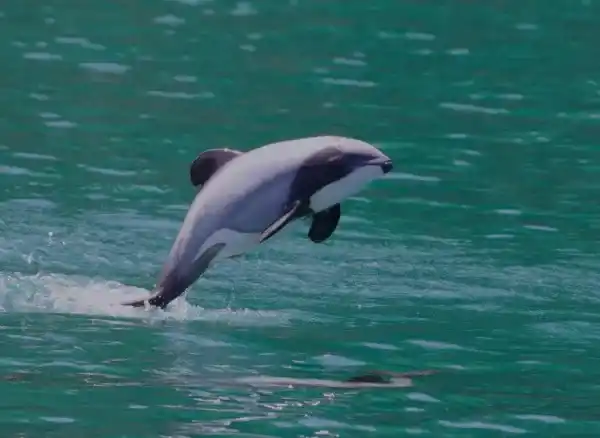
Hector's dolphin (Cephalorhynchus hectori)
Living in the coastal waters of New Zealand, it is the world's smallest dolphin, measuring only 1.6 meters in length and weighing about 60 kilograms. Major threats include entanglement in fishing nets, collisions with ship propellers, and water pollution. The IUCN estimates the population to be less than 7,400 individuals.
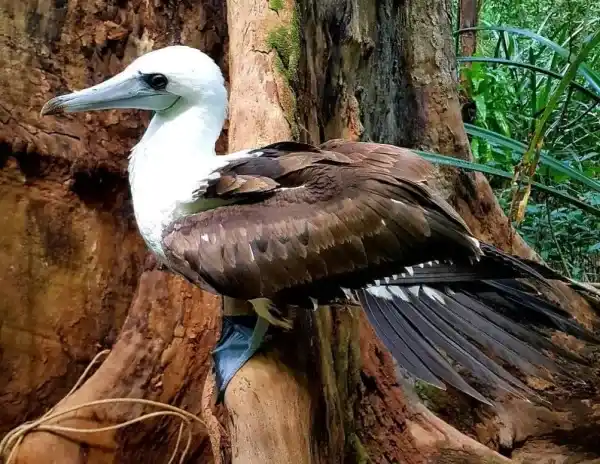
Abbott's Booby (Papasula abbotti)
A medium-sized seabird that breeds only on Christmas Island, lives in the Indian Ocean, is capable of long-distance flight, and can live up to 40 years. It is listed as an endangered species due to habitat change. Only about 6,000 mature individuals remain worldwide.
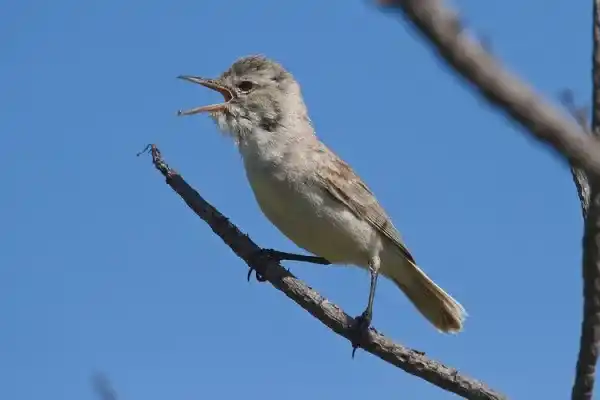
Kiritimati Reed Warbler (Acrocephalus aequinoctialis)
A small, passerine-shaped bird living in the Kiribati archipelago, with olive-grey plumage and no sexual dimorphism. It is endangered due to rising sea levels and threats from invasive predators.
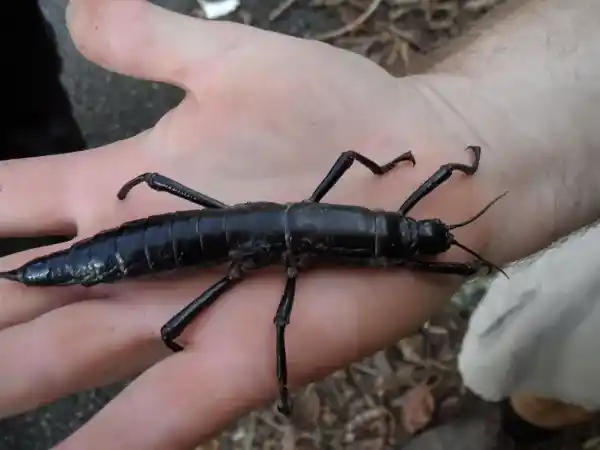
Lord Howe Island Stick Insect (Dryococelus australis)
Nocturnal, flightless, and with a robust body, females exceeding 20 centimeters in length, it is considered one of the rarest insects in the world. Once thought extinct in 1930, it was rediscovered in 2001 on a nearby uninhabited island, with fewer than 30 individuals remaining.
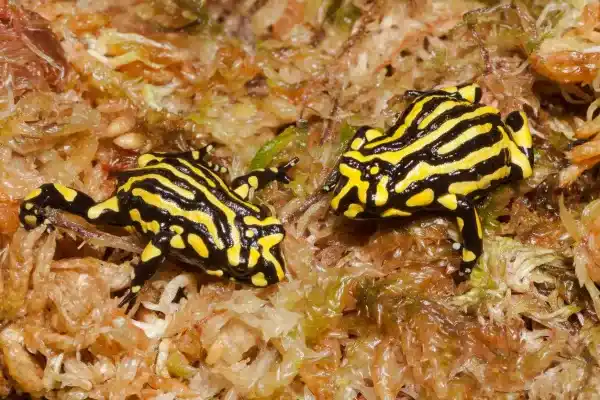
Southern Corroboree Frog (Pseudophryne corroboree)
Distributed in southeastern Australia, it has striking yellow and black stripes and feeds on insects and larvae. Its population has declined sharply due to climate change, bushfires, invasive species, and habitat destruction.
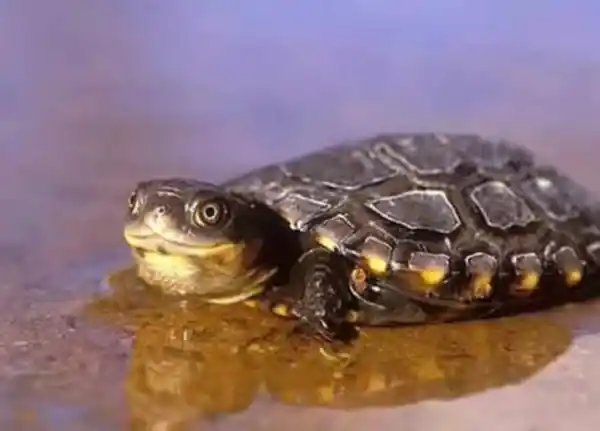
Western Swamp Turtle (Pseudemydura umbrina)
The freshwater turtle is found in scattered small populations in the southwestern corner of Australia. It is listed as critically endangered due to predation by invasive species, habitat fragmentation, and reduced rainfall.
A list of other endangered animals (excerpt)
The following are more Oceanian animal species listed as endangered or critically endangered:
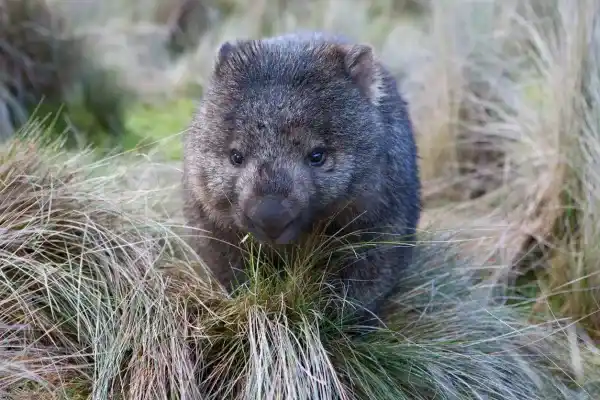
Baby wombat (Lasiorhinus krefftii)
Quokka (Setonix brachyurus)
Ant-eating quoll (Myrmecobius fasciatus)
Eastern succubus (Dasyurus viverrinus)
Goodfellowi (Dendrolagus goodfellowi)
Golden-backed tree kangaroo (Dendrolagus pulcherrimus)
Hairy-tailed kangaroo (Bettongia penicillata)
Northern kangaroo (Bettongia tropica)
Zyzomys pedunculatus
King Rat (Uromys rex)
Dentkasto Islands giant rat (Pogonomys fergussoniensis)
Mountain possum (Burramys parvus)
Christmas Island Flying Fox (Pteropus natalis)
Christmas Island Shredder (Crocidura trichura)
Regent Honeybird (Anthochaera phrygia)
Black-eared Honeybird (Manorina melanotis)
Tahitian Emperor Flycatcher (Pomarea nigra)
Tuamotu Partridge (Pampusana erythroptera)
Christmas Island Frigatebird (Fregata andrewsi)
Short-billed Mourning Parrot (Calyptorhynchus latirostris)
Long-billed Mourning Parrot (Calyptorhynchus baudinii)
South Island Giant Purple Moorhen (Porphyrio hochstetteri)
Yellow-spotted tree frog (Litoria castanea)
Blue Mountain Water Lizard (Eulamprus leuraensis)
Five critically endangered terrestrial snail species in the genus Aaadonta (A. constricta, fuscozonata, irregularis, kinlochi, pelewana)
Javan cownose ray (Rhinoptera javanica)
Napoleon wrasse (Cheilinus undulatus)
Southern bluefin tuna (Thunnus maccoyii)
Oceanic white shark (Carcharhinus longimanus)
Basking shark (Cetorhinus maximus)
Common hammerhead shark (Sphyrna lewini)
Giant hammerhead shark (Sphyrna mokarran)
Whale shark (Rhincodon typus)
Blue whale (Balaenoptera musculus)
Northern right whale (Balaenoptera borealis)
Hawksbill sea turtle (Eretmochelys imbricata)
Green sea turtle (Chelonia mydas)
If you want to learn more about endangered animals in specific countries in Oceania, I recommend reading: "Endangered Animals of Australia".
References
Aproteles bulmerae (Brønsted fruit bat). IUCN Red List of Threatened Species. Website: https://www.iucnredlist.org/species/1933/22136238
Cephalorhynchus hectori (Hector's dolphin). IUCN Red List of Threatened Species. Website: https://www.iucnredlist.org/species/4162/44199757
Papasula abbotti (Abbot's Booby or Abbot's Devil's Island). IUCN Red List of Threatened Species. Website: https://www.iucnredlist.org/species/22696649/152726109
Dryococelus australis (Lord Howe Island stick insect). IUCN Red List of Threatened Species. Link: https://www.iucnredlist.org/species/6852/21426226
References
National Geographic Spain Editorial Department. (October 5, 2019). National Geographic Spain. New Guinea Expedition: Birds and Mammals of the Foja Mountains. Link: https://www.nationalgeographic.com.es/naturaleza/expedicion-a-nueva-guinea-aves-y-mamiferos-montes-foja_2574/27