Wild cats, belonging to the Felidae family, are among the most agile and skilled predators on Earth. While domestic cats generally don't like water, many wild cats excel in aquatic environments. Many wild cats not only swim but also rely on water for foraging, cooling off, and traversing territory. This comprehensive guide introduces 15 swimming wild cats, from powerful tigers to mysterious small cats like the leopard cat and fishing cat.
The Felidae family is a very important family of mammals, encompassing all felines, including both domestic cats and wild cats. Felidae are characterized by sharp claws, agile reflexes, and excellent hunting skills. They are generally divided into two main categories: large cats and small cats.
Main classifications of the cat family:
Big cats (Pantherinae) are typically large animals capable of loud growls. Most are solitary, highly territorial, and adept at hunting large prey. Big cats include:
Lion (Panthera leo) : Lives in Africa and India. Lions are social cats and usually live in groups.
Tiger (Panthera tigris) : Mainly distributed in Asia, it is the largest cat species and is an excellent swimmer.
Jaguar (Panthera onca) : Inhabiting the Americas, especially tropical regions, it is one of the world's strongest cat species, capable of swimming and hunting aquatic animals.
Snow leopard (Panthera uncia) : Primarily distributed in high-altitude regions, such as the Himalayas. Snow leopards are adapted to cold environments and have thick fur.
Cheetah (Acinonyx jubatus) : Known for its extremely high speed, cheetahs mainly live in Africa. They don't particularly like water, but they will wade through it when necessary.
Kittens (Felinae) are typically small and agile, and many species of felines belong to this subfamily. They are characterized by their small size and diverse habits, including preying on small mammals, birds, and insects. Kittens include:
Domestic cat (Felis catus) : The most common pet cat, belonging to the cat family Felidae. Domestic cats are very agile and independent hunters, skilled at catching mice.
Lynx : There are four species of lynx: European lynx, Canadian lynx, North American lynx, and Siberian lynx. They typically inhabit forests and mountains and are skilled at jumping and hunting.
Leopard (Panthera pardus) : Widely distributed, especially in Africa and Asia. Leopards are very agile predators, capable of climbing trees and possessing strong swimming abilities.
Sand cat (Felis margarita) : Inhabits desert regions, adapted to harsh arid environments, small in size, and mainly preys on small mammals.
Forest cats (Prionailurus) : This includes many species, such as the leopard cat (Prionailurus bengalensis) and the fishing cat (Prionailurus viverrinus). These cats typically live in wetlands, forests, and other areas rich in water.
Clouded leopard (Neofelis nebulosa) : Inhabiting Southeast Asia and India, it is an arboreal feline with excellent climbing and swimming abilities.
Specialized kittens are a type of feline that typically possesses unique ecological adaptations and is distributed in specific regions or environments. These include:
Fishing cat (Prionailurus viverrinus) : Skilled swimmer, it mainly lives in wetlands and swamps in Asia, preying on fish, amphibians, etc.
Flat-headed cat (Prionailurus planiceps) : Inhabits wetlands in Southeast Asia and mainly hunts fish, amphibians, and small mammals.
Pardofelis : Primarily found in the forests of Southeast Asia, they mainly hunt by roosting in trees.
Classification criteria for felines
Size : Large cats are typically large in size, while small cats are smaller. Large cats include tigers, jaguars, and lions, while small cats include domestic cats, lynxes, and leopards.
Characteristics of vocalizations : Large cats usually growl loudly, while kittens have more delicate vocalizations. Many kittens only make hissing, meowing, or other soft sounds.
Claws and teeth : All felines have sharp claws and canines used for hunting and tearing prey. Big cats typically have stronger claws and larger canines, adapted for fighting larger prey.
Habitat and Habits : Some felines live primarily in trees (such as the clouded leopard), while others prefer grassland, forest, or desert environments. Some felines are excellent swimmers, such as jaguars, fishing cats, and leopard cats, while others have less contact with water.
Food sources : Felines are carnivorous animals that rely on hunting for food. Big cats typically hunt large animals, while kittens prey on small mammals, birds, and the like.
The Evolution of Felines
The evolutionary history of felines is very long; scientists believe that modern felines began to diverge approximately 30 million years ago. The common ancestor of large cats and small cats may have been a small feline living in forests. With changes in the environment, felines gradually evolved different body sizes, habits, and hunting methods to adapt to different habitats and survival challenges.
For example, lions and tigers have evolved powerful social structures and physical strength for group living and hunting large prey, while cheetahs have evolved astonishing speed. Meanwhile, some small felines, such as domestic cats and leopard cats, have gradually adapted to symbiotic relationships with humans or demonstrated superior skills in solitary hunting.
The feline family is incredibly diverse, playing a vital role in ecosystems. From the massive tiger and the fierce jaguar to the agile small cats, they are all apex predators in nature. Through their various adaptations, felines showcase the diversity of the natural world and the remarkable process of evolution.
Large felines that can swim
Large cats are the largest members of the feline family. Many large cats have evolved excellent swimming abilities, often using water for foraging and transportation. Below are some well-known large cats that can swim.
1. Tiger (Panthera tigris)
Tigers are among the most adept swimmers of the large cat family. They inhabit the jungles of southern Asia, China, and eastern Russia, often living near rivers, lakes, and wetlands. Their powerful muscles and webbed claws allow them to swim long distances, sometimes even miles. Tigers also swim across islands or rivers in search of food, territory, or to escape threats. They also hunt in the water, preying on fish, crocodiles, and other aquatic animals.
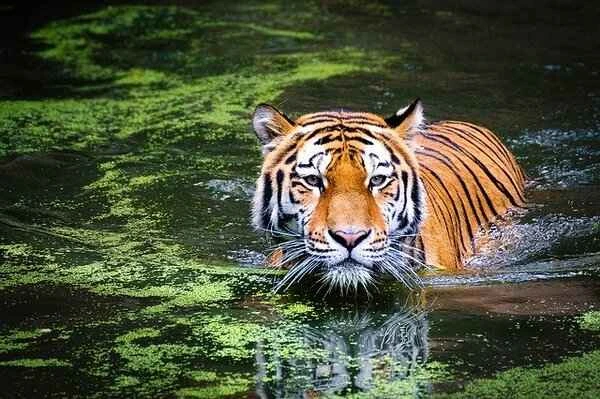
Tigers range in length from 6 to 10 feet and can weigh between 220 and 600 pounds. Their exceptional swimming ability makes them one of the most adaptable predators.
2. Jaguar (Panthera onca)
Jaguars are native to 19 countries in the Americas, and these felines are highly skilled swimmers. They inhabit rainforests and wetlands, and are often seen swimming. Jaguars have webbed paws, making them excellent swimmers; they dive into the water to hunt fish, caimans, turtles, and even small crocodiles. Jaguars have been observed traversing rivers and lakes, frequently active in the water.
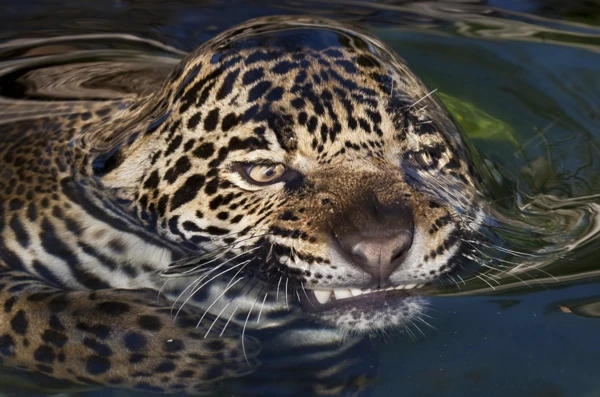
Jaguars range in length from 5 to 8 feet and weigh between 80 and 350 pounds. Their powerful swimming skills are a crucial factor in their hunting and survival.
3. Leopard (Panthera pardus)
Leopards are also large cats that are excellent swimmers. Although they don't wade in water as often as tigers or jaguars, they can move freely in water and are commonly found near rivers and lakes. Leopards are capable of swimming across rivers and hunting aquatic animals such as fish and crabs. Leopards are opportunistic hunters, utilizing waterways to hunt in areas with abundant water resources.
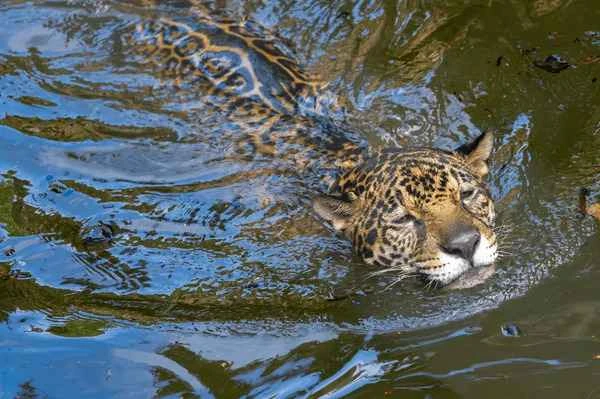
Leopards typically range in length from 36 to 72 inches and possess powerful claws that help them swim in water.
4. Lion (Panthera leo)
Lions generally dislike water, but they will swim occasionally, especially when crossing rivers and streams. Lions will swim across bodies of water if necessary, usually to expand their territory or escape threats. Although lions are not habitual swimmers, they can still wade through water when needed.
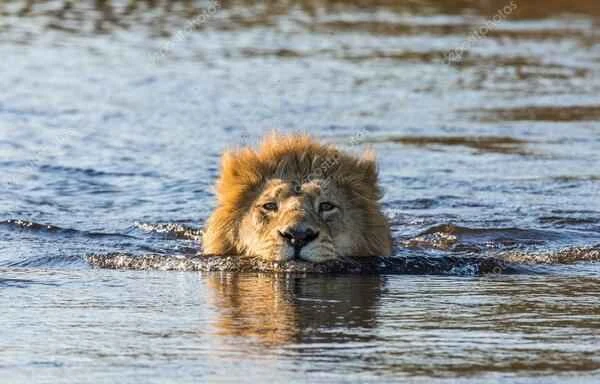
Male lions range in length from 5.6 to 8.3 feet and weigh between approximately 330 and 570 pounds.
5. Cheetah (Acinonyx jubatus)
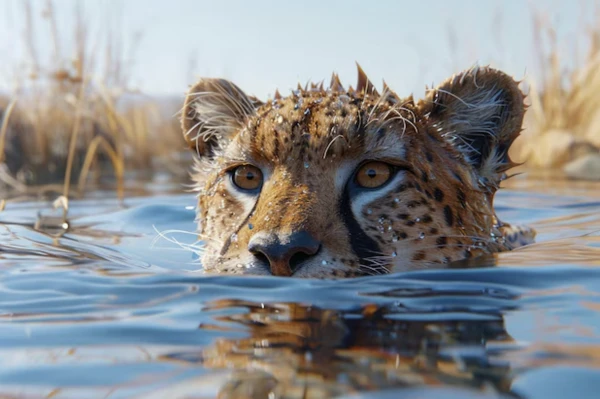
Cheetahs don't particularly enjoy water, but they will swim when necessary, especially when crossing streams or rivers. Cheetahs are primarily known for their incredible speed, but they will also swim when water becomes an obstacle. Cheetahs are mainly found in Africa, with a small number also inhabiting Iran. Male cheetahs are approximately 3.5 to 5 feet long and weigh between 50 and 160 pounds.
Medium-sized wild cats can swim
Medium-sized wild cats are typically twice the size of domestic cats. They often live in aquatic environments and rely on their swimming ability to forage and cross waterways.
6. Clouded Leopard (Neofelis nebulosa)
Clouded leopards inhabit the Himalayas, Southeast Asia, and southern China, and are highly skilled swimmers among felines. Not only are they excellent swimmers, but they also possess remarkable climbing abilities, and they frequently inhabit areas near water sources. Clouded leopards utilize their swimming prowess to cross rivers and hunt aquatic prey. This combination of swimming and climbing abilities allows them to adapt to a variety of environments.
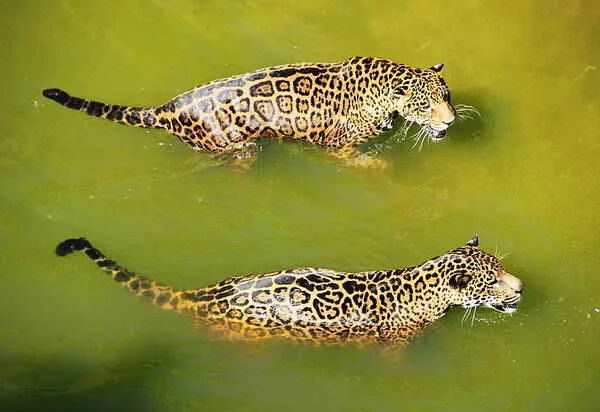
Clouded leopards typically range in length from 26 to 41 inches, and their swimming ability allows them to thrive in aquatic habitats.
7. Fishing Cat (Prionailurus viverrinus)
The fishing cat is one of the most famous wild cat swimmers. They inhabit southern Asia, primarily living in wetland environments, and prey on aquatic animals such as fish and frogs. The fishing cat's webbed paws make them excellent swimmers, allowing them to dive into the water to hunt. Fishing cats mainly inhabit wetlands, swamps, and riverbeds, and are widely known for their powerful swimming abilities.
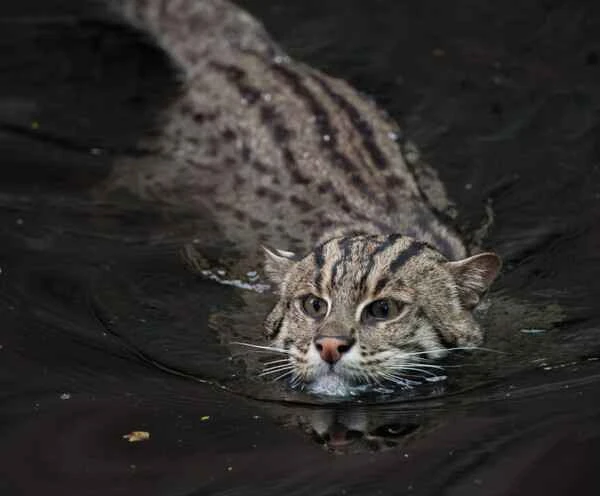
Fishing cats typically range in length from 33 to 45 inches and are top swimmers in their aquatic environments.
8. American Kitten (Herpailurus yagouaroundi)
The American otter, also known as the otters, is another medium-sized feline that excels at swimming. They are found in Central and South America, typically inhabiting areas near water sources and hunting fish, amphibians, and small mammals. American otters not only swim but also dive to catch prey. They usually live in water-rich habitats and are highly skilled swimmers.
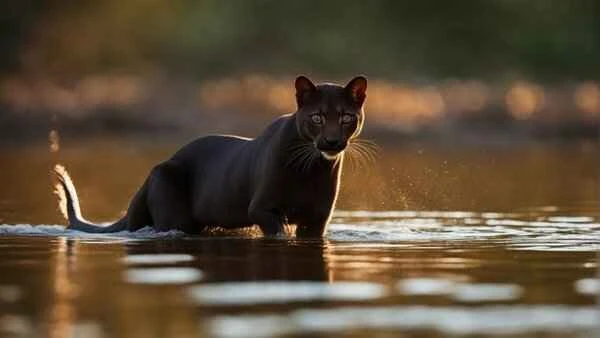
American kittens typically range in body length from 21 to 30 inches, with a tail length of 12 to 20 inches, and weigh between 7.5 and 15.5 pounds.
9. Leopard cat (Leopardus pardalis)
Leopard cats inhabit the southwestern America, Mexico, Central America, and South America, often found near rivers, lakes, and wetlands. They are excellent swimmers, frequently hunting fish, frogs, and other aquatic animals in the water. Leopard cats are not only superb swimmers but also agile hunters; their swimming ability allows them to find food in areas with abundant water.
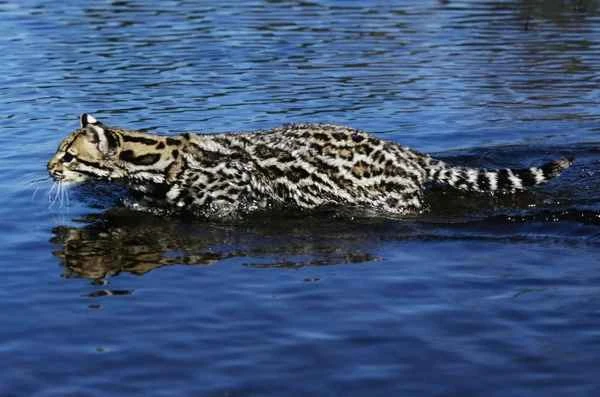
Leopard cats typically range in length from 29 to 39 inches and can swim in water to catch aquatic prey.
10. Serval cat (Leptailurus serval)
Servals are found in sub-Saharan Africa and are excellent swimmers, especially in wetlands or areas with water. They can leap up to 10 feet high and dive into the water to catch prey such as small aquatic animals like frogs. Although they don't swim as frequently as tigers, they excel in certain environments.
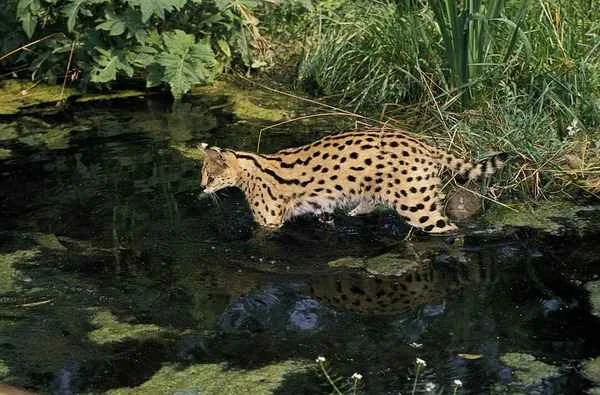
Servals typically stand between 21 and 24 inches tall and are between 39 and 51 inches long.
Small wild cats can swim
Small wild cats are typically similar in size to, or even slightly larger than, domestic cats, and they also exhibit remarkable swimming abilities. Many small cats live near water, using their swimming skills to hunt and cross waterways.
11. Flat-headed cat (Prionailurus planiceps)
The flat-headed cat is a small feline closely related to the fishing cat, found in the Thai-Malaysian Peninsula and Borneo, inhabiting wetlands such as swamps, flood forests, lakes, and streams. They are excellent swimmers, preying on aquatic prey such as fish, frogs, and crustaceans. Measuring approximately 16 to 20 inches in length, the flat-headed cat is a top swimmer among small felines.
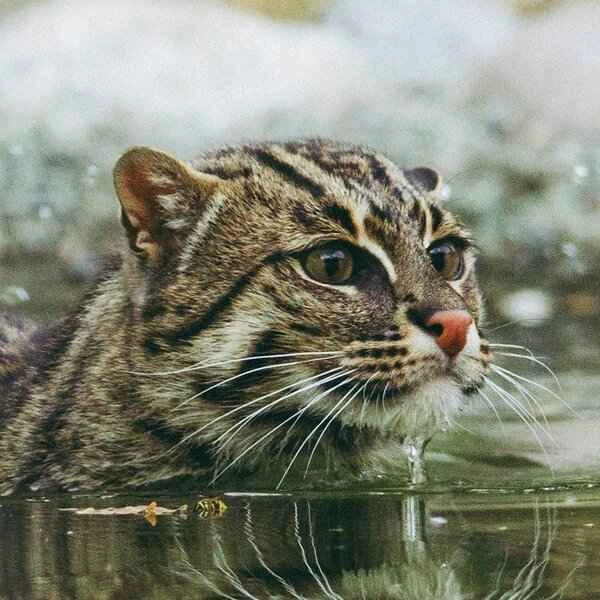
12. Leopard cat (Prionailurus bengalensis)
The leopard cat is another small wild cat species that excels at swimming. They inhabit waterways in Southeast and South Asia, often found in rivers and lakes. Leopard cats have more webbed toes, making them better suited for swimming than domestic cats. They are very agile swimmers, preying on fish, crustaceans, and other aquatic animals; their swimming ability is a vital skill for their survival.
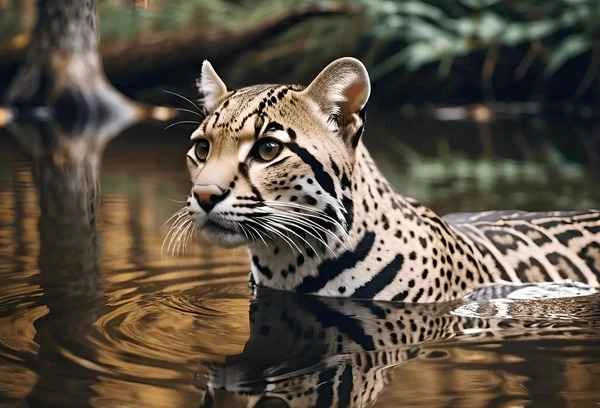
Leopard cats typically range in length from 18 to 26 inches, have a wide range of habitats, and are adapted to aquatic environments.
13. Leopardus geoffroyi (Coconut Cat)
The jay palm cat, also known as the brown palm civet or jay's cat, is a small feline that typically inhabits the southern and central regions of South America. They are excellent swimmers and are frequently observed in large rivers. The jay palm cat uses its efficient swimming skills to hunt in the water, making it a formidable swimmer among small felines.
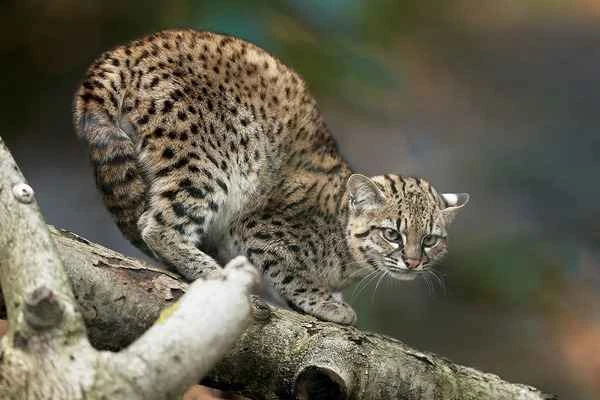
The Coconut Cat is about 18 to 24 inches long and is adapted to its aquatic habitat, demonstrating excellent swimming ability.
14. Rusty-spotted cat (Prionailurus rubiginosus)
The rusty cat is one of the smallest wildcats in the world, found in India and Sri Lanka. Despite their small size, these felines are excellent swimmers and can often be seen near water sources. While their small size limits their swimming range, rusty cats are skilled swimmers and sometimes dive into the water to hunt small prey.
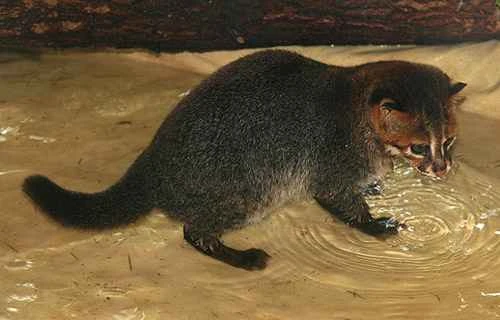
The rusty cat is only 14 to 19 inches long and is one of the smallest wild cats in terms of swimming ability.
15. Black-footed cat (Felis nigripes)
The black-footed cat (also known as the black-footed kitten) is another smaller feline. While not as renowned a swimmer as some larger cats, it can swim in areas with water. Black-footed cats inhabit the arid grasslands and scrublands of Africa, primarily hunting small mammals, birds, and insects. Although their swimming ability is not as frequent or specialized as some aquatic cats, they will cross water when needed, especially when their habitat is near a water source.
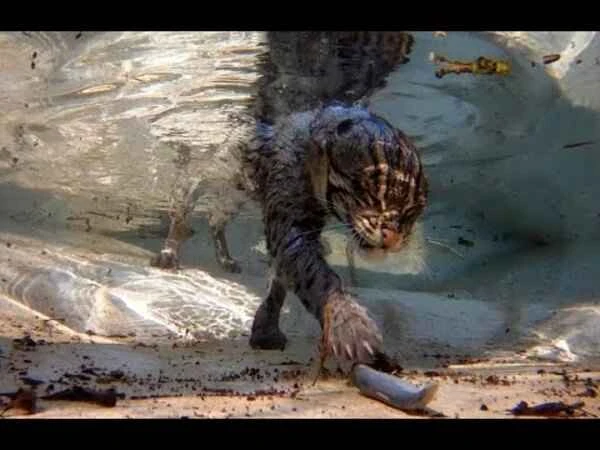
Black-footed cats typically range in length from 16 to 22 inches and are highly efficient small predators, renowned for their unique hunting techniques and agile behavior. They are extremely deadly hunters and are even considered one of the most lethal felines in the world.
The following table summarizes 15 wild cat species that can swim:
| Serial Number | wild cats | scientific name | Habitat | Swimming ability | body shape |
|---|---|---|---|---|---|
| 1 | tiger | Panthera tigris | Southern Asia, China, and Eastern Russia | Excellent swimmers can swim for miles, even across islands. They have been observed hunting fish, crocodiles, and other prey in the water. | 6-10 feet long, 220-600 pounds |
| 2 | Jaguar | Panthera onca | Americas (19 countries) | They are strong swimmers and hunt crocodiles, fish, turtles, and other prey in the water. They are skilled swimmers and can cross large rivers. | 5-8 feet long, 80-350 pounds |
| 3 | leopard | Panthera pardus | Africa, India, Southeast Asia and more | It can cross rivers and hunt fish and crabs in the water. While not as good a swimmer as tigers or jaguars, it is still quite adept. | 36-72 inches long |
| 4 | lion | Panthera leo | Africa, India | I don't swim often, but sometimes I cross rivers or streams. | 5.6-8.3 feet long, 330-570 pounds |
| 5 | Cheetah | Acinonyx jubatus | Africa, Iran | They don't like water, but they will swim when necessary, especially when crossing rivers. | 3.5-5 feet long, 50-160 pounds |
| 6 | Clouded Leopard | Neofelis nebulosa | Himalayas, Southeast Asia, Southern China | They are strong swimmers, use water to cross islands, and are also very good at climbing. | 26-41 inches long |
| 7 | Fishing Cat | Prionailurus viverrinus | Southeast Asia, South Asia | They are skilled swimmers and divers, catching fish, frogs, and other aquatic creatures. They mainly inhabit wetlands and riverbeds. | 33-45 inches long |
| 8 | American narrow cat | Herpailurus yagouaroundi | Central and South America | Skilled swimmers, they dive into the water to catch fish and amphibians. They live in wetland environments. | 21-30 inches long, tail 12-20 inches |
| 9 | Leopard cat | Leopardus pardalis | Southern United States, Mexico, Central and South America | They can swim across rivers to hunt fish and frogs. | 29-39 inches long |
| 10 | Selva cat | Leptailurus serval | Sub-Saharan Africa | They are strong swimmers and hunt frogs, birds, and small mammals in wetlands and near water sources. | 21-24 inches high, 39-51 inches long |
| 11 | Flat-headed cat | Prionailurus planiceps | Southeast Asia (Thailand-Malay Peninsula, Borneo) | Excellent swimmers live in swamps, forests, lakes and streams, catching aquatic creatures such as frogs and fish. | 16-20 inches long |
| 12 | Little Clouded Leopard | Prionailurus bengalensis | Southeast Asia and South Asia | They are excellent swimmers and typically inhabit areas near water, hunting fish and small mammals. Their toes have more webbed feet than those of domestic cats. | 18-28 inches long |
| 13 | George the tabby cat | Leopardus geoffroyi | South America | They frequently swim in rivers, hunt fish and amphibians, and live in wetlands and water-rich areas. | 20-24 inches long |
| 14 | rusty spotted cat | Prionailurus rubiginosus | India, Sri Lanka | Despite its small size, it can swim and occasionally hunts small prey near water sources. | 14-19 inches long |
| 15 | black-footed cat | Felis nigripes | South Africa | They don't swim often, but are capable of swimming when necessary. Known for their highly efficient hunting skills, they are among the deadliest felines. | 16-22 inches long |
Key highlights of swimming ability:
Tigers, jaguars, and leopards are among the most powerful swimmers of the cat family, capable of traversing vast areas of water and even hunting prey in the water.
Fishing cats, clouded leopards, and American narrow cats live in environments with abundant water. They typically have webbed toes, which helps them swim and allows them to hunt prey or cross waterways.
Clouded leopards, flat-headed cats, and George's spotted cats also demonstrate excellent swimming abilities. They typically inhabit wetlands or areas with abundant water, using their swimming skills to hunt or overcome obstacles.
These wild felines demonstrate the remarkable ability of the feline family to adapt to diverse environments. From dense forests to grasslands, wetlands, and swamps, their swimming ability gives them a unique survival advantage in their respective habitats.
Summarize
From powerful tigers to agile leopard cats, many wild felines demonstrate remarkable swimming abilities. They not only utilize water as hunting grounds but also swim to migrate between habitats and in search of food. Most swimming felines inhabit wetlands, rivers, lakes, or coastal areas, environments that provide them with abundant food sources. Whether hunting in water, crossing rivers, or escaping predators in dangerous situations, these felines' swimming ability undoubtedly gives them a significant survival advantage.
As our understanding of wild feline habitats deepens, more about their relationship with water is emerging. Their adaptability is evident not only on land but also in water. It is foreseeable that with further scientific research, we will gain a more comprehensive understanding of the habits and ecological roles of these swimming felines.
In summary, swimming ability is a crucial survival skill for wild felines, enabling them to adapt to their environment, obtain food, and expand their territory. Whether traversing vast rivers, hunting in the water, or simply swimming across small bodies of water, these felines' swimming prowess undoubtedly provides them with a significant competitive advantage. In nature, the swimming abilities exhibited by felines not only enhance their predator advantage but also enrich our ecological understanding of them.