The animal kingdom is filled with a diverse array of amazing creatures, and their reproductive methods are equally rich and varied. Different animals, based on their respective ecological environments and evolutionary characteristics, have developed unique birthing methods. These methods not only demonstrate the diversity of life but also reveal the wisdom nature employs to ensure the continuation of the species. This article will explore several unique birthing methods in animals, providing a deeper understanding of their reproductive strategies and behaviors.
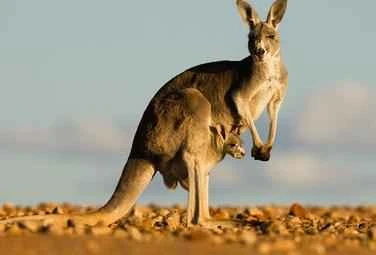
1. Kangaroo: Second birth in the pouch
Kangaroos are among the most typical marsupials, and are known worldwide for their unique birthing and parenting methods.
Unique childbirth process
Kangaroo gestation is very short, usually only about a month. During birth, the underdeveloped joey is born from the mother's uterus, and is only the size of a pea. The newborn joey is not fully mature and needs its mother's help to climb into her pouch.
Development in the baby pouch
After entering their mother's pouch, kangaroo calves continue to nurse and gradually mature. They may remain in the pouch for several months until fully developed before venturing out to explore the outside world.
Multistage reproduction
Kangaroo reproduction has another unique aspect: female kangaroos can continue to become pregnant even when they already have offspring in their pouch. This "delayed implantation" mechanism allows female kangaroos to quickly reproduce new generations of offspring when environmental conditions permit.
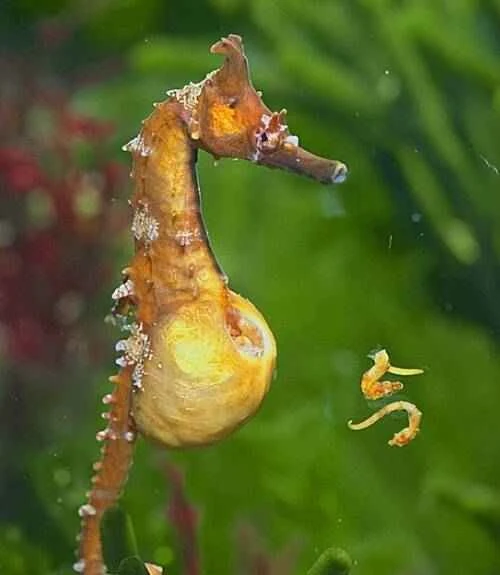
2. Seahorse: Male birthing
Seahorses are known for their unique ability to give birth in males, and are among the few animals in the world where males are responsible for pregnancy and childbirth.
Unique reproductive process
During seahorse reproduction, the female seahorse deposits her eggs into the male's brood pouch. The male fertilizes the eggs within the brood pouch and develops them. The brood pouch provides the embryos with oxygen and nutrients, allowing the baby seahorses to mature inside.
Male childbirth
When the embryo matures, the male seahorse undergoes a process similar to childbirth, expelling the calf. During this process, the male seahorse contracts its brood pouch, helping the calf leave and enter the sea.
3. Platypus: An egg-laying mammal
The platypus is a very special mammal that combines the reproductive characteristics of reptiles and mammals. As an oviparous mammal, the platypus has a unique and complex birthing process.
Oviparous process
Female platypuses lay one to three eggs, usually in a self-built nest. They incubate these eggs, unlike most mammals that give birth directly to their young. The incubation period is about 10 days, and the hatchlings are very vulnerable and require their mother's care.
Breastfeeding methods
Although platypuses are oviparous, they are still mammals. The hatchlings survive by suckling milk secreted from their mother's skin, rather than by nursing through nipples. This unique method of nursing is a significant characteristic of the platypus as a mammal.
4. Snakes: Mixed pattern of ovoviviparity
Most snakes are oviparous, but some species reproduce ovoviviparously. This hybrid reproduction involves the young snake developing inside the mother's body but ultimately hatching.
Mechanism of ovoviviparity
In ovoviviparous snakes, the mother retains the fertilized egg inside her body, allowing the embryo to develop. The embryo absorbs nutrients from the eggshell while receiving some support from within the mother's body. Once the embryo is fully developed, the young snakes are born from the mother's body like viviparous animals, but they actually hatch from the egg.
Adaptive advantages
This method of birth gives ovoviviparous snakes a better chance of survival in harsh environments. The embryo develops inside the mother's body, allowing the young snakes to avoid external threats until they are strong enough to survive independently.
5. Rays and sharks: The amazing diversity of viviparous fish
Rays and some shark species exhibit complex viviparous reproduction methods, with some species employing highly unusual methods such as ovoviviparity and intrauterine feeding.
ovoviviparous rays
Many rays are ovoviviparous, meaning their fry develop inside their mother and hatch from eggs. Once fully developed, the mother ray delivers the fry into the water.
Swallowing inside the shark's uterus
Some sharks, such as the great white shark, have an even more astonishing viviparous process. In these sharks, the earlier developing embryos cannibalize the undeveloped eggs of their siblings, or even the hatched embryos, while still in the uterus. This process, known as "intrauterine feeding," is a unique strategy that sharks use to adapt to the competitive environment for survival in the ocean.
6. Toad: A unique method of hatching from its back.
The South American tussock toad has an amazing breeding method: its larvae hatch directly on the mother's back.
Reproduction process
The female spiny toad embeds its fertilized eggs into specialized cavities in the skin on its back. The embryo develops within these cavities until the young toad is fully mature. Afterward, the young toad crawls out through these cavities on its mother's back to live in the outside world.
Ecological adaptation
This unique breeding method provides the young toads with a high degree of safety, avoiding potential attacks from predators while incubating in water.
7. Hippos: Underwater birth
Hippos (Hippopotamus) also have a rather unique way of giving birth; they usually give birth in the water.
labor process
Hippos choose to give birth in shallow water, where the water provides some protection for the calves. Immediately after birth, the calves swim to the surface to breathe, and the mother hippo helps them take their first breaths in the water.
Uniqueness
Water birth is an adaptive behavior for hippos, who live near water where water not only provides protection but also reduces predation threats on land.
The animal kingdom is filled with unique birthing methods, from the kangaroo's pouch to the male seahorse giving birth and the ovoviviparous nature of snakes. Each reproductive method is an adaptation of the species to its environment. Understanding these unique reproductive strategies not only amazes us with the diversity of nature but also reveals the wondrous evolutionary process of life. Exploring these animal birthing methods also allows us to gain a deeper understanding of the fragility and resilience of life.