Cicadas are unique insects in nature, and their life cycle, reproductive methods, and growth stages provide researchers with a wealth of material. The cicada's reproductive process is highly complex, involving multiple growth stages, from egg laying to larval development, pupa formation, and finally, adult cicada emergence. Each stage is crucial for the survival of the cicada population. This article will delve into the entire process of cicada reproduction, providing specific scientific data and detailed analysis.
The life cycle of cicada reproduction: from egg to adult cicada
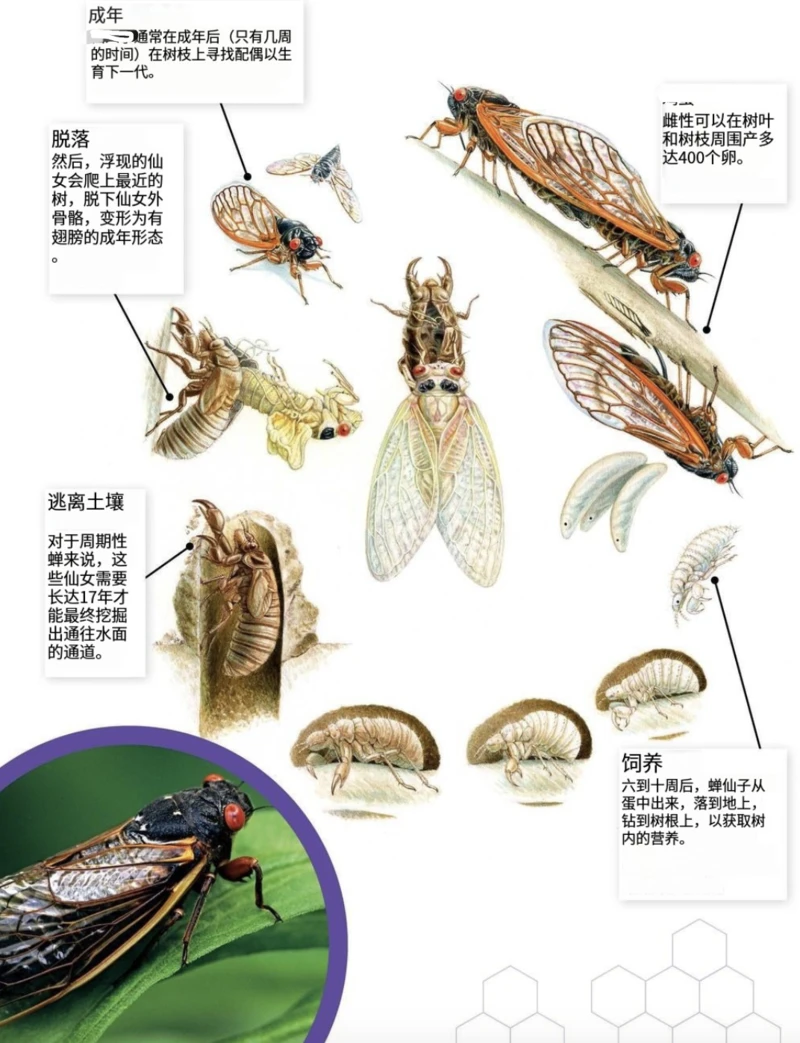
The cicada's life cycle begins with an egg, goes through several developmental stages, and ends with the birth of the adult cicada. The cicada's life cycle can generally be divided into four main stages: egg, larva, pupa, and adult.
1.1 Cicada Eggs: Egg Laying and Hatching
Cicada reproduction begins with the female laying eggs, typically on twigs, bark, or tender shoots of herbaceous plants. Studies show that a female cicada can lay 200-600 eggs in her lifetime, the exact number varying depending on the species. Cicada eggs are usually laid on plant surfaces, embedded in the bark or plant tissue by the female's ovipositor, forming small clusters of eggs. Incubation typically takes 1-2 weeks, depending on environmental temperature and humidity.
1.2 Cicada Larvae: Their Underground Life
After hatching from their eggs, cicada larvae quickly crawl underground to begin their growth process. Cicada larvae are "subterranean inhabitants" of the soil, growing by sucking sap from plant roots. The larval stage of a cicada typically lasts 2-17 years, depending on the species. For example, the larval stage of the Magicicada cicada in the eastern United States can last up to 17 years, while the larval stage of other cicada species is typically 3-7 years.
During their growth, the larvae undergo five molts. After each molt, the larvae grow larger and venture deeper into the ground to find more plant roots.
1.3 Cicada Pupa: The Transformation of the Earth's Surface
When cicada larvae have completed their development and are ready to enter the pupal stage, they begin to emerge from the ground. At this time, they seek out suitable tree trunks or plants, dig small holes in the surface, and enter the pupal stage. The pupal stage typically lasts 2-4 weeks, during which the cicada's body undergoes dramatic changes. The cicada's exoskeleton gradually hardens, and wings begin to form. The pupa is usually yellowish-white in color, with an opaque outer shell.
1.4 Adult Cicadas: Pupa Emergence and Reproduction
After the pupal stage, the cicada emerges from its pupa to become an adult. Adults typically emerge at night, and their bodies are relatively fragile. When they first crawl out, their wings are not fully extended and require time to become engorged with blood and stretch. After emerging from the pupa, the cicada needs about one hour to complete the stretching and hardening of its wings.
The main tasks of adult cicadas are singing and mating. Male cicadas attract females with their distinctive calls, and after successful mating, the females will enter the egg-laying stage and begin the reproduction process for the next generation.
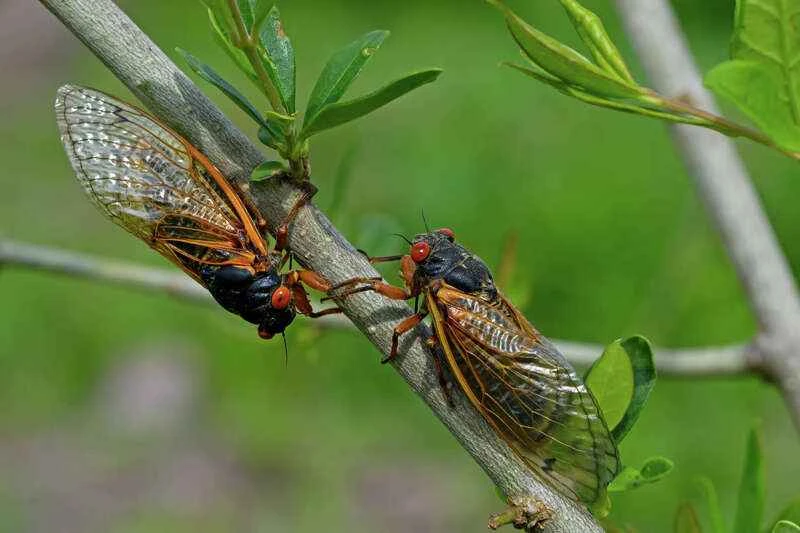
The mating process of cicadas: courtship and pairing
Cicada mating primarily relies on the calls of the male cicadas. The male cicadas produce sounds through the vocal organs on their abdomens, and the different pitches and volumes of their calls attract female cicadas to mate.
2.1 Cicada courtship behavior
The calls of male cicadas are highly distinctive, often conveying sex, species, and other information through vibrations. Beyond attracting females, the calls of male cicadas also play a role in territorial competition within the species. Scientific research indicates that the frequency of cicada calls typically ranges from 4,000 to 10,000 Hz, while some species, such as the periodic cicada, can exceed 10,000 Hz.
2.2 Cicada Mating
Once a female cicada hears and responds to the call of a male cicada, they will meet and mate. Mating typically lasts from a few hours to a day, during which the male cicada transfers sperm to the female through its copulatory organ. After successful mating, the female cicada will begin preparing to lay eggs, completing the reproductive cycle.
How do cicadas lay their eggs to reproduce?
The ovipositor of a cicada is the most crucial step in its reproduction process. The female cicada's ovipositor can penetrate tree bark or tender branches to implant the eggs.
3.1 The process of cicada egg laying
Female cicadas choose a suitable egg-laying site based on the suitability of the environment. They typically select trees, shrubs, or other plants, especially those with healthy root systems. After each egg-laying period, the female cicada buries the eggs within the plant, ensuring they can hatch under suitable temperature and humidity.
3.2 Cicada egg hatching time
Cicada eggs typically hatch within 7-14 days, depending on temperature and humidity. High temperatures and humidity are conducive to hatching. The hatched cicada larvae quickly crawl into the soil to begin their long underground life, which can last for several years.
The growth of cicada larvae during reproduction: their life cycle underground.
Cicada larvae rely primarily on the sap from underground tree roots for growth. Living underground, they feed on the sap of tree roots to sustain their development.
4.1 The life cycle of cicada larvae
Cicada larvae typically have a very long lifespan, generally taking 3-17 years to mature. The periodic cicada has the longest larval stage, lasting about 17 years, while other cicada species take approximately 3-7 years.
Underground, cicada larvae undergo five molts, gradually increasing in size after each molt and burrowing into deeper soil layers. Research has found that cicada larvae can sense changes in their underground environment through vibrations, thus choosing the most suitable place for their growth.
Habitat for cicada reproduction: the most suitable living environment for cicadas
The choice of habitat for cicadas is crucial, as a suitable habitat not only affects their reproduction but also their growth and development.
5.1 Cicada Habitat
Cicadas typically inhabit warm, humid environments, especially places with abundant vegetation. Forests, gardens, and farmlands are usually ideal habitats for cicadas to live and breed.
Scientific research shows that cicadas have high requirements for the temperature, humidity and plant diversity of their habitat, and these factors directly affect their reproductive success rate and growth rate.
Summarize
The cicada's reproductive process, from laying eggs to hatching larvae, pupal development, and finally adulthood, is complex and intricate. While the life cycle of cicadas varies among species, it follows certain ecological patterns. Understanding cicada reproductive behavior, life cycle, and habitat selection allows us to better comprehend the ecological functions of this remarkable insect and promote cicada reproduction and population stability by protecting its habitat.
Here are three frequently asked questions about cicada reproduction:
1. When is the breeding season for cicadas?
Cicadas typically breed during the summer, though the exact timing varies depending on the region and species. Most cicadas breed between June and August each year. Periodical cicadas (such as the 17-year periodical cicada in the eastern United States) may appear in large numbers in specific years, usually breeding at the end of their 17-year life cycle.
2. Why do cicada larvae take so long to grow?
Cicada larvae have a very long lifespan, typically living underground for 3-17 years . During this time, they primarily sustain themselves by sucking sap from tree roots. This long larval stage allows cicadas to accumulate sufficient energy underground before gradually maturing into pupae. The reason for this long cycle is that the cicada's life cycle is closely related to changes in its environment; this extended lifespan helps them adapt to these changes.
3. How do cicadas attract mates through their chirping?
Male cicadas attract females by emitting high-frequency calls using a vocal organ on their abdomen. The frequency of these calls varies among different species, typically ranging from 4,000 to 10,000 Hz . Males use their loud calls to compete for territory and attract females. Once a female cicada hears a suitable call, she will fly to the male to mate.