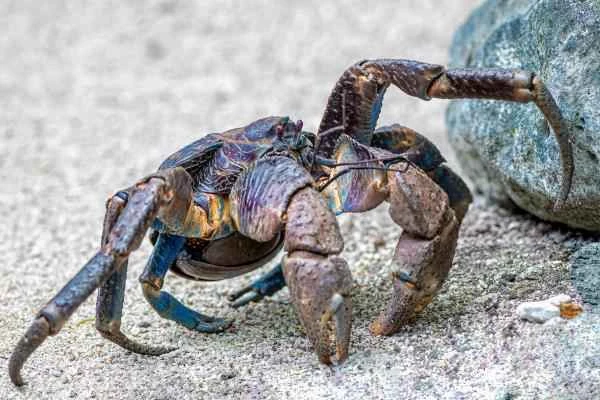
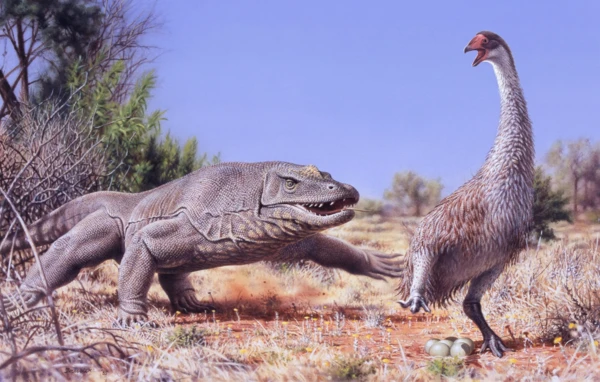
Long before the modern world recognized the fearsome Komodo dragon, another terrifying predator roamed the ancient earth: the red crocodile (Crocodilus ruber), a prehistoric beast that bore a striking resemblance to the Komodo dragon. These enormous reptiles were not only formidable hunters, but their anatomy also puzzled and astonished scientists. Unlike many of their contemporaries, they possessed an absurdly large head atop a muscular body—a feature that both defined their existence and solidified their dominance as apex predators.
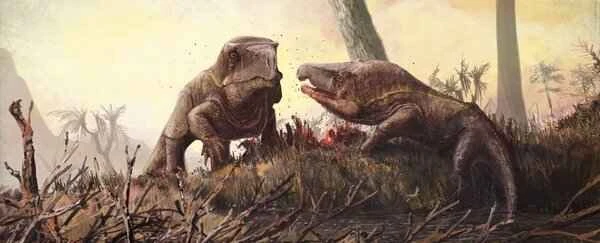
Huge monster
Red crocodiles, nicknamed by paleontologists for their striking reddish-brown color, belonged to an extinct family of reptiles that lived during the Late Cretaceous period, approximately 70 million years ago. These creatures could grow up to 30 feet (9 meters) long and weigh over a ton. Despite their enormous size, it was their massive and bizarre heads that set them apart from other creatures in the ecosystem.
Unlike modern Komodo dragons (whose body is proportional to their head), the red crocodile's skull is disproportionately large, almost comically so compared to its body. Its head is covered in thick, armor-like scales, and its lower jaw is filled with serrated teeth capable of easily tearing flesh and bone. This enormous head is not merely a biological quirk—it is a powerful adaptation that allows them to dominate their environment in ways other predators cannot.
The weight of the world: How did they survive?
When the fossil remains of the red crocodile were first discovered, the biggest question scientists asked was: how did these creatures survive under such enormous heads? These skulls were so large and heavy that they seemed almost impossible to support or move effectively.
Anatomical studies have shown that their thick, sturdy necks were key to their survival. These ancient creatures evolved incredibly strong neck muscles and vertebrae to help support the enormous weight of their heads. Their entire skeletal structure was designed to support this unique feature, making the red crocodile one of the most peculiar yet most efficient predators in nature.
In addition, the red crocodile's broad and powerful tail served a balancing function. Like modern crocodiles and Komodo dragons, their tails were an important part of their hunting strategy, used for balance and, in some cases, for delivering a devastating blow to prey. However, for the red crocodile, the primary function of the tail was to offset the weight of its oversized head, allowing it to remain agile despite its seemingly bulky proportions.
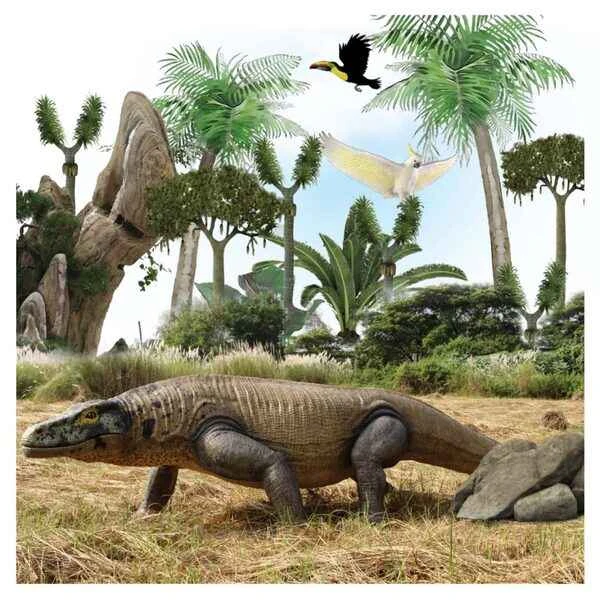
Top predators of the ancient world
Like modern Komodo dragons, red crocodiles are apex predators in their environment, inspiring fear in all other creatures. Their massive jaws and powerful bites mean they can take down animals much larger than themselves, including prehistoric mammals, dinosaurs, and even aquatic creatures that venture near the shoreline.
Their massive heads weren't just for show. They were the battering rams of the biological world, capable of crushing the skulls and spines of their prey with their jaws. Fossil evidence shows that many animals in their habitat bore scars from attacks by red crocodiles, and some skeletons revealed broken bones and deep puncture wounds that only the enormous jaws of this monster could have caused.
Red crocodiles also possessed Komodo dragon-like stealth abilities, stalking prey with the eerie quiet characteristic of creatures this size. They would ambush animals near water sources, striking with deadly precision, much like modern crocodiles. But unlike modern reptiles, due to their specialized anatomy, they could hunt and move over much greater distances.
Surviving by pure strength
Red crocodiles were effective hunters not only because of their size and strength, but also because they were very intelligent. These ancient reptiles exhibited remarkable hunting strategies, sometimes hunting large prey in packs, much like wolves. This level of cooperation is rare among reptiles today, but it likely helped them dominate during the Cretaceous period.
The red crocodile's overdeveloped senses also played a crucial role in its hunting abilities. Its large head contained exceptionally sensitive olfactory receptors, allowing it to detect prey from miles away, while its keen eyesight gave it an advantage when hunting at dusk or dawn. Like the modern Komodo dragon, it "tasted" the air with its long, forked tongue and tracked its prey with astonishing accuracy.
The mysterious extinction of the red crocodile
Despite its immense power and dominance, the red crocodile's reign came to an abrupt end. Scientists speculate that climate change and ecosystem shifts, coupled with competition from emerging large dinosaurs and mammals, led to its extinction. With the end of the Cretaceous period, the world's ecosystems underwent dramatic changes, and the red crocodile, with its enormous size and need for abundant food, likely struggled to adapt.
As resources become increasingly scarce, their massive heads, once a key advantage for survival, could also become their downfall. While smaller, more adaptable species can survive on limited food supplies, the red crocodile's enormous head and voracious appetite make it vulnerable to starvation in a constantly changing environment.
Echoes of the Past: The Legacy of the Red Crocodile
Although the red crocodile went extinct millions of years ago, its legacy is still visible in modern reptiles, especially the Komodo dragon. The similarities between the two species—particularly in hunting techniques, social behavior, and physical characteristics—lead many scientists to believe that the Komodo dragon is a distant relative of these ancient giants.
The Komodo dragon's formidable hunting abilities and extraordinary survival skills offer a glimpse into the world once ruled by red crocodiles. As we study these modern monsters, we learn more about their ancient ancestors—creatures whose enormous heads and overwhelming strength made them the undisputed kings of their time.
Conclusion: Giants of the Lost World
The red crocodile is an ancient Komodo dragon that thrived during an era when giants ruled the world. With its massive head, powerful bite, and fearsome hunting skills, it was a dominant force in the ecosystem. While these creatures may no longer roam the earth, their fossils serve as a chilling reminder of the terrifying beings that once roamed our planet—a reminder that in the distant past, the world belonged to monsters.