The Chinese people's love for rabbits is almost ingrained in their DNA: China's first lunar rover is named "Yutu" (Jade Rabbit); the first digital artifact featuring lunar soil released by the lunar exploration project is a space rabbit. Even the rabbit in the Chinese zodiac is said to have been chosen because the ancients, when assigning zodiac animals based on the time of day, felt that the hour "Mao" (卯) represented spring and dawn, full of vitality, perfectly matching the rabbit's position. This is why the rabbit was placed fourth. Furthermore, among the twelve zodiac animals, only the rabbit stands out as the representative of the traditional Mid-Autumn Festival. How did this national symbol of good fortune develop? Let's take a look.
I. The Path to Cultivating a National Auspicious Responsibility
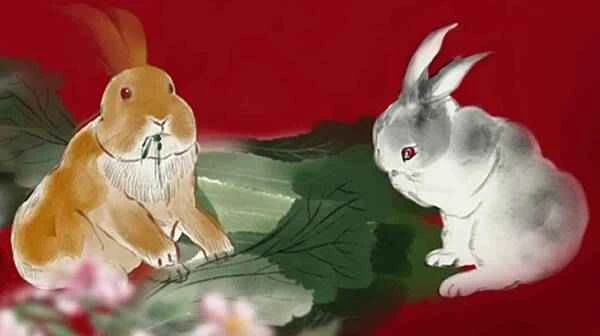
A rabbit's fate is sealed from birth, primarily determined by the color of its fur. In ancient times, whoever found a white rabbit was to present it to the court as a sign of a wise ruler and a well-governed country. According to the *Book of Han*, there are three records of white rabbits being presented as tribute during the Han Dynasty alone.
II. Why is the little white rabbit so noble?
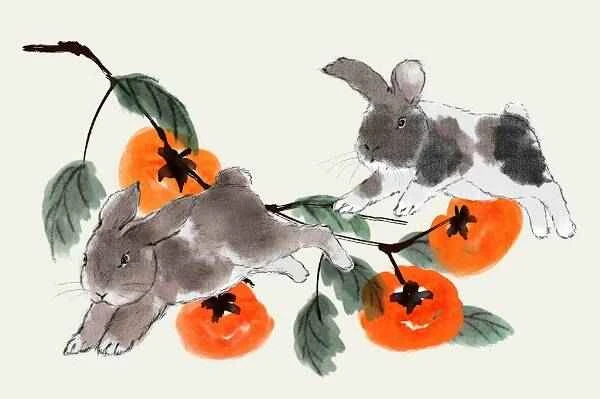
The white domestic rabbits we see today were only introduced from overseas during the Chongzhen era of the Ming Dynasty. Before that, solid-colored rabbits were rare; most were mixed-color rabbits: their fur was a mottled yellowish-brown, and even their eyes weren't the bright red of white rabbits. Like other livestock, these mixed-color rabbits were invariably served on the dinner table. The poem "The Rabbit's Nest" in the Book of Songs describes the process of catching rabbits. The poem "There is a rabbit's head; roast it and burn it. The gentleman has wine; let us pour and offer it to him" in the Lesser Odes of the Book of Songs speaks of roasting rabbits to entertain good friends.
Rabbit meat was also used as a tribute in special ceremonies. The *Book of Rites* records, "In all rites of ancestral temple sacrifices, the ox is called 'Yi Yuan Da Wu'... the rabbit is called 'Ming Shi'." These examples demonstrate that although rabbits entered the lives of ancient people very early on, they weren't particularly special in any particular way. That is, until the first pure white rabbit was discovered by chance.
III. Strange Ideas from Ancient People About White Rabbits
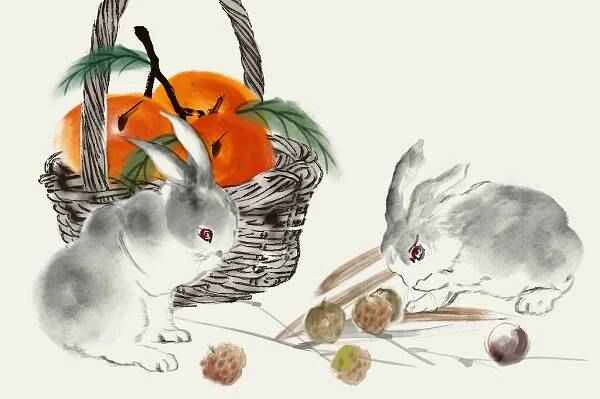
Now, most people know that the color of a white rabbit's fur is determined by its breed. But in the past, people exhausted all sorts of imaginations to understand this. One of the more widespread conjectures is similar to Emperor Jianwen of Liang's "Memorial on the White Rabbit," which says that rabbits "change color after a thousand years." This view holds that just as people's hair turns white with age, so too do rabbits. The reason why mixed-colored rabbits are more common in life is because rabbits have such long lifespans; only when they reach a certain age can they complete their magnificent transformation.
This idea sounds reasonable and has gained the approval of many people. Ge Hong of the Southern Song Dynasty also wrote in "Baopuzi": "Tigers, deer, and rabbits all live to be a thousand years old. Those that live to be five hundred years old will have white fur." This means that rabbits have a lifespan of 1,000 years, and their fur will turn white when they reach 500 years old.

IV. Those legendary white rabbits
The rabbit's rarity, coupled with the association of longevity with its white fur, gave it a unique aura. Gradually, more and more legends surrounding the rabbit arose. For example, some say it was the medicine-pounding rabbit that served the Queen Mother of the West, pounding the elixir of immortality; the moon, a symbol of longevity since ancient times, became the rabbit's dwelling place; in the legend of Chang'e flying to the moon, the moon became the Guanghan Palace, and the medicine-pounding rabbit became Chang'e's subordinate, usually called the "Jade Rabbit," which carries auspicious connotations.
Through popular propaganda, the rabbit has become synonymous with "immortality." Even after white rabbits became more common and the mystery of their fur color was solved, it did not affect their status in the slightest.
V. Homophones in Chinese Rabbit Culture
The saying "encountering a rabbit brings good fortune" reflects the fact that rabbits have always been a symbol of auspiciousness in traditional Chinese culture. People have also taken the interpretation of the rabbit's symbolism to its extreme through puns and homophones.
1. Rabbit = Spitting out food
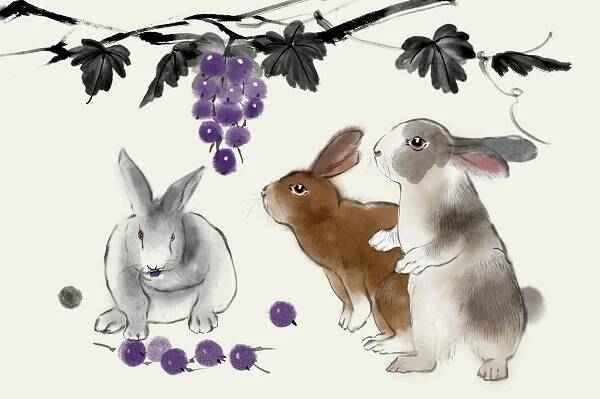
In folk culture, rabbits symbolize "many children and a prosperous family." This is mainly due to their reproductive ability. It is said that the name "rabbit" is a homophone for "spitting out offspring." The book "Lunheng" states that "rabbits lick the fur of male rabbits to become pregnant, and when they give birth, they spit out their offspring from their mouths."
The idea that "licking rabbit fur can lead to pregnancy" may sound ridiculous, but it reflects the ancients' understanding of rabbits' reproductive capabilities. In wedding customs, the ancients often used paper-cutting patterns of "snakes coiled around rabbits" to decorate the bridal chamber. Furthermore, the double rabbit motif is also an auspicious symbol of marital harmony and happiness.
2. Rabbit = Good fortune and promising future
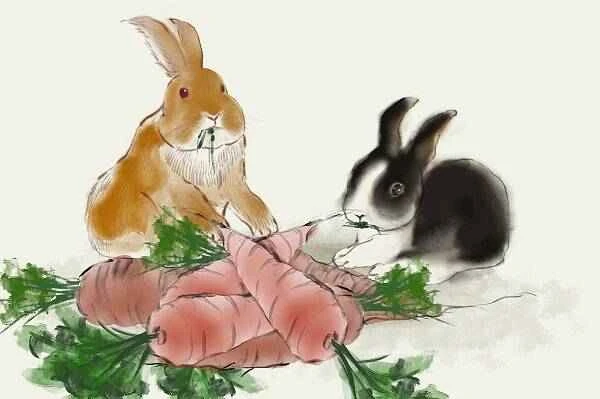
In folk tradition, rabbits symbolize good fortune and wealth. Rabbits love to eat carrots and cabbage. The word for cabbage sounds like "hundreds of fortunes" in Chinese, and the word for carrot sounds like "accumulated wealth." Together, they symbolize "wealth accumulating" and "every step brings wealth." In ancient times, merchants often wore jade rabbit carvings as a symbol of encountering good fortune.
Besides bringing wealth, the rabbit is a homophone for "journey" or "journey," and there's also the saying "plucking the laurel in the moon palace." Therefore, it also carries auspicious meanings such as a bright future (like the rabbit) and great ambitions (like the rabbit).
In addition, the rabbit also has the special identity of the medicine-pounding rabbit, symbolizing longevity and health. Its long and powerful hind legs, which make it adept at jumping, also give it the implication of rising step by step in folk legends.
VI. Sending 365 days of blessings in the name of the rabbit.
In 2023, the Year of the Rabbit, the nationwide trend of using internet slang for memes coincided with rabbit culture. The use of homophones was no longer limited to auspicious Chinese phrases like "rabbit flying forward," "great success," and "a bright future ahead," but many more variations emerged.
For example, using the English pronunciation of "to," we can say "Best Wish Rabbit You," a new way of wishing everyone a Happy New Year with a rabbit. Today, we're also using a pun on "rabbit" to send New Year's greetings: Good Luck Rabbit You, and may you suddenly become rich!
It is believed that the rabbit, which has been a symbol of good fortune since ancient times, will surely bring you unexpected good luck and inject you with the energy of sudden wealth and a bright future in the new year.