Among the vast biodiversity of Earth, one reptile reigns supreme—the Komodo dragon (Varanus komodoensis). Often called the "King of Lizards," this gigantic creature is the largest and most fearsome member of the lizard family, its primal strength, ancient lineage, and formidable hunting skills captivating scientists and nature enthusiasts alike. Komodo dragons are found only on the remote islands of Komodo, Rinca, Flores, and a few others in Indonesia, where they are apex predators. Let's delve into the fascinating world of this awe-inspiring creature and explore why it truly deserves the title of "King of Lizards."
1. The largest living lizard
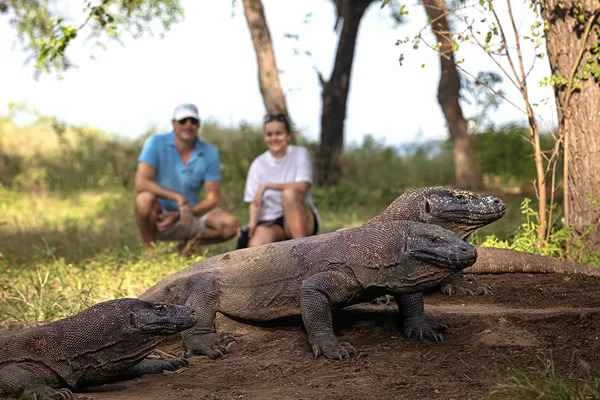
Komodo dragons are renowned for their astonishing size, which is one of the main reasons they are considered the king of reptiles. Adult male Komodo dragons can reach 10 feet (3 meters) in length and weigh over 200 pounds (90 kilograms). Female Komodo dragons are slightly smaller, but are still very powerful.
Their enormous size allows them to dominate their environment, with no natural predators to stop them. Their muscular bodies and powerful limbs give them incredible strength, enabling them to hunt prey much larger than themselves.
2. A predator unlike any other
As apex predators, Komodo dragons possess terrifying strength, speed, and intelligence, making them among the most effective hunters in the animal kingdom. Despite their clumsy appearance, these lizards are incredibly fast, capable of sprinting up to 12 mph (20 km/h) while chasing prey. Their hunting methods rely on stealth and power, ambushing their prey with lightning speed and delivering a fatal bite with their deadly jaws.
But what truly makes Komodo dragons' hunting skills terrifying is the venom glands in their mouths. For a long time, it was believed that Komodo dragons relied on bacterial infections to infect their victims, but scientists have discovered that they actually produce venom that causes shock, excessive bleeding, and a drop in blood pressure, rendering their prey immobile. Once bitten, the prey has no chance and usually dies from blood loss or shock, as the Komodo dragon patiently follows its prey, waiting for it to fall before devouring it.
3. Frenzied Eating: The Ultimate Carnivore
Komodo dragons are voracious carnivores with appetites befitting their size. Their diet includes large animals such as deer, wild boar, and buffalo, and occasionally smaller Komodo dragons. They can consume up to 80% of their own body weight in a single meal. Their powerful jaws and expandable stomachs allow them to swallow large chunks of meat and bones, making them extremely efficient predators.
One of the most striking feeding behaviors of Komodo dragons is their group feeding. When a large animal is knocked down, multiple dragons gather on the carcass and feed voraciously, each vying for the food. Although they are solitary by nature, they tolerate the presence of other dragons during feeding, even though dominance is determined by size and aggression.
4. Ancient Relics: Living Fossils
Komodo dragons are often called "living dinosaurs" because of their ancient lineage. These reptiles are direct descendants of prehistoric monitor lizards that roamed the earth millions of years ago during the age of dinosaurs. Komodo dragons have changed almost nothing over millions of years, making them a glimpse into the distant past and a living relic of the prehistoric world.
Komodo dragons' robust and resilient physiology allows them to survive and reproduce in the harsh, arid environment of the Indonesian islands, where few other large predators exist. Their ancient lineage is one of the many reasons why Komodo dragons hold such a special place in scientific research and popular fascination.
5. Incredible adaptability: Survival in isolation
The Komodo dragon's ability to adapt to its environment is a key factor in its survival and success. These monitor lizards are native to the isolated Lesser Sunda Islands of Indonesia, where they live in harsh, arid, and sparsely vegetated environments. Despite seemingly harsh conditions, the Komodo dragons thrive.
They are opportunistic hunters and scavengers, feeding on carrion and live prey. They can go for weeks without eating after a large meal, giving them an advantage in food-scarce environments. Furthermore, they are excellent swimmers, allowing them to move between islands in search of prey or mates, which further contributes to their survival.
6. The Mysterious Parthenogenesis: Reproduction Without a Partner
One of the most amazing creatures, the Komodo dragon, is known for its ability to reproduce through a process called parthenogenesis—a form of asexual reproduction in which females can lay viable eggs without mating with a male. This phenomenon was observed in captivity when female Komodo dragons laid fertile eggs in the absence of a male.
Parthenogenesis is an evolutionary adaptation that allows Komodo dragons to perpetuate their species even in isolated environments where males are scarce. This remarkable ability demonstrates the species' adaptability and its capacity to survive in challenging environments.
7. Wild Komodo Dragons: The Struggle for Conservation
Despite their fearsome reputation and dominance as apex predators, Komodo dragons are considered vulnerable due to habitat loss, human encroachment, and declining prey populations. The total Komodo dragon population is estimated at between 3,000 and 5,000 individuals, with a distribution limited to a few islands.
Conservation efforts to protect these magnificent reptiles and their habitats are ongoing. Komodo National Park, established in 1980, has played a vital role in protecting the species by safeguarding its natural environment and minimizing human disturbance. However, the ongoing threats of climate change and human development continue to threaten the long-term survival of the Komodo dragon.
8. Komodo dragons' interaction with humans: a cautious relationship.
Although Komodo dragons rarely attack humans, they should not be underestimated. These creatures are naturally curious and are known to approach humans, especially in areas where they are accustomed to human presence. Komodo dragons have sharp claws, powerful tails, and venomous bites, and can become extremely dangerous if provoked.
Occasionally, there are reports of Komodo dragons attacking humans, especially when humans get too close to their territory or interrupt their feeding. Although Komodo dragons are known for being frightening, they generally prefer to avoid interaction with humans unless provoked or hungry.
Conclusion: King of Lizards
The Komodo dragon is an extraordinary creature, rightfully known as the king of lizards. With its enormous size, deadly hunting skills, long history, and astonishing adaptability, the Komodo dragon is one of nature's most successful and awe-inspiring predators. As the largest lizard in the world, it is a symbol of strength, resilience, and the mysteries of nature.
Despite facing challenges such as habitat loss and population fragility, the Komodo dragon remains both fascinating and fearsome, a reminder of the diversity and wonder of life on Earth. With conservation efforts working to protect these modern monsters, the Komodo dragon's reign as king of lizards is expected to continue for generations to come.
The following is a detailed overview of different lizard species, their conservation status, fighting abilities, and sizes. These creatures range from small, agile climbers to enormous, fearsome predators. Lizards belong to a diverse group of reptiles, having evolved various defense mechanisms and hunting skills based on their habitats and ecological roles. The following is a comparison of the major species, highlighting their unique characteristics and levels of conservation.
| Lizard species | scientific name | Dimensions (length and weight) | Protection Status (IUCN) | Combat/Defense Abilities | Habitat |
|---|---|---|---|---|---|
| Komodo dragon | Varanus komodoensis | Up to 10 feet (3 meters) tall, and weighing over 200 pounds (90 kilograms). | Vulnerable | It has venomous bites, a strong tail, sharp claws, and is an ambush predator. | Indonesia (Komodo Island, Rinca Islands) |
| Hila Poison Lizard | Heloderma suspectum | 1.3-2 feet (40-60 cm), 3-5 pounds (1.5-2 kg) | Near Danger | The bite is venomous; the movements are slow but powerful; it is a defensive stance. | Southwestern United States and Mexico |
| Green iguana | iguana | Up to 6.6 feet (2 meters) tall, 20 pounds (9 kilograms) | No danger | It has a whip-like tail, sharp claws, and can climb quickly, jump, and swim. | Central America/South America, Caribbean |
| Marine iguana | Amblyrhynchus cristatus | 4.5 - 5.5 feet (1.4 - 1.7 meters), 11 pounds (5 kilograms) | Vulnerable | It is a strong swimmer with powerful claws, making it suitable for climbing, and it can also dive to find food. | Galapagos Islands |
| spiny lizard | Giant lizard | 8 inches (20 cm), 0.07 pounds (30 grams) | No danger | Camouflage, spiked armor, able to drink water through skin capillaries | Australia |
| Nile Monitor Lizard | Nile Monitor Lizard | 5.5-7 feet (1.6-2.1 meters), 20-30 pounds (9-14 kilograms) | No danger | It is a strong swimmer, has sharp claws, and a powerful tail that can be used as a whip. | Sub-Saharan Africa |
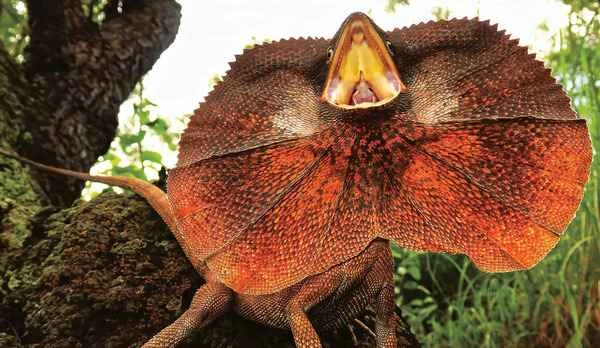
| Folded Lizard | Folded Lizard | 2.5-3 feet (75-90 cm), 1.1 pounds (0.5 kg) | No danger | Used for intimidation; runs fast; can climb trees to escape. | Australia, New Guinea |
| Gecko (common species) | Gecko family | 3 - 6 inches (7.5-15 cm), <0.1 lbs (varies) | No danger | Adhesive toe pads for climbing, tail regeneration, and nocturnal activity. | Around the world (tropical/subtropical) |
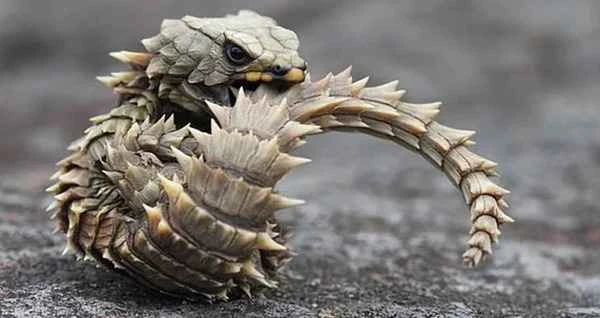
| Armadillo Lizard | Ouroborus cataphractus | 3.5 - 4.3 inches (9-11 cm), 1.2 ounces (35 grams) | Vulnerable | Protective spiny scales, rolled into a ball to protect the soft abdomen. | South Africa |
| Bearded dragon | Pogona vitticeps | 18-24 inches (45-60 cm), 0.7-1 pound (0.3-0.5 kg) | No danger | Bearded dragons can quickly fluff up their fur, change color to regulate body temperature, and signal. | Australia |
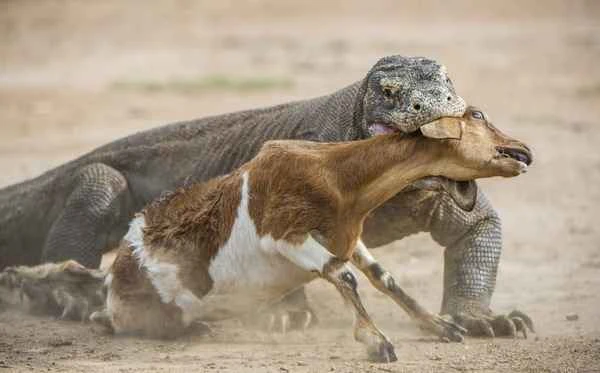
1. Komodo dragon
Protection status: Vulnerable
Size: The Komodo dragon is the largest living lizard, reaching up to 10 feet (3 meters) in length and weighing over 200 pounds (90 kilograms).
Combat/Defense Capabilities: As apex predators, Komodo dragons possess a venomous bite, sharp claws, and a muscular tail capable of delivering powerful strikes. They are known for their ambush tactics and for hunting large prey, including deer and buffalo. Their venom causes shock and prevents blood clotting in their prey, making it extremely deadly.
Habitat: Found only on a few Indonesian islands, including the Komodo dragon and the Rinca monitor, which live in arid, hot environments.
2. Hiiragi (Devil Lizard)
Protection status: Near Threat
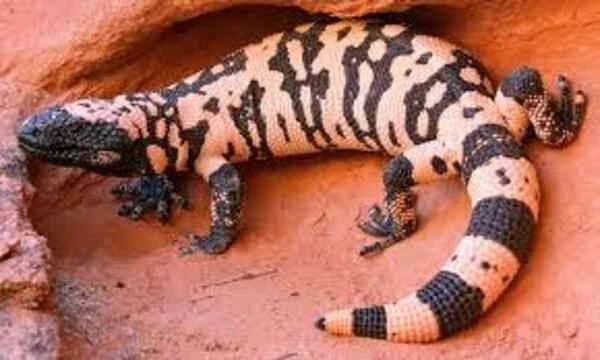
Size: The Shira monster is relatively small compared to the Komodo dragon, measuring 1.3 to 2 feet (40-60 cm) in length and weighing 3-5 pounds (1.5-2 kg).
Combat/Defense Abilities: Although the Shira monster is slow-moving, its bite is venomous and can be extremely painful, but rarely fatal to humans. They defend themselves by hissing, puffing out their bodies, and only biting when cornered.
Habitat: These reptiles are found in arid regions of the southwestern United States and parts of Mexico, living in deserts and semi-arid scrublands.
3. Green iguana
Conservation status: Least Concern
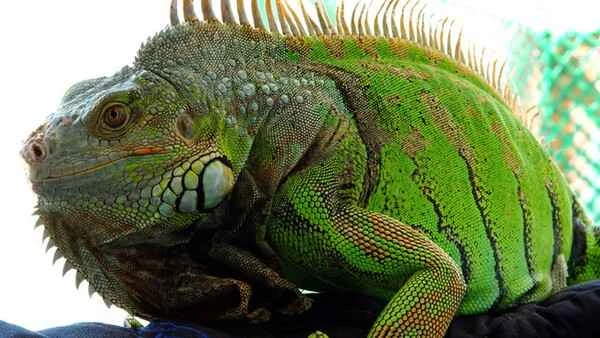
Size: These large herbivorous lizards can grow up to 6.6 feet (2 meters) long and weigh about 20 pounds (9 kilograms).
Combat/Defense Abilities: Green iguanas are generally docile, but they can use their sharp claws and powerful tails to defend themselves against predators. They are excellent climbers and swimmers, which helps them avoid danger.
Habitat: Native to the tropical rainforests of Central and South America, they have also appeared in the Caribbean and have become an invasive species in parts of Florida.
4. Marine iguana
Protection status: Vulnerable
Size: Marine iguanas typically measure 4.5 to 5.5 feet (1.4-1.7 meters) in length and weigh about 11 pounds (5 kilograms).
Combat/Defense Abilities: These unique iguanas are excellent swimmers and divers, primarily feeding on algae. They possess powerful claws that allow them to grip rocky surfaces. When threatened, they can use their tails for defense.
Habitat: They are native to the Galapagos Islands and are the only lizards adapted to marine environments.

5. Spiny lizard
Protection status: No danger
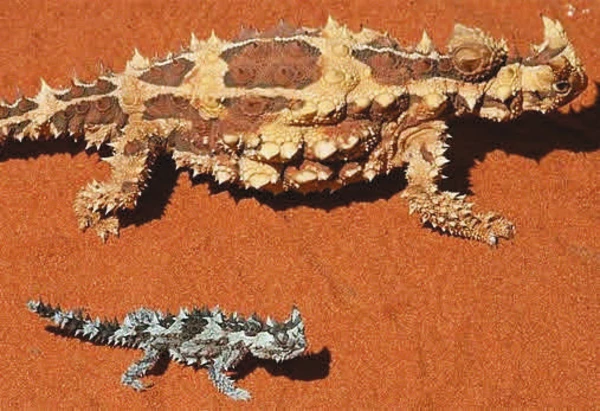
Size: The spiny lizard is one of the smaller lizards, with a body length of up to 8 inches (20 cm).
Combat/Defense Abilities: Their bodies are covered with sharp, thorn-like spikes that can deter predators. The spiny lizard also possesses the remarkable ability to collect water through its skin and can camouflage itself to blend into the desert environment.
Habitat: Native to the arid desert regions of Australia.
6. Nile Monitor Lizard
Conservation status: Least Concern
Size: These large lizards are 5.5 to 7 feet (1.6-2.1 meters) long and can weigh up to 30 pounds (14 kilograms).
Combat/Defense Abilities: Nile monitor lizards are excellent swimmers with sharp claws and a powerful tail for defense. They are fierce predators and skilled hunters, frequently preying on fish, birds, and small mammals.
Habitat: They are widely distributed in sub-Saharan Africa and typically live near rivers, lakes and wetlands.
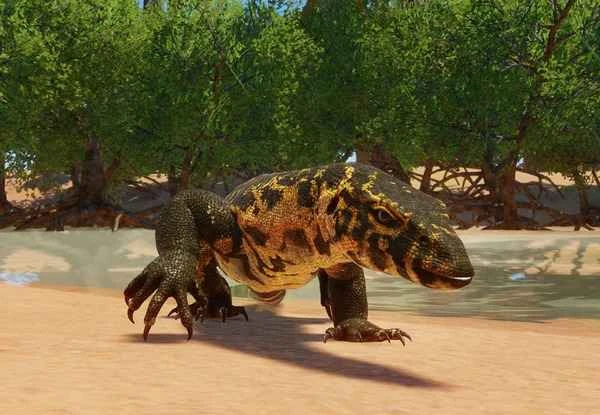
7. Frilled Lizard
Protection status: No danger
Size: The fringed lizard is 2.5 to 3 feet (75-90 cm) long and weighs about 1.1 pounds (0.5 kg).
Combat/Defense Abilities: When threatened, these lizards display striking folds around their necks to make themselves appear larger and intimidate predators. They can also use their hind legs to charge and escape danger.
Habitat: The fringed lizard is found in northern Australia and southern New Guinea, living in tropical and temperate forests.
8. Common gecko
Protection status: Minimum protection
Size: Geckos are typically small, ranging in length from 3 to 6 inches (7.5-15 cm).
Combat/Defense Abilities: Geckos have sticky toe pads that allow them to easily climb smooth surfaces. They can also shed their tails to escape predators.
Habitat: Geckos are found all over the world and live in a variety of environments, including tropical forests, deserts and urban areas.

9. Armadillo Lizard
Protection status: Vulnerable
Size: Small, 3.5 to 4.3 inches (9-11 cm) long.
Combat/Defense Abilities: This lizard has tough, spiky scales that it can roll into a ball, similar to an armadillo, to protect its vulnerable belly from predators.
Habitat: Native to the deserts of South Africa.
10. Beared dragon lizard
Protection status: No danger
Size: Bearded dragons can reach 18 to 24 inches (45-60 cm) in length and weigh 0.7-1 pound (0.3-0.5 kg).
Combat/Defense Abilities: Bearded dragons inflate their throats and "manes" when threatened, making them appear larger. They can also change color and run very fast.
Habitat: Native to the arid, rocky deserts of Australia.

The table above provides a broad comparison of lizard species, each with unique survival, defense, and hunting adaptations. These reptiles are vital to their ecosystems, but many lizards are at risk due to habitat destruction, climate change, and human activities. Conservation efforts are essential to ensuring their continued survival.