Dogs and cats are common pets, and their reproductive cycles differ from those of humans. Although they do not have menstruation (menstruation) like humans, they also experience similar physiological processes; specifically, they have their own estrus cycles .
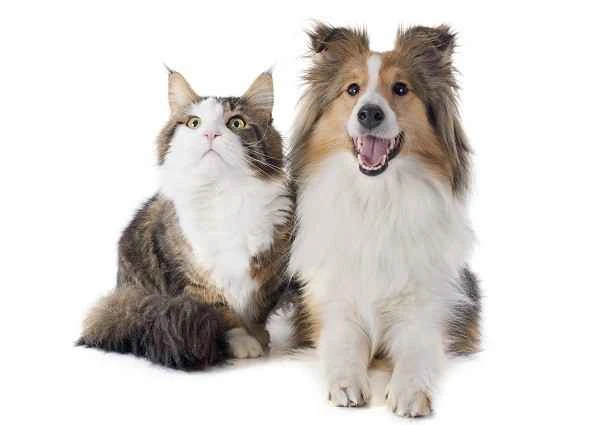
Dog's estrus cycle
A dog's estrus cycle, commonly known as the heat cycle , is its reproductive cycle, similar to the human menstrual cycle, but unlike humans, dogs do not experience menstrual bleeding. A dog's estrus cycle can be roughly divided into four phases:
Proestrus : This stage typically lasts 7 to 10 days. Female dogs will have vaginal discharge , and they may become more active and attract male dogs, but they usually will not accept mating. The discharge during this stage is usually bloody or red, but this is not "menstruation" but rather part of the estrous cycle.
Estrus : This is the optimal breeding season for dogs, typically lasting 7 to 10 days. Female dogs will accept mating from males. During this stage, secretions may decrease and become clearer, indicating the dog is ready to breed.
Diestrus : This stage lasts about 2 months. The female dog's reproductive ability decreases. Although they no longer attract males, they will begin to become pregnant if fertilization is successful.
Anestrus : This is the dog's resting period, lasting about 4 to 5 months. During this stage, the dog's reproductive system is in a "dormant" state.
cat's estrus cycle
Cats' estrus cycle is also different from menstruation (menstruation). Their estrus cycle is called estrus period , and cats are " seasonal estrus animals ", which means that they usually go into heat in the spring and summer, which is affected by the length of daylight.
A cat's estrus cycle typically includes the following stages:
Proestrus : Lasts 1 to 2 days. Female cats may become more affectionate towards humans and call out, but they usually do not accept male mating.
Estrus : A cat's estrus cycle typically lasts 4 to 6 days. During this time, female cats will emit very loud vocalizations and show strong interest in male cats. This is when female cats are most likely to mate.
Postestrus : If a cat does not mate successfully, its estrus cycle may end on its own, and it will enter this stage. The cat will stop being in heat and return to its normal daily life.
Anestrus : This is the cat's resting period, which usually occurs in winter and does not occur during estrus.
Summarize
While dogs and cats have bloody discharge during their estrus cycle , this is not the same as a menstrual cycle in humans. Their physiological mechanisms are fundamentally different from human menstruation. A dog's or cat's "estrus period" is a time when they prepare for reproduction, not a process of shedding the uterine lining like menstruation. Therefore, dogs and cats do not have menstruation ; they have estrus cycles , which include hormonal changes and physiological responses in preparation for reproduction.