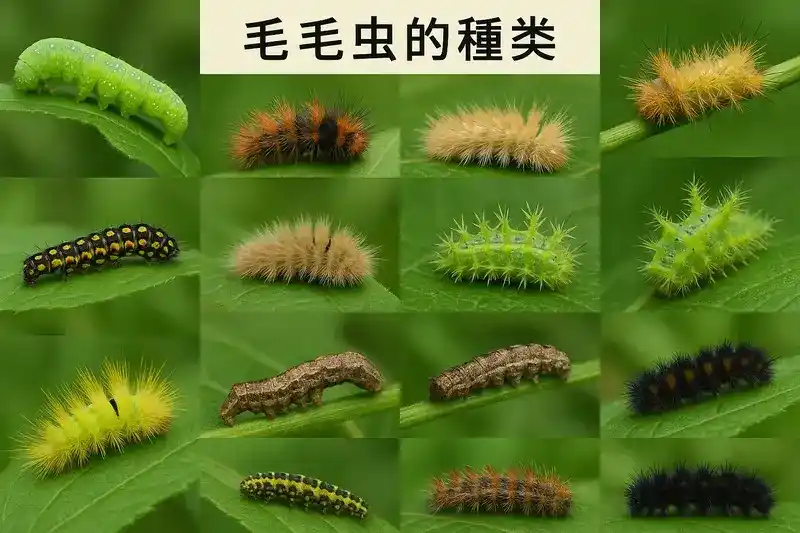
Some common caterpillar species include the crystalline caterpillar (Acraga coa), the larva of the five-spotted hawk moth (Manduca quinquemaculata), and the fluffy caterpillar (Megalopyge opercularis). Insects undergo a complex life cycle, and the larval stage (i.e., caterpillar) is a crucial phase in the development of butterflies and moths (Lepidoptera) into adults. This article will introduce you to several special types of caterpillars.
Acraga coa (Glittering caterpillar)
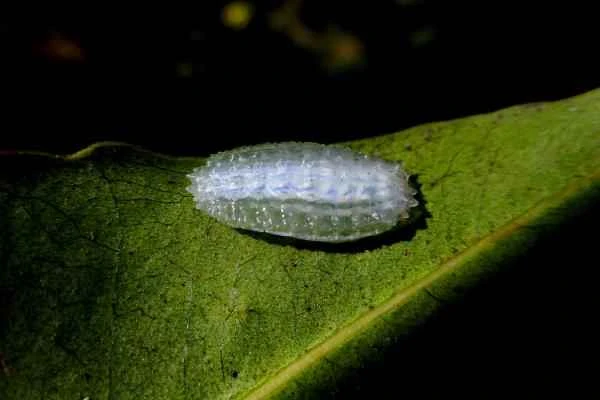
This caterpillar appears to be made of delicate crystal. It is white, covered with short, transparent spikes tipped with yellow dots. Its distribution extends from Mexico to Central America. The adult stage is an orange, fuzzy moth that resembles a toy caterpillar, hence the name "fuzzy moth."
Five-spotted hawk moth larva (Manduca quinquemaculata)
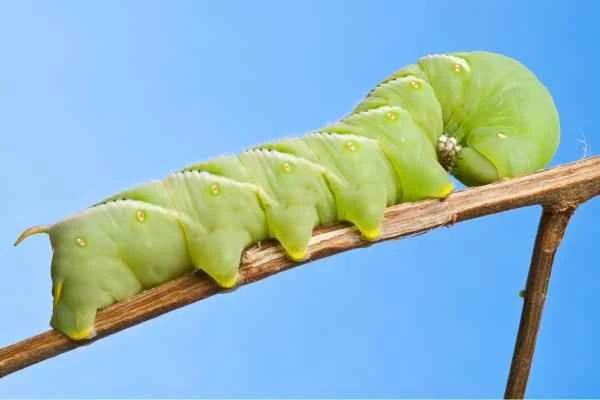
This is a green, plump caterpillar with a distinctive horn-like protrusion at the tail. They often rest with their heads raised, resembling a sphinx, hence their classification as a member of the family Sphingidae. This caterpillar feeds on tomatoes and causes significant damage to agriculture. The adult is a yellow moth with five black spots on each side of its abdomen, hence the name "five-spotted moth."
Blue Morpho caterpillar (Morpho menelaus)
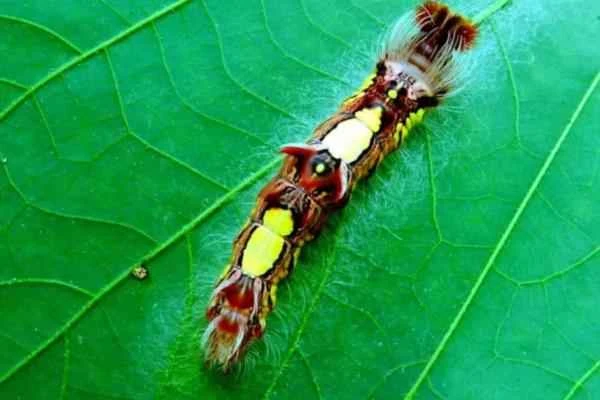
The larvae of the Blue Morpho butterfly possess protective red and white long hairs, and their bodies display alternating yellow, brown, and white stripes. These hairs are stinging and serve as a defense against predators. After emerging from their larvae, they become the beautiful Blue Morpho butterflies, a world-renowned tropical butterfly.
Caterpillar (Megalopyge opercularis)
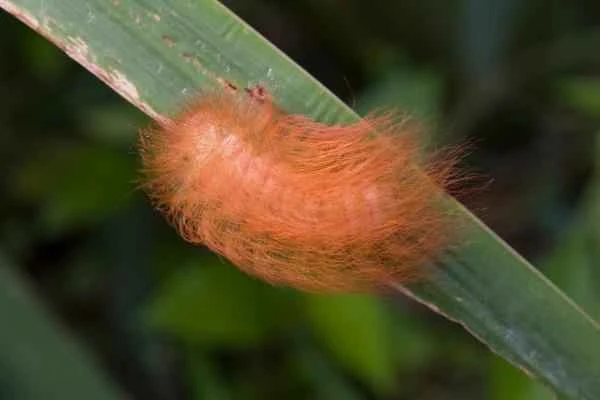
This caterpillar is covered in long, dense hairs (called "bristles"), resembling a plush toy. Despite its cute appearance, it is one of the poisonous caterpillars; contact with its hairs can cause skin irritation and even respiratory problems. The adult is known as the "cat moth" or "cat cat moth."
Wool Bear Caterpillar (Pyrrharctia isabella)
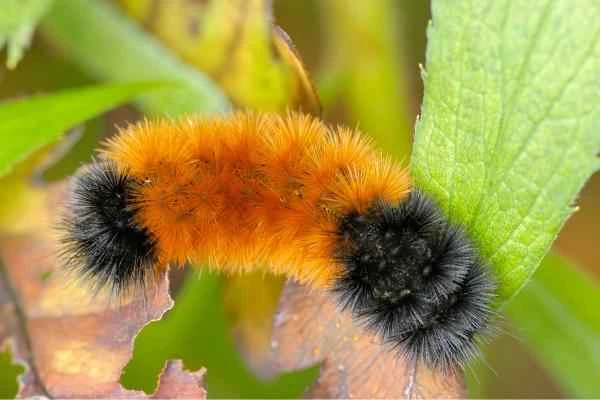
This caterpillar has black ends and an orange-brown middle section. It is widely distributed in temperate and cold regions. Despite having dense bristles, it is non-toxic to humans and does not cause allergies. It resembles the migratory caterpillar in appearance, but the two are not the same species and are not poisonous.
The Great White Butterfly Caterpillar (Pieris brassicae)
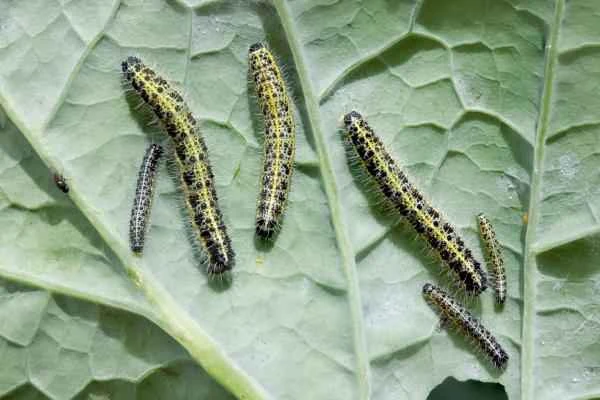
A common caterpillar in Spain, primarily feeding on cruciferous vegetables such as cabbage. The female lays her eggs on the leaves, and the larvae hatch and begin to eat the leaves and excrete waste, causing damage to the crop. The adult is known as the "cabbage white butterfly."
King moth caterpillar (Citheronia regalis)
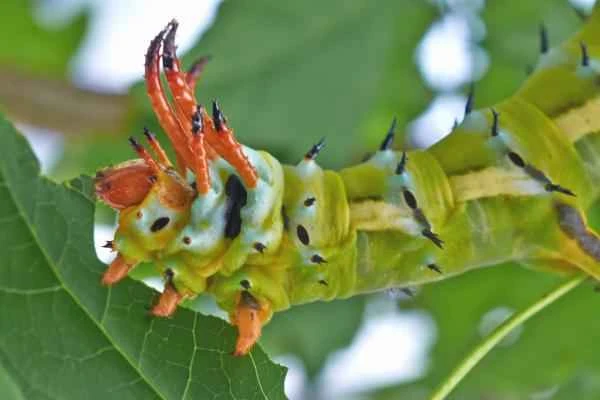
This is a large, green caterpillar with clearly defined body segments, covered in black, curved spines. Its head and tail are red with red, horn-like protrusions, making it quite spectacular. The adult is a large, orange-brown king moth.
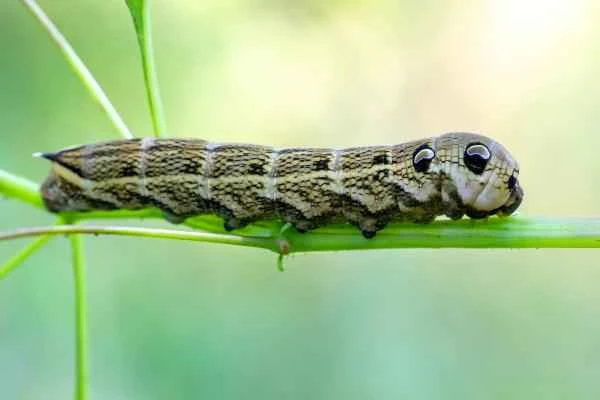
The large purple-spotted moth caterpillar (Deilephila elpenor)
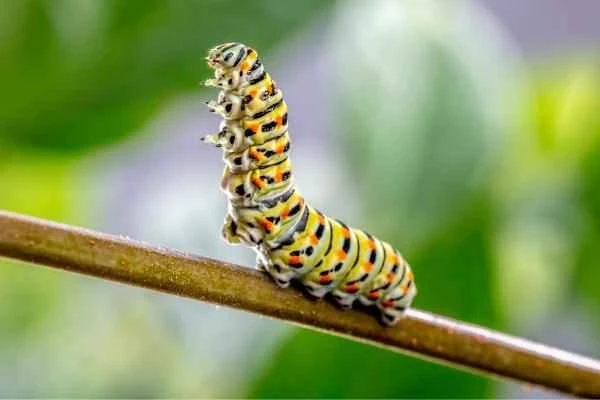
This species of caterpillar has a robust body and two large, eye-like spots on its head, which it uses to deter predators. They don't actually have eyes; those are camouflage. The adults are nocturnal moths with pink and brown wings.
The migratory caterpillar (Thaumetopoea pityocampa)
These caterpillars move in swarms, almost like a parade. They primarily feed on pine trees and can severely damage them. Their hairs are poisonous; contact can cause allergies, redness, swelling, and even respiratory problems.

Do all caterpillars turn into butterflies?
Not all caterpillars will become butterflies. Caterpillars are merely the larval stage in the life cycle of butterflies and moths. They go through four stages: egg → caterpillar → pupa → adult (butterfly or moth).
Other insects, such as beetles and flies, also undergo similar metamorphosis, but their larvae are called "maggots" or "larvae" and do not become butterflies or moths. Therefore, strictly speaking, only the larvae of Lepidoptera are called "caterpillars".