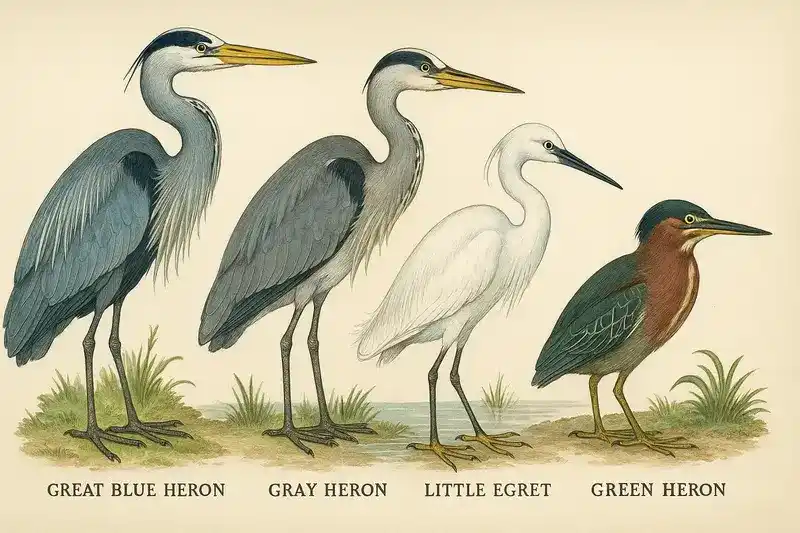
Herons (Ardeidae) are waterbirds widely distributed throughout the world, typically solitary in nature. This article introduces 10 representative heron species.
1. Grey Heron (Ardea cocoi)
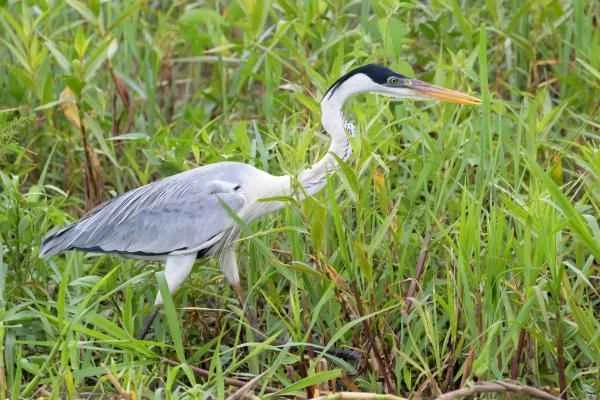
The grey heron, native to Central and South America, has grey and white plumage, with long feathers adorning its neck, back, and chest. Its bill and legs are yellow. They are diurnal, usually solitary, but sometimes form small groups. They inhabit freshwater or brackish wetlands and prefer to perch in trees. During the breeding season, they build nests in tall, dense vegetation or reed beds, weaving nests from dry branches and other plant materials, laying 3 to 5 eggs. Their diet includes insects, amphibians, fish, small mammals, and birds.
2. Great Egret (Ardea alba)
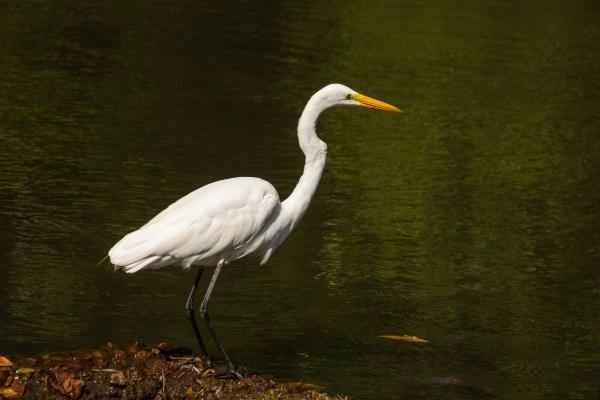
The Great Egret is a slender, all-white heron with black legs and a long, orange-yellow beak. It is commonly found in shallow or calm waters, feeding on fish, amphibians, and invertebrates, using its beak to harpoon its prey quickly. It builds its nest in trees using twigs, laying 3 to 5 eggs per clutch. Great Egrets are widely distributed across all continents except Antarctica.
3. Night heron (Nycticorax nycticorax)
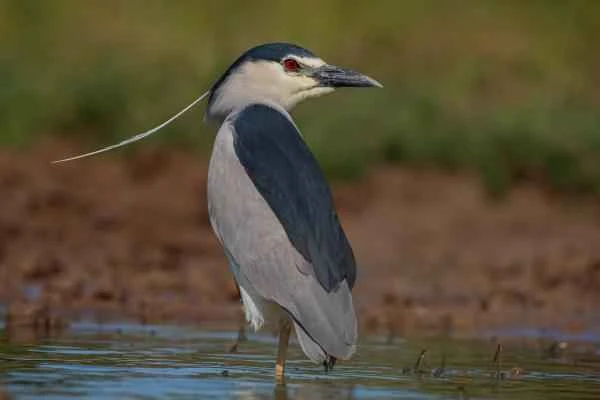
The Black-crowned Night Heron is robust, with a short, stout beak and neck. Its plumage is grey, with a black crown, nape, and back, a white throat, and two long white feathers at the nape. Its legs are yellowish-green, and its iris is red. Smaller than the Grey Heron, it has a black back and grey belly. It is a nocturnal or twilight-active bird, preferring densely vegetated areas along the banks of lakes and rivers. Its diet includes small vertebrates, invertebrates, plant debris, and seeds, and it is widely distributed across Eurasia, Africa, and the Americas.
4. Cattle Egret (Bubulcus ibis)
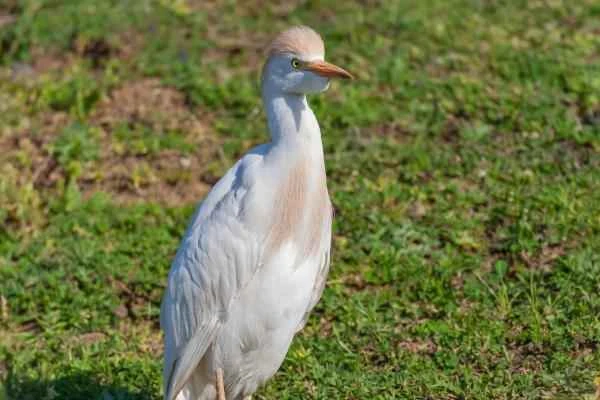
The cattle egret is slender with pure white plumage, its head and neck turning golden during the breeding season. It is distributed globally in tropical, subtropical, and temperate regions, including grasslands, marshes, farmlands, and mangroves. It often perches on the backs of cattle, the ground, utility poles, or trees. Standing approximately 40 centimeters tall, it preys on small vertebrates and invertebrates. Due to its strong expansion capabilities, it is considered an invasive species in some areas.
5. Little Egret (Egretta thula)
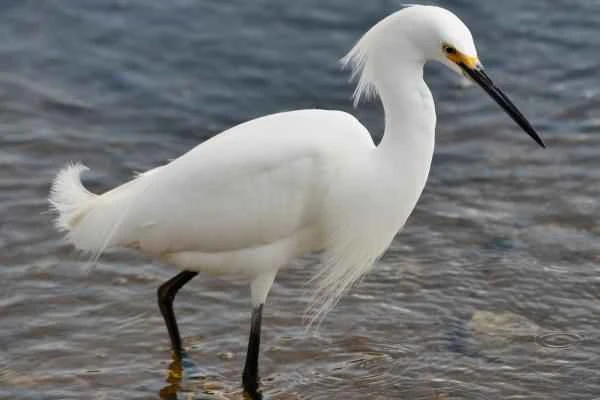
The Little Egret is about 60 cm long. During the breeding season, it develops decorative feathers on its back and chest, a black bill with a yellow base, and black legs. It is easily distinguished from the larger Great Egret (Ardea alba). They are usually solitary but can also live in groups, preying on fish, amphibians, insects, spiders, and crustaceans. They are distributed in ponds, swamps, rivers, and islands in the Americas.
6. Blue heron (Butorides striata)
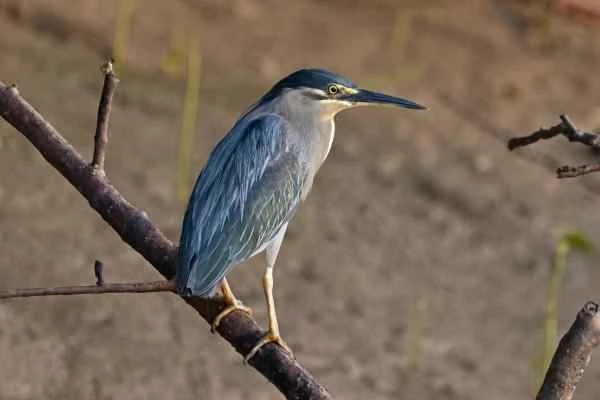
Commonly known as the Blue Heron or Striped Heron, it is distributed across the Americas, Asia, Africa, and Oceania, and can adapt to both freshwater and saltwater environments. Adult birds can reach up to 48 cm in length and feed on small fish and insects. Its crest and head are black with a greenish sheen, its neck and chest are brownish-gray, and the rest of its body is grey. Although its back is grey, it lacks a metallic sheen.
7. Striped Heron (Botaurus pinnatus)
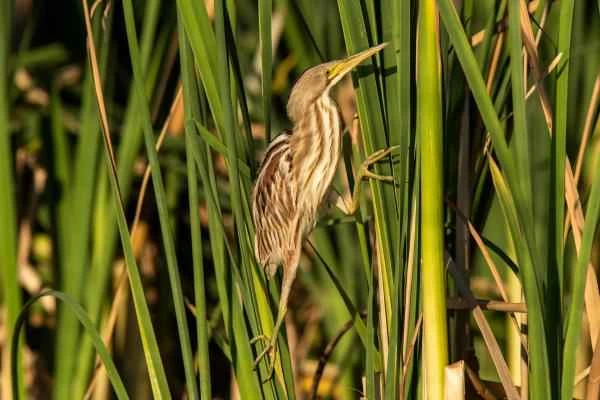
Distributed in South America, this small animal has plumage with stripes of black, ochre, and cinnamon. It is elusive and has short flight distances. It prefers wetlands and lakes with dense reeds. It feeds on fish, insects, and amphibians. Its nest is a cone-shaped platform constructed of dry reeds, containing 3-4 green eggs.
8. Great Heron (Botaurus pinnatus)
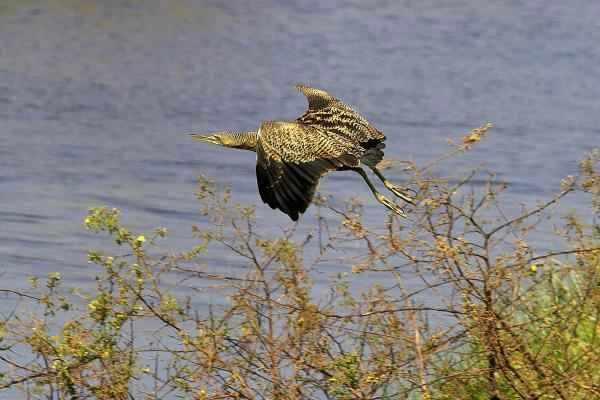
Inhabiting tropical America, it dwells in tall reed beds and is solitary, rarely appearing in open areas. Its plumage is camouflaged, light brown with brown markings. A sensitive and patient predator, it feeds on fish, insects, amphibians, and small mammals (including capuchin monkey cubs). Its nest is a cup-shaped structure made of coarse plant material, containing 2 to 3 olive-green oval eggs.
9. Red-necked Tiger Heron (Tigrisoma lineatum)
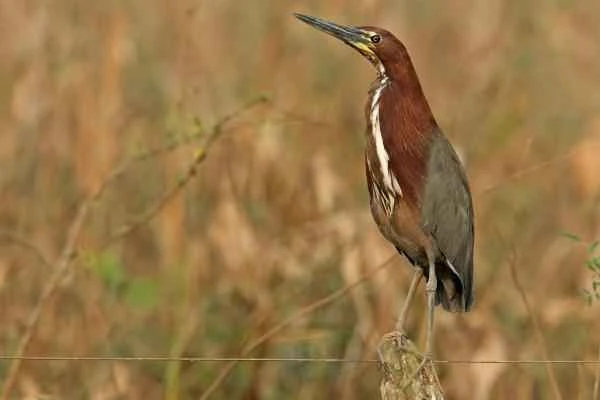
Distributed in the coastal jungles of Central and South America. The neck is chestnut-colored, with black and white stripes from the chest to the throat, and the back is grayish-brown with reddish tinges. Individuals are slow-moving and solitary, nesting in trees or reed beds. The nest is composed of twigs or reeds, and the animal lays 2 to 3 white eggs. Its diet includes insects, fish, reptiles, and crustaceans.
10. Blowing Heron (Syrigma sibilatrix)

Also known as the "Whistle Heron," it has a pinkish-purple beak with a black tip, black legs, and a grayish-white iris. Its back is grayish-blue, and its neck and chest are pale yellow. It usually appears in pairs, sometimes forming small flocks of up to 45 individuals. It inhabits wetlands, pastures, and forest edges, roosting in trees at night. Its call consists of a high-pitched whistle and a low hum. It nests in trees 3 to 15 meters high, using twigs.