The vast, roaring, and bountiful Southern Ocean is a world-renowned marine ranch, nurturing an astonishing number of marine creatures. Besides large animals like penguins and seals, whales are particularly outstanding. The blue whale is the largest mammal in Antarctica and the largest mammal in the world. The Southern Ocean boasts the highest whale population and catch among all the world's oceans, with a current population of approximately one million.
Every year when the Antarctic summer arrives, giant whales from the Southern Hemisphere migrate south, turning the Southern Ocean into a whale world.
I. Distribution of Categories
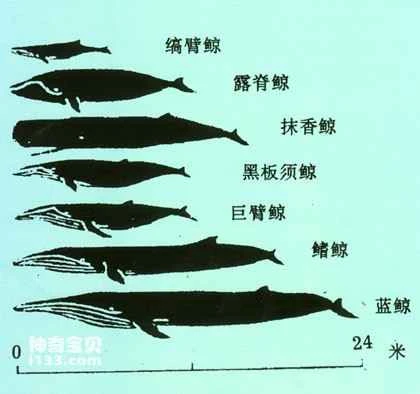
Antarctic whale scale map
Whales inhabiting the Southern Ocean are divided into two main categories: baleen whales and toothed whales, with as many as 12 species. Larger baleen whales include blue whales, fin whales, black baleen whales, banded baleen whales, giant baleen whales, minke whales, and right whales; larger toothed whales include sperm whales and orcas.
The largest of these is the blue whale, while the most numerous is the finned whale. The giant arm whale and right whale have been almost hunted to extinction, with few survivors, likely due to their slow swimming speed and ease of capture.
Whales are widely distributed in the Southern Ocean, with their presence found almost everywhere south of the Inter-Antarctic Convergence. Their distribution is closely related to that of krill populations. Blue whales are mainly distributed in the ice floes, while the southernmost whales are the giant baleen whale and the black baleen whale. The striped baleen whale can overwinter in Antarctic waters, and the right whale is mainly distributed in the sub-Antarctic region. Toothed whales are distributed in the Inter-Antarctic Convergence and migrate with the seasons.
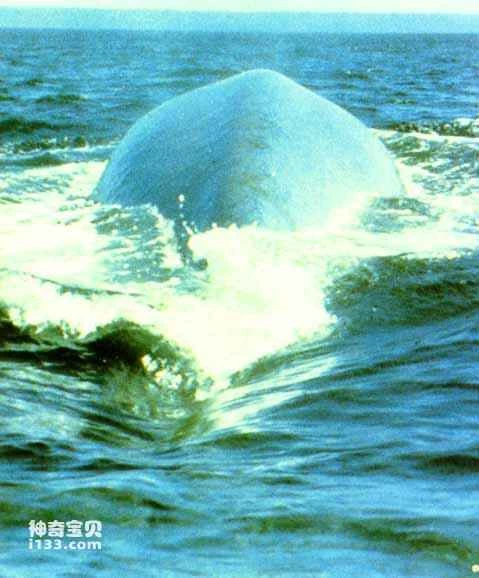
1. Blue Whale
Also known as the blue whale, it reaches 30 meters in length and weighs an average of 150 tons, with the largest reaching 190 tons. Its tongue alone weighs 3-4 tons, enough to fill a large truck. Its body is bluish-gray or yellowish-brown due to a layer of yellowish-brown diatomaceous earth covering its skin; its true color is actually black. The blue whale's massive and obese body makes it a prime target for hunting, resulting in a continuous decline in its population, with only about 200,000 remaining.
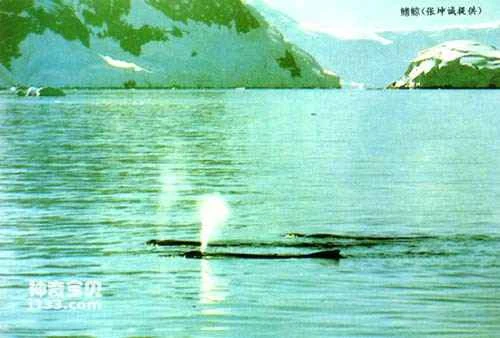
2. Fin whale
It is 25 meters long and weighs about 50 tons. Its back is black, its belly is white, and its sides are light gray. Its body shape is similar to that of a blue whale. It is also the most hunted species, causing its population to drop from 400,000 to 80,000.
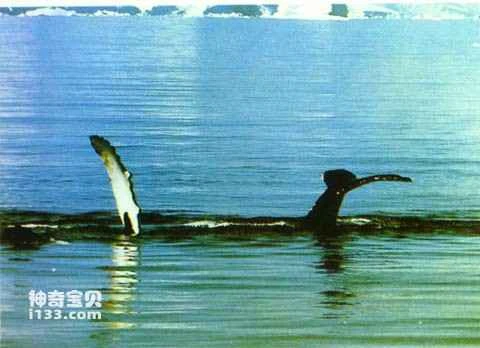
3. Giant Arm Whale
Also known as the humpback whale, it is about 15 meters long and weighs 25 tons. Its back is black, while the rest of its body is gray. It has very long pectoral fins that resemble a pair of giant arms. It has a thick, short body and a hunched back, hence its name. Its current population is very small, and it has become a rare species in the Antarctic Ocean.
4. Banded Whale
It is about 10 meters long and weighs 7 tons. It has a slender body and is the smallest of the baleen whales. There are about 200,000 of them.
5. Right whale
It is 18 meters long and weighs about 20 tons. It has a slender body, a black back, and a grayish-white belly. It belongs to the sub-Antarctic species.
6. Sperm whale
Also known as the toothed whale, it measures 18–25 meters in length and weighs 20–25 tons, with the largest reaching 60 tons, making it the largest of the toothed whales. Its body is grayish-yellow, with a particularly large, wedge-shaped head that accounts for one-third of its body length. Its body is short and stout, and its movements are slow and clumsy, making it easy to hunt. Its current population has declined from 850,000 to 430,000.

7. Orca
Also known as the killer whale, it is 8-10 meters long and weighs several tons. It has a black back, a grayish-white belly, a curved dorsal fin up to 1 meter long, a long, slender mouth, sharp teeth, and a fierce temperament. It is adept at attacking its prey and is a major enemy of penguins and seals. Sometimes it even attacks its own kind, baleen whales or sperm whales, making it a tyrant of the sea.
II. Living Habits
Whales are marine mammals that give birth to live young, nurse their young, and breathe with lungs. However, they differ from marine mammals such as seals, as well as seabirds like penguins that breathe with lungs. Whales live their entire lives in the water, while other marine mammals and seabirds spend some time in the water and some time on land. This unique habit may be related to their origin.
Swimming and diving prowess are common traits among whales and other marine mammals. Whales and seals are both excellent divers. Baleen whales typically swim at 30 kilometers per hour, increasing to 40 kilometers per hour when startled. The fastest, the baleen whale, reaches approximately 55 kilometers per hour, faster than a massive ship weighing tens of thousands of tons. Sperm whales swim more slowly, generally at 10 kilometers per hour, with a maximum speed of 25 kilometers per hour. Whales also possess astonishing diving time and depth, capable of diving to depths of 200-300 meters for up to two hours. Compared to seals, whales cannot dive as deep as Weddell seals, which can reach depths of 600 meters, but whales can dive for much longer. Weddell seals can only hold a single dive for 70 minutes, half the time of whales. This difference in depth and duration of dive may be related to their body size; whales, being enormous, are obviously less agile in their descent and ascent than the slender and robust Weddell seal. Whales have large lung capacity, capable of holding 15,000 liters of air. They store large amounts of oxygen when diving and exhale large amounts of carbon dioxide when surfacing, which is one of the secrets to their ability to dive for long periods. In addition, whales and seals have very small heads, less than 1/1000 of their body weight, which may be a combined advantage that enables them to dive for long periods and to great depths.
The "fountain-like" breathing method is a unique habit of whales. While underwater, whales keep their nostrils closed. When they surface to breathe, their nostrils open, and through the pressure of their lungs and muscle contractions, they spout a jet of white water, accompanied by a whistle-like sound. The height and shape of the spout are distinguishing features of different whale species. Experienced whalers can quickly determine the species, size, and distance of a whale using this method. For example, the blue whale's spout is vertical, powerful, thick at the top and thinner at the bottom, with a loose top, resembling a firework, and can reach a range of over 10 meters. Other baleen whales typically spout spouts 8-10 meters high. The sperm whale's spout deflects slightly to the left and forward, with weaker force, a shorter and looser spray, and a height of only 3-4 meters. The cause and composition of the water spout are still debated; some believe it is waste expelled from the lungs, while others believe it is a product of water vapor from the lungs combined with stirred-up seawater.
Southern Ocean whales primarily feed on krill, but also consume some copepods and other crustaceans. Filter-feeding baleen whales migrate from subtropical and temperate zones to Antarctica, where they feast and mate. During this period, some populations can accumulate up to 50% of their total body fat. Baleen whales eat very little in the subtropics; the fat they accumulate in Antarctica provides them with energy for the rest of the year. Toothed whales, such as the sock whale, primarily feed on squid and fish.
Whales have huge appetites; a blue whale can eat 8 to 10 tons of krill a day. The volume of a blue whale's mouth is up to 5 cubic meters. When it opens its mouth, a large amount of krill and seawater rush in together. When it closes its mouth, it squeezes the seawater out through the baleen plates and swallows the filtered krill in one gulp.
Most whales do not exhibit a strong tendency to form groups, but sperm whales are unique in that they form small families, typically consisting of a female, a calf, and a male. However, adult males often accompany them, waiting to seize opportunities to compete for mates. Sperm whales are often polygynous.
Most whales breed outside Antarctica, generally once a year, giving birth to one calf per litter. The gestation period is typically 9-12 months, 12 months for blue whales and up to 16 months for sperm whales. Calves grow very rapidly. A blue whale fertilized egg weighs less than 1 milligram, so small it's difficult to see with the naked eye. At birth, a calf can reach 7-8 meters in length and weigh about 2-3 tons, making it the largest baby in the world. The nursing period for calves is 7 months, with daily intake of 400-500 kilograms. The milk of female whales is highly nutritious, with a fat content of 40-50%, similar to seal milk, and 10-15 times the fat content of fresh cow's milk. Therefore, calves grow quickly and become very plump. During the nursing period, a calf can gain 4 kilograms per hour, a total gain of 80-100 kilograms in a 24-hour period. After weaning, the growth rate of calves slows significantly. Blue whales reach sexual maturity at 4-5 years old, and their lifespan can reach up to 100 years. Baleen whales typically live for 40 to 50 years, but can live up to 100 years.
Migratory lifestyles are a common behavior among whales, much like the migration of fish and birds, albeit with variations in timing, season, and location. Migration is both an instinct and a necessity for survival. For example, baleen whales feed very little in other waters, primarily in the Antarctic Ocean, so they must return there. Most whales in the Southern Ocean migrate from subtropical and temperate zones, arriving in the Antarctic Ocean around November each year, staying for about 100 days before embarking on their return journey in February or March of the following year. Baleen whales spend the longest time in the Antarctic Ocean, typically over 120 days. Some grazed whales can overwinter in the Antarctic Ocean and breed in sub-Antarctic regions. Most other whale species seek mates and mate in the Antarctic region or during their migrations, reproducing in temperate and subtropical zones. It is rare to see nursing whale calves in the Antarctic Ocean.
III. The Whale's Song
The ability of whales to sing is a legend dating back to ancient Greek mythology. Fishermen at the time heard a wondrous, melodious song from underwater, becoming so engrossed that they lost their way and tragically wrecked. Later, some attributed this to sea monsters, claiming the sound was their groans. However, in recent years, thanks to scientific advancements, the myth has become reality. Scientists have finally solved the mystery, proving that it is indeed whales singing. Whales sing tunes during migrations and breeding seasons, with different melodies for different occasions, changing their tunes approximately every year. This artistic genius of whales brings joy to their journeys, a fascinating and intriguing phenomenon.
IV. The Mass Suicide of Whales
In years with high population numbers, Arctic lemmings will collectively run to the ocean and commit suicide by jumping into the sea; similarly, whales in Antarctica will commit mass suicide.
The phenomenon of whale "body suicide" is a great mystery of the biological world. Although it has not been observed in the Southern Ocean, it has occurred in other oceans around the world. People have witnessed this scene: on the rolling waves near the shore, suddenly a group of giant whales, ranging from dozens to hundreds, appear. They head in one direction, following a single route, collectively rushing towards the beach to their deaths. People are powerless to stop them; they cannot stop them, nor can they save them. They can only watch helplessly as they relentlessly rush towards the shore. That foolish, death-defying stubbornness is truly perplexing.
However, dolphins can prevent whales from committing "mass suicide" and save their lives. Once, such an incident occurred off the coast of New Zealand: more than 40 giant whales migrating towards the Antarctic Ocean swam rapidly towards the shore. People present reacted quickly, immediately dispatching speedboats to stop them, attempting to drive them back into the deep sea. However, the whales stubbornly continued their march towards the shore, refusing to turn back, and people were helpless. At this critical moment, suddenly, several dolphins appeared on the surface of the sea. Like arrows released from a bow, they charged towards the whales, blocking their path and forcing them to turn back into the deep sea, thus saving all the whales!
The behavior of dolphins rescuing whales is a unique instinct for them, as dolphins develop the habit of lifting their infants to the surface to breathe when they are parents. Dolphins rescuing people who have fallen into the water and saving whales from "mass suicide" may be a development and extension of this instinct. The true nature of this behavior remains a mystery.
V. The Bloodbath Between Humans and Whales
Sperm whales are enormous creatures of the ocean, and people have been terrified of them since ancient times, with many superstitious and frightening legends and stories still circulating today.
Battles between humans and sperm whales have occurred numerous times throughout history. From the sinking of the American three-masted whaling ship "Eshesk" by a whale in the early 19th century to the wrecks of the Soviet whaling ships "Stuziasta" and "Slava 10" in the 1940s, sperm whales were responsible for these incidents. These battles between humans and whales have taken place from the Bering Strait in the Northern Hemisphere to the adjacent waters of the Southern Ocean in the Southern Hemisphere, resulting in the capsizing, destruction, and sinking of nearly a hundred whaling ships and cargo vessels; and the deaths of hundreds of whalers.
In the early 19th century, near Moja Island in southern Chile, lived a gigantic male sperm whale, over 20 meters long and weighing over 70 tons. Its body was dark gray with a broad white stripe on its head, and it was extremely ferocious. Upon seeing a whaling ship, it would erupt in fury, leaping upright out of the water with a thunderous roar, creating towering waves and white spray reaching tens of meters high. It would then swim several hundred meters further, lying still on the surface, observing the whaling ship's movements and waiting for its arrival. When the whaling ship approached and hurled its harpoons, it would immediately dive into the water and charge straight at the ship. With a powerful shovel, it would either smash or capsize the vessel. Then, with a few sweeps of its tail, the ship would break apart and its crew would fall into the water. At this point, it would open its massive jaws and swallow the drowning people whole.
Sperm whales not only retaliate against whaling boats that track them, but they also actively attack large whaling vessels and even cargo ships, relentlessly ramming them until they are badly injured. Even after a ship sinks, they linger, swimming and searching the area, never letting go of any survivors struggling in the water.
According to incomplete statistics, this giant sperm whale destroyed 30 ships of various sizes and caused more than 100 deaths. However, one day in 1859, this sperm whale, which had dominated the market for more than 30 years, was finally killed by a Swedish whaling team in the South Pacific. At that time, it had been hit by 17 harpoons, several of which struck its vital parts, piercing its lungs and right eye. In addition, it was old and weak and unable to struggle or fight back.
Do sperm whales attack ships solely in self-defense? American mammalogists answer no. It's an instinct to preserve the species and its offspring. Historical examples of sperm whales attacking ships show that it's always the male whale that does it. This is most likely an instinct to defend territory and protect mates and offspring. Of course, the possibility of a wounded male whale struggling desperately and biting back in self-defense cannot be ruled out.