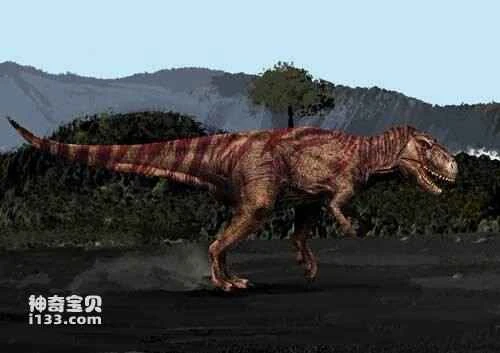
Ornithopods are an important branch of the dinosaur family, consisting of a diverse range of herbivorous dinosaurs, including four families: Heterodontosauridae, Rhydontosauridae, Iguanodontidae, and Hadrosauridae. Although all ornithopods were herbivorous, their teeth varied considerably in morphology and function due to adaptations to different environments. Significant differences exist between families and even between genera, demonstrating the dinosaurs' remarkable adaptation to the Mesozoic Earth's ecological environment.

Heterodontosaurus
1. Heterodontidae
Let's first introduce the Heterodontidae family. This family includes the following main genera: *Lanasaurus*, *Aborethrosaurus*, *Ricaurus*, and *Heterodontidae*. Their teeth share some common characteristics: cheek teeth with high crowns, the crowns being chisel-shaped, and canine-like teeth growing on both the premaxilla and dentition. However, different genera show varying degrees of specialization in herbivory: *Aborethrosaurus* cheek teeth are loosely arranged, with symmetrical crowns, a distinct cusp, and unthickened roots clearly separated from the crowns; *Lanasaurus* teeth have crowns similar to *Aborethrosaurus*, but the crowns are very close together, with some teeth even overlapping; in *Ricaurus*, the tooth crowns remain symmetrical, but have convex outlines on both the inner and outer sides, the thicker roots are slightly constricted and close to the cusp, and the length of the crown is proportionally much greater than its width. In Heterodontosaurus, the tooth roots are large, with a cross-section that is somewhat square rather than round. There are no dental rings or the roots do not contract. The crowns are asymmetrical; the lower teeth have straighter outer crowns and more convex inner crowns, while the upper teeth are the opposite. The convex surfaces are enamel-coated, while the straighter surfaces are not. However, in the genera *Aberrocephalosaurus* and *Lanasaurus*, both sides are enamel-coated. Teeth in this family tend to have relatively high crowns. In *Lanasaurus*, a pair of inwardly inclined abrasive surfaces along the transverse ridges indicate that the movement of the upper and lower jaws is strictly vertical. In other genera, the abrasive surfaces of the teeth typically extend from one tooth to the next.

Teeth of Aberreichthys

Lana dragon's teeth

Rico Black Dragon's Teeth

Dimetrodon teeth
It is evident that Heterodontosaurids were an active, agile, bipedal herbivorous dinosaur that primarily fed on plants on the ground or in shrubs. They initially ate plants less than 1 meter above the ground. The absence of teeth at the snout of the premaxilla, the formation of a horny border, and the narrowing of the anterior edge of the premaxilla indicate a relative ability to select plants. The premaxillary teeth, due to their occlusion with the predentary bone, developed an abrasive surface, suggesting that these teeth could not only penetrate but also cut through their prey. Their first premaxillary tooth was small, nail-shaped, and slightly curved; the second was larger, with a small lingual arch near the tongue, similar to the first premaxillary tooth; the third premaxillary tooth was canine-like, with small serrations on both sides of the marginal teeth. All these premaxillary teeth were completely covered with a layer of enamel, and the inner surface of the crown had an abrasive surface, a result of continuous occlusion with the predentary bone and the upper edge of its sheath.
In specimens of the genus *Aborethrosaurus*, the premaxillary dentition lacks canine teeth, possibly representing females or juveniles. The cheek teeth of *Aborethrosaurus* are chisel-shaped, with small denticles located only in the upper third of the crown, their anterior and posterior edges clearly separated, thus the distal denticles connect to the basal ring. There is a broad projection in the middle of the cheek surface of the crown, but no ridges are present. In *Aborethrosaurus*, the crowns of the teeth in the maxillary dentition are either symmetrical or slightly posteriorly pointed, with 4-7 denticles pointing towards the crown apex and connected to the basal ring by the anterior edge.
In the genus *Heterodontosaurus*, the teeth are tall and strong, with a large primary ridge located in the center of the cheek surface. The remaining ridges are slightly weaker than the primary ridges. A single secondary ridge develops between the outermost ridge and the primary ridge, without tooth rings. Extremely worn teeth have been found in *Heterodontosaurus* specimens, with the angle of the worn surface increasing with age, ranging from 45 to 65 degrees. In the genus *Lanasaurus*, the angle can reach 75 to 80 degrees.
All these subtle differences demonstrate that dinosaurs of various genera within the Heterodontidae family exhibited a meticulous selection of different microhabitats in their adaptation to the ecological environment. This meticulous selection shows that dinosaurs were indeed a successful animal group in the Mesozoic Era, capable of making full use of all terrestrial ecological niches.
2. Rhizodontidae
Rhydontosaurids are small to medium-sized ornithopod dinosaurs. They were bipedal, with a not highly specialized body structure, and were distributed across Asia, Australia, Europe, and North America, living from the Middle Jurassic to the Late Cretaceous. The teeth of Rhydontosaurids were not entirely uniform. They had five slightly curved, simple premaxillary teeth, and ten or eleven laterally flattened maxillary teeth with widened crowns and marginal dentitions on both sides. Their lower jaw had approximately 13-14 teeth; the first three or four were relatively simple and conical, while the other teeth had flattened crowns both internally and externally, and like the maxillary teeth, marginal dentitions. This type of dental form is called heterodontism.


Teeth of prismodon
The buccal surfaces of the maxillary teeth of the Rhomboidosaurs are heavily enamelized with small, vertical ridges; most mandibular teeth, however, have thicker enamel on the lingual surfaces, with a prominent central ridge and several weaker secondary ridges. The presence of these ridges is likely the origin of the name "Rhomboidosaur." The flat, sloping wear surfaces of these teeth clearly demonstrate their robust wear resistance. Furthermore, the presence of double wear surfaces on the Rhomboidosaur teeth indicates that their jaw movements were vertical. In addition, Rhomboidosaurs possess an important characteristic common to ornithopods: the crowns of their maxillary teeth curve inwards, while the crowns of their mandibular teeth curve outwards.


Teeth of Tenautron

Dry dragon teeth
Tenauterosaur is the largest genus in the family Rhomboidosauridae. Its upper and lower teeth have strong and wide crowns. The buccal surface of the upper teeth has 5-6 ridges of almost equal length. The lingual surface of the crown of the lower teeth has enamel and a very prominent primary ridge. Small accessory ridges develop on both sides of the primary ridge.
The genus *Gymnosauridae* is also a representative of the family Rhydontosauridae. The buccal surface of the crown of its maxillary teeth has a thick enamel layer and develops obvious primary ridges, which are usually asymmetrically distributed on the surface of the teeth. Two to four secondary ridges also develop on both sides of the primary ridges, which point towards and gradually disappear into the small teeth that develop at the edge of the crown.
3. Iguanodontidae
Iguanodontidae is one of the most abundant ornithopod dinosaurs. They were enormous, reaching lengths of 5-10 meters, classifying them as large dinosaurs. Iguanodontidae dinosaurs primarily lived from the Late Jurassic to the Early Cretaceous, with some species persisting into the Late Cretaceous. They possessed specialized five-fingered hands, with a spear-shaped thumb, hoof-like claws on the middle three fingers, and a very small fifth finger. Such hands were well-suited for grasping objects. The Iguanodontidae family includes six genera: *Curculosaurus*, *Iguanodon*, *Dreadnoughtus*, *Mutabarosaurus*, *Connorosaurus*, and *Protobarosaurus*, with *Curculosaurus* being the most primitive.
The number of teeth in Iguanodontid dinosaurs varies across different genera. The number of upper jaw teeth can range from 14 to 29; for example, *Curculosaurus* has 14, *Dreadnoughtus* has 22, *Protobarus* has 23, and *Iguanodon* has 29. The number of lower jaw teeth can range from 14 to 25; for example, *Curculosaurus* has 16, *Dreadnoughtus* and *Protobarus* both have 23, and *Iguanodon* has 25. None of them have teeth on their premaxilla.
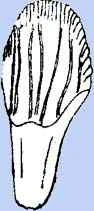


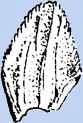
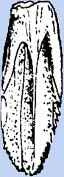
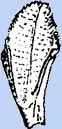
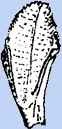
Iguanodon teeth
The upper teeth of Iguanodontid dinosaurs had narrower crowns, with rhomboid buccal and lingual surfaces, and were relatively longer than the lower teeth. The buccal surface of the crown had thickened enamel, well-developed marginal denticles, and a large, dominant primary ridge located slightly posterior to the midline of the crown. The rest of the crown was relatively smooth, except for a few small secondary ridges of varying lengths. All these teeth had long, tapering roots.
Iguanodontid dinosaurs had a single row of upper jaw teeth, with the front and back teeth smaller than the middle teeth. The crowns of these teeth were laterally compressed, and their shapes varied across genera; some were wider (e.g., *Curculosaurus* and *Mutabarosaurus*), while others were relatively narrower (e.g., *Iguanodon* and *Protobarosaurus*). The fine structure of the cheek surface (the enamel side) also differed: some had very well-developed primary ridges (e.g., *Curculosaurus*, *Iguanodon*, and *Protobarosaurus*), while others had no primary ridges (e.g., *Mutabarosaurus*); some had a smooth surface without any secondary ridges except for large primary ridges, while others had many secondary ridges (e.g., *Curculosaurus* had 9, *Iguanodon* had 4-6, *Mutabarosaurus* had 13, and *Protobarosaurus* had 2-3). Furthermore, the etching on the front and back edges also differed.
In Iguanodontidae, the crowns of the mandibular teeth are wider than those of the maxillary teeth, the inner surfaces are enamelized, and they have ridges of varying degrees. Some have well-developed primary ridges (such as those in the genera *Iguanodon* and *Protobarus*), while others do not (such as those in the genera *Cyclops*). Some have numerous secondary ridges on either side of the primary ridges, and still others have tertiary ridges extending from the base of the marginal denticles; for example, *Cyclops* has approximately 10 tertiary ridges, and *Iguanodon* has 1-2.
Scientists have also observed a tooth replacement process in the genus *Iguanodon*, where teeth in even-numbered positions are replaced sequentially, starting with those in even-numbered positions. In most cases, the replacement wave proceeds from back to front, resulting in teeth in the replacement dentition gradually decreasing in size from back to front. Scientists speculate that this tooth replacement process may be a common phenomenon throughout the Iguanodontidae family.
4. Hadrosauridae
The teeth of a single hadrosaurid dinosaur are very similar to those of anthropod dinosaur, with elongated crowns. However, unlike their counterparts, hadrosaurids possessed hundreds of teeth on each side of their lower jaw. These teeth were firmly fused together by bone tissue, forming washboard-like cutting surfaces used to shred food picked up by the horny beak at the front of the mouth. This structure of the upper and lower jaws allowed them to handle harder foods, such as fibrous plants, and even several branches.
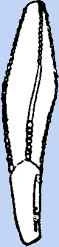
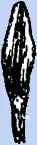
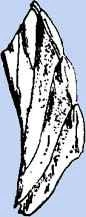

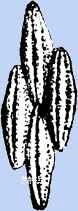
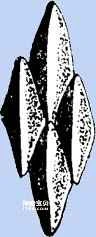
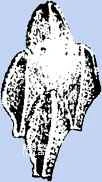
hadrosaur teeth
A single tooth is composed of dentin and enamel. The enamel surface is typically rhomboid in shape and divided into somewhat symmetrical anterior and posterior parts by a longitudinal ridge. The individual teeth differ in their margins and the decoration of their enamel surfaces; some are smooth, while others have nodular ridges. In the lingual portion of the mandibular dentition, the exposed enamel surfaces converge to form a checkerboard pattern, with the root of one tooth completely hidden by the crown of the next. On the other hand, in the maxillary dentition, except for the last tooth in the vertical row, the enamel surface of the remaining teeth is largely covered by the preceding tooth, and there is no checkerboard pattern like in the mandibular dentition.
The lingual surface of the mandible is very thin and often breaks during fossil preservation, exposing the tooth roots in a plate-like manner. This phenomenon is not observed in the maxilla.
In hadrosaurid dinosaurs, each row of teeth was curved, unlike herbivorous mammals where the chewing surfaces of the teeth are perpendicular to the tooth axis; instead, they were inclined to the tooth axis. Therefore, the chewing surfaces of the upper and lower teeth were nearly vertical rather than horizontal, and thus the teeth functioned as shearing rather than grinding like in horses. This curved tooth row, combined with this characteristic, created an efficient feeding mechanism. In the tooth row, the teeth in the middle were larger than those at the ends.
From the jaw structures and tooth structures of the Heterodontosaurids, Rhomboidosaurs, Iguanodontidae, and Hadrosaurids we have introduced, we can see the following trends in tooth morphology from primitive to advanced ornithopod dinosaurs: 1. From teeth on the premaxilla to their disappearance; 2. From a small number of teeth to a gradual increase; 3. From covering the entire tooth to being distributed on one side (outer surface for upper teeth, inner surface for lower teeth); 4. From a chisel-shaped crown to a near-oval shape and then to an elongated rhomboid shape; 5. From undeveloped to highly developed primary ridges in upper teeth, and from numerous to few fine ridges on the surface. These trends demonstrate that the function of teeth gradually strengthened during the evolution from primitive to advanced ornithopod dinosaurs, indicating an increase in the adaptability of ornithopod dinosaurs to their environment.